
The UK government is facing pressure from lawmakers to abandon its plan to resume the extradition arrangement with Hong Kong over concerns that the Chinese Communist Party (CCP) could exploit the system to target dissidents.
Under the UK’s Extradition Act 2003, Hong Kong is designated as a category-2 territory, meaning the home secretary must issue a certificate upon receiving a valid request for extradition.
The Conservative government suspended the arrangement in July 2020 after Beijing imposed a national security law (NSL) that criminalizes acts of subversion, secession, and collusion with foreign forces. The law also allows the Chinese communist regime to assume jurisdiction over certain cases and try those cases in mainland Chinese courts.
The law has since been used to jail pro-democracy activists, including British citizen and media tycoon Jimmy Lai.
On July 17, the Labour government published a draft order to remove Hong Kong’s designation as a category-2 territory, so it can deal with Hong Kong’s extradition requests on a case-by-case basis.
The order would also enable extraditions to and from Chile and Zimbabwe.
The Home Office has not responded to The Epoch Times’ request for comment at the time of publishing.
In a July 18 letter to Shadow Home Secretary Chris Philp, Security Minister Dan Jarvis said it’s in the UK’s “national interest to have effective extradition relationships to prevent criminals from evading justice and the UK becoming a haven for fugitives.”
Philp said that since the suspension of extraditions, the UK has not been able to certify an extradition request from Hong Kong “even if there were strong operational grounds to do so,” and that the de-designation of Hong Kong as a category-2 territory will allow the UK to “cooperate with them on the case-by-case ad hoc basis available for non-treaty partners.”
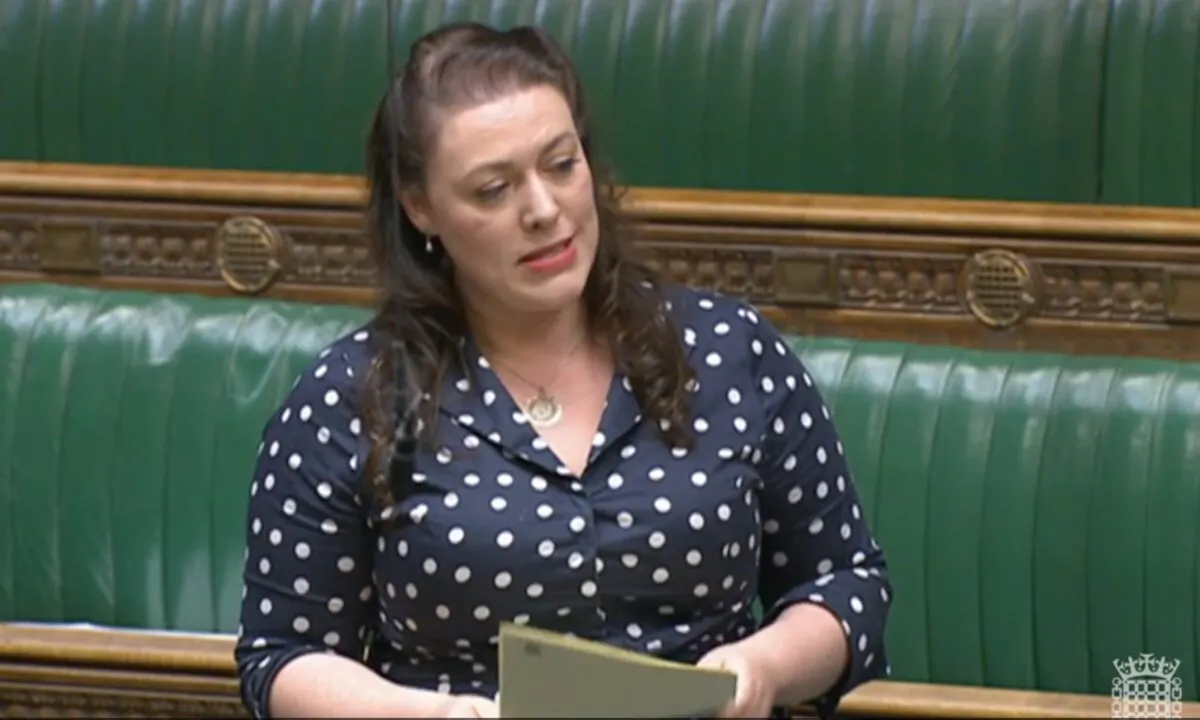
In a July 23 letter to Jarvis, Shadow National Security Minister Alicia Kearns said the CCP’s NSL has “crushed freedom of expression, political freedom, and the rule of law in Hong Kong and introduced the possibility of extradition of Hong Kongers to mainland China,” which “operates an opaque legal system with the estimated highest number of executions of any country, with the figure kept secret by the CCP.”
Kearns said the situation in the former British colony “has worsened” since the UK suspended extradition with it, citing the ongoing imprisonment of Lai, and the arrest in May of family members of Washington-based Hong Kong activist Anna Kwok.
“Given the CCP’s willingness to manipulate convictions and target dissidents abroad, there is a risk renewed extraditions to Hong Kong will see requests to the UK for the extradition of otherwise innocent individuals,” she wrote.
“What guarantees can you give that no Hong Konger, CCP critic, or anyone targeted by the CCP will be extradited under the new arrangement? What protections will be put in place to identify and reject false charges made against activists resident in the UK by the Hong Kong authorities?”
In an interview with GB News’ Nigel Farage, former Conservative Party leader Sir Iain Duncan Smith, co-chair of the Inter-Parliamentary Alliance on China, said renewed extradition could put Hong Kongers in the country, as well as MPs sanctioned by China, at risk.
Duncan Smith is one of the lawmakers sanctioned by Beijing in 2021 for his criticism of the CCP’s human rights abuses of Uyghur Muslims in Xinjiang.
“So when we travel abroad, we have to be very careful of where we go, because if we go to a country that’s got an extradition agreement with Hong Kong or China, then it could throw in that red notice and have us arrested, pending any further extradition. And the same would happen here if we stupidly returned to an extradition agreement,” he said, adding that he is ready to organize opposition against the plan.
Farage, who’s also the leader of Reform UK, said the government is “quite prepared to give in to China” as “they think that our economic future is going to be inextricably linked with China.”
Hong Kong’s NSL assumes jurisdiction over anyone anywhere, including foreign nationals.
The Hong Kong police have issued dozens of arrest warrants and bounties on exiled activists, including 19 issued on Friday.
In March 2022, Benedict Rogers, co-founder of the UK’s Conservative Party Human Rights Commission, and a former Epoch Times contributor, received a letter from the Hong Kong Police and National Security Bureau, threatening him with a fine of $13,000 and up to life imprisonment unless he shut down the website of Hong Kong Watch, a human rights group he co-founded.
In a statement published on Thursday, Hong Kong Watch said it “strongly condemns the UK government’s apparent plans to reinstate extradition cooperation with Hong Kong, following the National Security Advisor’s trip to Beijing to meet with Minister of Foreign Affairs Wang Yi last week.”
The group’s Senior Research and Policy Advisor, Thomas Benson, said the planned move “opens up the possibility of opaque extradition cooperation outside the protections of a formal treaty-based system,” and urged the government to “reverse course on these plans before it is too late.”
Finn Lau, a UK resident wanted by the Hong Kong police and previously assaulted in London, said he’s “utterly disappointed” by the government’s plan.
 Friends Read Free
Copy
Facebook
Tweet
Friends Read Free
Copy
Facebook
Tweet