
Ukraine has taken one of its most concrete steps yet toward restoring its electoral system after nearly four years of war, as pressure mounts—particularly from U.S. President Donald Trump—for the country to hold elections.
Ukraine’s Central Election Commission said on Dec. 23 that it has fully restored the State Register of Voters, reopening a system that was shut down the day Russia launched its invasion in February 2022. The registry is the backbone of Ukraine’s voting system and is required for any national election to take place.
“Updating the voter register is one of the basic conditions for holding any election,” Ukrainian lawmaker David Arakhamia said in a Dec. 23 post on Telegram. “The war has significantly affected demographic indicators, and this must be reflected in the register. There is a great deal of work to be done in this direction.”
The voter registry was suspended in 2022 to protect personal data and prevent cyberattacks while Russia targeted Ukrainian state systems. The Central Election Commission said it spent the past three years rebuilding and securing the database so it could safely interact with voters again.
Election Debate Intensifies
The restoration of the voter register comes as Arakhamia said Ukrainian lawmakers are in the midst of forming a working group to explore whether elections could be held under martial law, another major step toward addressing Trump’s repeated demands that Ukraine hold elections.
“I think it’s an important time to hold an election,” Trump told Politico in a Dec. 9 interview. “They’re using war not to hold an election, but I would think the Ukrainian people should have that choice. … You know, they talk about a democracy, but it gets to a point where it’s not a democracy anymore.”
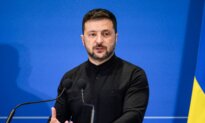
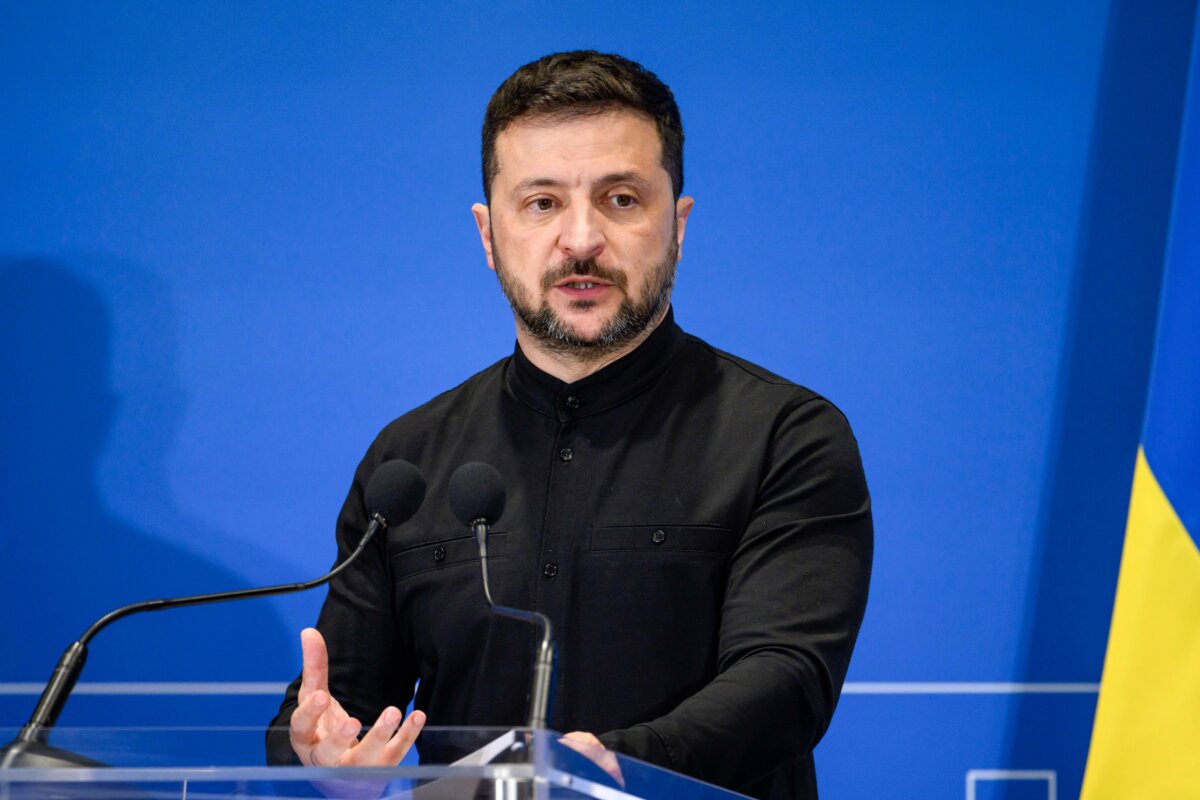
Responding to Trump’s remarks, Ukrainian President Volodymyr Zelenskyy has signaled openness to holding a vote—provided security can be guaranteed.
“I’m ready for elections, and moreover, I ask … that the U.S. help me, maybe together with European colleagues, to ensure the security of an election,” Zelenskyy said on Dec. 9. “And then in the next 60–90 days, Ukraine will be ready to hold an election.”
Ukrainian law forbids holding elections under martial law, which has been extended 17 times since Russia’s invasion began nearly four years ago.
Zelenskyy has asked lawmakers to consider changing the law to allow wartime elections, and the formation of the working group reflects a significant shift in thinking from when the Ukrainian parliament in February passed a resolution affirming that elections should not be held during martial law.
Millions Abroad, Soldiers at the Front
A key challenge to holding a vote is that millions of Ukrainians are no longer living where they did before the war.
More than 5.8 million Ukrainians fled abroad after the invasion, according to the U.N., while hundreds of thousands serve in the military. Updating voter records and allowing those people to vote would be key to any credible election, Zelenskyy has indicated.
Speaking to reporters on Dec. 20, Zelenskyy said that Ukraine’s Foreign Ministry is already working on ways to allow Ukrainians abroad to vote in a future election.
“In today’s situation, the process will be complicated due to the number of Ukrainians [living abroad],” Zelenskyy told reporters. “But this is precisely the task of the Ministry of Foreign Affairs, and they have already begun working on it.”
Zelenskyy has also said he supports online voting for Ukrainians abroad, although lawmakers have not yet agreed on legal changes needed to allow it.
Security a Big Hurdle to Elections
Ukrainian election watchdog OPORA has said that security remains the biggest obstacle to holding a vote.
In a recent assessment, OPORA found that even if martial law were lifted, only a small number of communities would currently be able to hold safe elections. Many polling stations have been damaged or destroyed, shelters are often far from voting sites, and shelling continues in large parts of the country.
OPORA said in a separate review that restoring the voter registry is a key step—but only one of many. Elections would also require updated voter lists, safe polling locations, protections against Russian cyberattacks and disinformation, and clear rules for voting in occupied or formerly occupied regions.
“Conduct of elections in these regions will require large-scale preparatory works that are unlikely to be completed even within a year after termination of hostilities,” the group wrote.
Public opinion reflects those concerns. A December poll by the Kyiv International Institute of Sociology found that a majority of Ukrainians believe elections should be held only after a final peace agreement, not during active fighting.
Meanwhile, alongside restoring the voter registry, Ukraine’s elections committee approved several other measures on Dec. 23 that point to longer-term election planning. These include a communication strategy for postwar elections, as well as proposals to improve access for voters with disabilities. The Central Election Commission also updated polling station records and made what it said were routine changes to local election commissions.
 Friends Read Free
Copy
Facebook
Tweet
Friends Read Free
Copy
Facebook
Tweet