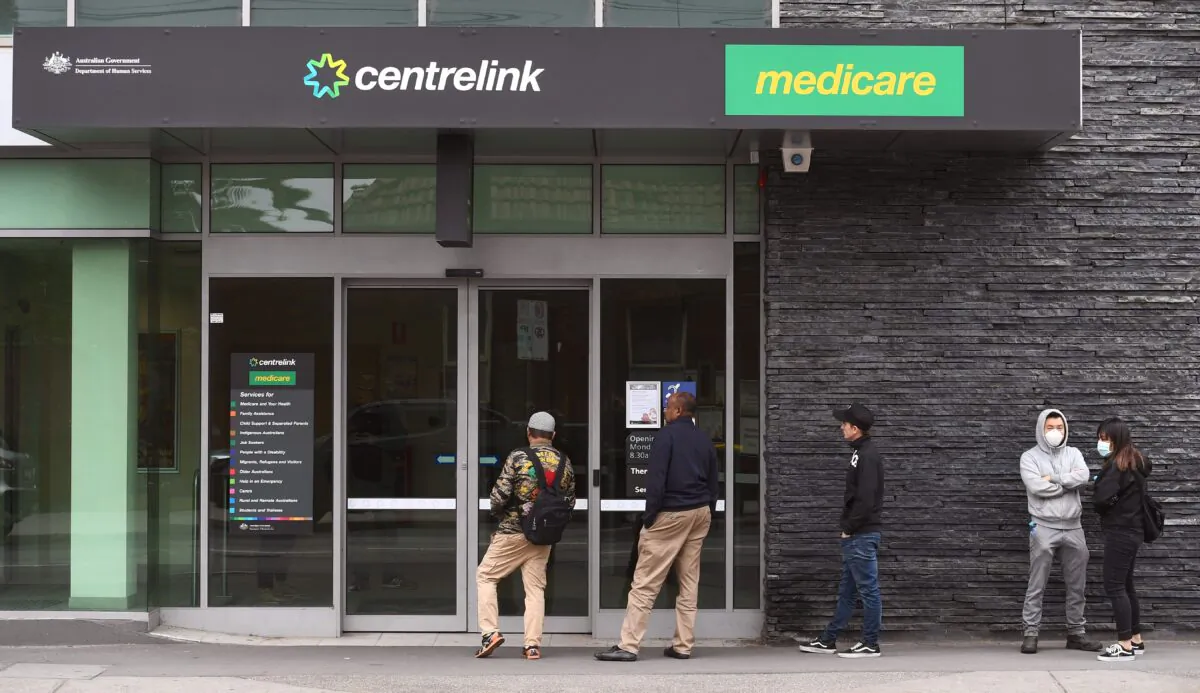

Australia’s unemployment rate has risen to 4.3 percent, up from 4.1 percent the previous month, according to seasonally adjusted figures from the Australian Bureau of Statistics (ABS).
The news comes amid Australians struggling with higher fuel prices linked to the Iran war, as well as higher interest rates.
ABS head of labour statistics Sean Crick said 35,000 more people were without a job in February.
“Fewer people who were waiting to start a job in January moved into employment in February,” he said.
Despite the rise in unemployment, 49,000 new jobs were added to the market in February.
Meanwhile, part-time employment increased by 79,000 at a time where inflation and costs of living are rising.
However, those employed on a full time basis declined by 30,000 people.
“‘This month we saw more people move into part-time employment, particularly those aged 65 and over,’ Crick said.
“Additionally, we saw fewer people are leaving jobs to retire compared to a year ago.”
Total hours worked by Australians also dropped by 0.2 percent this month, amid a decline in the number of people maintaining full-time jobs.
However, the participation rate in the workforce increased by 0.2 percentage points to 66.9 percent in February, reflecting a greater share of Australians were either working or actively looking for work.
Unemployment Rises as Interest Rates Increase
The rise in unemployment comes after the Reserve Bank of Australia (RBA) increased official interest rates by 0.25 percent to 4.1 percent on March 17.
This will increase the mortgage payments of Australians already grappling with higher fuel and grocery prices.
The RBA pointed out that inflation had increased in the second half of 2025 and predicted the Middle East war would add to inflation.
“While inflation has fallen substantially since its peak in 2022, it picked up materially in the second half of 2025,” the RBA said.
It said rising inflation was partly due to the economy operating near capacity, with strong demand putting pressure on labour and supply.
“In addition, the conflict in the Middle East has resulted in sharply higher fuel prices, which, if sustained, will add to inflation,” the bank said.
Opposition leader Angus Taylor said it was a tough day for families with a mortgage and business people with a loan.
“Inflation is rising. Interest rates are going up in contrast to peer countries across the world,” he told reporters on March 18.
Treasurer Jim Chalmers admitted the interest rate rise was tough news for millions of Australians.
 Friends Read Free
Copy
Facebook
Tweet
Friends Read Free
Copy
Facebook
Tweet