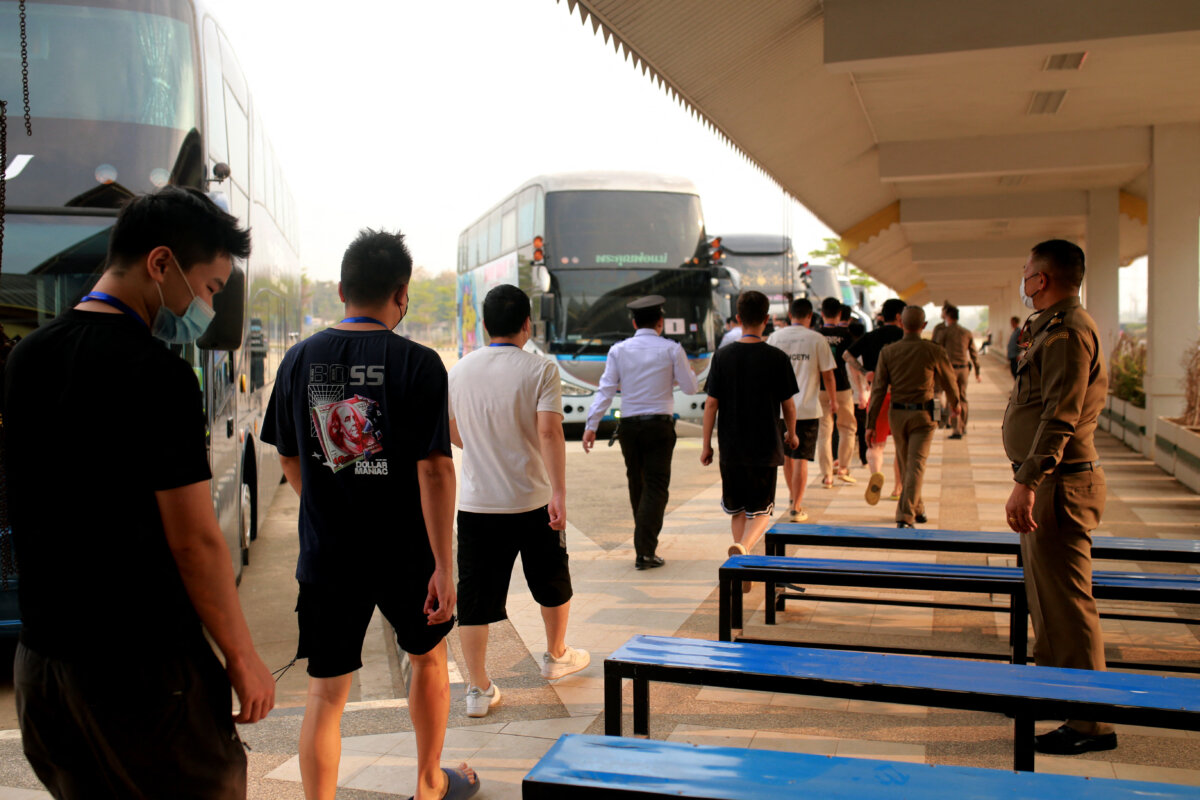

Washington’s accusations against Beijing linking the regime to scam operations across Southeast Asia have exposed the Chinese Communist Party’s strategy of consolidating influence in Burma (also known as Myanmar) while fueling the country’s civil war, experts warn.
FBI Director Kash Patel testified before the Senate Intelligence Committee on March 18 that the Chinese Communist Party (CCP) is helping build scam hubs in Burma and elsewhere in Southeast Asia.
“They’re literal compounds … fleecing Americans and senior citizens all the way from Southeast Asia because they are backed by the CCP,” Patel said during a hearing on worldwide threats.
He said that the regime knows that “it’s going to hurt everyday Americans.”
The bureau has initiated a major operation targeting these digital fraud networks and has established a specialized domestic reporting center for victims, according to Patel.
In a separate hearing days later, Reva Price, Commissioner of the U.S.-China Economic and Security Review Commission, also warned that Beijing has quietly supported fraud operations.
“[Scam centers are] targeting Americans … and run by Chinese syndicates in many of these cases, often with the implicit wink and nod from the Chinese government,” she told the Joint Economic Committee on March 24.
Cyber-enabled fraud cost Americans more than $12.5 billion in reported losses in 2024—with seniors taking the biggest financial hit on average —according to a White House fact sheet on cybercrime published in March.
Direct Accusations
Jason Tower, a senior expert at the Global Initiative Against Transnational Organized Crime, said Washington’s rare public pushback stems from Beijing deliberately shielding key criminal kingpins from justice.
“China’s sudden move in January to extract Chen Zhi—who has been indicted in a U.S. court—illustrates this,” Tower told The Epoch Times.
“This explains why the U.S. is now much more direct in raising this issue of China’s role vis-a-vis these crime groups.”
Chen, a Chinese Cambodian political adviser to the Cambodian government and chairman of the Prince Holding Group—labeled by the U.S. government as a “Transnational Criminal Organization”—was sanctioned by the U.S. Treasury Department in October 2025 for orchestrating massive online fraud networks.

Antonio Graceffo, a China expert and Epoch Times contributor who has reported extensively on Burma, viewed Washington’s latest move as a signal that the scam problem would not be addressed unless Beijing’s backing of these networks was publicly exposed.
“The [U.S.] government’s actually known about this for a long time, but the fact that they’re saying it out [loud], that is pretty significant,” Graceffo told The Epoch Times.
Targeting Americans
The Chinese Ministry of Public Security claimed in December 2025 that the regime will continue “strengthening law-enforcement cooperation to dismantle criminal networks and safeguard public security.”
In January, Beijing followed up with the execution of 11 people linked to online scam centers operating in Burma.
However, Tower said the CCP’s crackdown strictly focuses on crime groups defrauding its own nationals, a selective pressure that has incentivized syndicates to shift toward “foreigner butchering”—a practice that primarily preys on non-Chinese victims.
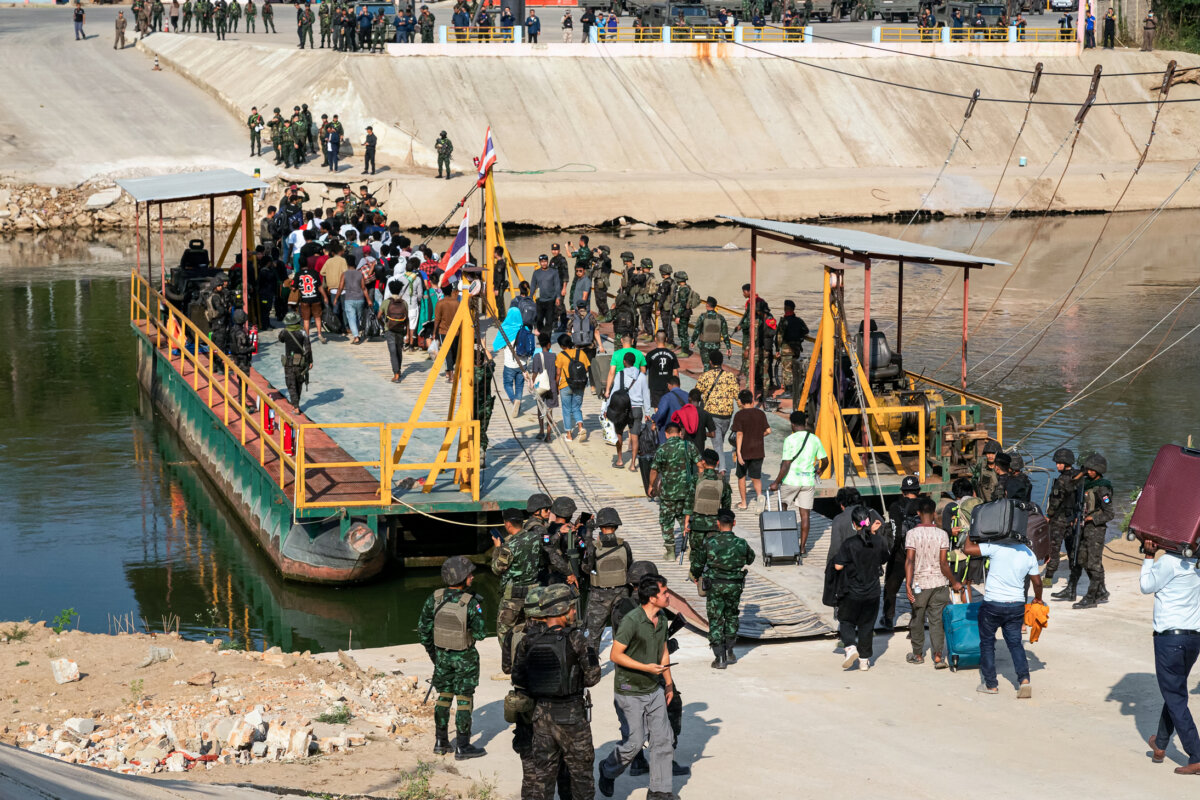
“[Foreigner butchering] targets especially nationals of countries that are China’s key competitors,” Tower said. “As a result, Chinese scam syndicates now target the U.S. more than any other country.”
Graceffo said economic and linguistic factors make Americans the prime targets for these groups.
“The average American earns more than people in all the other countries of the world except a few countries; that’s why they’re being targeted,” Graceffo said.
“And English is an easy language for the scam centers to work with. You can always find people to do scams who can speak English.”
He said that these operations exploit liberal U.S. laws by operating in a legal gray area, manipulating U.S. victims into handing over funds to evade criminal liability.
“In many cases, because they don’t steal your money and you voluntarily transfer your money to them, it’s very difficult to prosecute in a foreign country [such as Burma],” Graceffo said.
Consolidating Influence
Graceffo said the CCP’s motive to combat scam activities is self-serving, as it only goes after syndicates that disrupt its own infrastructure projects in Burma.
“The scam centers are very much inhibiting Chinese investments from moving forward, so they would remove them for that reason,” he said.
While Beijing uses these arrests to signal it will not tolerate the victimization of its citizens, Tower said the regime is leveraging the crackdown to tighten its grip on Burma.

“China’s action has functioned to deepen China’s security influence in Myanmar, where it is presently manipulating its relationships with powerful ethnic armed groups and the Myanmar military regime,” Tower said.
“This is part of a move to weaken the country’s pro-democracy resistance forces and to consolidate Chinese influence in the country.”
The Southeast Asian nation has been embroiled in a civil war since a 2021 military coup, with ethnic armed groups engaged in intense fighting against the military junta.
Fueling the War
The conflict has internally displaced more than 3.5 million people, according to the U.N. High Commissioner for Refugees.
Graceffo argued that China’s support for both the junta and the scam industry is prolonging the civil war, making it harder for resistance forces to prevail.

“The scam centers are a major destabilizing force that will definitely be problematic in terms of winning the revolution and establishing democracy in Burma,” he said.
“The border guard forces that are working with the scam centers, they’ve got weapons, surveillance, and drones, and China is definitely perpetuating the Burma war through supporting the junta with such equipment.”
As Beijing continues to back the junta’s ongoing atrocities, Graceffo cautioned that the number of casualties and displaced persons in Burma will inevitably surge.
“I have many [statements] from resistance fighters that if China would stop supporting the junta, they could win,” Graceffo said.
“China is the main issue, though.”
 Friends Read Free
Copy
Facebook
Tweet
Friends Read Free
Copy
Facebook
Tweet