
A delegation from the United States is attending Russia’s version of ‘Davos’ for the first time in eight years.
The St. Petersburg International Economic Forum (SPIEF) is often described as the Kremlin’s equivalent of the World Economic Forum in Davos, Switzerland, and runs from June 3–6.
Most major Western investors have steered clear of the event since Russia invaded Ukraine in February 2022, but this year an American delegation led by the head of the Federal Commission of Fine Arts, Rodney Mims Cook Jr., will attend for the first time since 2018.
Russian presidential aide Yury Ushakov announced their attendance on June 2 during a briefing ahead of the forum, Russian outlet Interfax reported.
“One could say that an official U.S. delegation led by the chair of the U.S. Commission of Fine Arts, Rodney Cook, will arrive for the first time in several years to participate in the forum. I would say Americans have been absent at this level since around 2017–2018,” Ushakov said.
He further confirmed that Cook will speak at the forum’s Russia–U.S.: Dialogue of Cultures session, alongside other speakers, including Valery Gergiev, the director of the Bolshoi and the Mariinsky theaters, and Mikhail Piotrovsky, the general director of the Hermitage museum.
“Naturally, the U.S. representatives will chat with our official representatives, officials, and art figures, and a discussion is expected on numerous issues on the U.S.–Russian cultural agenda,” Ushakov added.
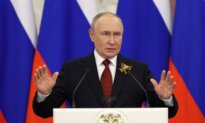
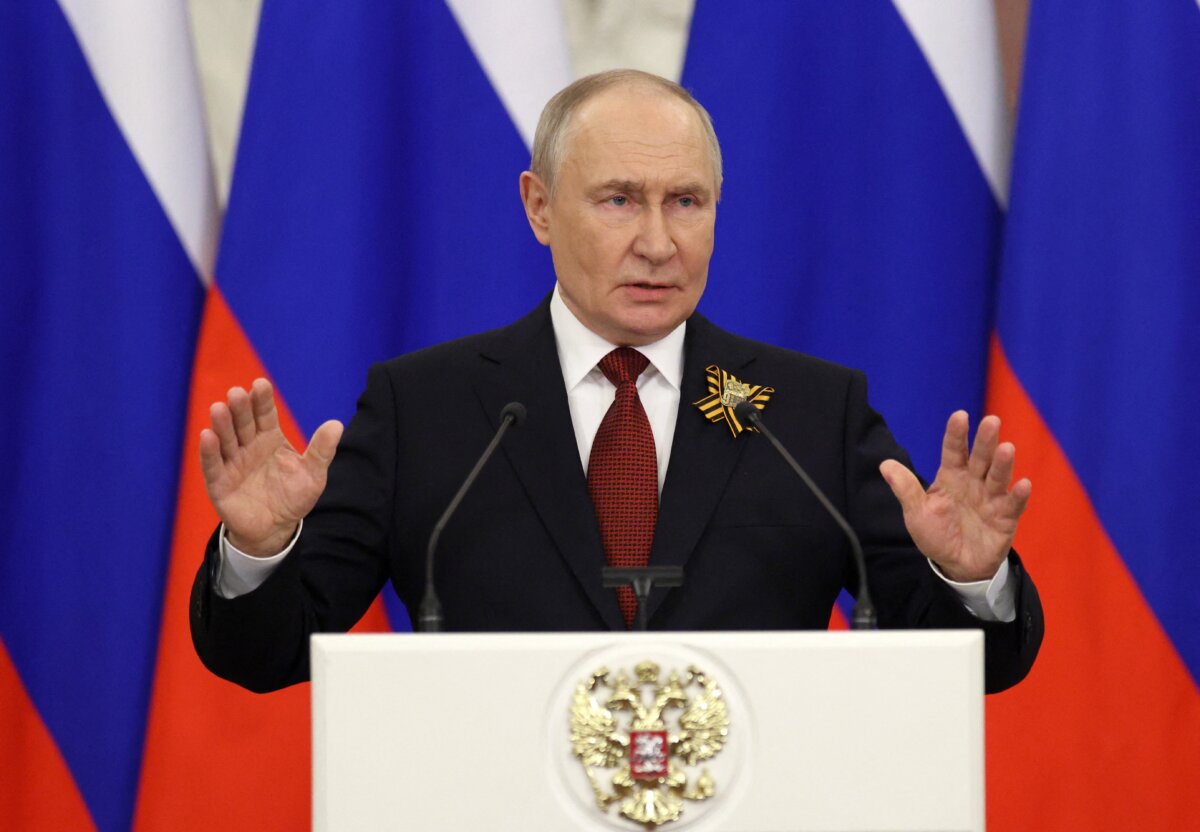
Russian President Vladimir Putin, scheduled to speak at the event on June 5, will not meet with any members of the American contingent.
Kremlin presidential press secretary Dmitry Peskov said that there are “no plans” for Putin to meet or speak with the U.S. delegation, Russian state news agency TASS reported on June 4.
The attendance of Americans for the first time this decade comes as Washington continues its efforts to bring an end to the now more than four-year-old war raging between Moscow and Kyiv.
Though face-to-face meetings between the United States, Russia, and Ukraine have stalled in recent months, Special Presidential Representative for Investment and Economic Cooperation with Foreign Countries and CEO of the Russian Direct Investment Fund Kirill Dmitriev said dialogue between Moscow and Washington was continuing and expected it to become more active soon.
“We are in constant contact with our American colleagues. This communication occurs several times a week, and the dialogue continues. I believe we will see even more active steps in this dialogue in the near future,” Dmitrev, a close Putin ally who has been involved in the talks, told TASS.
“Enemies of the Russia–US dialogue are constantly spreading disinformation and trying to create non-existent sources of additional tension. The dialogue is complex, but we appreciate [U.S. President Donald] Trump’s commitment to peace initiatives,” he added.
Elaborating, he said he had spoken with U.S. Special Envoy Steve Witkoff and Trump’s son-in-law, Jared Kushner, who have been leading American efforts to end the war, on June 3.
“Just yesterday, we spoke on the phone with both Witkoff and Jared Kushner. We’re in constant dialogue because the American side is trying to promote peace, and the American side is telling the Ukrainian side that they need to embrace peace, not constant provocations and confrontation,” he told TASS on the sidelines of SPIEF.
According to Dmitriev, the main topic of conversation was economic cooperation, with him saying that “there are many joint economic initiatives we can implement,” and “we are actively developing them.”
He stated that Moscow was preparing for joint investment with Washington “in various projects that are beneficial for both Russia and the United States, including in Russia.”
As the conference began in St Petersburg, Ukraine’s long-range drones struck an oil terminal in the city and other targets inside Russia, including a weapons production site, Ukrainian President Volodymyr Zelenskyy said on June 3.
Zelenskyy himself has stated that he wants to press on with peace negotiations before winter sets in to take advantage of Kyiv’s strategic gains.
Zelenskyy said in an interview with CBS’s “Face the Nation,” recorded on May 29 and aired two days later, that Russia began to lose the battlefield initiative in December 2025.
“They couldn’t occupy territories more during one month than they lose during the same month,” the Ukrainian president told “Face the Nation” host Margaret Brennan.
“So now we have this period of time before the winter. … We have, before the winter, we need to find a way, [a] diplomatic way, to sit and to speak.”
Russia controls about one-fifth of Ukrainian territory following Putin’s decision to send in tens of thousands of troops in 2022, but some reports suggest Moscow’s battlefield gains have slowed this year.
Russia has seized most of the Donbas region in eastern Ukraine in fighting that began there in 2014 but has not taken the remaining 10 percent.
Victoria Friedman contributed to this report.
 Friends Read Free
Copy
Facebook
Tweet
Friends Read Free
Copy
Facebook
Tweet