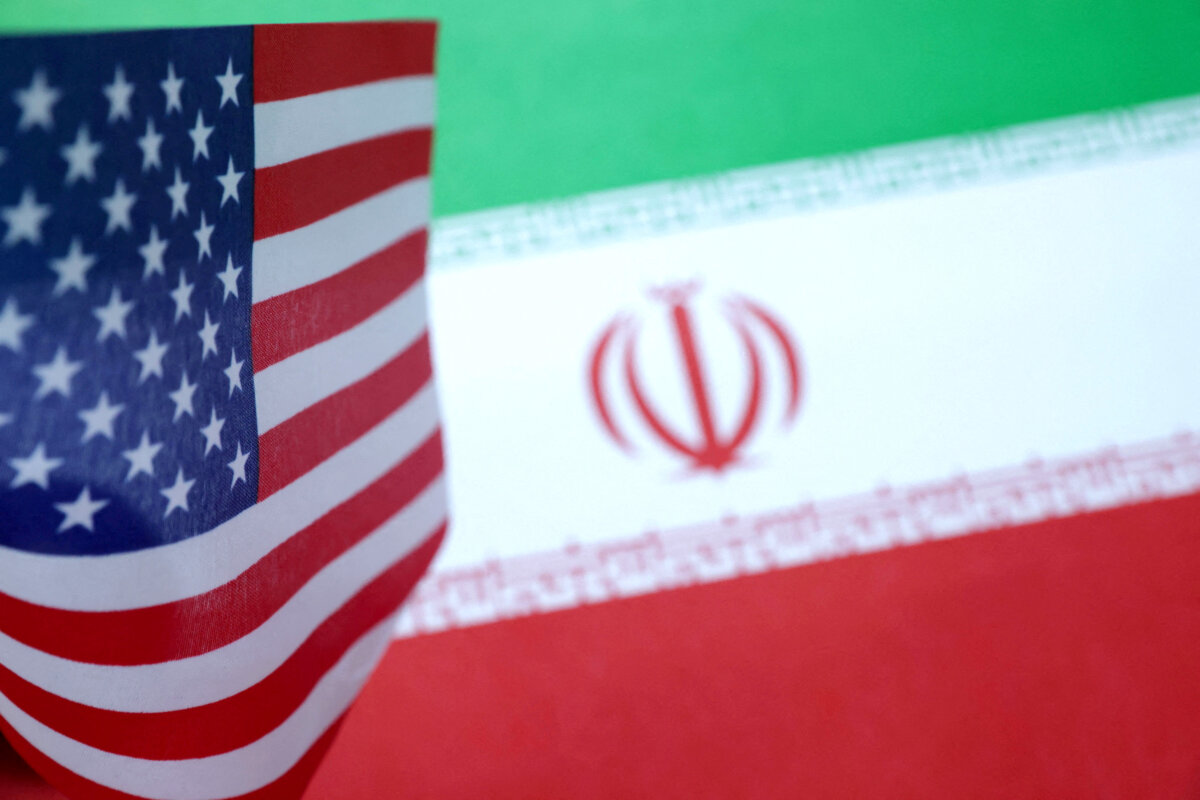

The United States and Iran are set to resume talks on the Islamic Republic’s nuclear program on Feb. 6, Reuters reported on Feb. 2, citing unnamed U.S. and Iranian officials.
U.S. special envoy Steve Witkoff and Iranian Foreign Minister Abbas Araghchi will meet in Istanbul, Turkey, according to Reuters, following widespread protests in Iran and harsh words by President Donald Trump about the clerical regime ruling the country.
One regional diplomat told Reuters that representatives from other countries in the region, such as Saudi Arabia and Egypt, would also take part in the talks.
The Epoch Times has contacted the U.S. State Department for comment.
On the Iranian side, the country’s president said on Feb. 3 that he had instructed Araghchi to look into negotiations with the United States.
“I have instructed my Minister of Foreign Affairs, provided that a suitable environment exists—one free from threats and unreasonable expectations—to pursue fair and equitable negotiations, guided by the principles of dignity, prudence, and expediency,” Iranian President Masoud Pezeshkian wrote on X.
Ali Shamkhani, an adviser to Iranian leader Ali Khamenei, told Lebanese outlet Al Mayadeen on Feb. 3 that Tehran was open to negotiations on its nuclear program, but only with Washington.
He stated that Iran “has repeatedly confirmed and demonstrated its readiness for practical negotiations with the United States solely, and not with anyone else,” and criticized the notion of including Europe as it had “practically proven that it cannot do anything, after U.S. President Donald Trump withdrew from the nuclear deal in 2018, and also during negotiations before last June’s war.”
“Even Trump did not allow them to intervene in these matters,” Shamkhani said, adding that the “negotiations are limited to the United States and to the nuclear file, over which an agreement can be reached.”
He also stated Iran had “no reason” to move its stores of enriched uranium out of the country
The United Arab Emirates has also called for a long-term solution to the issues between the United States and Iran.
“I think that the region has gone through various, various calamitous confrontations. I don’t think we need another one, but I would like to see direct Iranian–American negotiations leading to understandings that we don’t have these issues every other day,” the UAE president’s adviser Anwar Gargash told a panel at the World Governments Summit in Dubai.
“It is extremely important that many of the key issues that have rocked the bilateral relationship and has had an impact on the region, and foremost amongst them is the nuclear issue, is addressed directly and that it doesn’t become a source of instability and a source of questions like these every year or 2.”
Reports of the meeting follow comments from Trump on Feb. 1 that Iran’s decision on a nuclear deal would determine whether Khamenei’s prediction that a U.S. attack could lead to a regional war was accurate.
“Of course he would say that,” Trump told reporters on Feb. 1 at Mar-a-Lago in Palm Beach, Florida.
“But we have the biggest, most powerful ships in the world over there, very close, couple of days, and hopefully we’ll make a deal. If we don’t make a deal, then we’ll find out whether or not he was right.”
Khamenei earlier said Iran does not seek to attack any country but “will strike a strong blow against anyone who attacks and harasses” its territory, according to state media, after Trump posted on Truth Social that “a massive armada” was being deployed to the Middle East.
Iranian Supreme National Security Council Secretary Ali Larijani said on X on Jan. 31 that arrangements for negotiations were underway but did not provide any details.
Trump directed the military build-up in the Middle East after recent protests in Iran devolved into deadly confrontations with Iranian security forces. More recently, the president has pressured Iran’s Islamist regime to make a deal to constrain its nuclear program.
“As I told Iran once before, MAKE A DEAL!” Trump wrote in a Jan. 28 post on Truth Social. “They didn’t, and there was ‘Operation Midnight Hammer,’ a major destruction of Iran. The next attack will be far worse! Don’t make that happen again.”
Operation Midnight Hammer refers to the U.S. air strikes conducted in June 2025 against three Iranian nuclear facilities, which occurred amid an exchange of missile salvos between Israel and Iran at the time.
Reuters and Aldgra Fredly contributed to this report.
 Friends Read Free
Copy
Facebook
Tweet
Friends Read Free
Copy
Facebook
Tweet