
Over the past month, the U.S. military has amassed dozens of strike capabilities in the Middle East as President Donald Trump demands that the Iranian regime submit to new security constraints.
As negotiations have played out, the Trump administration has repeatedly invoked the June 2025 U.S. strikes on Iran’s nuclear facilities and warned that military action remains on the table if Tehran doesn’t make sufficient concessions.
Now, the window for a deal appears to be closing. Speaking to a gathering of world leaders this week, Trump indicated that he could decide on a course of action with Iran in a matter of days.
“We may have to take it a step further, or we may not,” the president said. “Maybe we’re gonna make a deal. You’re going to be finding out over the next probably 10 days.”
Here are the key U.S. military assets currently deployed in or moving to the Middle East and how they could come into play.
Lincoln Carrier Strike Group
Iran drew Trump’s attention last month, after mass economic protests within the country devolved into deadly confrontations with Iranian security forces.
In a Jan. 13 post on Truth Social, Trump called on the Iranian public to keep protesting and said “help is on its way.” The Trump administration has since demanded that Tehran hobble its nuclear development.
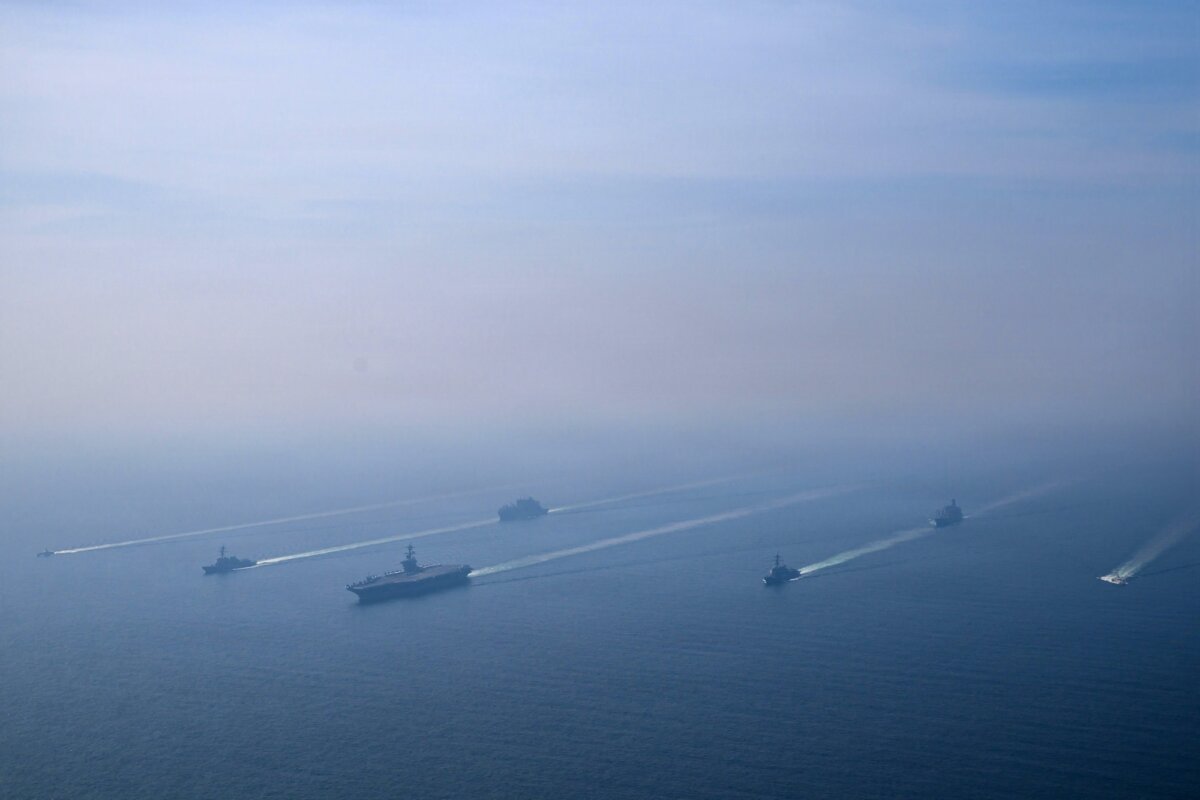
On Jan. 28, Trump said he had dispatched a “massive armada” headed by the USS Abraham Lincoln, an aircraft carrier, to the waters of the Middle East.
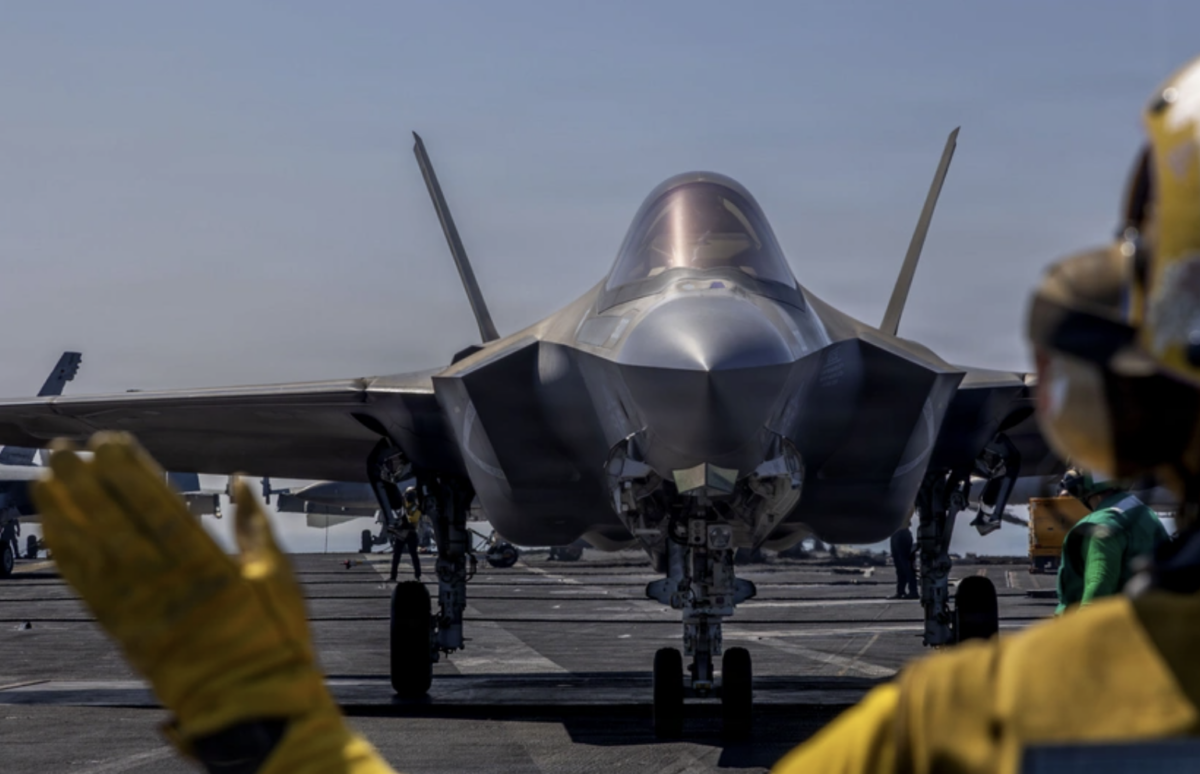
Strike elements within the USS Abraham Lincoln’s air wing include three squadrons of U.S. Navy F/A-18 Super Hornet fighter jets and a squadron of U.S. Marine F-35 Lightning II stealth fighter jets. Several other squadrons of support aircraft fill out the carrier air wing, including a squadron of Navy E/A-18G Growler electronic warfare aircraft.
E/A-18G Growlers can jam or destroy enemy radar and communications systems, reducing the overall risk U.S. forces could face as they conduct strike operations.
The Lincoln Carrier Strike Group also includes three destroyers: the USS Spruance, the USS Frank E. Petersen Jr., and the USS Michael Murphy.
Each destroyer can carry as many as 96 vertical launch missile cells, armed with a mix of offensive Tomahawk land-attack cruise missiles and defensive missiles for protecting the carrier group.
The USS Mitscher and USS Delbert D. Black, both destroyers, are also operating in the waters of the Middle East, although they appear detached from the Lincoln Carrier Strike Group.
The Ford Carrier Strike Group
By mid-February, Trump announced that a second U.S. carrier strike group was ready to sail for the Middle East.
“In case we don’t make a deal, we’ll need it,” Trump said on Feb. 13. “It’ll be leaving very soon.”
The U.S. Naval Institute has since reported that the USS Gerald R. Ford, an aircraft carrier, has set sail from the Caribbean Sea, heading east.
On Feb. 20, naval observers had spotted elements of the USS Gerald R. Ford Strike Group transiting the Strait of Gibraltar, at the mouth of the Mediterranean Sea.
Aboard the USS Gerald R. Ford are four squadrons of F/A-18 Super Hornets and a squadron of E/A-18G Growlers.
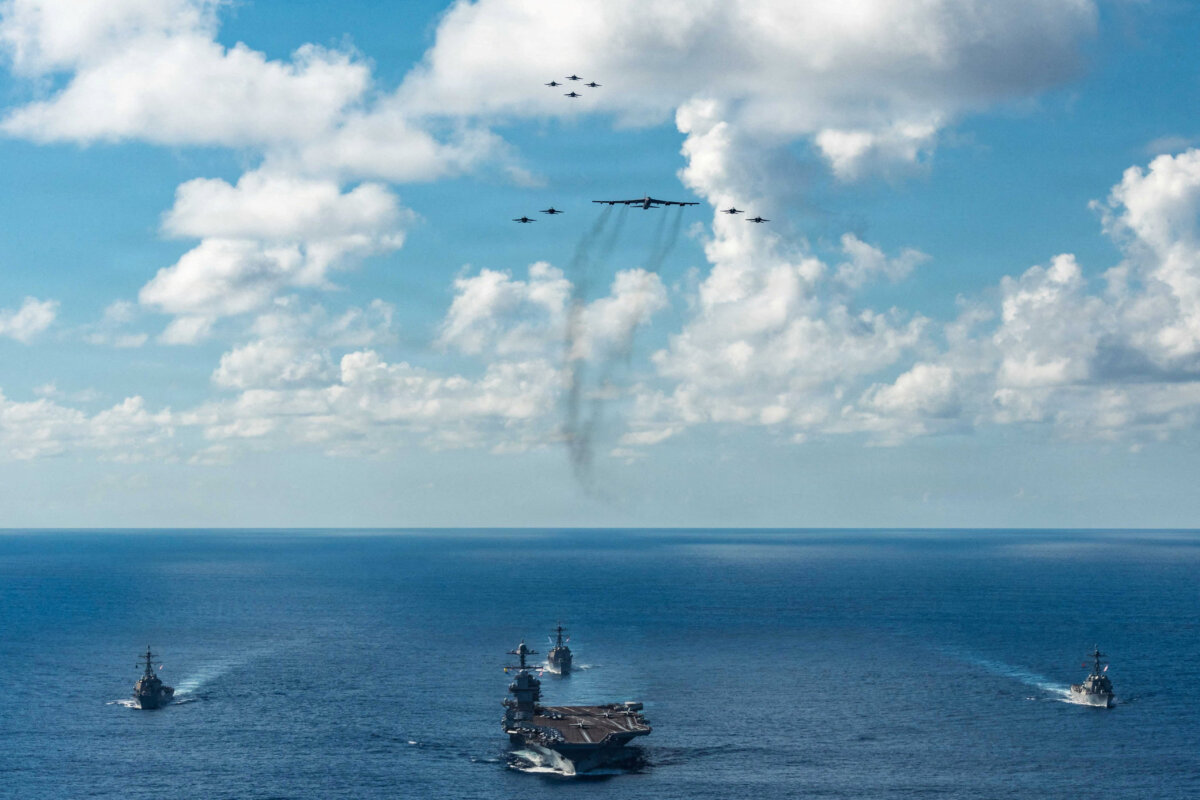
The Ford’s pivot to the Middle East was made eight months into its current deployment. The carrier originally set sail for the Mediterranean in June 2025, before rerouting to support Operation Southern Spear in the Caribbean Sea and the mission to capture wanted Venezuelan leader Nicolás Maduro on Jan. 3.
Forward Deployed Aircraft
Along with the dispersed strike assets at sea, the U.S. military has deployed dozens of key aircraft to bases throughout the Arabian Peninsula and along the Persian Gulf.
Satellite images this month showed at least 17 F-15 Eagle fighter jets and eight A-10 Thunderbolt ground attack aircraft at the Muwaffaq Salti Air Base in Jordan. Satellite imagery also showed additional EA-18G Growlers at the base.
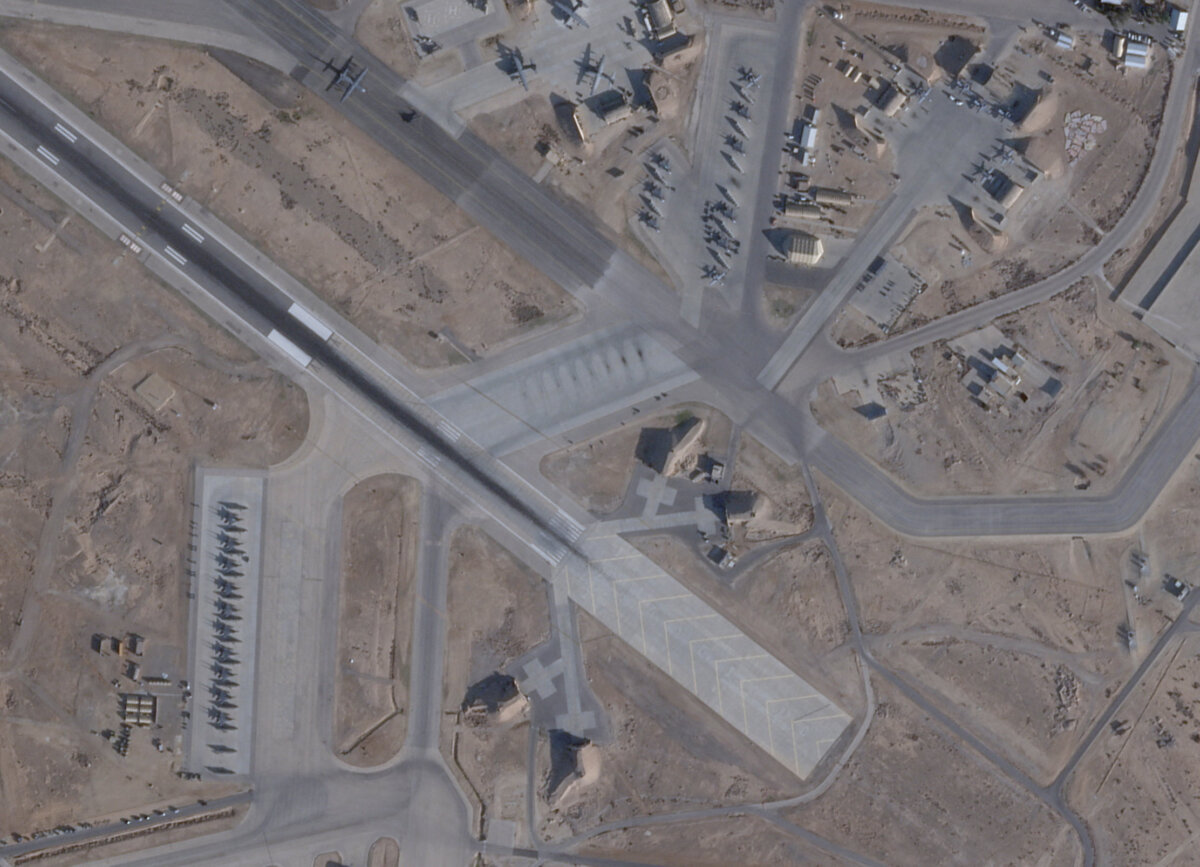
Additional images, published this week by the China-based commercial satellite image company MizarVision, showed at least 18 F-35 Lightnings and six EA-18G Growlers at the Muwaffaq Salti Air Base.
MizarVision identified at least 12 more F-16 Falcon fighter jets, although the United States and Jordanian air forces both operate these aircraft.
Potentially dozens of KC-135 Stratotanker and KC-46 Pegasus aerial refueling aircraft have been spotted this month at Al Udeid Air Base in Qatar and Prince Sultan Air Base in Saudi Arabia. A satellite image published by MizarVision on Feb. 19 showed 13 KC-135s and seven KC-46s at Prince Sultan Air Base.
In a conflict, aerial refueling aircraft such as the KC-135s and KC-46s could play a key role in sustaining strike aircraft and extending their range to carry out attacks.
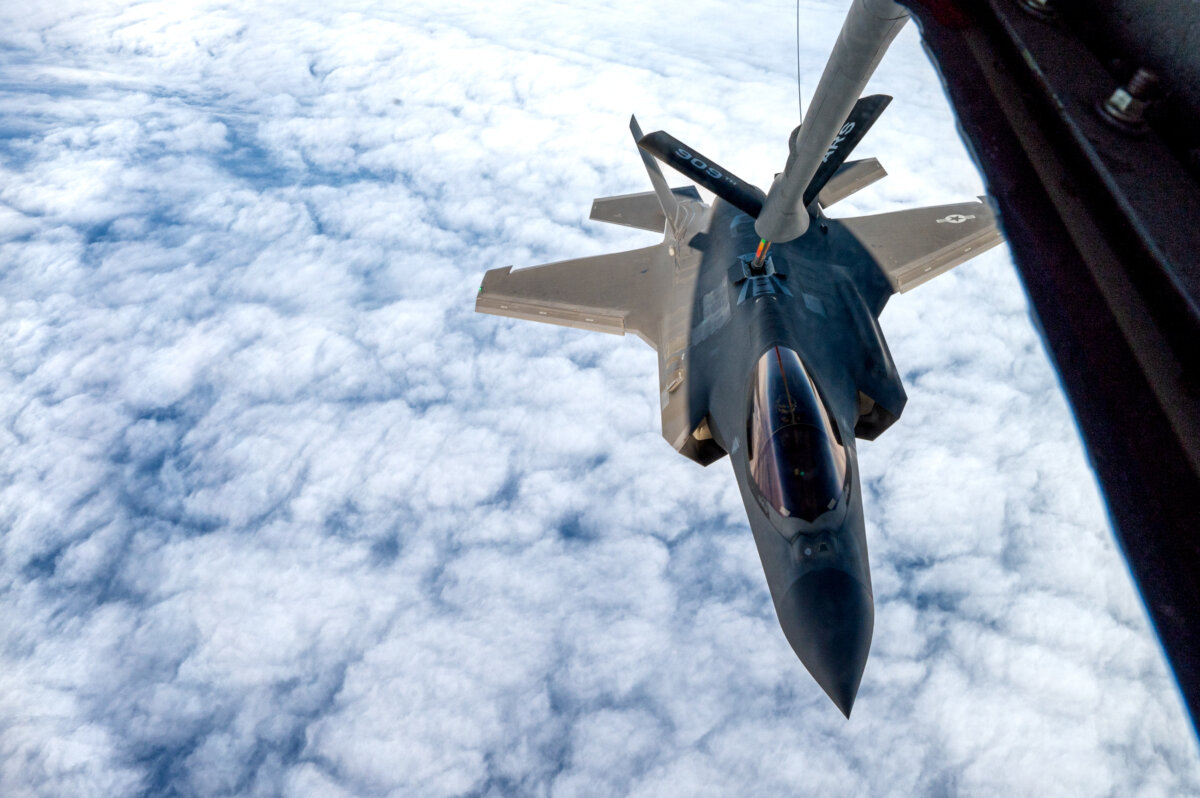
(Airman 1st Class Arnet Tamayo/U.S. Air Force via DVIDS)
U.S. forces may have other key strike aircraft positioned at Diego Garcia. For decades, the island, located in the Indian Ocean, has served as an airstrip for military aircraft operated by the United States and the UK.
The UK currently controls Diego Garcia and the surrounding Chagos Archipelago. This week, Trump urged UK Prime Minister Keir Starmer not to proceed with a deal to transfer control of the Chagos Islands to Mauritius.
“Should Iran decide not to make a Deal, it may be necessary for the United States to use Diego Garcia and the Airfield located in Fairford, in order to eradicate a potential attack by a highly unstable and dangerous Regime,” Trump wrote in a Feb. 18 Truth Social post.
The current framework for transferring control of the Chagos Archipelago allows for the UK to continue using Diego Garcia as a military outpost under a 99-year lease, and it could extend the lease by 40 years. Trump has said that a lease provides too tenuous an arrangement for operating from the territory.
Conflict Could Draw Weapons From Afar
Should Trump order military action against Iran, military planners could begin to draw assets from other nearby theaters.
The USS Roosevelt and USS Bulkeley, both destroyers, were operating in the Mediterranean Sea in recent weeks.
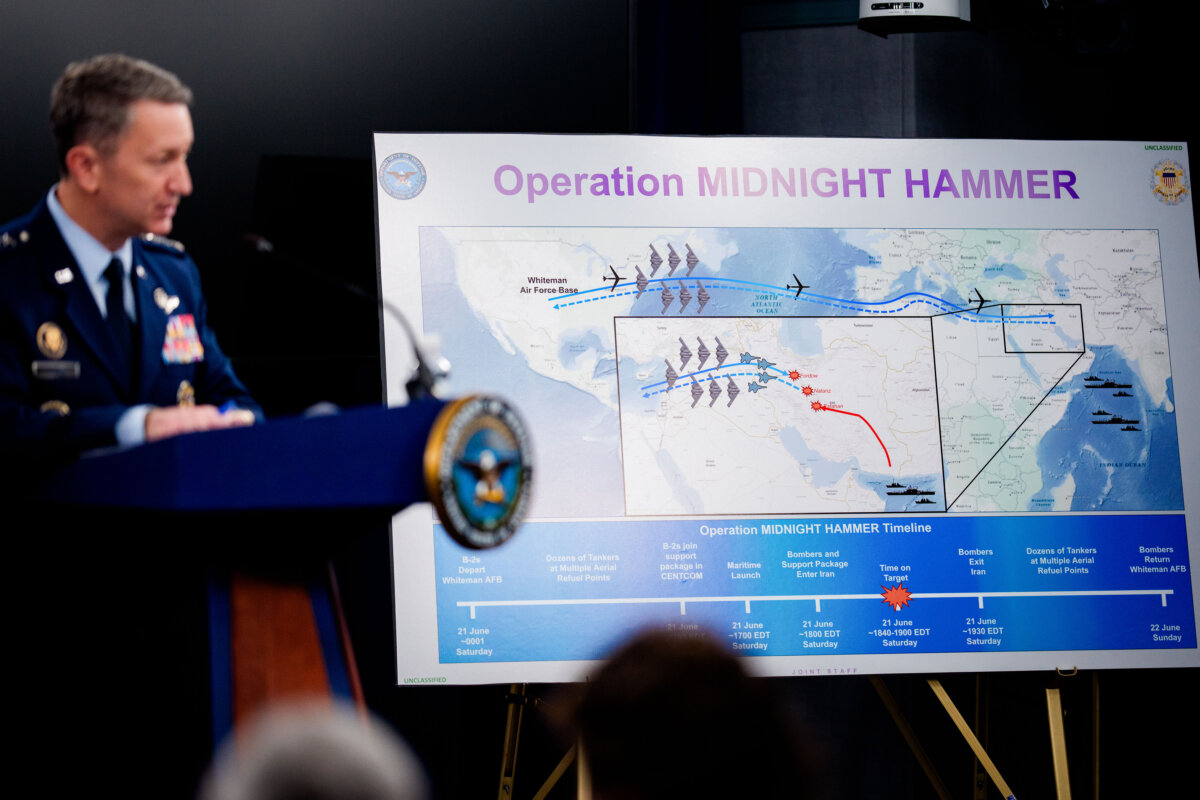
When Trump ordered U.S. forces to strike Iranian nuclear facilities in June, B-2 Spirit stealth bombers departed from Whiteman Air Force Base in Missouri and circumnavigated the globe to carry out the surprise attack.
The June 2025 strike on Iran also entailed a degree of misdirection; a separate set of B-2 bombers departed Whiteman Air Force Base and headed west toward the Pacific Ocean as decoys.
 Friends Read Free
Copy
Facebook
Tweet
Friends Read Free
Copy
Facebook
Tweet