
The U.S. State Department has ordered the withdrawal of nonessential personnel from the U.S. embassy in Lebanon amid heightened security concerns.
“We continuously assess the security environment, and based on our latest review, we determined it prudent to reduce our footprint to essential personnel,” a senior State Department official told The Epoch Times on Feb. 23.
While the State Department official did not specify the security concerns that prompted the staff drawdown at the embassy in Beirut, the move comes amid mounting tensions between the United States and Iran.
For weeks, U.S. forces have been amassing across the Middle East, as U.S. President Donald Trump has called on Tehran to submit to new security constraints. The president has threatened military action if no deal is reached, and Iranian officials have warned that they could respond in ways that would spread the conflict across the Middle East.
Tehran has historically partnered with and supported Hezbollah, a designated terrorist group based in Lebanon.
The State Department official who spoke to The Epoch Times described the latest security precautions as “a temporary measure intended to ensure the safety of our personnel while maintaining our ability to operate and assist U.S. citizens.”
For now, the State Department official said the embassy in Beirut remains operational with its core staff.
Trump has ordered two U.S. carrier strike groups to the Middle East. In recent weeks, dozens of U.S. warplanes and aerial refueling aircraft have also gathered at airbases across the region.
Speaking to a gathering of world leaders on Feb. 19, Trump noted the June 2025 U.S. strikes on Iran and said, “We may have to take it a step further.”
“You’re going to be finding out over the next probably 10 days,” Trump added during his Feb. 19 remarks.
In an interview with CBS News on Feb. 22, Iranian Foreign Minister Abbas Araghchi said Iranian Supreme Leader Ayatollah Ali Khamenei could approve a set of terms for a potential deal with the United States this week. Araghchi said he anticipates being ready to present the terms at a round of talks in Geneva, Switzerland, on Feb. 26.
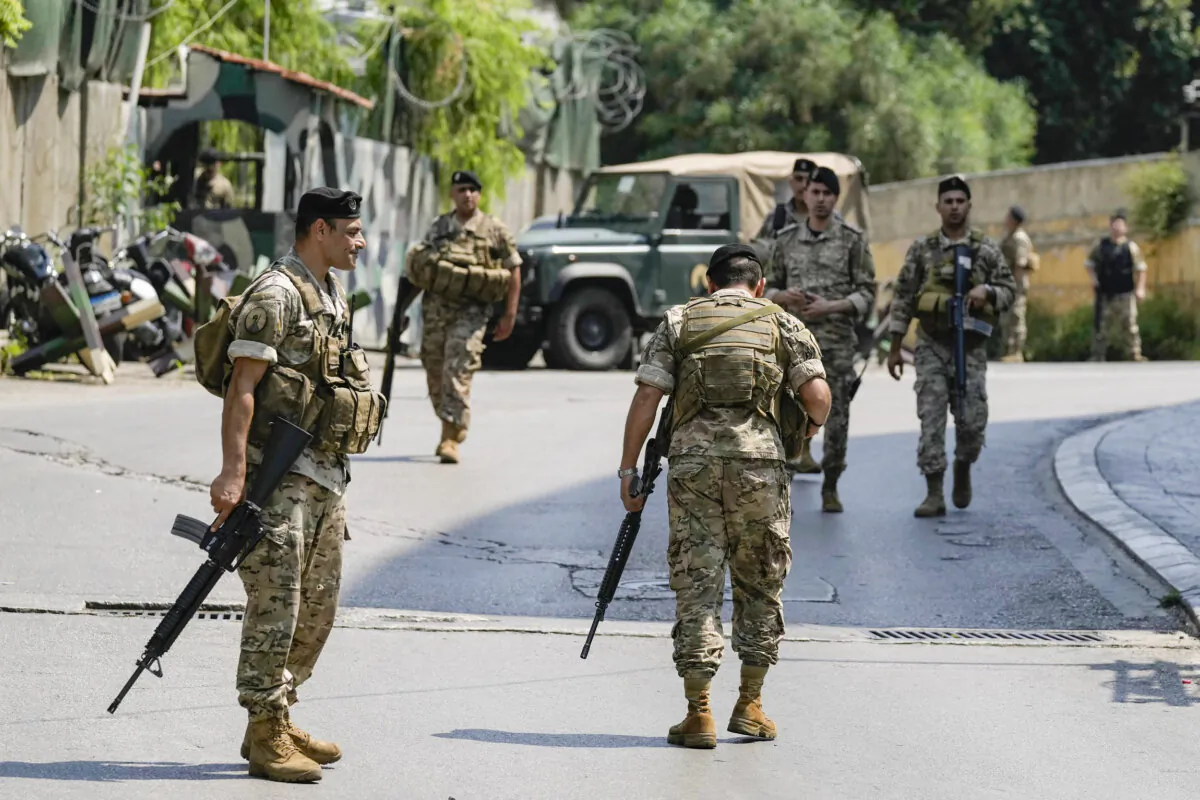
Lebanon has long been a venue for heightened regional tensions.
After the Oct. 7, 2023, Hamas attack on southern Israel, Hezbollah began launching rockets and drones at parts of northern Israel and contested areas along the Israeli–Lebanese–Syrian border, fueling cross-border skirmishes.
Israeli forces intensified attacks targeting Hezbollah leadership ahead of a ground assault into southern Lebanon in October 2024. Then-President Joe Biden’s administration brokered a cease-fire for Israel and Lebanon in November 2024, but Israeli forces have maintained a presence in southern Lebanon and have continued to conduct strikes on Hezbollah suspects.
 Friends Read Free
Copy
Facebook
Tweet
Friends Read Free
Copy
Facebook
Tweet