
The United States has begun decreasing the number of staffers present at its embassies in the Middle East because of heightened security risk.
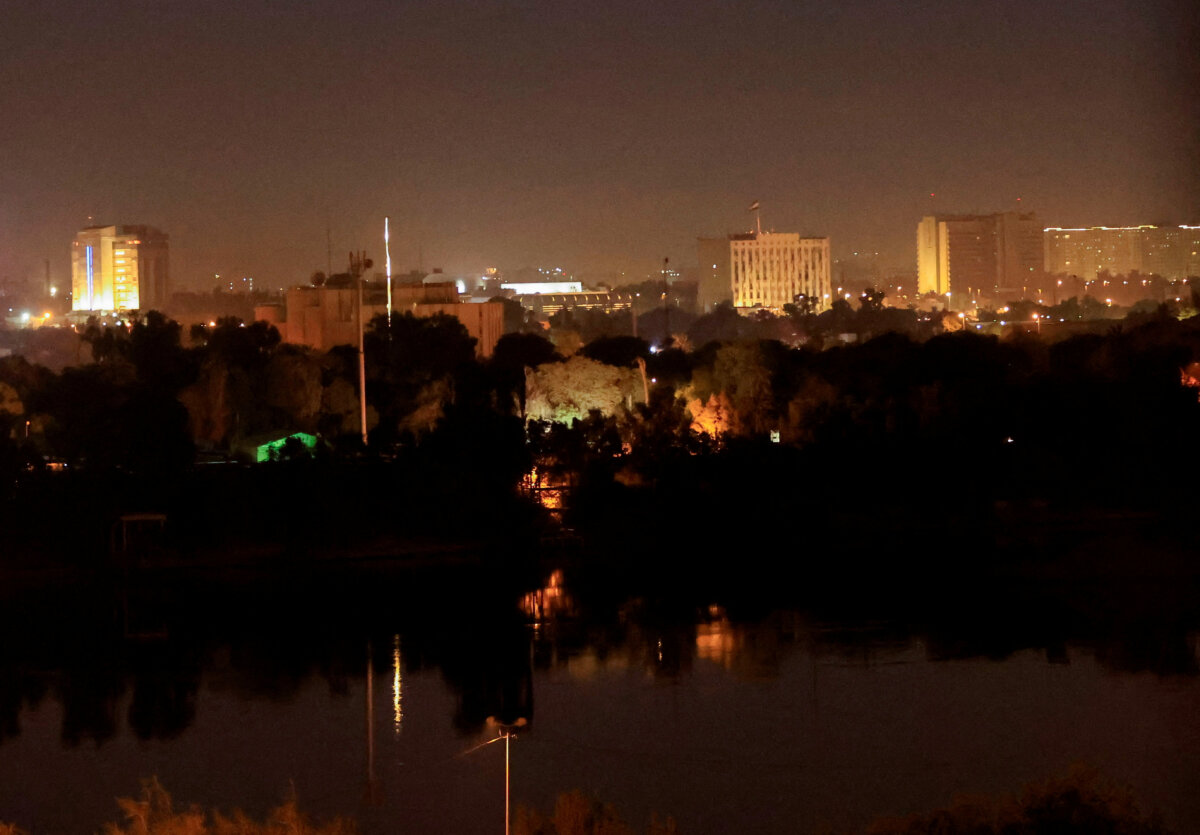
The State Department ordered the departure of all nonessential personnel and their families at the U.S. Embassy in Baghdad—which already has limited staffing—on June 11 after its latest review, citing its commitment “to keeping Americans safe, both at home and abroad.”
The Department of State updated its travel advisory for Iraq on June 11 to reflect the departure of non-emergency U.S. government personnel because of heightened regional tensions.
“Do not travel to Iraq due to terrorism, kidnapping, armed conflict, civil unrest, and the U.S. government’s limited ability to provide emergency services to U.S. citizens in Iraq. Do not travel to Iraq for any reason,” the advisory said.
The Department of State has also authorized the optional departure of nonessential staff and families from the U.S. embassies in Bahrain and Kuwait, which means that they would be able to evacuate at the government’s expense.
U.S. Central Command released a statement confirming that Defense Secretary Pete Hegseth “has authorized the voluntary departure of military dependents from locations” across the region, as it continues “monitoring the developing tension in the Middle East.”
White House deputy press secretary Anna Kelly first confirmed the moves, saying, “The State Department regularly reviews American personnel abroad, and this decision was made as a result of a recent review.”
President Donald Trump later confirmed the personnel move when asked about the reports by members of the press at the Kennedy Center.
“Well, they are being moved out because it could be a dangerous place, and we’ll see what happens,” he said.
The ordered and optional withdrawal of personnel comes amid rising tensions in the region surrounding ongoing efforts by the United States to stop Iran’s advancing nuclear program and ensure that it does not obtain a nuclear weapon.
Iran and the United States have already undergone five rounds of talks over the matter, and Trump has said that either Israel or the United States could launch airstrikes against Iran’s nuclear facilities if negotiations fail.
“They seem to be delaying, and I think that’s a shame,” Trump said in a recent interview. “I’m less confident now than I would have been a couple of months ago. Something happened to them.”
At the Kennedy Center on June 11, the president reiterated his position.
“They can’t have a nuclear weapon,” he said. “Very simple … we’re not going to allow that.”
Iran said that it was not seeking to develop a nuclear weapon.
“Iran is not seeking a nuclear weapon, and U.S. militarism only fuels instability,” Iran’s mission to the United Nations wrote in a social media post.
Iranian Defense Minister Gen. Aziz Nasirzadeh told members of the press on June 11 that he hopes talks with the United States are productive but that his country would be ready to respond in the case of a conflict.
“If conflict is imposed on us, the opponent’s casualties will certainly be more than ours, and in that case, America must leave the region, because all its bases are within our reach,” he said. “We have access to them, and we will target all of them in the host countries without hesitation.”
Meanwhile, a statement was issued by the Middle East-based United Kingdom Maritime Trade Operations center earlier on June 11, warning ships in the region that it “has been made aware of increased tensions within the region which could lead to an escalation of military activity having a direct impact on mariners.”
The Epoch Times has reached out to the State Department for further comment.
James Burke and The Associated Press contributed to this report.
 Friends Read Free
Copy
Facebook
Tweet
Friends Read Free
Copy
Facebook
Tweet