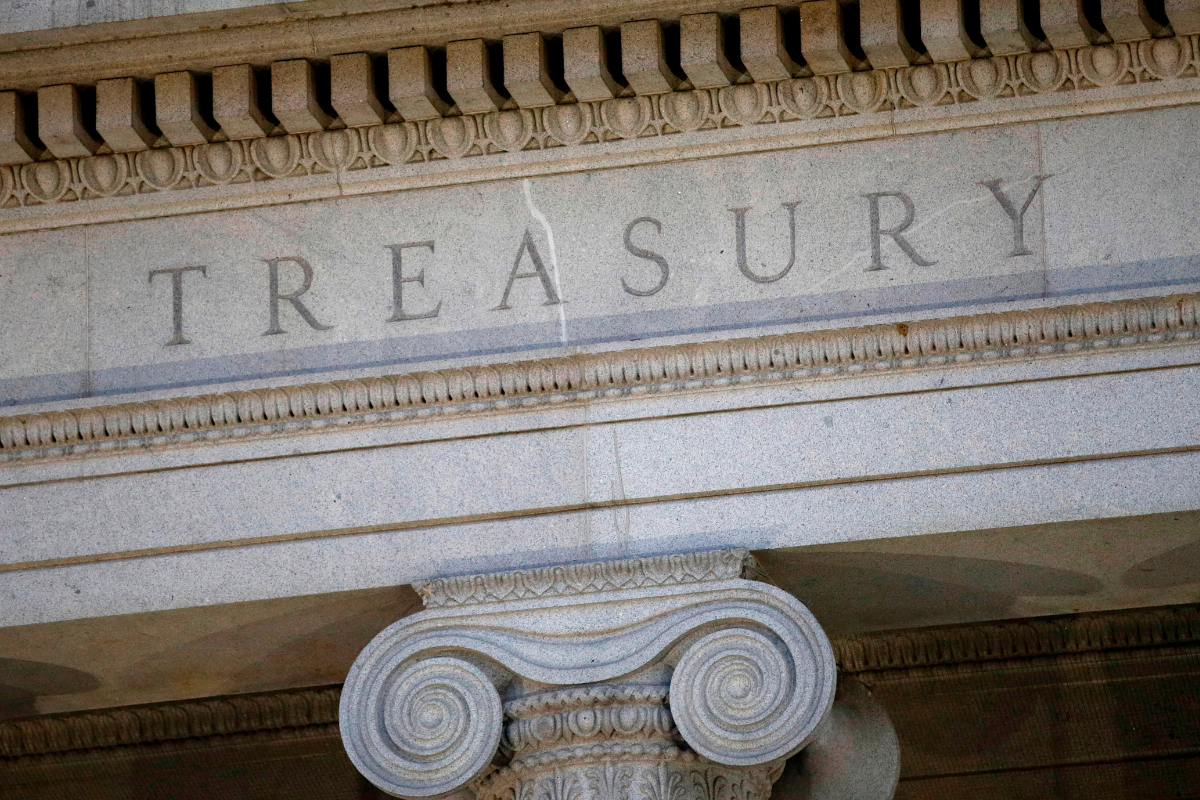

The U.S. Treasury Department on Wednesday sanctioned an international network of individuals and companies in Iran, Nigeria, Italy, and Russia for supporting weapons procurement efforts on behalf of Iran’s Islamic Revolutionary Guard Corps (IRGC). The action comes after a series of Iranian attacks on commercial vessels in the Strait of Hormuz in recent days.
The sanctions designate seven individuals and entities under Executive Order 13382, which focuses on proliferators of weapons of mass destruction and their supporters. They follow previous actions in May and June as part of the broader “Economic Fury” campaign to undermine Iran’s military supply chains.
“President [Donald] Trump has been clear that Iran must denuclearize,” Treasury Secretary Scott Bessent said in a statement. “Treasury will continue to target and disrupt the illicit procurement networks that fund Iran’s weapons programs and war machine.”
Behrouz Namazi, an Iranian national and general director of Tehran-based Nika Jet Company, which provides services for aircraft parts and drones, is alleged to have sought weapons for the IRGC. Nigeria-based Vanguard Tactical Supply Limited functioned as an intermediary, while Milan-based Italian national Dounia Ettaib handled procurement efforts, according to the department.
Russian national Mariya Vladimirovna Selina, head of the financial department at Moscow-based Avratek, an aviation transportation company, supported Namazi’s efforts. Russian Vadim Anatolyevich Druzhbin, also at Avratek, coordinated travel for Namazi and Selina and has previously participated in Iranian shipments.
The designations block all property and interests in property of those targeted that are in the United States or under U.S. persons’ control. U.S. persons are generally prohibited from transactions with them, and face potential civil and criminal penalties for violations. Foreign financial institutions risk secondary sanctions.
The sanctions align with National Security Presidential Memorandum 2, directing efforts to deny the IRGC resources. The State Department designated the IRGC under the same executive order over its ballistic missile program.
The move comes after Iran’s recent attacks on commercial shipping in the Strait of Hormuz and U.S. measures against Iranian shadow financial networks just days earlier.
On June 10, Treasury sanctioned nine individuals and entities, many China- and Hong Kong-based, working with IRGC and Ministry of Defense procurement, including through clandestine banking. Bessent underscored the need to undermine foreign networks assisting Iran’s military.
“Through Economic Fury, the Treasury Department is disrupting the foreign procurement networks that support the Iranian military’s efforts to acquire weapons,” Bessent said at the time.
On May 8, sanctions were levied against 10 individuals and companies across the Middle East, Asia, and Eastern Europe that had enabled weapons and drone components for Iran’s military, including networks tied to the Center for Innovation and Technology Cooperation seeking man-portable air-defense systems.
“While the surviving IRGC leaders are trapped like rats in a sinking ship, the Treasury Department is unrelenting in our Economic Fury campaign,” Bessent stated in that release.
The administration has maintained pressure on Iran through sanctions on financiers linked to Iran’s supreme leader and shadow currency networks in mid-July, as well as efforts aimed at Iranian oil and shipping.
These measures look to disrupt Iran’s ability to fund and arm its proxies and military posing threats to U.S. partners and global shipping. Treasury officials have warned of risks to entities facilitating Iranian activities, including in the Strait of Hormuz.
 Friends Read Free
Copy
Facebook
Tweet
Friends Read Free
Copy
Facebook
Tweet