

U.S. Vice President JD Vance on Monday said that text of a deal between the U.S. and Iranian governments to end a months-long war will soon be released, but added that some details need to be worked out.
“I think it’s a great day for the American people, because what this deal does fundamentally is two things. It immediately reopens the Straits of Hormuz. We’re already seeing in the past 24 hours more traffic flow, you see oil prices coming down, but you also have the long-term commitment that Iran will never develop or procure a nuclear weapon,” Vance told CNBC in an interview.
The text of the deal may be released this week, and will “make the whole region safer,” Vance said, referring to the Middle East.
Vance added in the interview that “there are a lot of very important details to figure out that we’re actually going to sit at the table and discuss together.”
“Our expectation is that the strait is going to be opened in a toll-free way for the long term,” he said. “And that’s the sort of thing that we’re going to figure out in these technical negotiations.”
Vance said that during 60-day-long talks between the two parties, the United States still has “diplomatic, economic, and military leverage” over Tehran. “But we also are extending an open hand to the Iranians and saying, if you guys negotiate in good faith and you make that long-term commitment not to develop nuclear weapons, then we are going to make sure that your country is successful,” he added.
“If, however, you refuse to meet us halfway, then we’re going to continue to apply the pressure that we’ve seen build up economically, in particular, and that’s going to be bad for them, and fundamentally it’s going to be bad for the region,” the vice president said. “So we hope they make the right choice. We feel pretty confident about where we are.”
U.S. President Donald Trump, who had earlier said the blockaded Strait of Hormuz is opening up for oil traffic, announced on Sunday that the two parties came to an agreement, effectively ending months of talks to get to that point.
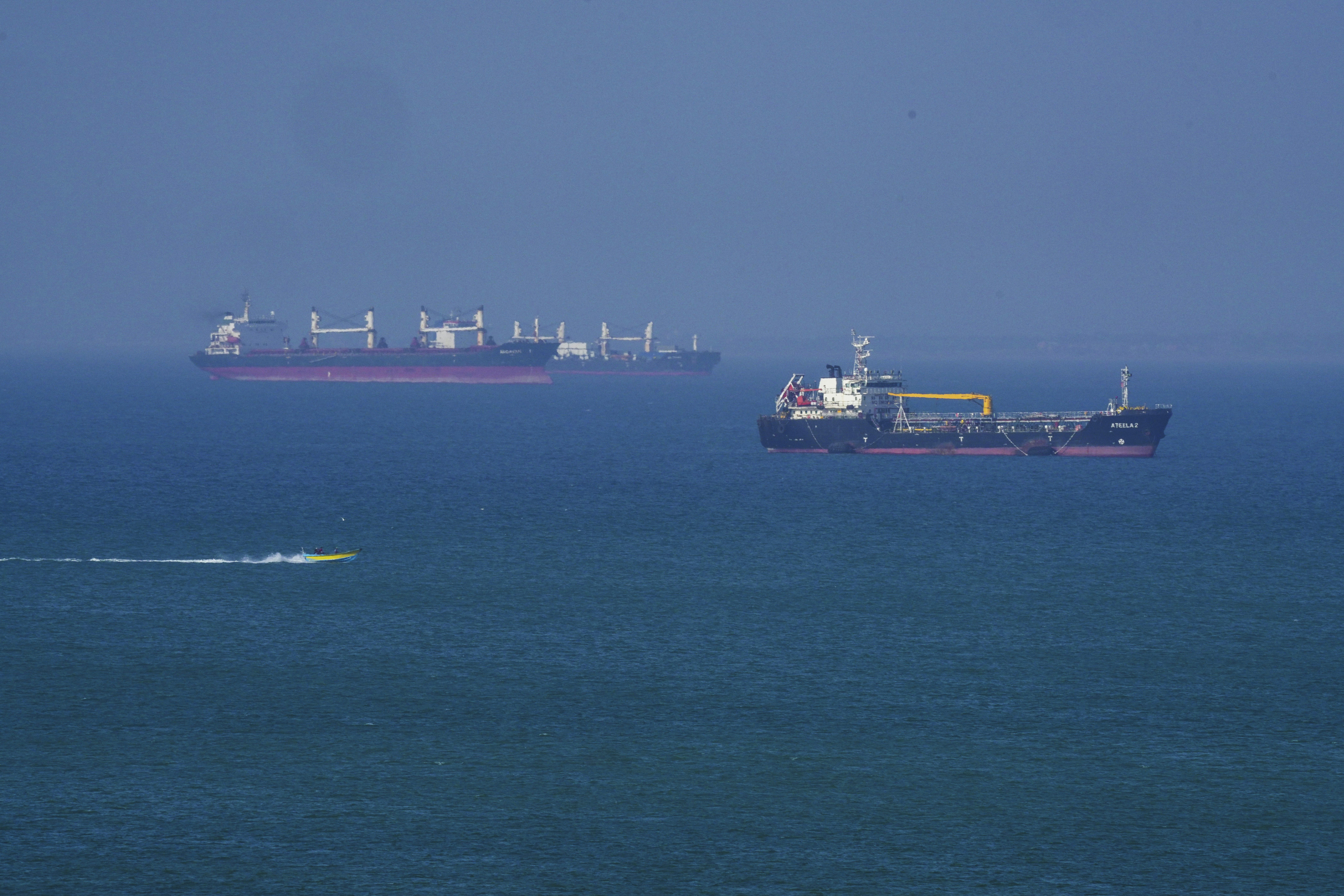
The strait, which connects the Persian Gulf to the wider ocean, has effectively been shut down since the start of hostilities on Feb. 28, although U.S. officials have said they were “recently” able to use other means to transport millions of barrels of oil out of the region.
The U.S. military also imposed a blockade on Iran’s ports. As of Sunday, 142 ships had been redirected, and nine vessels that declined to comply with the blockade had been disabled, the U.S. military has said.
 Friends Read Free
Copy
Facebook
Tweet
Friends Read Free
Copy
Facebook
Tweet