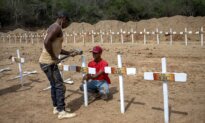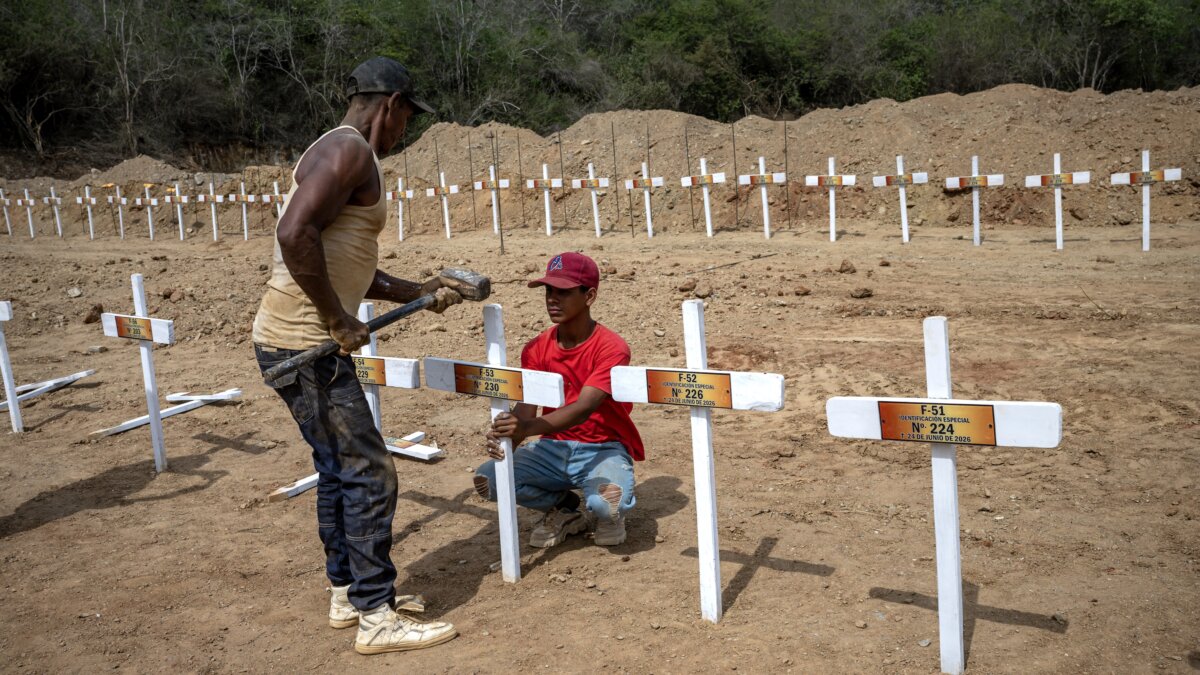

The death toll from Venezuela’s twin earthquakes has risen to 3,342, according to a July 5 update from the Venezuelan Ministry of Communication.
The ministry also reported 16,470 people injured and 17,345 displaced from their homes due to the damage and unstable buildings.
Now, 12 days after the devastating June 24 quakes, 30,388 people remain missing, with 13,814 having been located, according to Desaparecidos Terremoto Venezuela, a website that allows Venezuelans to self-report missing loved ones.
The Venezuelan government also said that nearly 30,000 officials had been deployed to help people affected by the quakes, alongside more than 3,000 international rescue workers.
Venezuelan Interim President Delcy Rodriguez said in a July 5 speech commemorating Venezuela’s 215th independence day that the government continues to work around the clock with civilians and foreign rescue teams to assist those affected by the disaster.
Despite the diminishing chances of survival, locals are continuing search-and-rescue efforts.
On July 4, a team of civilians managed by Alexander Delgado, who is usually a physical education teacher in the neighboring state of Aragua, was still trying to pull victims out of the rubble at a collapsed public housing complex in the state of La Guaira.
The state—north of the capital, Caracas, in north-central Venezuela—was hardest hit by the quakes. It has been formally declared a disaster zone.
Miguel Poleo, a mechanic, joined the crew to search for his stepdaughter and her family. So far, he has only located their dog, dead in the rubble.
“I don’t think they’re alive anymore,” he said as he rested after pulling debris out of a tunnel.
Poleo and Delgado both said they would stay until all the victims are found.
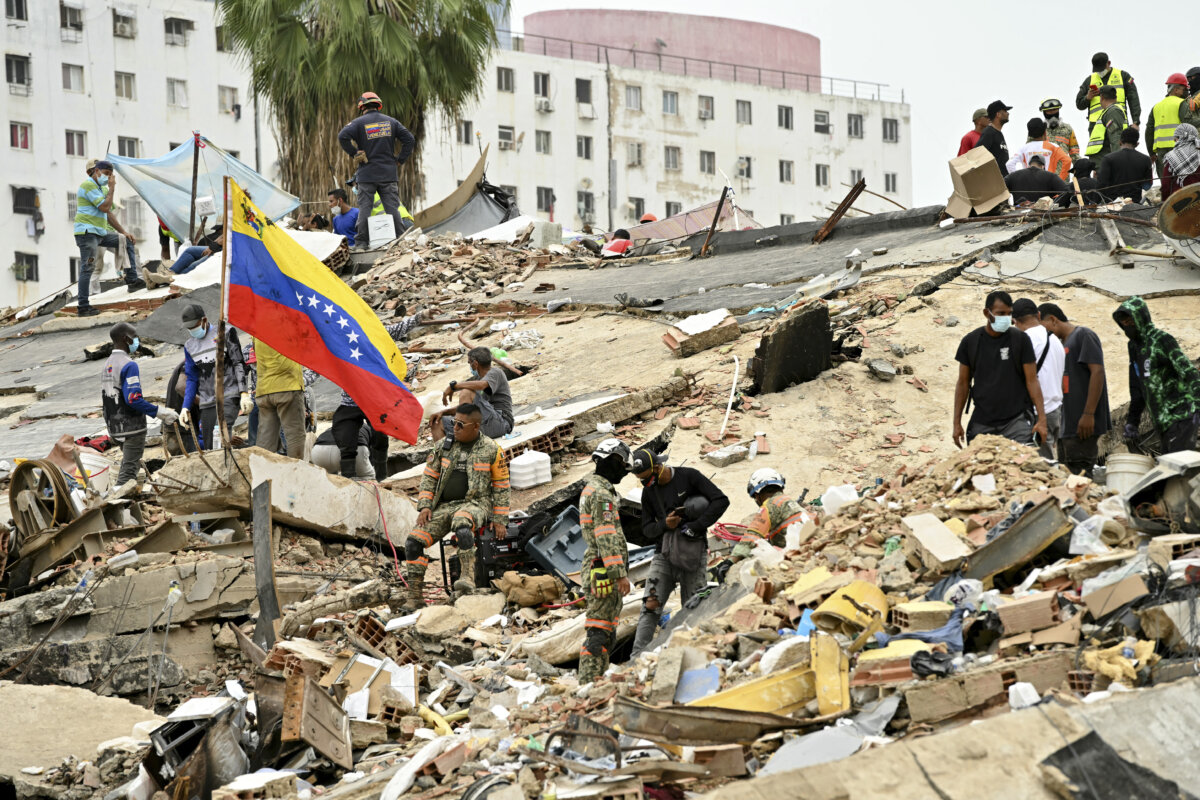
Poleo said he wants to give his wife the chance to bury her daughter and grandchildren.
“We need to find the bodies,” he said.
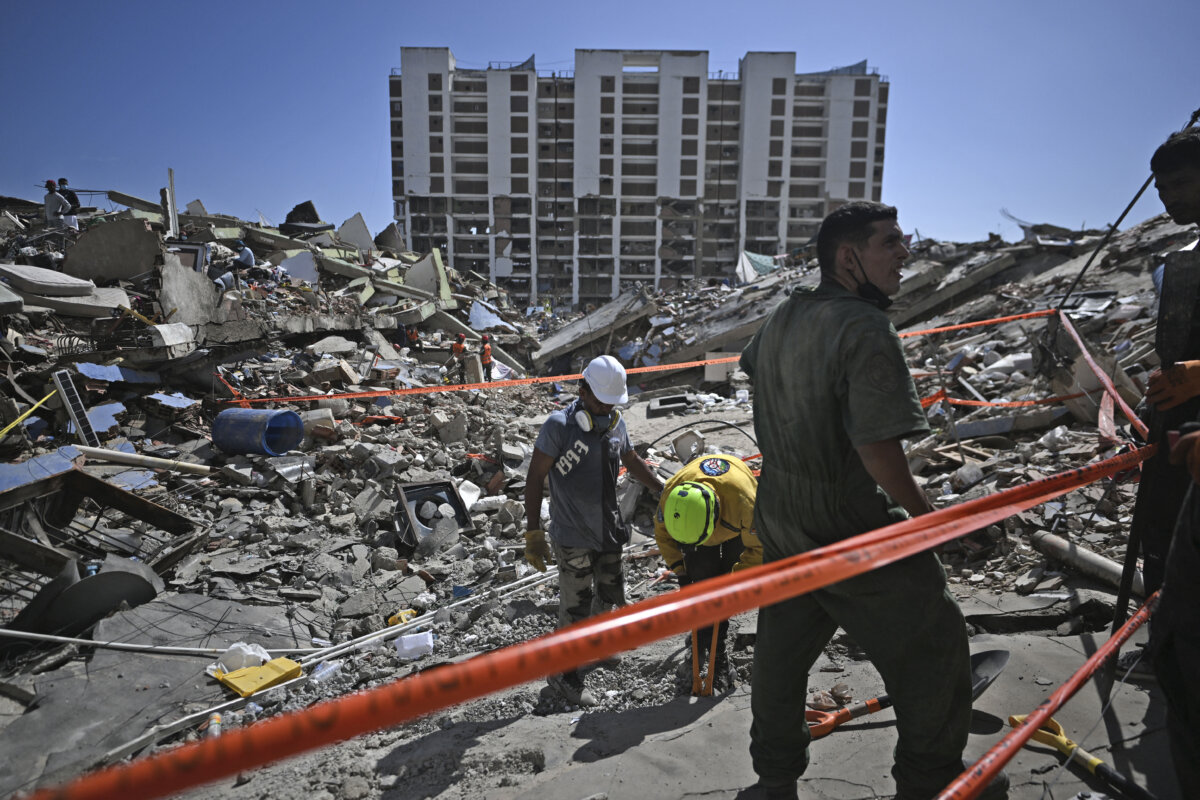
International rescue teams have slowly started packing up to go home as efforts shift from live rescues to recovery.
The nation’s spirits were lifted on July 2 when rescuers pulled 43-year-old security guard Hernán Alberto Gil Flores alive from a collapsed basement after a grueling, days-long rescue effort that became a symbol of hope.
Dr. Peter Holz, the medical director at a La Guaira field hospital run by disaster relief group Samaritan’s Purse, part of the U.S. State Department’s coordination with several groups providing aid in Venezuela, said on July 4 that it had treated some 400 patients so far.
“In the beginning, it’s all trauma from the earthquake, then we will have follow-up surgical visits,” he said from inside the hospital’s pharmacy, erected over what is normally a baseball field.
Gradually, the Samaritan’s Purse 100-person team will hand over operations to local doctors, either continuing to operate at the field site or integrating all their equipment and supplies into local clinics, where they will remain permanently, Holz said.
“It will develop more into a community health center,” he added. “There’s a lot of sad stories but also a lot of hope in the midst of all of it.”
On July 5, Venezuela’s Independence Day, U.S. Secretary of State Marco Rubio said: “We hold in our hearts and are united in prayer for the Venezuelans affected by the recent devastating earthquakes. Their courage and unity in the face of tragedy reflect the Venezuelan people’s enduring resilient spirit.”
He said the Fairfax County Fire and Rescue Department, the Los Angeles County Fire Department, Miami-Dade Fire Rescue, and the City of Miami Department of Fire-Rescue had activated to assist with response and recovery efforts and to deliver aid.
“Amid this difficult time, we look forward to continuing the work towards a stable, prosperous, and democratic Venezuela aligned with the United States,” he said.
Reuters contributed to this report.
 Friends Read Free
Copy
Facebook
Tweet
Friends Read Free
Copy
Facebook
Tweet