
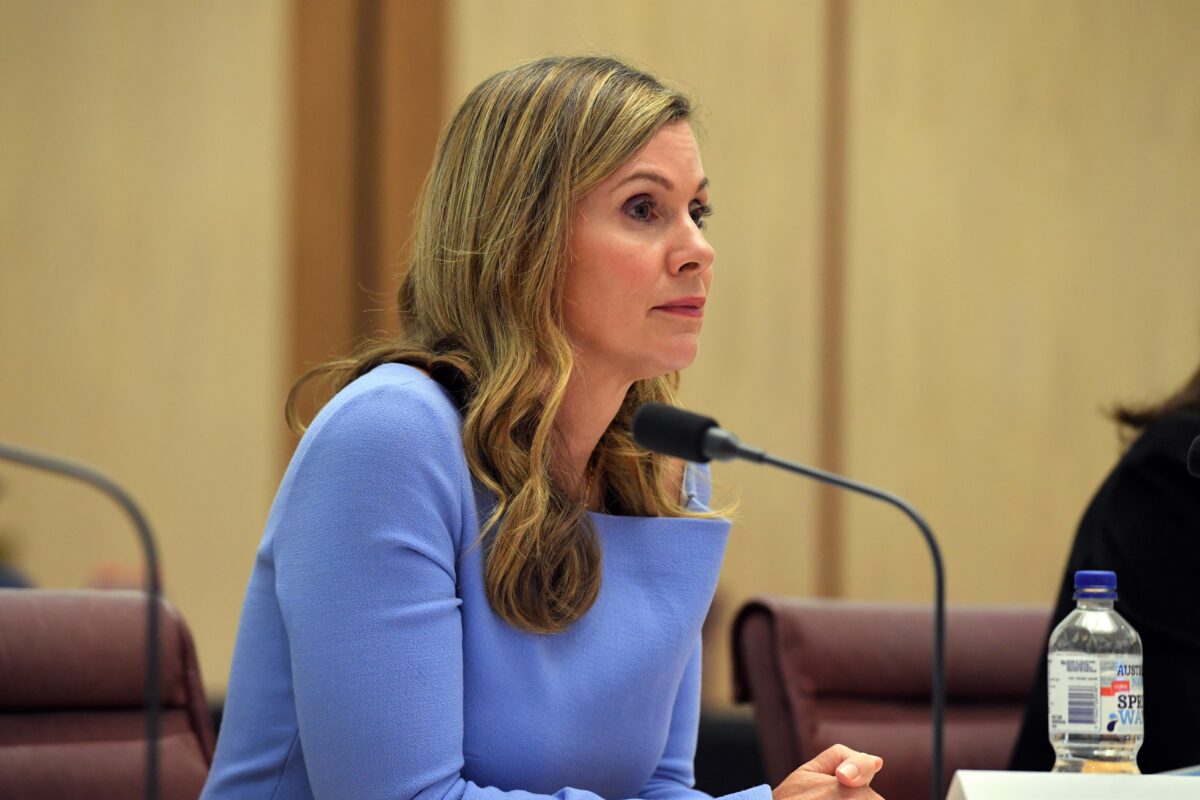
A world in which artificial intelligence vets what people are allowed to see online has been advocated at the World Economic Forum (WEF) in Davos by Australia’s eSafety commissioner Julie Inman Grant.
For the next two years, WEF speakers identified misinformation and disinformation regulation as a major priority.
A former employee of Microsoft, Twitter (now X), and Adobe, Commissioner Inman Grant is a regular attendee at the Forum each year.
Speaking as part of a panel called, “Protecting the Vulnerable Online,” the commissioner extolled the advantages of a global regulatory coalition, which would impose “safety by design” regulations on online platforms, placing them under government control.
Ms. Inman Grant claimed preventive measures, education, and research were all vital in regulating online spaces, while comparing decisions (by platforms like X) to un-ban previously banned accounts, to allowing dangerous drivers on the roads without seatbelts or traffic laws.
She drew another analogy with a decision by her former employer, X Corp, to cut its safety engineers by 80 percent, its content moderators by 30 percent, and public policy staff by 70 percent.
“So it’s like Volvo firing their designers, their engineers, and then not letting the traffic infraction people in the ambulance,” she said.
She revealed content regulators in several countries had formed an alliance called the Global Online Safety Regulators Network, mentioning Ofcom in the UK, Ireland’s Online Safety Commissioner, and the DSA in Europe.
“While political decisions and cultural context and history will determine what is considered safe or what is considered harm in any given country, we’re starting those efforts now,” she told delegates.
WEF regular, Julie Inman Grant (Australian eSafety Commissioner) boasts about the establishment of an AI-powered global government regulatory coalition created to bring online platforms under tighter control through safety by design regulations.
Grant, a former Twitter employee,… pic.twitter.com/jhJC4cg2sU
— Rukshan Fernando (@therealrukshan) January 17, 2024
Force Tech Giants to ‘Do Better’ With Online Safety: Commissioner
Ms. Inman Grant believes regulators such as her are “starting from behind” and that “we as governments” need to co-operate to “counter the wealth, the stealth and frankly, the power of all these technology companies and … really force them to do better.”
She has already issued a legal notice to X Corp demanding answers on how it was meeting the Australian government’s safety expectations.
Despite the platform responding as required, Ms. Inman Grant went on to issue a $610,500 fine for failing to answer “key questions” about the action X was taking against child abuse content.
Google has also provided “generic” responses, but was warned rather than fined, while the commissioner said she found TikTok, owned by a firm named ByteDance which has ties to the CCP, to be “above all, more transparent than the others.”
That’s despite the app been banned from all federal government-owned devices after security concerns were raised by the Department of Home Affairs.
Similar bans apply in New Zealand, Canada, Belgium, the Netherlands, Norway and the UK amongst others. Even the Taliban has banned it.
She previously said she would endeavour to uncover the personal details of users operating accounts that were “the most egregious, repetitive spillers of hate,” in comments to the ABC.
“What we want to know is, who are these accounts? Are they given special dispensation? Are they able to tweet without (sic) immunity, particularly if they’re paying for a Twitter blue subscription … without lifting the hood and using these transparency powers, we really don’t know what’s happening”.
At the WEF last year, Ms. Inman Grant said she felt there needed to be “a recalibration of a whole range of human rights that are playing out online … from freedom of speech to … the right of data protection.”
 Friends Read Free
Copy
Facebook
Tweet
Friends Read Free
Copy
Facebook
Tweet