A leading astronomer says he would settle for UFO research funding if it meant the federal government would take space research seriously.
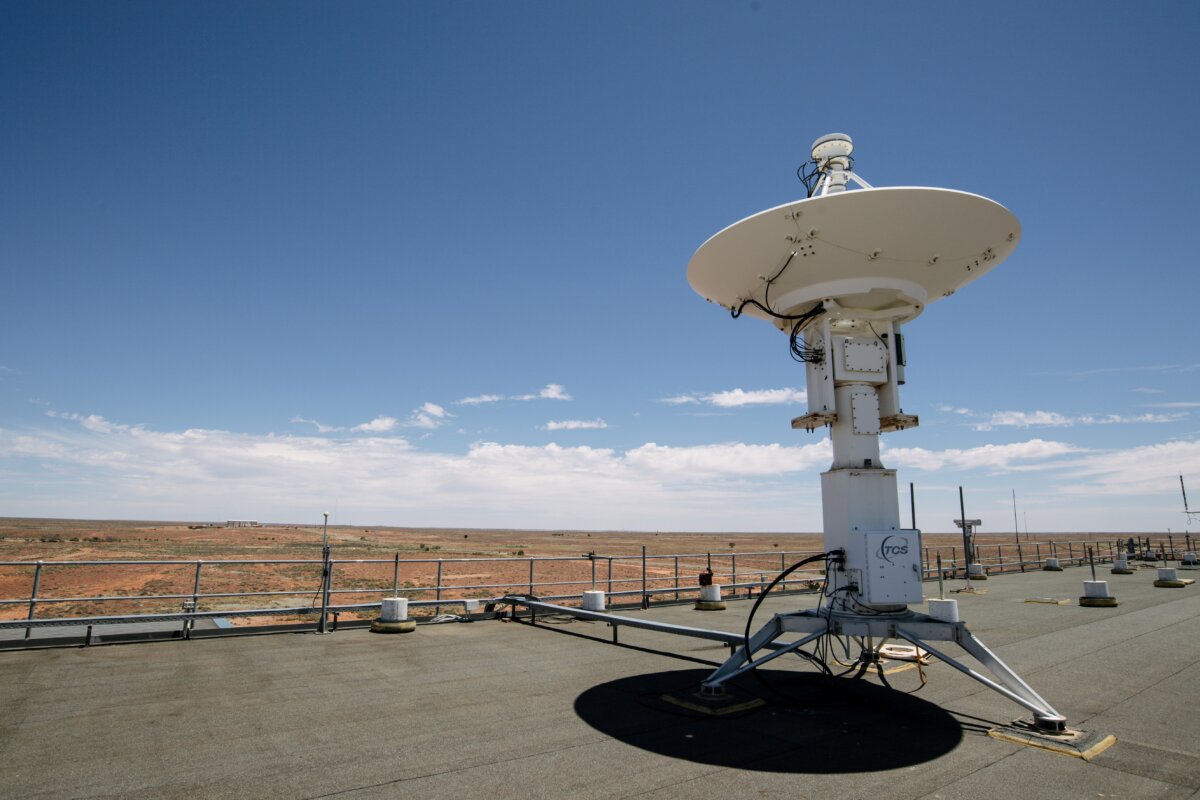
A newly released government “statement on space,” launched by Industry Minister Tim Ayres, commits Australia to more ambitious work on research services, flights, agriculture and exploration technologies.
But Australian National University professor Brad Tucker said the statement, which so far does not commit any new funding to the sector, was the equivalent to “buying a box of bandaids” without even sticking one on.
“I’ll take whatever [money] we can get,” Tucker said.
“At least if you’re tracking UAPs [Unidentified Anomalous Phenomena] or UFOs, you’re also tracking space junk. That’s situational space awareness.”
The Australian Space Agency’s budget has been cut by more than 50 percent since 2024, which Tucker said indicated the sector was “quite far down the totem pole” for priority research areas.
“We bat really far above our average. We do a lot better than our population size would indicate, but we have to have things in place to support it,” he said.
“It does seem that space is not a priority for the federal government.”
Labor’s strategy will include faster approval of space projects, as the nation races to keep up with places like India and the United States.
Australian companies were building capability in rockets, satellites, positioning and advanced navigation technologies, hypersonic aircraft, robotics and advanced manufacturing, Senator Ayres said.
The government hopes Australia can become the preferred location for rocket launches and returns in the Indo-Pacific, given its geographical advantages and world-class research institutions.
“This focus is intended to support industry, government and partners to better understand where the Australian space industry can contribute to a more competitive, productive and resilient economy,” the statement says.
By Lucinda Garbutt-Young in Canberra
 Friends Read Free
Copy
Facebook
Tweet
Friends Read Free
Copy
Facebook
Tweet