News Analysis
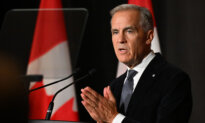
Prime Minister Mark Carney has been trying to forge closer ties with Europe amid uncertainty in the U.S.-Canada relationship, but his recent comments on the Israel-Palestine conflict suggest Ottawa will not be immediately following the path taken by Paris and London on the issue of Palestinian statehood.
French President Emmanuel Macron announced last week his country would recognize Palestinian statehood at the upcoming U.N. General Assembly in September. UK Prime Minister Keir Starmer on July 29 threatened that he would follow suit unless Israel agreed to a ceasefire in Gaza.
Carney was asked by reporters on July 28 whether Canada will also move to recognize a Palestinian state. The prime minister did not provide an unequivocal “yes or no” answer, but by saying Hamas cannot have any role in the governance of Gaza, he established a clear and, at this stage, difficult-to-reach condition.
France and the United Kingdom will become the first countries in the G7 to recognize Palestine as a state if they follow through on their pledges. Currently around 75 percent of the United Nations members recognize Palestine.
Macron said in his announcement he had confidence in Palestinian Authority President Mahmud Abbas’ commitment to peace. Abbas controls the West Bank, while Hamas rules over the Gaza Strip.
Whereas Macron did not establish any conditions for the state recognition, Starmer set up several. He said the UK will recognize Palestine unless the Israeli government takes “substantive steps to end the appalling situation in Gaza, agree to a ceasefire and commit to a long-term, sustainable peace, reviving the prospect of a Two State Solution.”
Israeli Prime Minister Benjamin Netanyahu has strongly condemned the move to recognize Palestinian statehood, saying it “rewards terror and risks creating another Iranian proxy, just as Gaza became.”
Israel has been trying to eliminate Hamas after it conducted raids inside Israel in October 2023, killing 1,200 and kidnapping 251.
‘Two-State Solution’
Speaking to reporters on July 28, Carney said that the “deplorable terrorist attacks” by Hamas are what caused the current situation, with Gaza facing a humanitarian crisis after nearly two years of Israeli military operations.
“We’ve always supported, and we continue to support, a two-state solution with a free and viable Palestine living in peace and side by side in peace and security with Israel,” Carney said.
He added Canada will work with the international community to reach those criteria.
“That does not include Hamas in any role in a future Palestinian state, and we will take steps that advance those fundamental principles at the appropriate time,” said Carney.
These comments were welcomed by Israel and Jewish advocates, who had previously criticized the Liberal government for some of its postures on the Israel-Hamas war, such as voting in favour of resolutions critical of Israel at the United Nations.
The Centre for Israel and Jewish Affairs said it welcomed Carney’s “commitment” to “taking steps to advance a future for the Palestinians that is free from Hamas.”
It is not evident at this stage how Canada will attain its objectives of having a Palestinian state in which Hamas plays no role. It is also not easy to envision a situation where Israel effectively accomplishes its goal of defeating Hamas militarily.
A lasting solution would likely go through a political settlement.
Talks
Such efforts were revived this week at the United Nations in New York with a high-level conference aimed at reaching a peace settlement and implementing a two-state solution between Israel and Palestine. The conference is co-chaired by France and Saudi Arabia and not attended by the United States and Israel.
Other talks to reach a ceasefire between Israel and Hamas, and mediated by the United States, Qatar, and Egypt, have not been successful.
The United States and Israeli sides pulled out of talks in Qatar last week, accusing Hamas of not negotiating in good faith. Hamas reciprocated the same accusation afterward.
The messaging from the United States and Israel has since hardened, with U.S. President Donald Trump saying Israel would have to “finish the job” with Hamas. Meanwhile, Netanyahu said he was considering “alternatives” to freeing the hostages and defeating Hamas.
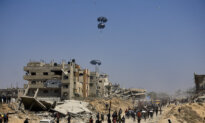
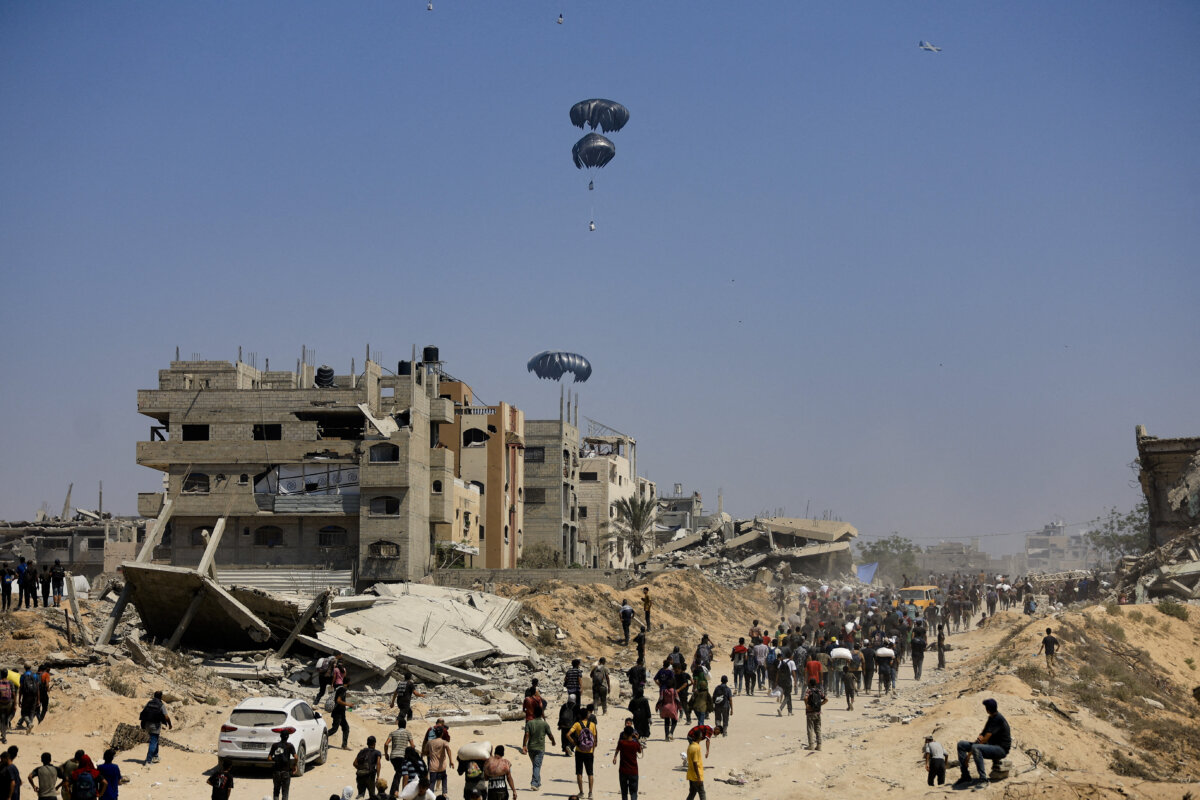
After the ceasefire talks broke down last week, Carney issued a strongly worded statement accusing Israel of violating international law by denying humanitarian assistance, leading to a “disaster” in Gaza. Israel said the U.N. was not doing its job distributing aid, but has since increased deliveries including by air drops. The U.N. said Israel would not facilitate all its deliveries and mentioned factors such as violence and looting that were preventing distribution.
Carney also called on Hamas to release all hostages and for the Israeli government to “respect the territorial integrity of the West Bank and Gaza.”
The concerns being raised about the integrity of the West Bank have been a regular occurrence given the longstanding encroachment by Israeli settlers. This situation has not been replicated in the Gaza Strip, a fenced-in enclave under the rule of terrorist group Hamas since 2007.
 Friends Read Free
Copy
Facebook
Tweet
Friends Read Free
Copy
Facebook
Tweet