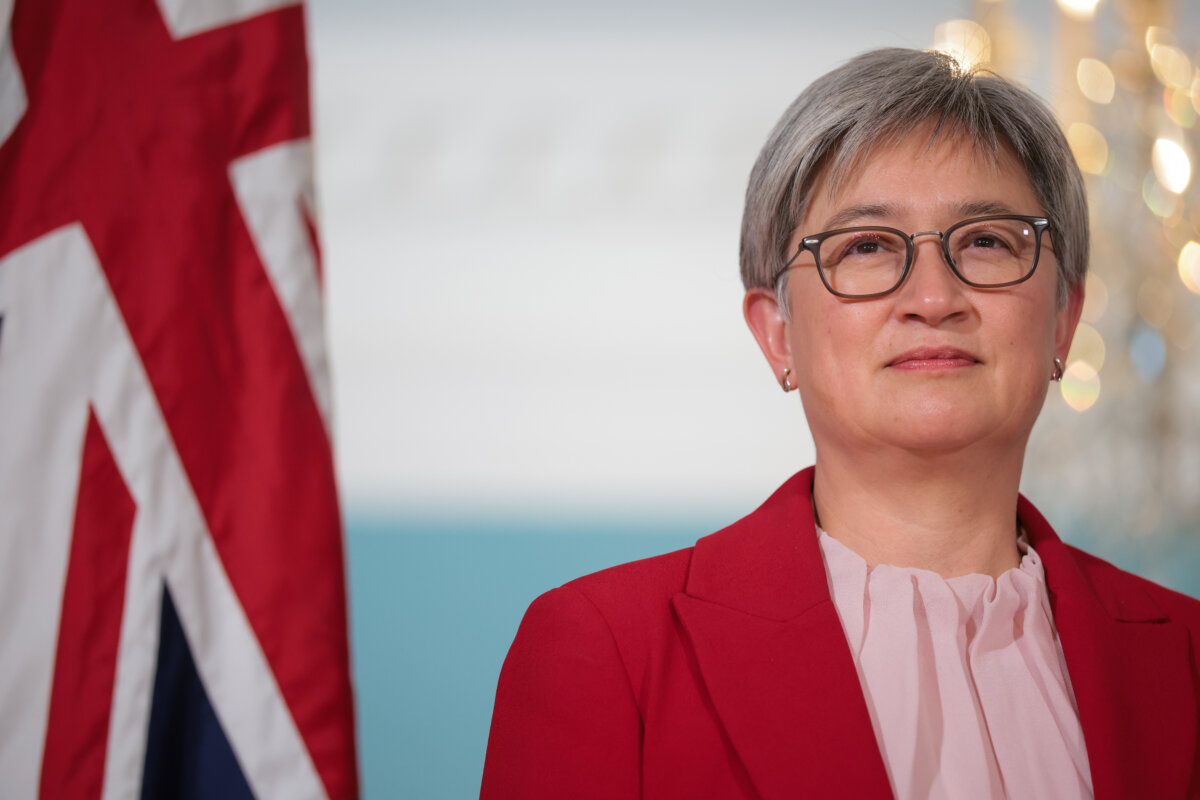

AI’s extraordinary promise could give way to major risks, Australia’s Foreign Minister Penny Wong told the U.N. Security Council, warning the technology must not be left unchecked in military or nuclear domains.
“AI’s potential use in nuclear weapons and unmanned systems challenges the future of humanity,” Wong told delegates in New York on Sept. 26 (AEST).
“Decisions of life and death must never be delegated to machines,” she added.
While praising AI’s promise in areas such as education, health, and climate, Wong cautioned that the same technology posed significant risks if deployed without safeguards.
“These weapons threaten to change war itself and they risk escalation without warning,” she said.
‘Collapse of Truth’: Wong Concerned with AI-Generated Reality
Her concerns stretched beyond battlefields, pointing to AI’s role in spreading disinformation.
“While once we grappled to discern fact from propaganda, we are now witness to a collapse of truth altogether,” she said.
“Content deliberately designed to deceive is now almost indistinguishable from reality. False voices, fabricated images, manufactured narratives, algorithms amplifying fiction masquerading as fact. And together, this risks destabilising societies and deepening divisions.”
U.N. Secretary-General António Guterres reinforced the concern, telling the Council: “The ability to fabricate and manipulate audio and video threatens information integrity, fuels polarisation and can trigger diplomatic crises … humanity’s fate cannot be left to an algorithm.”
Australia Pushes for AI Standards
Wong urged the Council to establish international rules ensuring AI is “safe, secure, responsible and ethical.”
She cited the Republic of Korea–Netherlands “Responsible AI in the Military Domain Summit” as a model for global cooperation, and highlighted Australia’s support for a related UN resolution.
“The Security Council must lead by example—to strengthen international peace and security and ensure it is not undermined,” Wong said.
Her intervention comes as Australia campaigns for a non-permanent seat on the Security Council in 2029–30. She argued that middle powers must help shape AI governance, pointing to Canberra’s investment in digital resilience.
“As this Council turns 80, let us recommit ourselves to the U.N. Charter … working together to ensure AI serves humanity, and ensuring the digital future is one of peace and security. Building a tomorrow worthy of our children,” she concluded.
AI’s Economic Impact
AI was a central theme at last month’s Productivity Roundtable, where Treasurer Jim Chalmers struck a cautious balance.
“I’m optimistic that AI will be a force for good, but realistic about the risks,” Chalmers said.
In an opinion piece, he argued AI would reshape the economy by cutting information-processing costs and accelerating problem-solving.
Tools such as eBay’s AI translation service, he noted, were already boosting global trade, while cheaper R&D could spur innovation and GDP growth.
While concerns about job losses remain, Chalmers said early studies suggest AI may enhance rather than replace human work.
 Friends Read Free
Copy
Facebook
Tweet
Friends Read Free
Copy
Facebook
Tweet