
News Analysis
In the early days of Ottawa’s frantic push to dissuade the incoming Trump administration from imposing sweeping tariffs, cabinet ministers began reusing a term that hadn’t been in the government’s lexicon since mid-2018: “illegal migration.”
Prior to this, the government called it “irregular migration,” in line with the shift in language south of the border under the previous administration to be more “inclusive” regarding these issues, as well as the media adopting the term in their style guides since the mid-2010s.
The same trend was seen when the Liberal government started using the term “carbon tax” earlier this year once it decided to drop the measure, as it had proved politically costly. Up until then, the government had termed the levy “pollution pricing” or “carbon pricing.“
This in turn influenced how the media covered the taxing policy, with some outlets putting quote marks around the term “carbon tax,” and some preceding it with the phrase “so-called.”
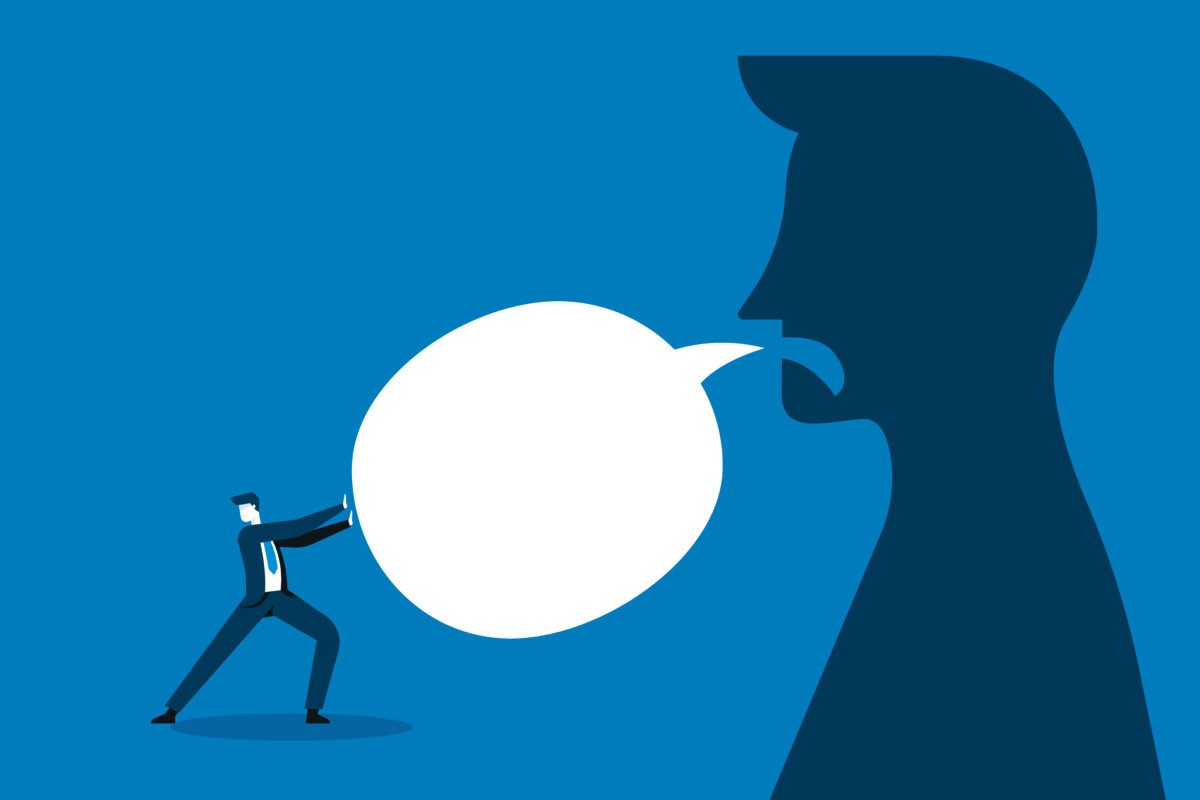
Marco Navarro-Génie, president of the Haultain Research Institute, says it’s worrisome that when governments employ certain words in an effort to change perceptions, the media and even in some cases the education system go along with the trend.
“Words matter. The words that we use have an experiential connection to what we call reality,” he told The Epoch Times.
David Millard Haskell, a professor at Wilfrid Laurier University and a former journalist, says the media should be more discerning when it comes to covering polarizing issues.
“Journalists are not stenographers, but they should be the arbiters of truth as best they can prove it, and that is apart from their own opinions,” Haskell said in an interview.
‘Irregular’ vs. ‘Illegal,’ ‘Pollution Pricing’ vs. ‘Carbon Tax’
As the U.S. tariffs were described as “existential” by the federal government, cabinet ministers said it was top priority to convince the Trump administration against imposing the sweeping 25 percent tariff on Canadian products. U.S. President Donald Trump had cited concerns about illegal cross-border migration and fentanyl trafficking as the reason for the initial round of tariffs.
And when addressing the tariffs, Canadian officials began using wording that mirrored the expressions and demands used by the president. This included the appointment of a “fentanyl czar” as requested by the president, as well as the use of the word “illegal migration.”
 Gas prices are displayed at a gas station in Carleton Place, Ont., on May 17, 2022. (Sean Kilpatrick/The Canadian Press)
“Our work now over the coming weeks is to continue the conversation, to show them why we think the Canadian border is secure but also to recognize their concern around fentanyl or illegal migration,” senior cabinet minister Dominic LeBlanc told CBC News in December 2024 after visiting then-U.S. President-elect Trump at Mar-a-lago along with former Prime Minister Justin Trudeau.
Subsequent government documents and communiques also started regularly using the term “illegal” migration.
This was a departure from the seven-year period starting in July 2018, when the federal government changed the word “illegal” to “irregular” on its website to refer to those entering Canada at non-official entry points. While the term “irregular” still remains on some key government immigration webpages, new documents issued related to security have begun using the term “illegal.”
Navarro-Génie says besides the reality of Trump’s tariffs, the language change also came amid a general shift in voter attention to rapidly increased immigration rates in recent years.
While the mainstream political parties for years avoided discussing high immigration rates, the Conservatives started speaking out publicly about the issue in 2023 in light of a worsening housing crisis, growing health-care shortages, and surveys that began showing a majority of Canadians are concerned about high immigration rates. As public calls and objections from the provinces increased, the governing Liberals began revising their immigration policies in 2024. More recently, Prime Minister Mark Carney said during the election campaign that Canada needs to cap immigration rates in order to build more capacity for newcomers.
“I think that was part of that correction, because continuing to put it in flowery language would just inflame the situation with people who were upset about it,” Navarro-Génie said.
In the case of taxing greenhouse gas emissions, the government had called the measure “pollution pricing.” As surveys showed more and more Canadians didn’t like paying more for energy use, the government made an attempt to rebrand its carbon tax rebate program from the “Climate Action Incentive Payment” people saw in their bank statements to the “Canada Carbon Rebate,” in a bid for Canadians to more directly recognize the program and warm up to it.
But as Trudeau stepped down, prominent candidates vying for his post, including Carney, campaigned on abandoning the consumer portion of the tax, and Carney carried through with the promise after he became prime minister.
“We just cancelled the divisive consumer carbon tax,” the Liberal Party said on March 14 after Carney gave an order to reduce that tax rate to zero in his first act as prime minister.
Inconsistency
Navarro-Génie points to examples when the media don’t go along with government language due to certain ideological leaning. This includes, he says, when the media refuse to call groups like Hamas “terrorist,” referring to them as “militants” instead, even though the government has designated them as terrorist organizations.
In these cases, he says, the media make the case that the term is “politically slanted” and define their own terms to use instead. But, he says, in many cases this same criterion isn’t applied to words adopted by the government if aligned with a certain ideological leaning.
“Somehow they don’t seem to do that with a whole host of vocabulary that comes out of Ottawa,” Navarro-Génie says. He cites other examples, such as the government referring to euthanasia as medical assistance in dying, and the language dealing with gender identity and how it’s been widely adopted in mass media and teaching material in schools.
“We don’t call it [euthanasia] suicide anymore. It’s attempting to point out that it is a service, that it’s a good thing. If you think about the language around identity, and men and women for example, it’s doing the same thing, to change the nature of reality,” he says.
“We know what a woman is without really having to have a complex description of it. But when people start spinning a complex description of it because they want to change that reality, that is in fact a kind of an intellectual, if not a political, violation.”
Haskell points to other examples when some media outlets use words in line with their ideological leanings. One example he cites is when media outlets call a group protesting abortion “anti-abortion,” instead of “pro-life” as preferred by the group itself. Another is when those who were questioning the efficacy of COVID-19 vaccines and mandates during the pandemic were called “anti-vaxxers,” he adds.
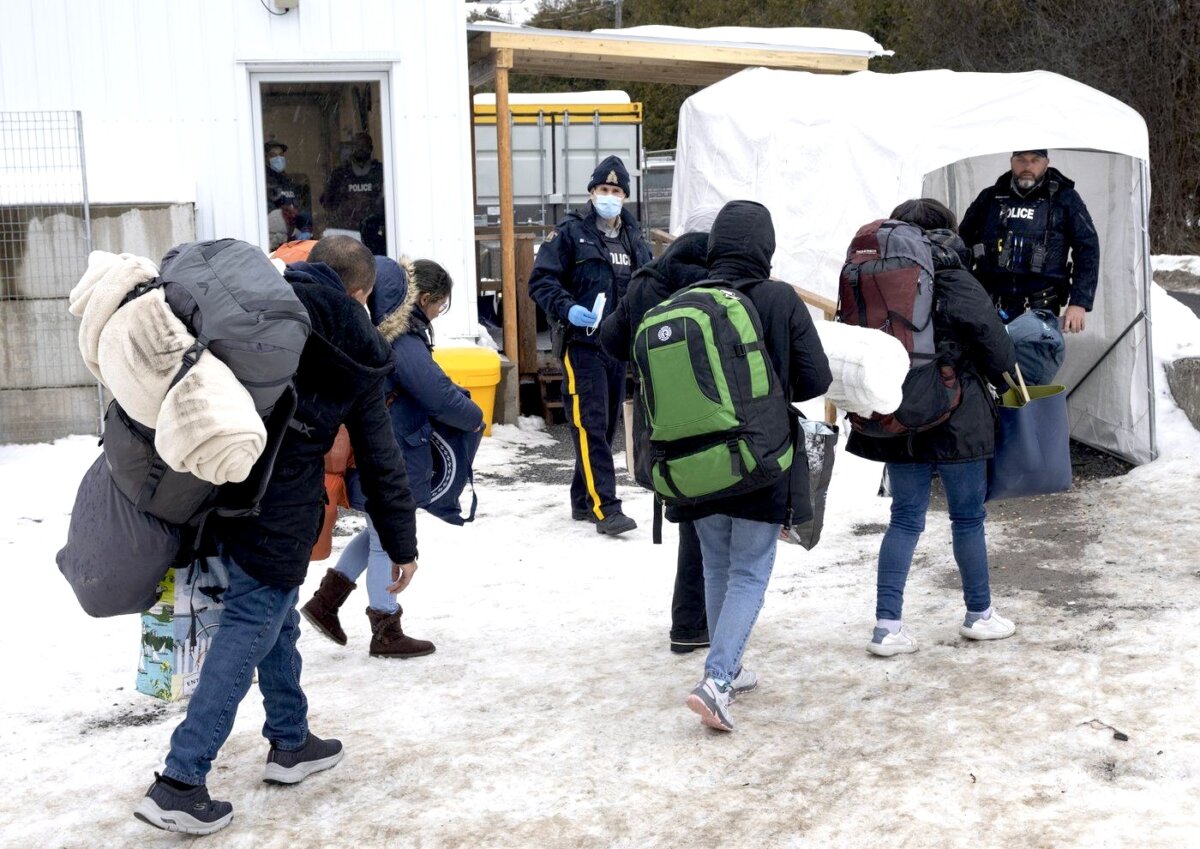 Asylum-seekers are met by RCMP officers after crossing the Canada-U.S. border at Roxham Road, Quebec, into Canada on Feb. 9, 2023. (The Canadian Press/Ryan Remiorz)
“We see case after case where they breach their own ethics rules, that instead of using a neutral term or the term desired by the group, they’ll choose whatever is most damning to their ideological enemies or supportive of their ideological kin,” Haskell says.
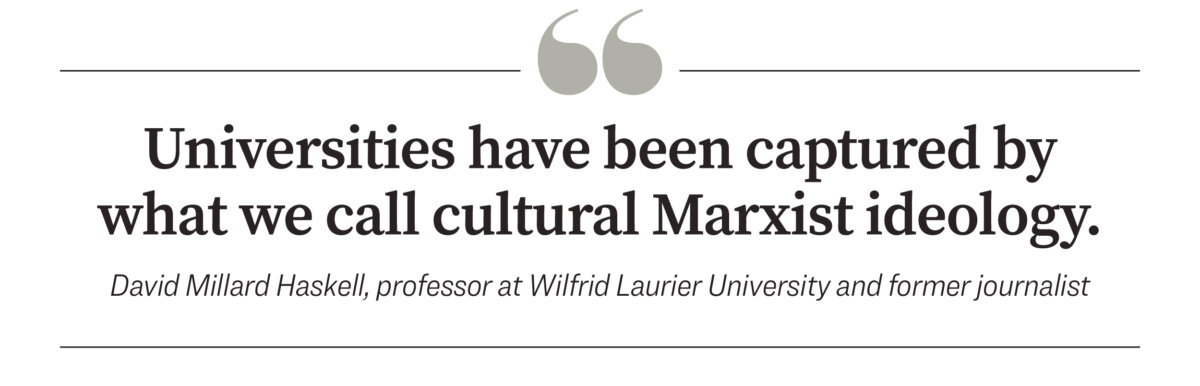
He says that in many cases, this goes back to the fact that “universities have been captured by what we call cultural Marxist ideology, far-left ideology, that is at odds, really, with the majority of what Canadians think.”
‘Revolutionary’
Navarro-Génie says the use of language to bring about change manifests more dramatically in revolutionary movements. In the case of the French Revolution in the 18th century, for example, radicals even changed the calendar and days of the week to break away from tradition and the religious heritage of the country.
He says although the attempts at changing language today aren’t as extreme, there are still similarities in the trend.
“We don’t have gallows, and we don’t have guillotines, so they’re not the same kind of revolutionary [as the French Revolution], but the act of trying to change the nature of reality is revolutionary,” Navarro-Génie said.
It could turn into a form of “tyranny” as a result, he adds.
“The purpose of this, as we saw in the Soviet Union, is that the imposition of certain language is meant to obscure certain aspects of reality and political reality that governments don’t want people to see, and push people towards a particular aspect of seeing things and behaving the way the government wants,” he says.
Top-Down
But besides the media and the education system adopting such terms, more concerning is if the language is coerced by the government, Navarro-Génie says.
Critics such as public speaker and academic Jordan Peterson took issue with the federal government’s legislation on gender expression passed in 2017. The government said the legislation was “intended to protect individuals from discrimination within the sphere of federal jurisdiction and from being the targets of hate propaganda.” Critics such as Peterson said the legislation would bring with it compelled speech.
Navarro-Génie says politicians using words to promote their viewpoint is a concept as old as political history, from the ancient Greeks all the way to the present.
Ahead of the federal election, the Conservatives often referred to their rivals as the “NDP-Liberal coalition” when speaking in English, while saying the “Bloc-Liberal coalition” when speaking in French, substituting the NDP for the main rival in Quebec. Similarly, the Liberals have adopted their own particular words when campaigning and advancing policies, such as the use of the term “investment” when referring to government expenditure programs, saying “decarbonized oil and gas” when talking about developing the sector, or using the term “assault-style firearms” when referring to guns they want to ban.
But the issue changes when governments impose the use of certain words on the public, Navarro-Génie says, or when the media and the education system go along with the trend without scrutinizing the issue to present the truth to the public.
“Governments should not be in the business of crafting the language that people use. It should be the other way around. A good leader, a good politician, a government that serves its people is going to use the language that the people use and serve it,” he says.
“The other model is the authoritarian or quasi-totalitarian, in which the government imposes language onto the people so that people can think in a particular way and express themselves in a particular way.”
 Friends Read Free
Copy
Facebook
Tweet
Friends Read Free
Copy
Facebook
Tweet