



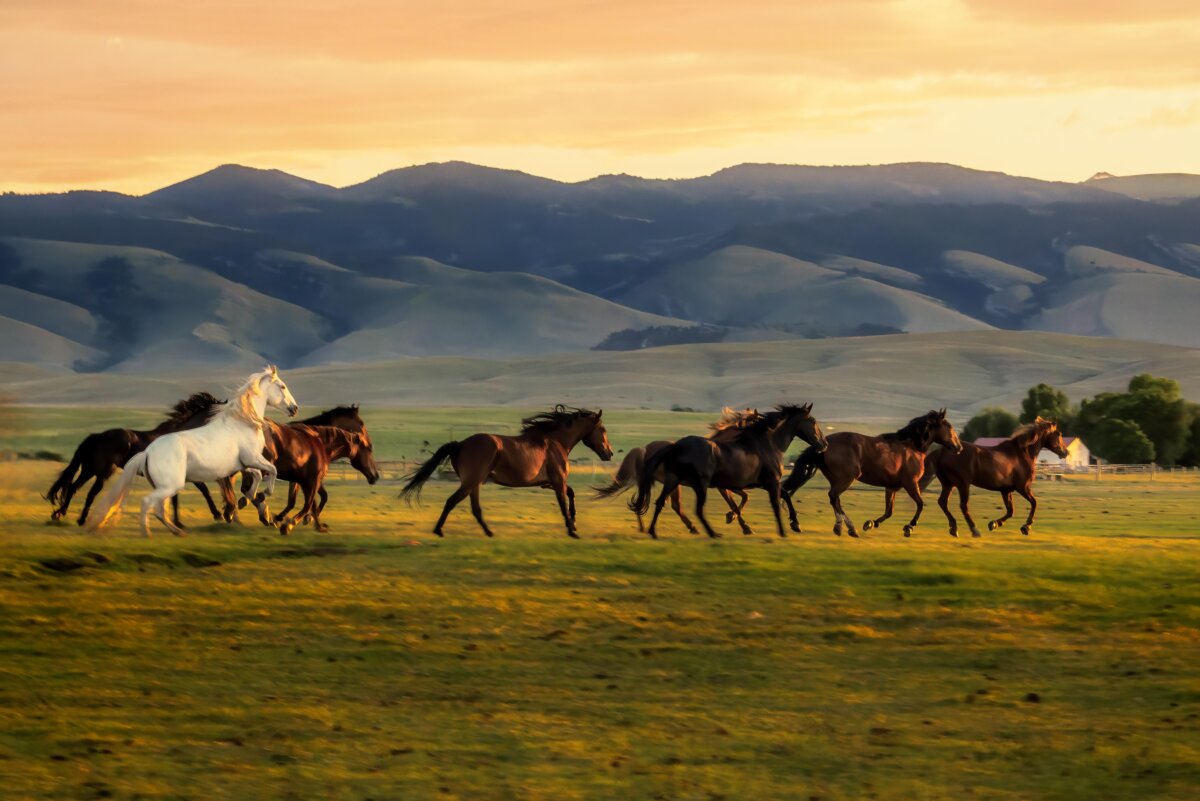
We were bundled up against the crisp morning chill in the quiet solitude, gazing at the orange and lemon sherbet sunrise spreading across the mountain crests. As we huddled behind a waist-high pile of rocks about 20 feet from the wide-open pasture gate, distant muffled drumming broke the silence.
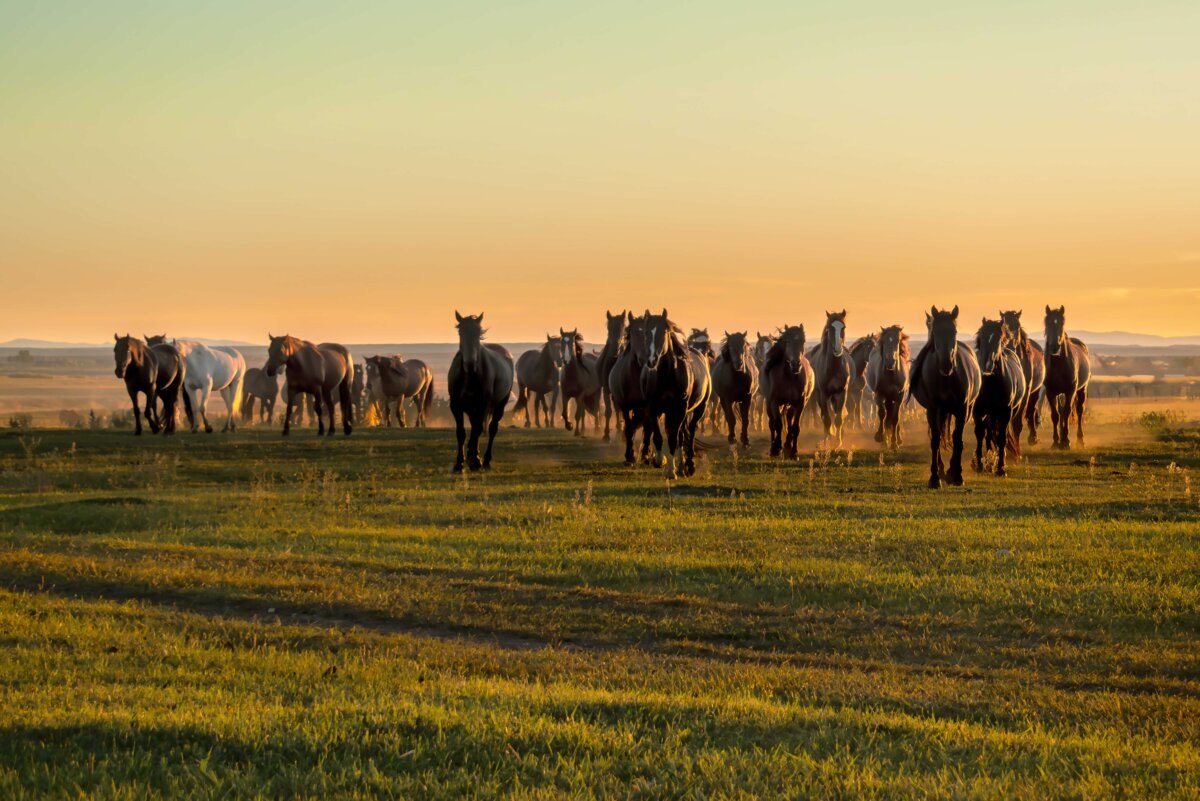
The drumbeat grew closer and closer and louder and louder. Then, in a blink of an eye, dozens of muscular mustangs with steaming nostrils and outstretched tails charged directly toward us, at the last instant streaming past without breaking stride. The ground trembled under their thundering hooves. Our hearts raced in time with their breakneck pace.
Before we could catch our breath, the wild horse sanctuary’s Jess Oldman rode up sporting a broad smile, anxious to learn our reaction to the stampede he choreographed for my wife Maria to capture with her camera. It was an unforgettable moment also imprinted on our memory.
Home on the Range
About 10 minutes from Lander, Wyoming, en route to Yellowstone National Park, awaits an authentic Western experience for the entire family. It’s a unique opportunity to observe magnificent mustangs up close and to watch them gallop across the broad plain at the base of the majestic Wind River Range.
The Wind River Wild Horse Sanctuary provides professional care and a permanent home for 250 largely unadoptable mustangs on a 1,400-acre working cattle ranch. Five hundred acres are dedicated to the country’s only Bureau of Land Management (BLM) approved sanctuary located on tribal land.
The 2.2-million-acre Wind River Indian Reservation was created for Northern Arapaho and Eastern Shoshone tribes. But the Oldham family, who operates the sanctuary, is of Navajo and Anglo-American ancestry.
Unlike most other BLM long-term facilities, the free-roaming eco-sanctuary is open to the public. “The BLM wants to provide education through public off-range pastures,” according to June Wendlandt, wild horse and burro lead for BLM Wyoming. “The Oldham family offers public tours by appointment and education on the importance of wild horses and their history.”
Odessa Oldham, 33, traveled to the Smithsonian National Museum of the American Indian in Washington to research how horses changed Native American life and the vital role they played in their culture for the sanctuary’s visitor center. The center features curated interpretive panels and displays and a small gift shop. “Our family truly believes that taking care of the wild horses is part of the Native heritage,” she said.
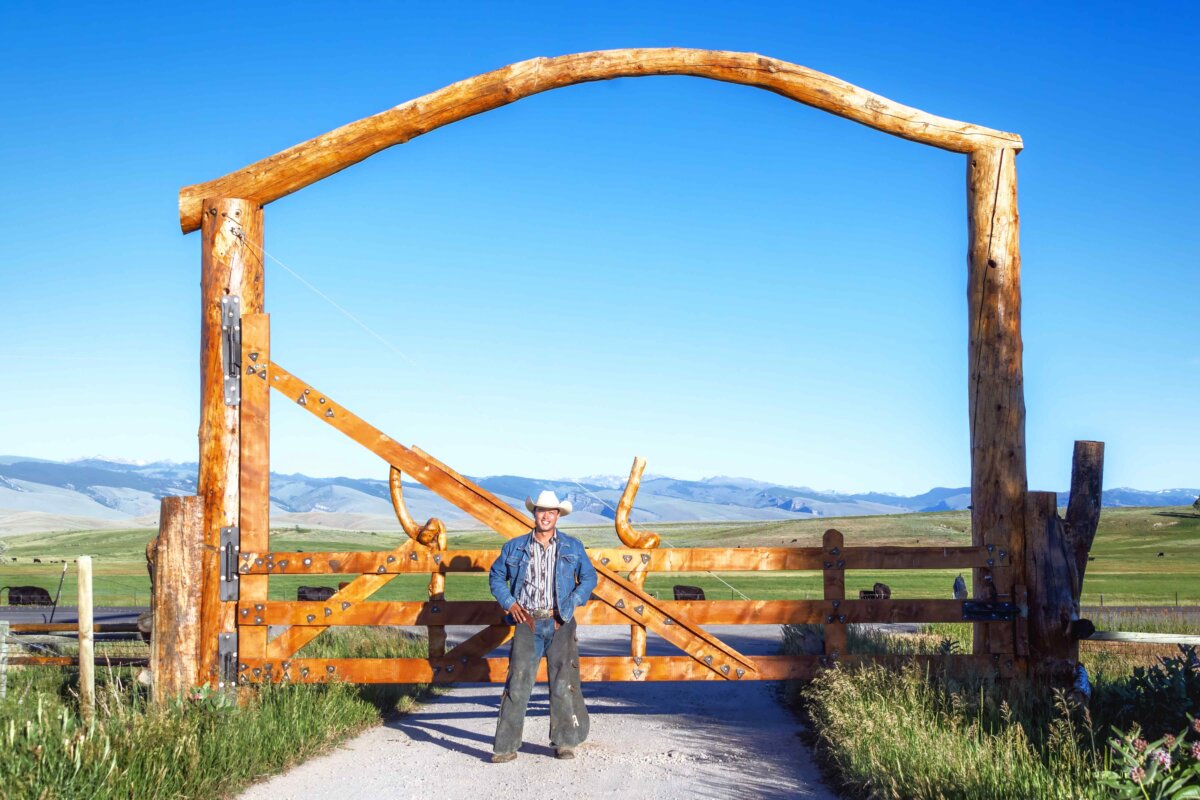
A knowledgeable guide driving a utility terrain vehicle that resembles a “golf cart on steroids” takes visitors on a 45-minute sanctuary tour. It might be leading-man Jess himself who takes you. He knows all the horses’ names and histories. “The black gelding walking confidently toward us is Old Man,” the 6-foot-2-inch sanctuary manager pointed out. “He is the oldest horse in the herd.”
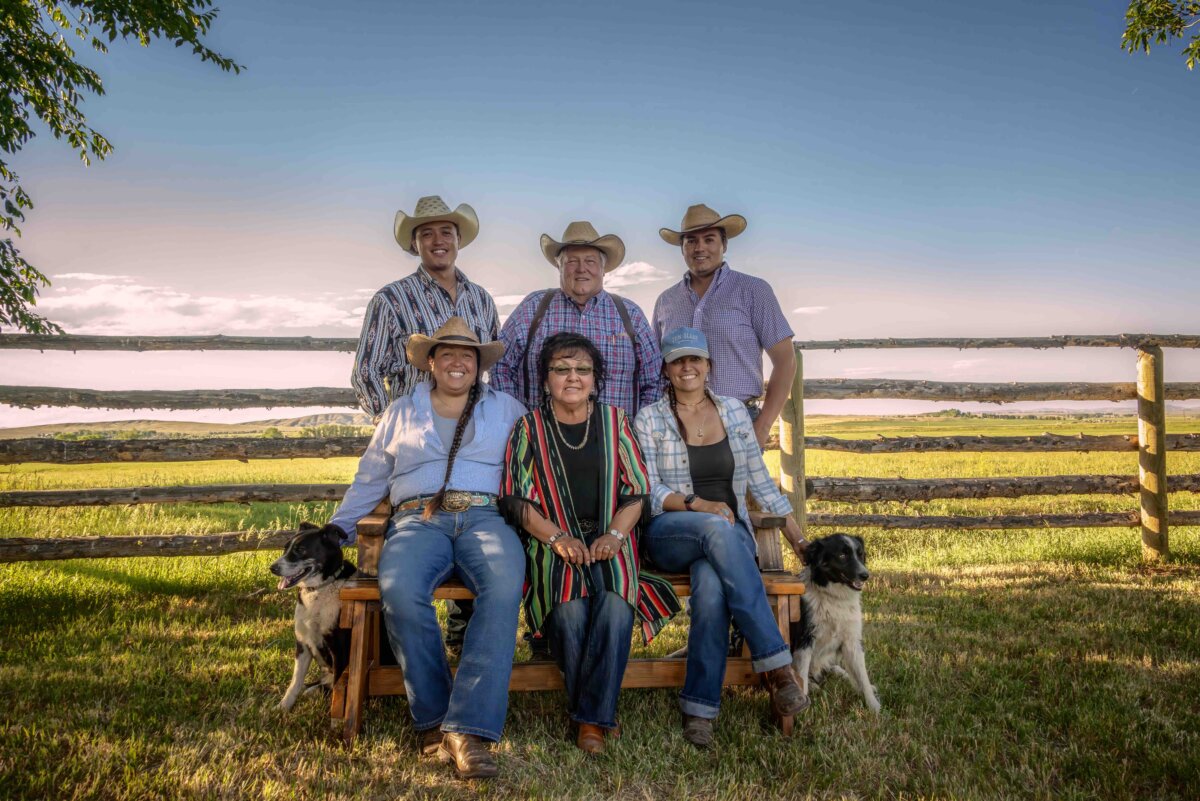
The Oldham family—dad Dwayne, mom Denise, daughter Odessa, and sons Jess and Jared—opened the Wind River Wild Horse Sanctuary in 2016. Dwayne is a former Wyoming state veterinarian whose frontier family settled in the area shortly after the Civil War. His wife Denise was raised on the Navajo Reservation in New Mexico. Jared is no longer involved in its day-to-day operations.
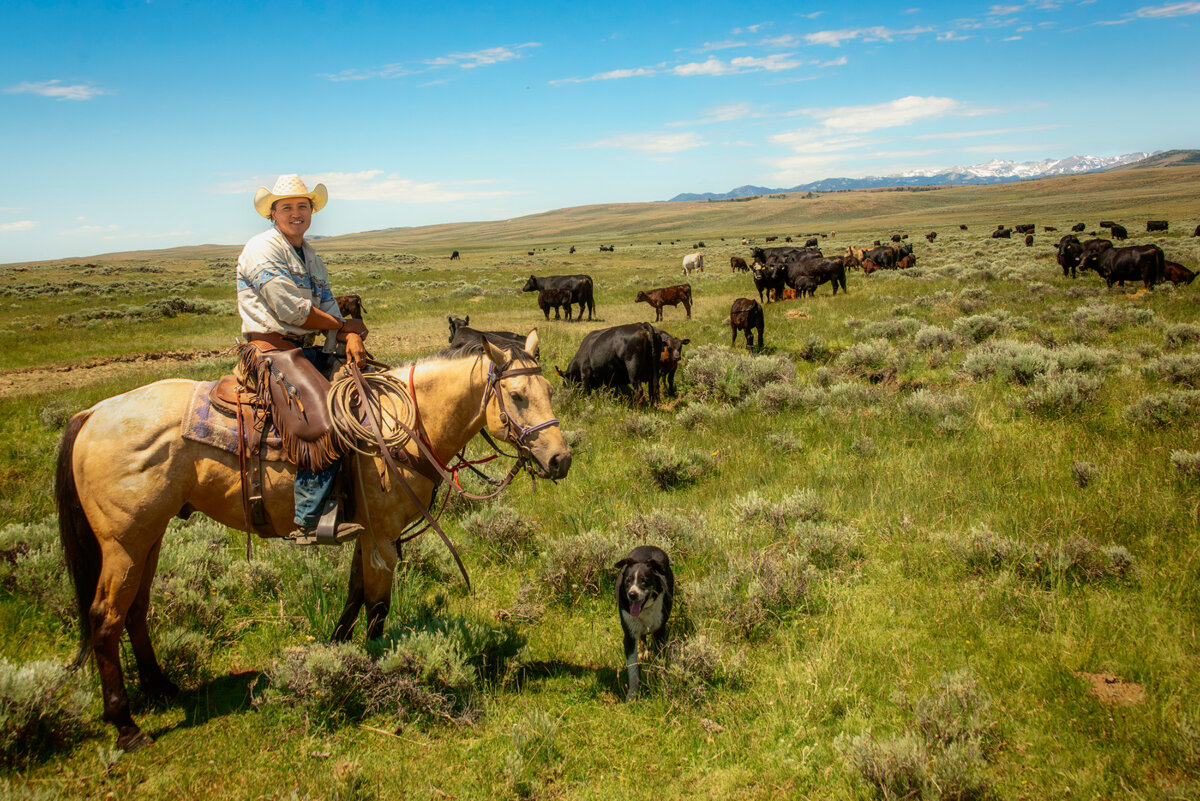
“It is a privilege to be able to help run the sanctuary and the cattle ranch,” said 28-year-old Jess, a University of Wyoming graduate with a degree in microbiology and immunology. “It’s a lifestyle that is a little hard on the body at times, but it’s one that is really good on the soul.”
Horse Heritage
All the wild horses in the American West are called mustangs, from a Spanish word for “stray.” Yet they belonged in this country ages before us. The horse reportedly originated in North America some 55 million years ago. DNA evidence indicates that it remained on the continent until as recently as 5,000 years ago.
When Hernán Cortés landed in Mexico in 1519, he brought horses from Spain. Over many generations, bands of stray conquistador horses migrated northward to the Great Plains and Western high deserts; those captured became prized American Indian ponies and U.S. cavalry mounts.
By the 1800s, American Indian horsemanship was legendary, and the survival of many Native peoples depended on wild horses. They paid homage to the mustangs by integrating them into their cultural and spiritual lives and by creating art that honored their bravery and sanctity.
In his travels out West in the 1830s, painter George Catlin was one of the first American artists to render the culture and customs of Native Americans, including their riding broken wild horses bareback.
The height of the American Indian horse culture lasted just over a century, from the 1750s to the 1870s. But the bond between Native Americans and horses has remained strong and transcends mere symbolism. It represents a way of life and is celebrated today through horseback riding, rodeos, powwows, and other events.
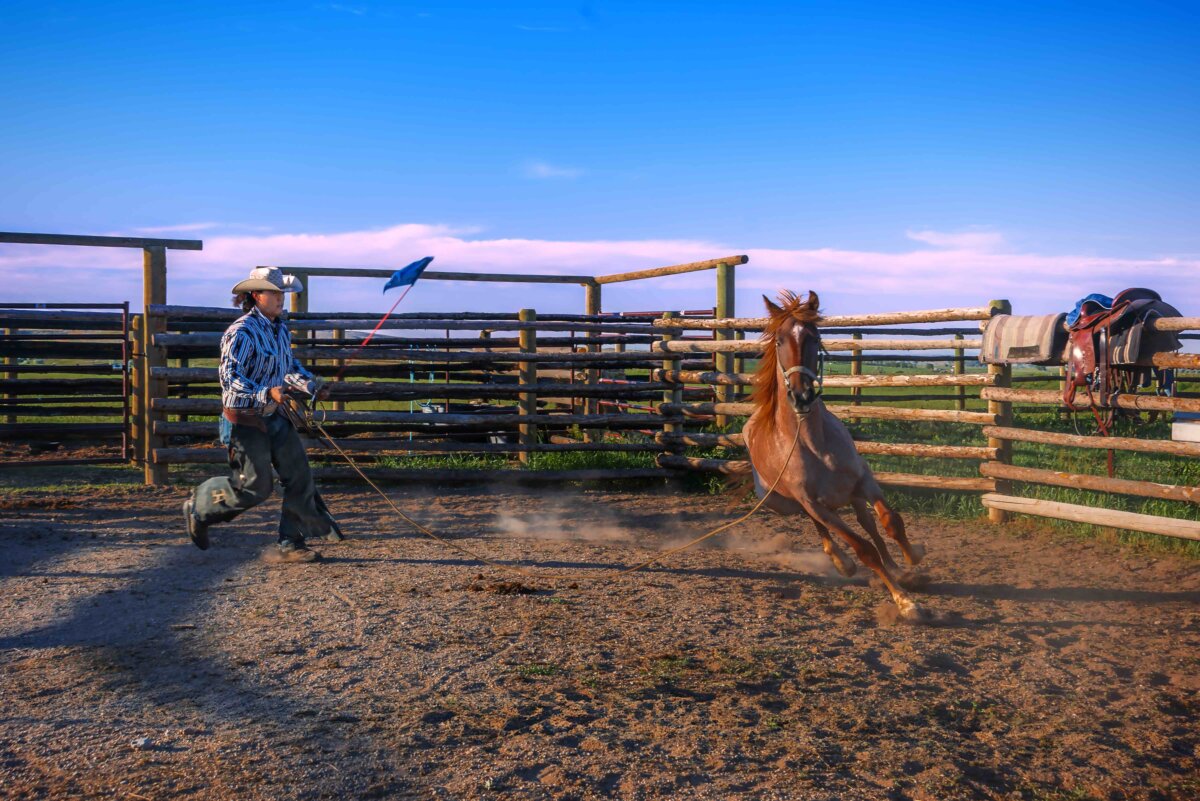
The Oldhams enlist mustangs to help reservation youth struggling with family and social problems. “They enjoy working with the horse,” Jess said. “They see some change in the horse and even some change in themselves.”
No More Saddles and Spurs
When the Great Depression descended, many farmers and ranchers could not afford to pay the mortgage, much less buy oats and hay. Out of desperation, they swung open their stables and, often choking back tears, set their horses free.
No more bits scraping their mouths or spurs biting their sides. No more heavy saddles carried on their backs or iron shoes banged onto their hooves. No more plows to pull or cattle to round up. No more brisk brushings or carrot treats or troughs of fresh water.
Most mustangs are never ridden or bent to man’s will. But they remain curious and are happy to coexist with us on their own terms, like any unbroken horse.
A Symbol of the West
Mustangs are as synonymous with the West as sagebrush. “They can survive in the deserts of Nevada with very little feed, very little water, and they can come to Wyoming and grow very thick coats and exist in negative 30-degree snowstorms,” Jess asserted. “Their adaptability makes them a little bit of a detriment to the environment.”
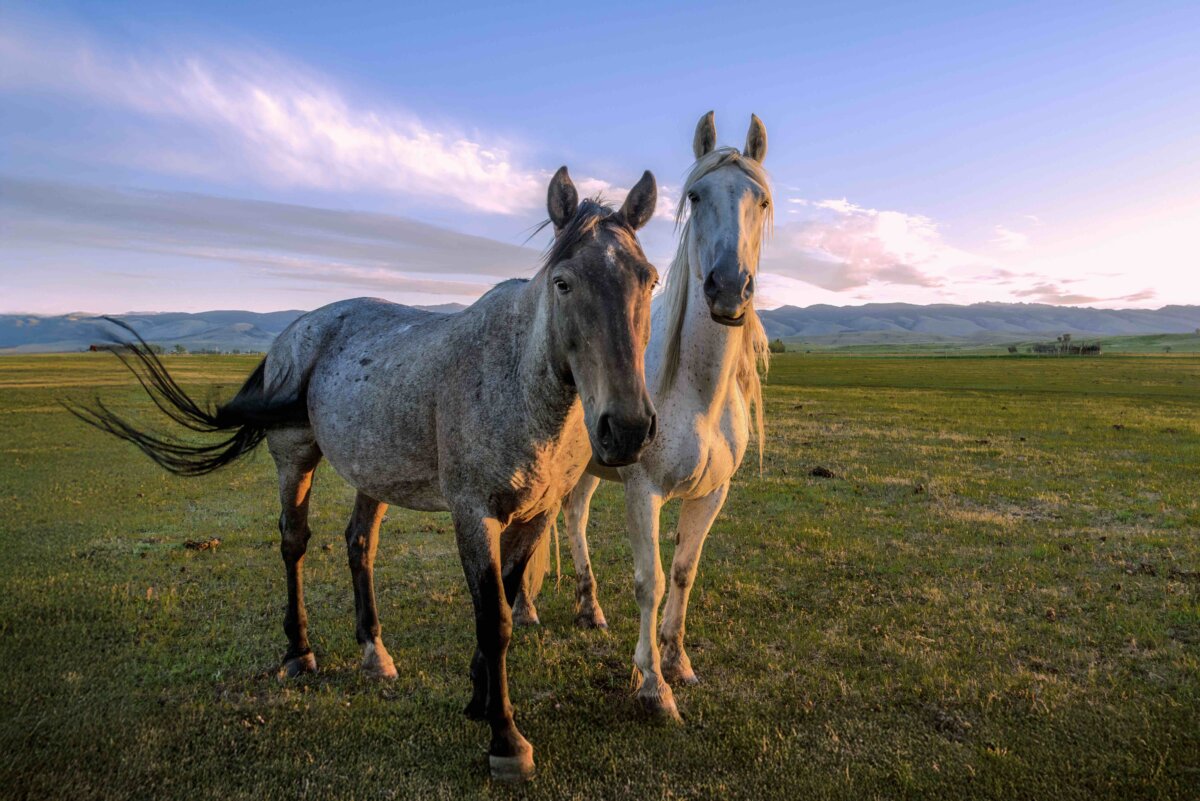
Lacking a natural predator, mustang population growth poses challenges to fragile ecosystems, prompting management efforts by the BLM. “Managing wild horses on the range is an emotional and controversial subject,” BLM’s Wendlandt acknowledges. “Wild horses compete with domesticated animals, wildlife, and recreational users. Maintaining wild horses at an appropriate management level keeps the wild horses healthy and the range healthy.”
“Our family are cattle ranchers by trade,” Dwayne Oldham, 64, remarked. “We try to help bridge the gap in the wild horse controversy and be part of the solution. We think ranchers and wild horse advocates should work together.”
The BLM’s nationwide population estimate in 2024 for wild horses and burros was approximately 73,520 on BLM-managed public lands, with 66,236 on off-range pastures. This signifies a third-year decline in overpopulation since 2020. The BLM manages the wild horse population in three ways: capture, birth control, and adoption.
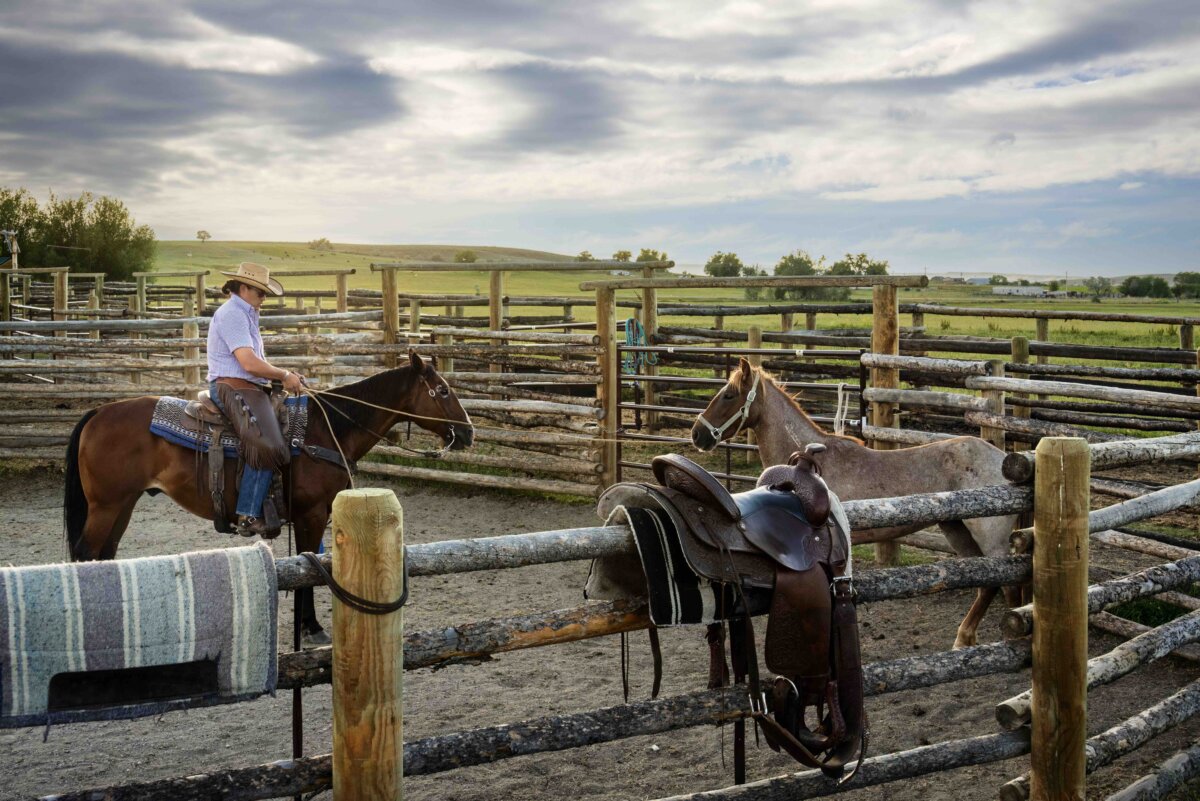
Most of the mustangs on the Wind River Wild Horse Sanctuary are older horses no longer available for adoption. The Oldhams train a small number of the adoptable horses that are one year to six years of age and have been pre-processed by the BLM. For information on wild horse adoption, visit the BLM website.
Unbridled Freedom
On the tour, as you approach grazing mustangs on the irrigated green pasture, they will raise their heads, prick up their ears, and nicker and snort to each other. They may stand stock-still like statues. But before long, a handful of horses may slowly approach winsomely close, expressing a childlike curiosity, reflecting their gentle natures in their soulful brown eyes.
Other times, the mustangs come together in tight formation. Suddenly, they gracefully gallop away, heads held high, across the sun-kissed meadow, their shimmering coats a cavalcade of equine colors. With only the wind to groom their tangled manes, they embody freedom and wildness in stark contrast to our structured lives.
Although the bald eagle is America’s national symbol, the robust and resilient mustang is often associated with the nation’s stalwart character.
“The wild horse is so ingrained in the American imagination that even those who have never seen one know what it stands for: fierce independence, unbridled freedom, the bedrock ideals of the nation,” journalist and author David Philipps wrote in his book “Wild Horse Country: The History, Myth and Future of the Mustang.” “From car ads to high school mascots, the wild horse—popularly known as the mustang—is the enduring icon of America.” Joining millions of Americans over the past seven decades, I drive a new-generation Ford Mustang.
Gainful Employment
The Oldhams encourage us to rethink the function of captured mustangs. “What is their purpose?” Jess asked. “Give them a job, something to do—something beyond being a regal part of who we are as Americans and who we are as Native Americans. There’s too many of them to fulfill just that role. And they’re capable of so much more.”
Jess recommends mustangs be adopted and trained for use by mounted rangers, border patrol agents, and police officers. His face brightens when he visualizes an all-mustang rodeo showcasing their athleticism in barrel racing, calf roping, and bronc riding events.
“Horses are a bonding animal,” Jess said. “They have a deep connection with what’s going on inside your mind, inside your heart, and inside your soul.” This emotional awareness is inherent in mustangs, and he is convinced that, when trained, they could be successfully engaged in equine-assisted physical and mental health therapy.
The Wyoming Department of Corrections reports that its Honor Farm’s Wild Horse Program plays an essential role in inmate rehabilitation. The program, which includes gentling mustangs, teaches inmates life skills such as respect and teamwork, and the horses receive caring human companionship.
Mustang Mystique and Human Spirit
Mustangs embody the mystique of the Spanish conquistadors, American Indians, and Western cowboys. The Wind River Wild Horse Sanctuary recognizes the importance of maintaining their historical value and is committed to preserving their freedom and habitat through education and conservation. The Oldhams foster their emotional well-being and physical care at the sanctuary, while enriching the human spirit through direct interaction with the magnificent mustangs.
This article was originally published in American Essence magazine.
