



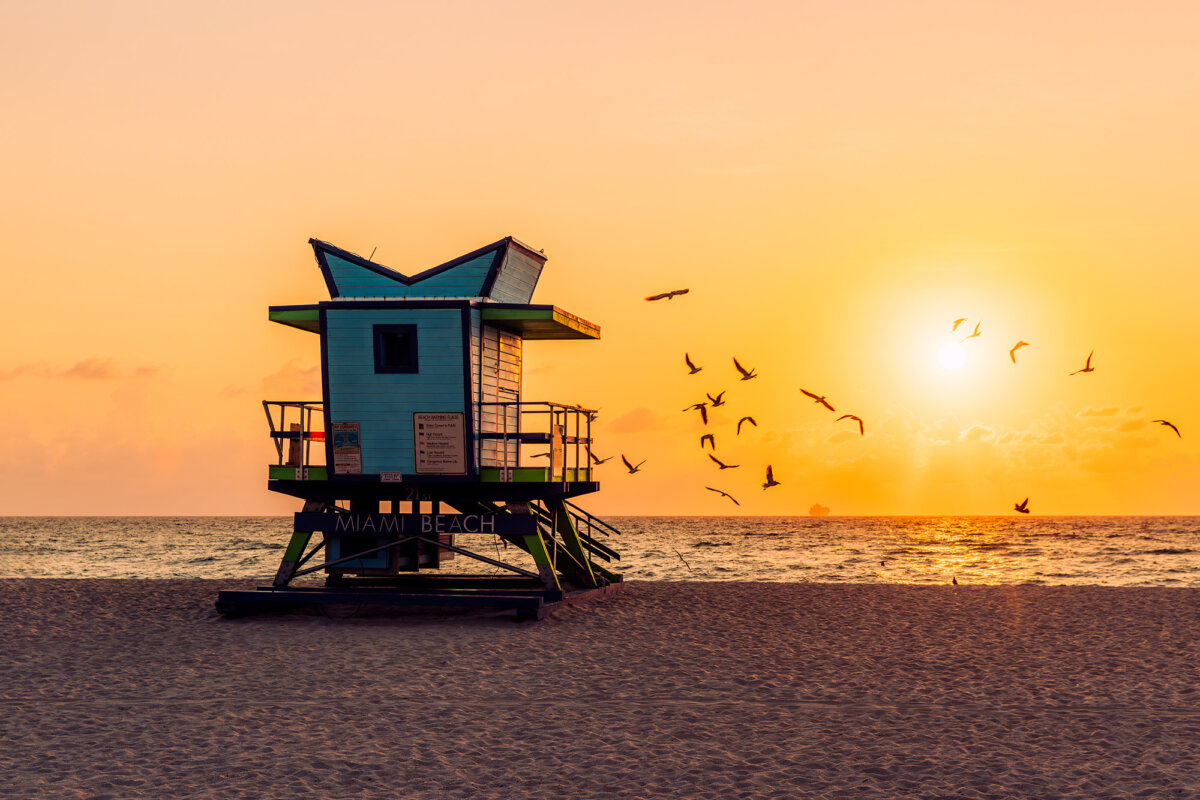
Whatever the season you choose to visit, Miami sizzles. A South Florida dream, shimmering skyline stretched out along a blue sea, it’s always summer here—in both weather and spirit. No doubt about it: The Magic City never stops, a place with a surfeit of sunshine, passion, and, of course, good times. Dance your way through the day to a Latin beat.
With a metro population of more than 6 million people, it’s a big place. Add to that fact: “Miami” is really many places, a metropolis of neighborhoods and many cultures. Experiencing even just its best in 24 hours is a challenge—but one that’s worth it. Here’s our guide to exploring Miami in one day.
Arrival
Miami International Airport (MIA) is a busy place. A major hub for American Airlines, it serves some 1,000 flights a day, with nonstop flights to almost 200 destinations. It’s the main American gateway to Latin America, so if you are flying to the south, you’ll likely find a nonstop route. Direct flights also arrive from cities in Europe and Asia, including London, Paris, Madrid, Istanbul, and Dubai. Domestic routes to and from MIA within the United States are plentiful.
The history here is long and rather interesting. In 1929, Pan Am Airways opened the first incarnation of the airport. This was a seminal moment, not just for commercial air travel, but also for opening up Miami as a major international tourism destination. After adding new airlines and growing through the 1930s and 1940s, everything boomed in the 1950s. In 1959, the five concourses of the new Miami International Airport were completed. They have been constantly expanded ever since.
Visitors can take their pick of taxis and ride-sharing cars. But there are good connections to the city via public transit, too. Two Metrorail train lines run to the north and south and include stops downtown. Every half-hour, a direct bus leaves for South Beach. In all cases, a one-way fare is just $2.25.
Morning
After breathing recycled air en route, salty breezes will be welcome. Really, they are the best form of a fresh morning wake-up call. Hop into a car—the quickest and easiest transportation in this case—and head to North Beach Oceanside Park.
Stretching some eight blocks along the Atlantic, this feels like a beach in a small town, yet it’s in the heart of the big city. Enjoy the shade under a canopy of trees and listen to the calming sounds of the ocean waves. Wander along the diminutive dunes. Those with swimsuits at hand can even take a dip in the warm water.
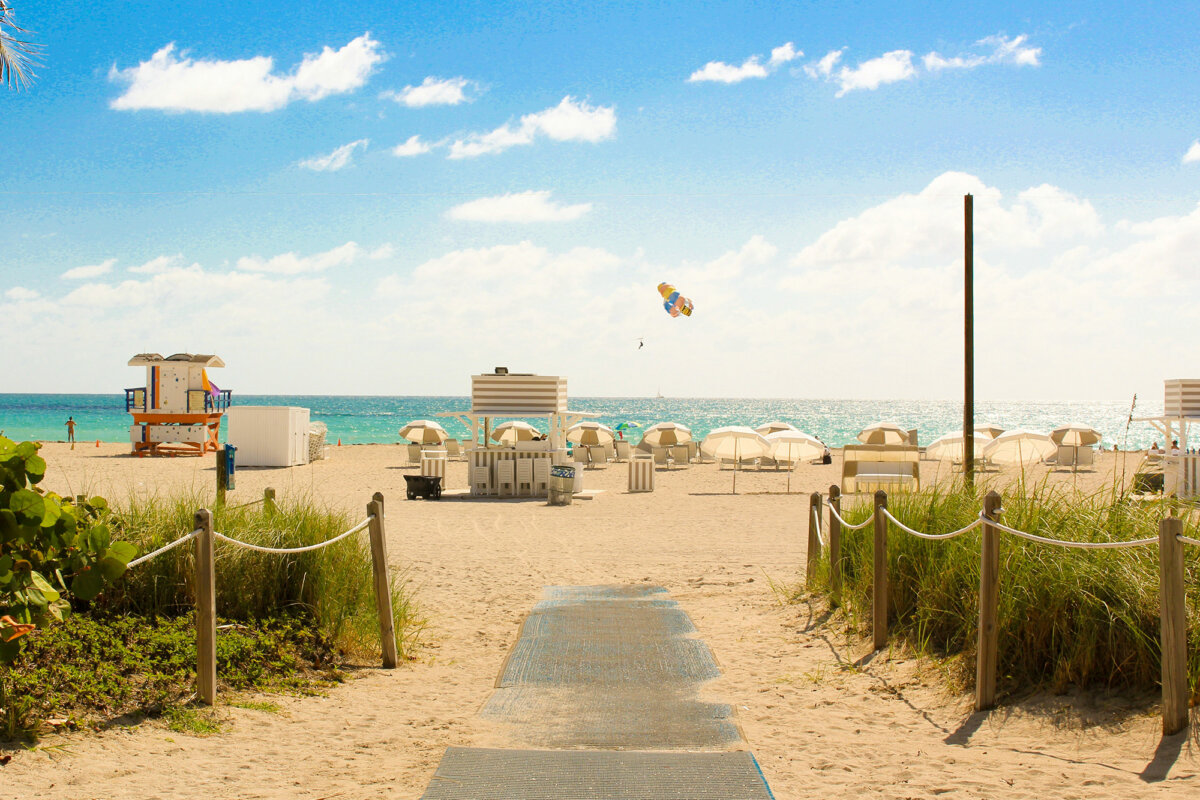
The best part? The park sits at the start of Miami’s Beachwalk, a broad, nine-mile paved boardwalk that runs all the way to South Beach. Start either on foot or on a bicycle, which is available to rent right at the park. A few blocks south, fortify at Papillon By the Beach, one of the best places to breakfast and brunch in this part of the city. Recommended: Choose from among their six varieties of eggs Benedict.
Burn off those calories, and once you fulfill your quota of fresh air, it’s time for a little culture. Just across Biscayne Bay, a cluster of compelling museums can be found in and around Maurice A. Ferré Park. The palm-lined park is worth a stroll, especially along the quirky and fun Dogs and Cats Walkway, which is lined with sculptures of furry friends.
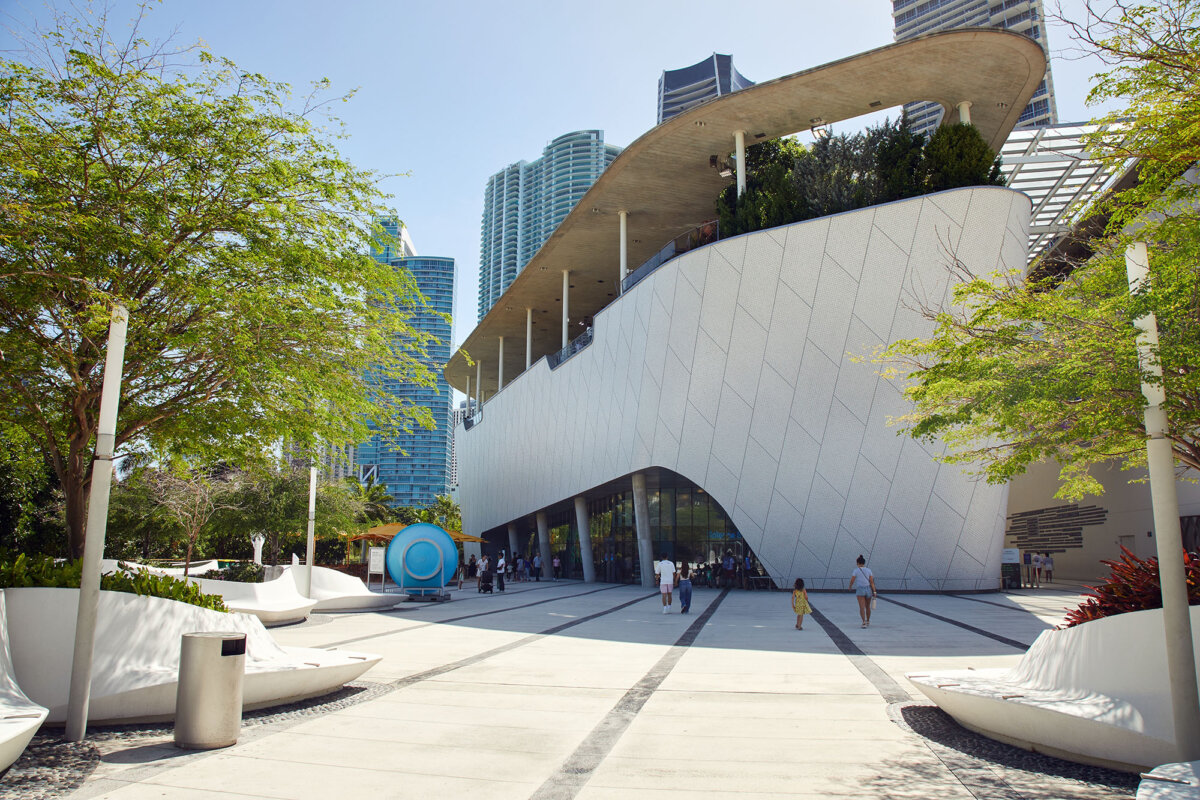
A visitor could spend a whole day in the adjacent Phillip and Patricia Frost Museum of Science, which includes a superstar planetarium and famed aquarium. But perhaps the coolest spot (pun intended) is a couple blocks west, at the Museum of Ice Cream. Spend some time in more than a dozen interactive “playscapes,” and enjoy a truly wonderful thing—unlimited access to ice cream.

Afternoon
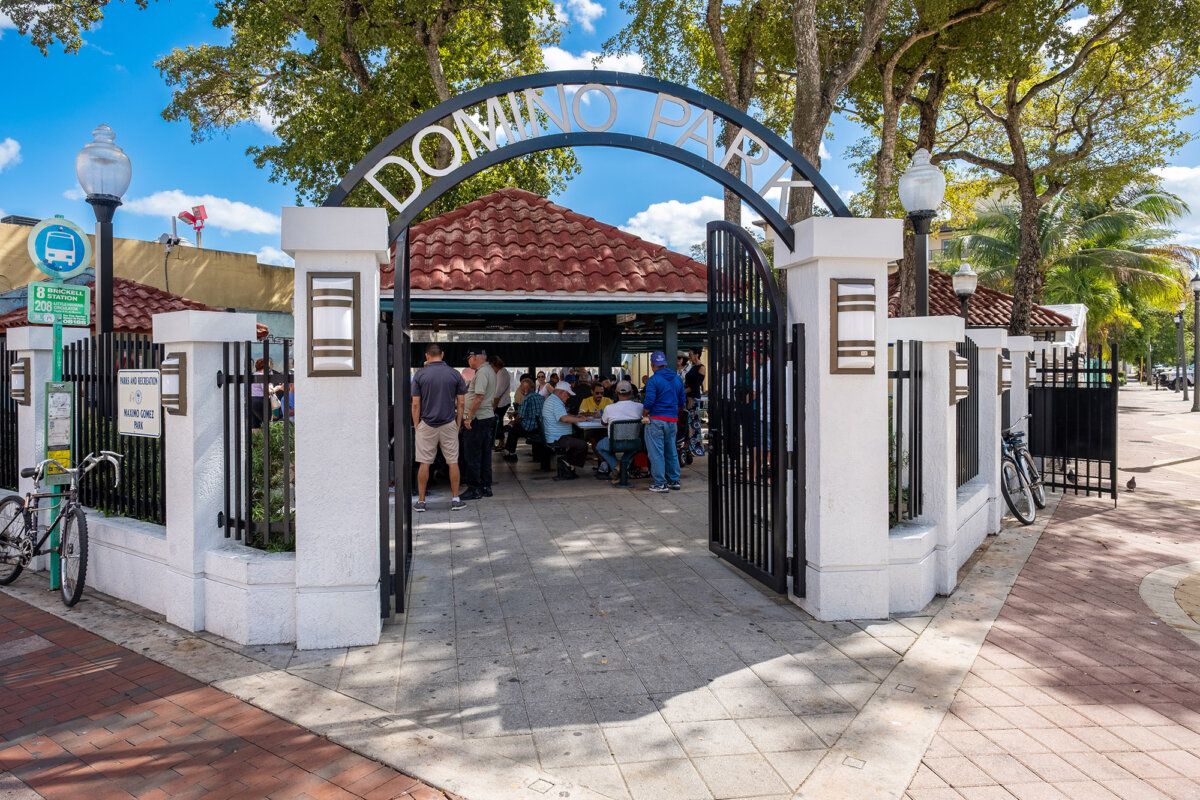
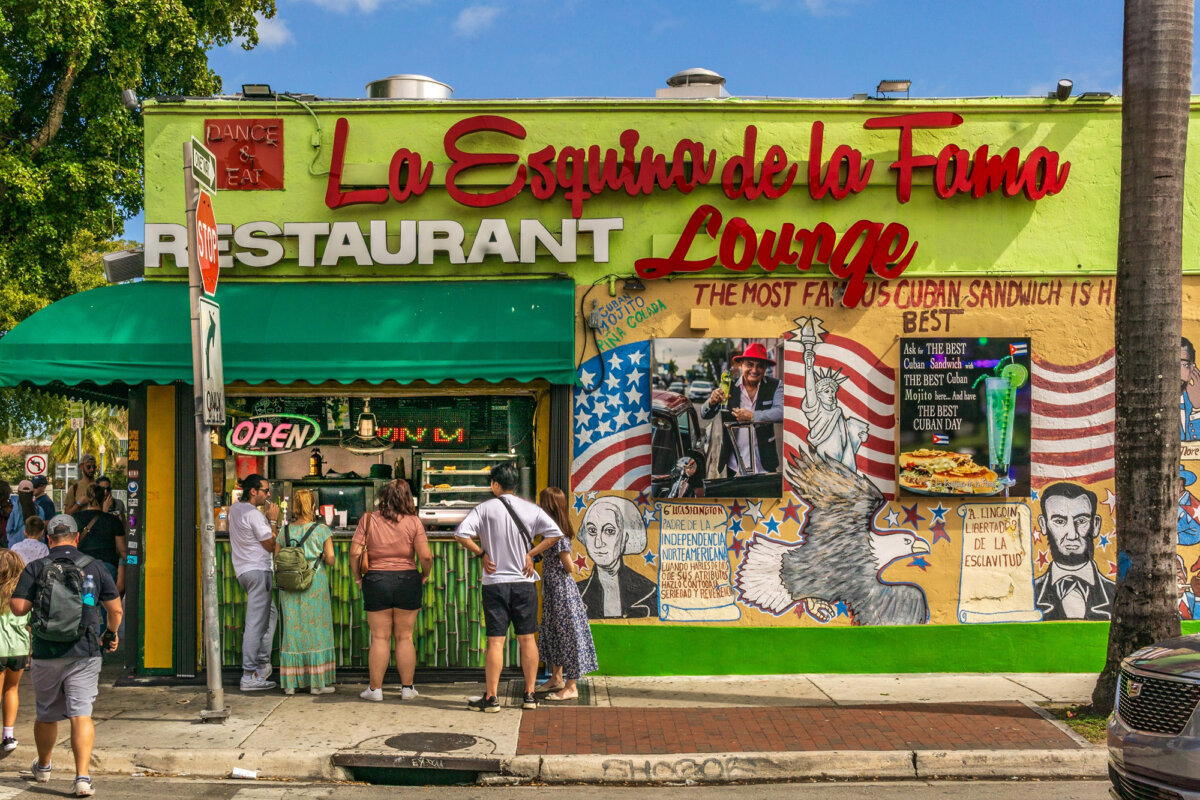
But don’t fill up on too many treats, because it’s time for lunch. Head further inland, to Little Havana—about half an hour on public transit, less than half that in a car. Take some time to walk around the district, which boomed in the 1960s when Cubans escaped the Castro regime. Máximo Gómez Park is a highlight and the neighborhood’s beating heart. A little time here feels not just like cultural immersion but a trip back in time.
Walk off Calle Ocho, through the archway, and be immediately surrounded by people smoking cigars while they play dominos. Even if you don’t speak Spanish, you can feel the passion and appreciate the heritage. Then taste it, too.
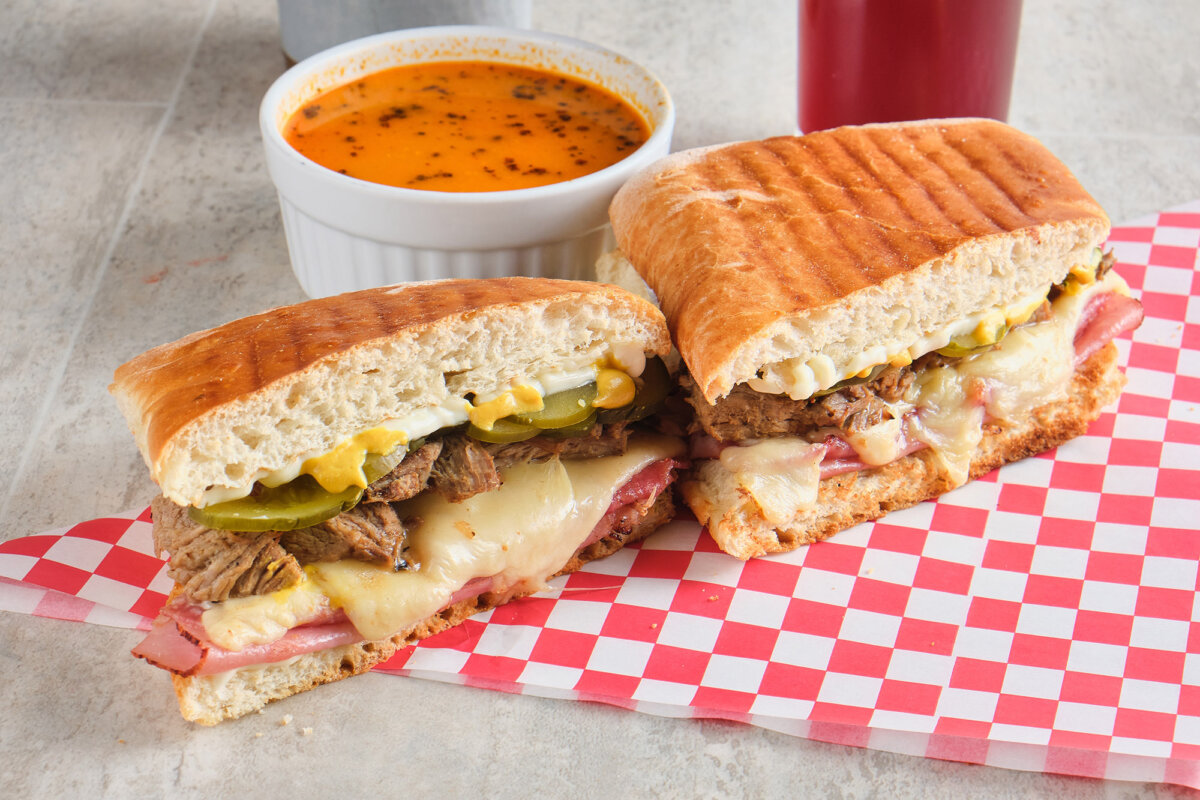
The Cubano is a Miami classic. The official history (which was studied by the University of South Florida) dates its invention back to 19th-century Havana, but this mouthwatering sandwich was absolutely popularized locally.
Think: layer upon layer of pork, pressed on crusty bread, with pickles, mustard, and oozy, super-satisfying Swiss cheese. Further west on Calle Ocho, Versailles claims to be “the world’s most famous Cuban restaurant.” It’s certainly a favorite.
Operating since 1971, the restaurant is old school in all the best ways—and it serves a very good Cubano. There are also other dishes that will take your taste buds to Havana, including ropa vieja, beef shredded and cooked up with tomato sauce, peppers, and onions. It’s hearty, homey, and served with a side of black beans, rice, and sweet plantains.
After a big lunch, there’s nothing better than a warm, lazy, sultry boat ride. Consider some sightseeing and maybe a little afternoon nap as you roll along. Miami is a city that must be seen from the water, the glassy, white skyline shimmering and glimmering in that bright, all-day sun.
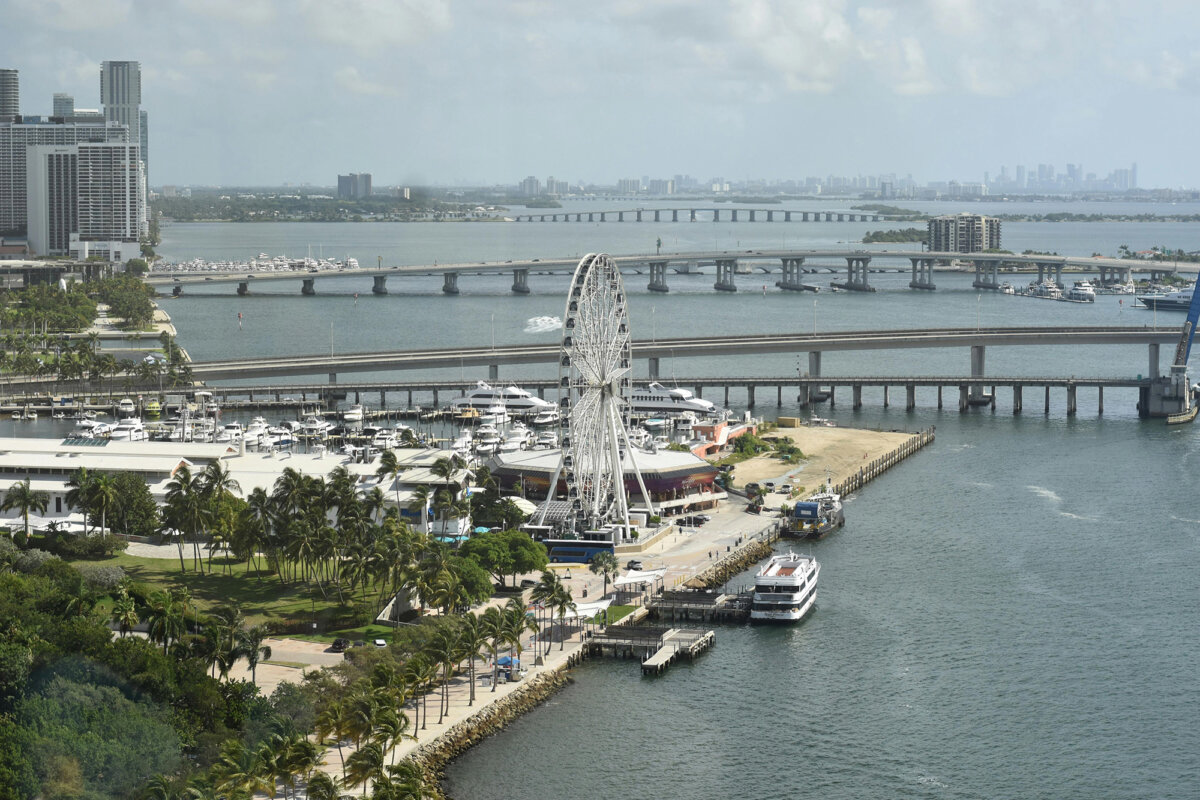
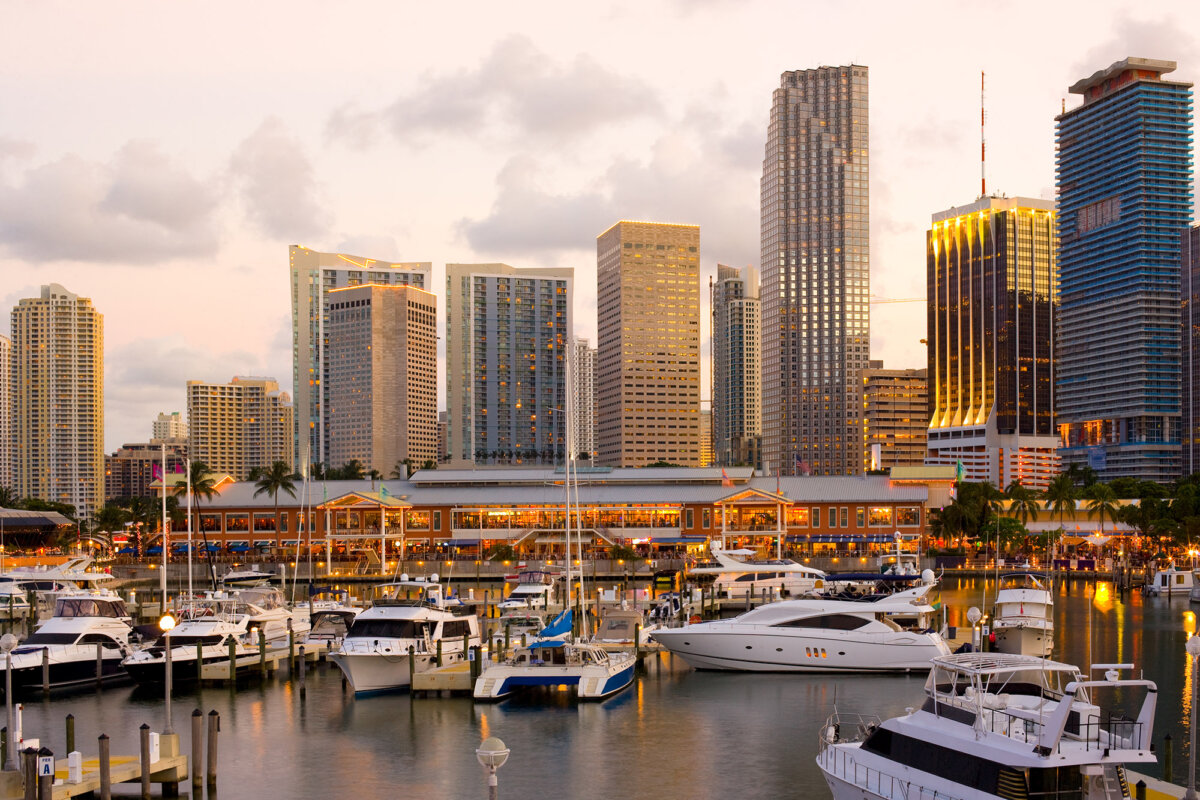
Miami on the Water offers 90-minute voyages from its launch point downtown. Sailing along on a double-decker boat, guests enjoy marine views of the big cruise ships at the Port of Miami and the green Venetian Islands, as well as a millionaire’s row of super-luxe homes. There is also a really excellent view of the city skyline.
Back on dry land, browse at the Bayside Marketplace. Stroll the Miami Walk of Fame, which includes stars ranging from Channing Tatum to Kevin Hart. Shop at dozens of boutiques, which include many small, independent outlets—for example, breezy, beach-friendly clothing at Blanco by Nature. Get a whole new perspective on your surroundings from 200 feet up on the Sky Views Miami observation wheel.
Evening
While you might already feel like winding down, this sizzling city only heats up after the subtropical sun sinks below the horizon. Head across Biscayne Bay to South Beach. Take a pre-dinner amble around this mesmerizing and super-spirited part of the city.
The neon lights on all the art deco buildings turn on at dusk. Largely built during a 1920s tourism and housing boom, these sleek hotels, restaurants, and apartment blocks display nautical themes and bright, pastel colors. South Beach is home to the greatest concentration of art deco in the United States.
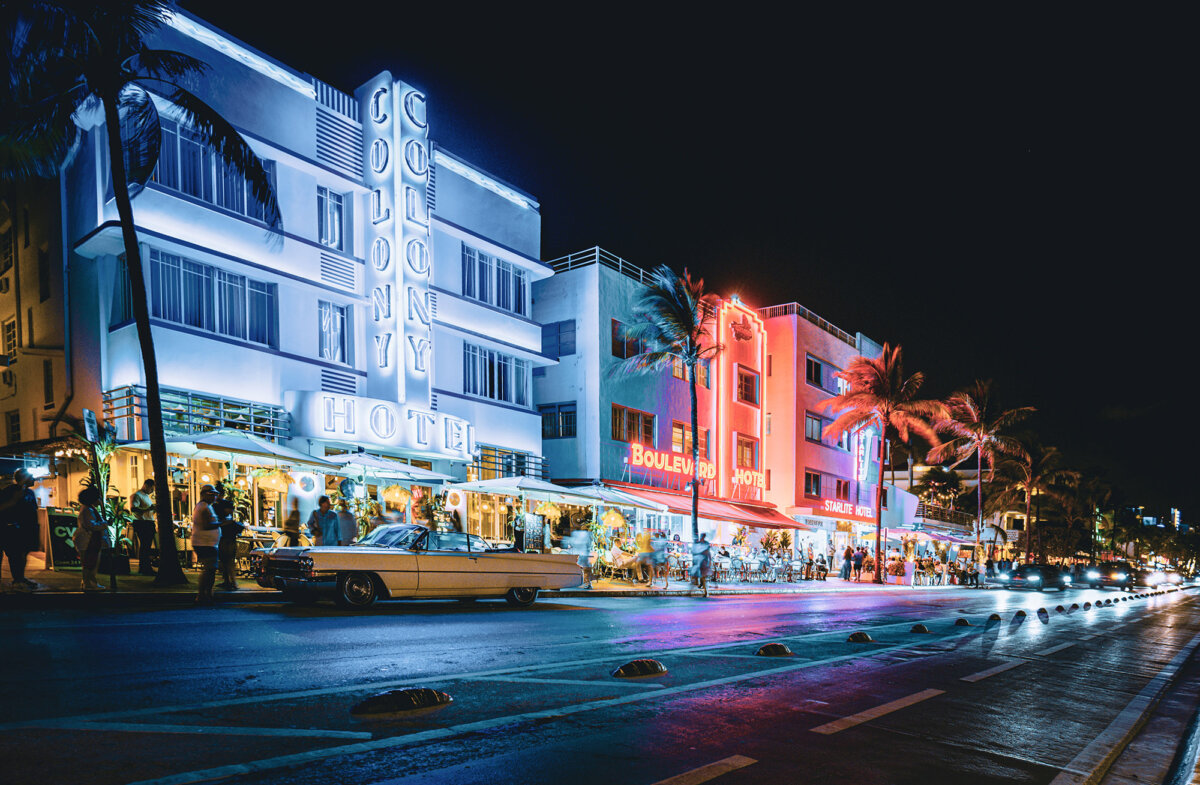
Settle in. There’s so much to do here. Put some dinner into the plans at some point. Hopefully, it’s an al fresco meal at one of the many restaurants with sidewalk seating. Icon Beach Cafe, right there on Ocean Drive, is a favorite, casual spot, serving lovely seafood with a Latin twist. Think: paella, whole red snapper, or Caribbean shrimp, served with rice.
After dinner, gauge your energy level and do as much as possible. Walk the pier at South Pointe Park. Take a Big Bus night tour to see more and go a little deeper into the history. Or just sit back, relax, and enjoy an open-air flick under the stars at the Rooftop Cinema Club.
If you have a little juice left, dance the rest of the night away. And if you know a little salsa, there’s never been a better time to show it off. South Beach will samba and rumba and cha-cha into the wee hours. It’s the perfect Miami way to end a busy day in the Magic City.
______
Day Trip to the Keys
Just south of Miami, the 1,700 islands of the Florida Keys stretch out into the Gulf of America. With aquamarine waters, sandy beaches, vibrant villages, and an independent spirit, this, the “Conch Republic,” feels like a world apart. The Overseas Highway connects the mainland with Key West, at the end of the road, over a total of 42 bridges. The drive from Miami takes about 3 1/2 hours each way. That’s a long day trip, so it may be worth spending a night, or two, or three, in this sunny subtropical paradise.
Habla Español?
Miami is definitely the most Latin city in the United States, and you’re as likely (or even likelier) to hear Spanish on the street as English. Learning a couple words—perhaps just “hola” for hello and “gracias” for thank you—could be welcome, handy, and helpful.
