



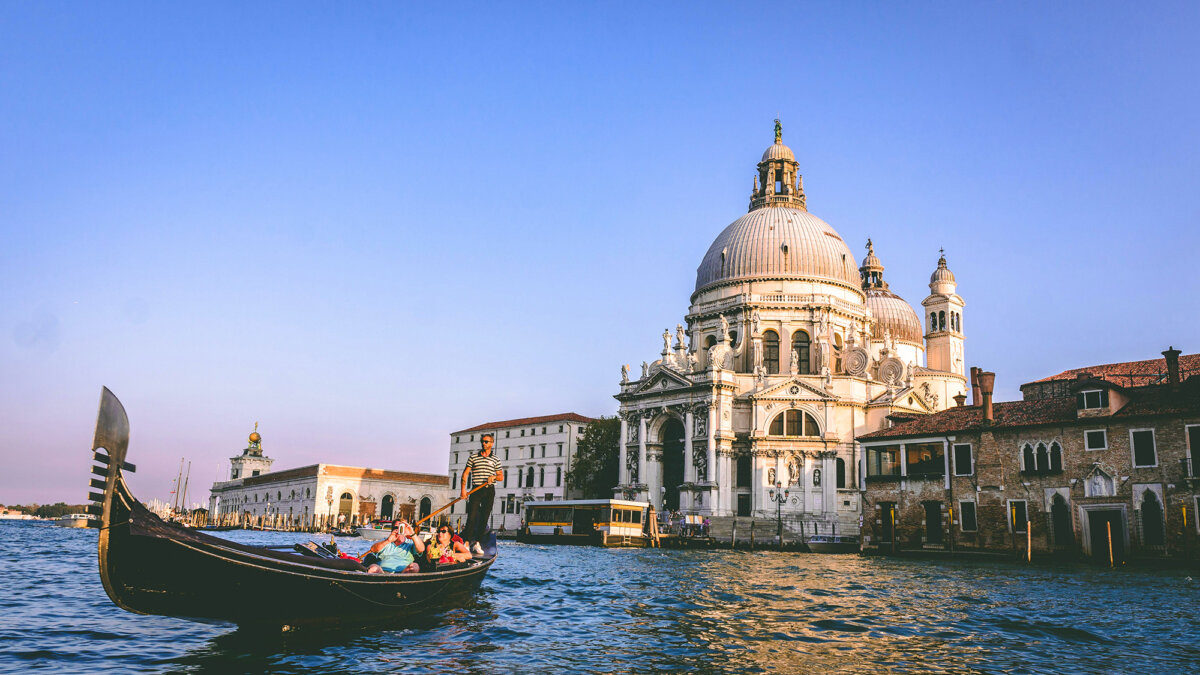
Is there a city as evocative—and romantic—as Venice? Just the name conjures up myriad magical images. Some 150 canals (or more) crossed by 400-plus bridges, all connecting, seemingly, more islands than you can count. (For the record, there are more than a hundred.)
Gondoliers navigate the waters bordered by Gothic, Baroque, and Renaissance palaces. The glory of St. Mark’s Square—its Byzantine basilica and towering campanile—all reflect the wealth and power of the centuries when the Most Serene Republic of Venice ruled the seas and coastline, all the way down to the Greek islands.
Of course, especially in high season, a city this historic and beautiful attracts lots (and lots) of visitors. There’s just simply so much to see in this Adriatic city. So here’s our guide to taking in as much as you can in just 24 hours, while avoiding the crowds—as much as possible.
Arrival
Venice is one of the most popular cruise ports in the Mediterranean. But if you’re arriving on a big ship, be warned that a new rule is limiting access to the Venetian Lagoon, where cruise ships historically docked. You may find yourself docked in a farther-away place such as Ravenna or Marghera, and then busing it in the rest of the way.
However, most visitors still fly in. Venice Marco Polo Airport (VCE), on the mainland, is a bright, inviting place to land. Despite the city’s relatively modest size (about a quarter of a million residents), VCE is Italy’s fourth-busiest airport, a testament to Venice’s vast global popularity as a destination. Nonstop routes—some seasonal—land here from around the world, including several North American destinations, including Dallas, Washington, Toronto, and New York City.
The airport sits a little less than five miles from the city, and visitors have a few different options to get into town. Public buses (plus taxi and ride-share services) take less than half an hour by road and bridge. But arriving by sea is far more fun, and it seems rather appropriate for such an aquatic city.
There are two main choices: a private or shared water taxi and the Alilaguna water bus. The latter operates three lines (blue, orange, and red) through the Grand Canal and to outlying islands. Their dock at VCE can be accessed by a covered walkway (complete with moving sidewalk) about 10 minutes from the terminal. Notable tip: Because there’s virtually no automobile traffic in Venice, look up the closest pier to your hotel in advance, as you may be hoofing it, luggage in tow, once you disembark the water bus.
Morning
Yes, it’s the busiest spot in one of the most crowded tourist destinations on earth. So it’s best to head to St. Mark’s Square first thing, before the heat of the day builds, and the cruise and bus tours roll into town.
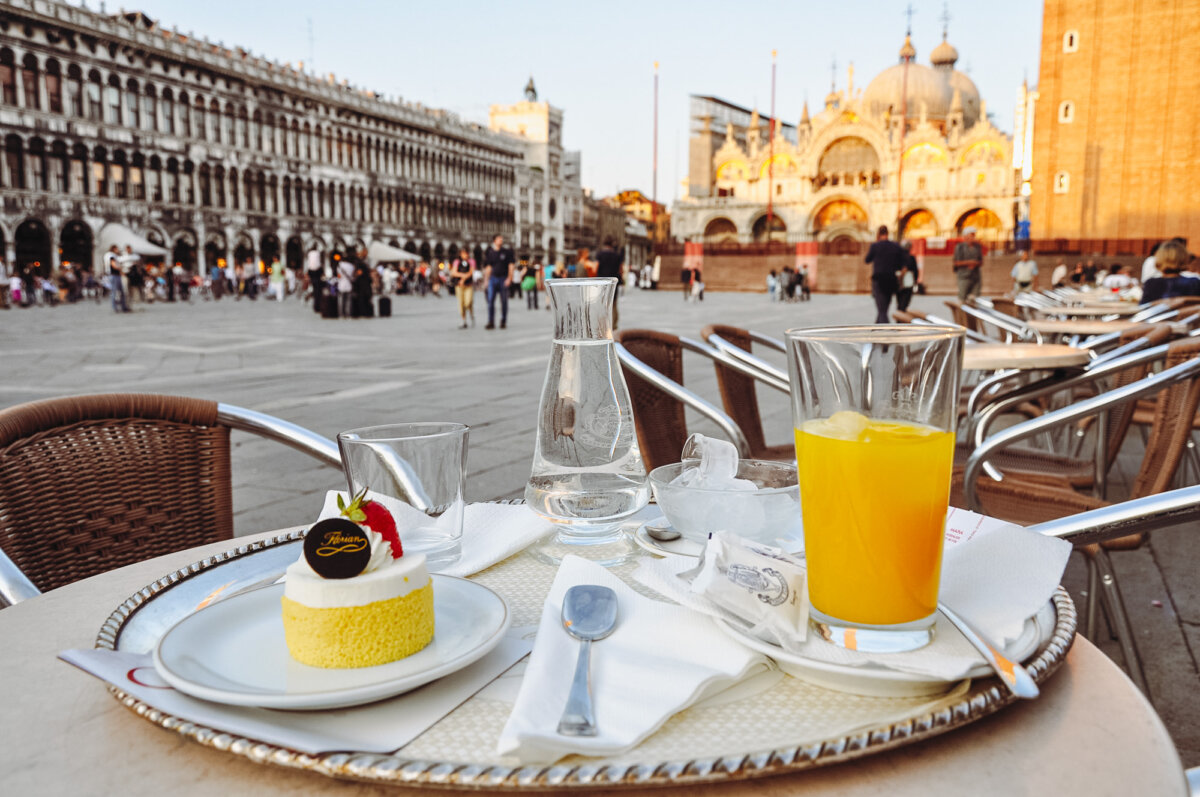
Fortify first, perhaps at an al fresco table at Caffè Florian, Venice’s oldest coffee house, established way back in 1720. Fuel up with a double espresso and one of their breakfast specialties, perhaps a croissant filled with buffalo mozzarella, ham, or basil and tomato. This little meal certainly comes with a price tag (perhaps 20 euros to 25 euros per person for both the food and drink), but the view is more than worth the cost.
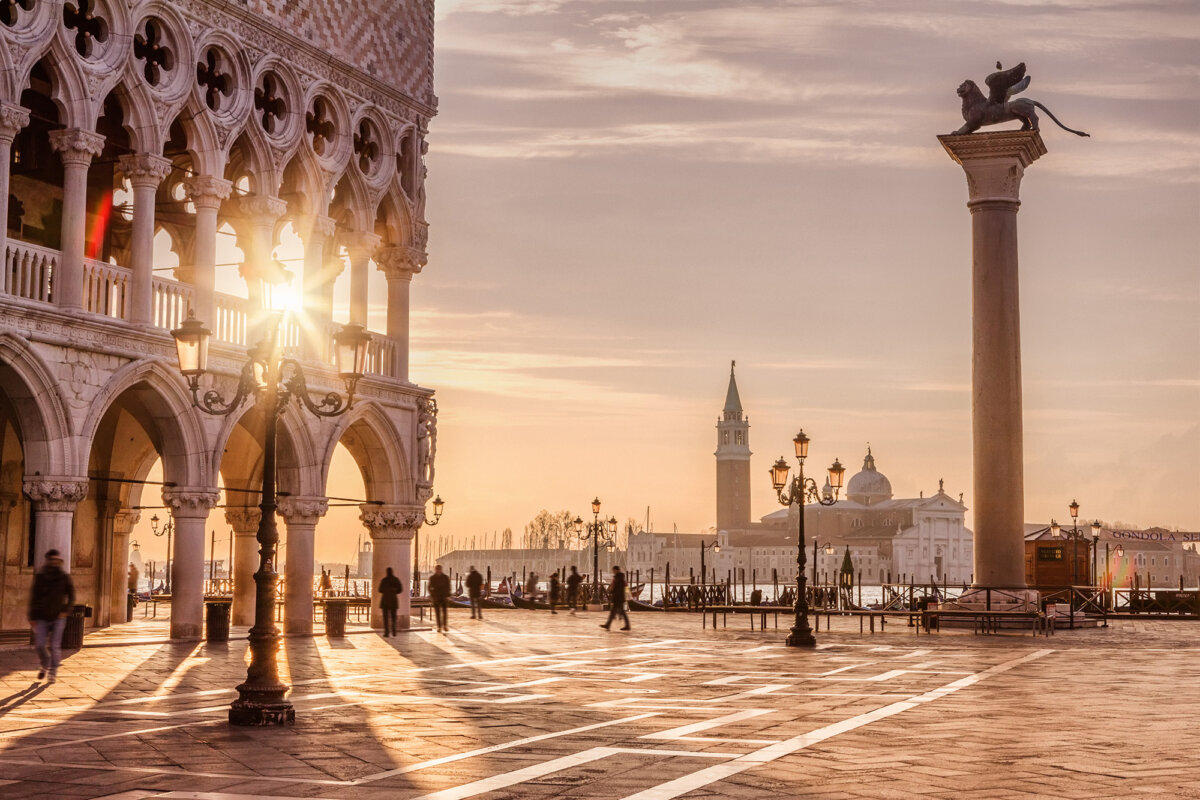
But don’t tarry too long. True and utter magnificence awaits. Like so many glorious historical spots in Italy, St. Mark’s Square (Piazza San Marco or, often, for Venetians, just la Piazza) is the kind of place where you could spend an entire day. So although you’ll have enough time to see everything, I’d recommend moving quickly.
La Piazza is, in every way—political, social, and religious—the beating heart of Venice. Development here dates all the way back to the ninth century. Everything here is a reflection of the wealth and power of the Venetian Republic at its peak.
Settlement in Venice had humble beginnings: small isolated communities of people driven from the mainland to these islands. They survived with industries such as salt mining and fishing. The area initially flourished as an independent city-state ruled by an elected doge, sandwiched between empires.
The Republic sacked Constantinople in 1204 during the Fourth Crusade, carrying home the spoils. They built a trade empire in the Eastern Mediterranean that reached its zenith in the 15th century, and Venetians controlled silk and spice routes. It all lasted more than a thousand years, until Napoleon defeated and dismembered the Republic in 1797. (For the record, the French general really liked St. Mark’s Square, calling it “the most beautiful drawing room in Europe.”)
The Basilica is probably the most popular attraction on the square—so start there. Two quick pieces of advice: Booking a ticket in advance will let you skip the queue, and there’s a dress code to enter—knees and shoulders must be covered up. So leave the tank top in your suitcase, and maybe select your longest pair of shorts (or stick a pair of light, breezy pants in your backpack).
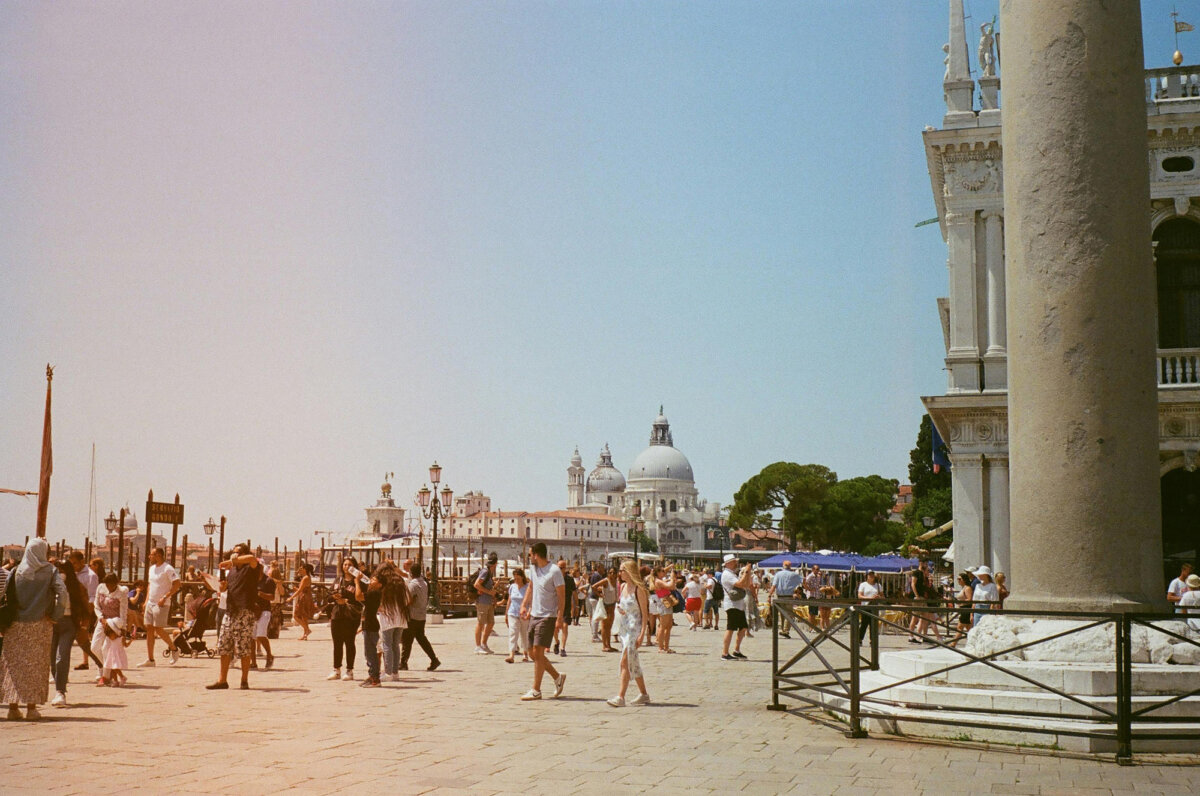
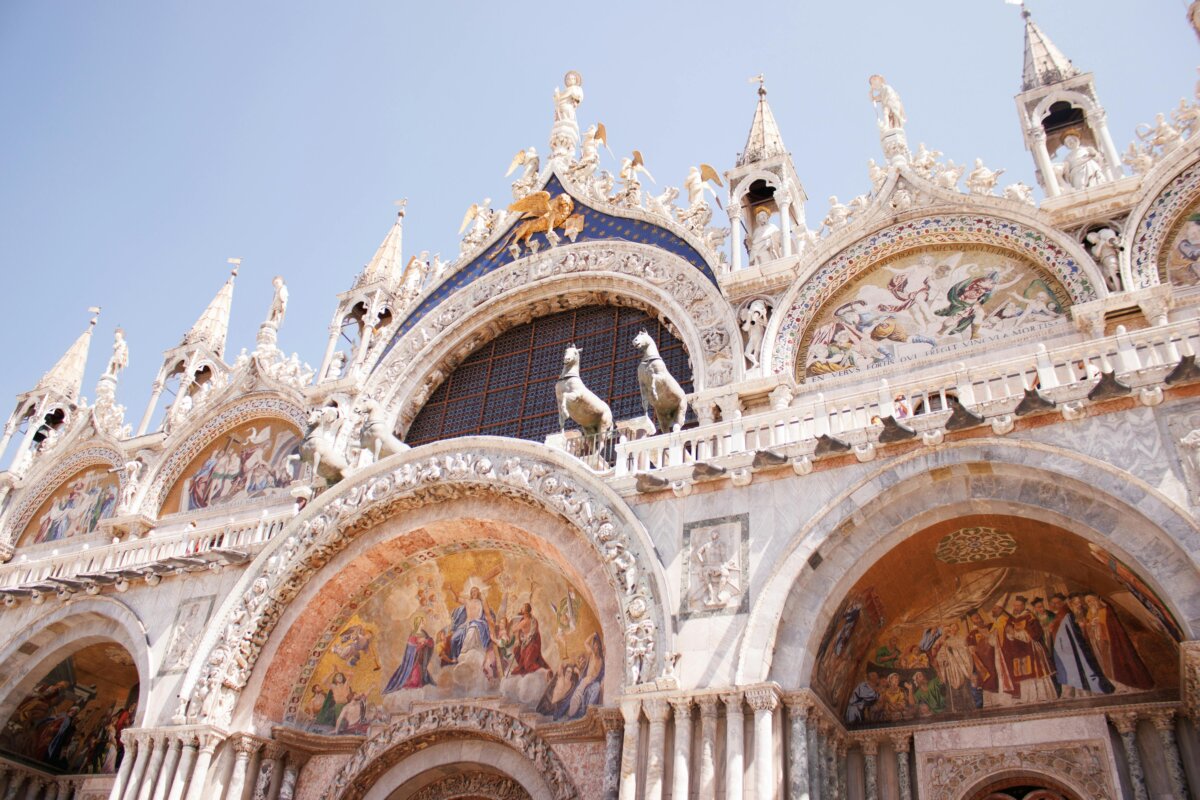
Whole books have been written about the Basilica. But, in short, builders constructed this wonder in the 11th century, bringing together Gothic, Byzantine, and Renaissance influences. And they used so much gold: inside, golden mosaics relate stories from the Bible, and up behind the high altar, the Pala d’Oro is encrusted with literally thousands of gems. Check out the Treasury, which contains sacred objects collected over centuries.
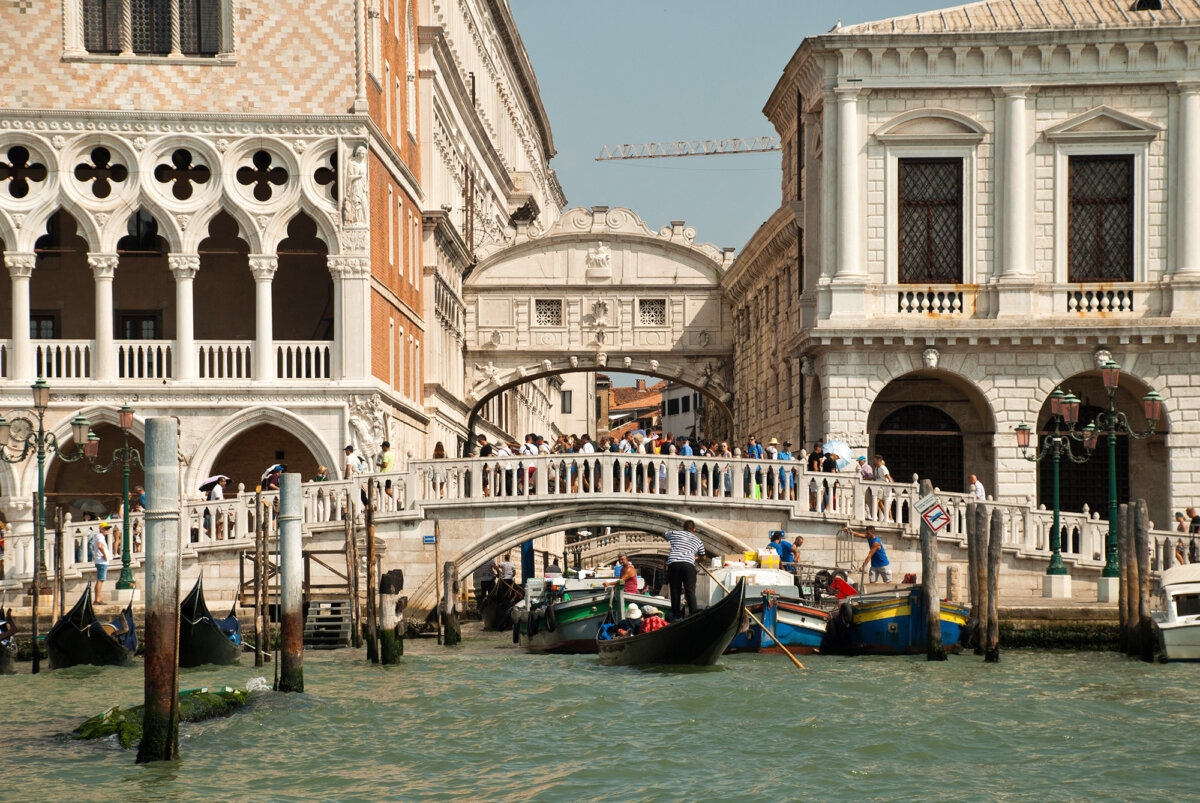
Round out your time at St. Mark’s with a visit to the Doge’s Palace (Palazzo Ducale) and its artworks, the Giants’ Staircase, and the Bridge of Sighs. Then, gather some energy to climb the steps to the top of the bell tower (campanile). The views from its apex give a true appreciation for the latticework of canals that connect this city, and, on a clear day, can stretch all the way to the peaks of the Dolomites.
Afternoon
It’s been a busy morning. But before grabbing a bite of lunch, cross Venice’s other must-see: the Rialto Bridge. From personal experience, I can tell you: Even on quiet, rainy, off-season afternoons you sometimes need to push a little to get through the crowds to the other side.
Antonio da Ponte, an architect and sculptor, built the Rialto (whose name is a derivation of the Italian for “high bank”) in the late 16th century. It’s a single, stone span stretching a little more than 150 feet across the Grand Canal, covered by a portico lined with busy shops. Until the 19th century, this was the only bridge across the canal.
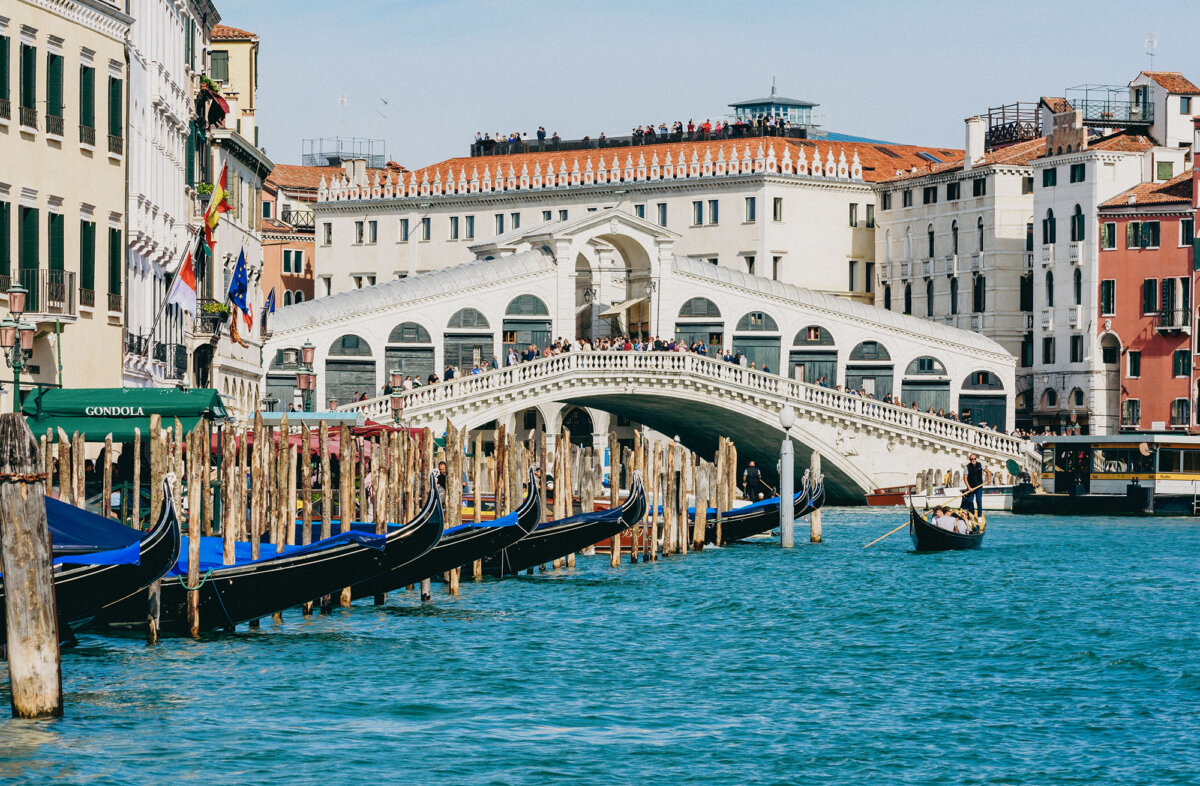
Honestly, viewing the Rialto (rather than standing on it) is the main attraction here. So snap a few photos, then set off on a worthwhile pursuit—that is, a big plate of steaming pasta.
Avoid the touristy restaurants near the bridge and walk, up and down the steps of seemingly endless little spans crossing tiny, hidden canals. If you start to feel slightly lost—or even veer off course on purpose for some exploration—in these less-visited parts of the city, well, that’s one of the great pleasures of Venice.
Eventually, you’ll arrive at Osteria Alla Staffa. Bright and loud, filled with friends having lively conversations, this restaurant is where I enjoyed the best lasagna of my life. But they also offer local specialties. For example, anyone ordering the black-ink spaghetti with Venetian cuttlefish won’t walk away disappointed. Or hungry.
From there, it’s less than 10 minutes on foot to the water bus wharf at Ospedale. And likewise, the ferry from there to Murano takes about 10–15 minutes. As the heat and crowds build into the later afternoon, this breezy ride will be a great escape.
Enjoy an opportunity to see some of the most famous glass on earth—and how it’s made. They’ve been creating beautiful chandeliers, vases, sculptures, and other artisanal pieces on this island in the Venetian Lagoon since the 13th century.
You’ll get a great appreciation for it at the Glass Museum (Museo del Vetro). Witness firsthand the glass being blown and shaped, feeling the heat from the kiln, at workshops such as the Murano Glass Company.
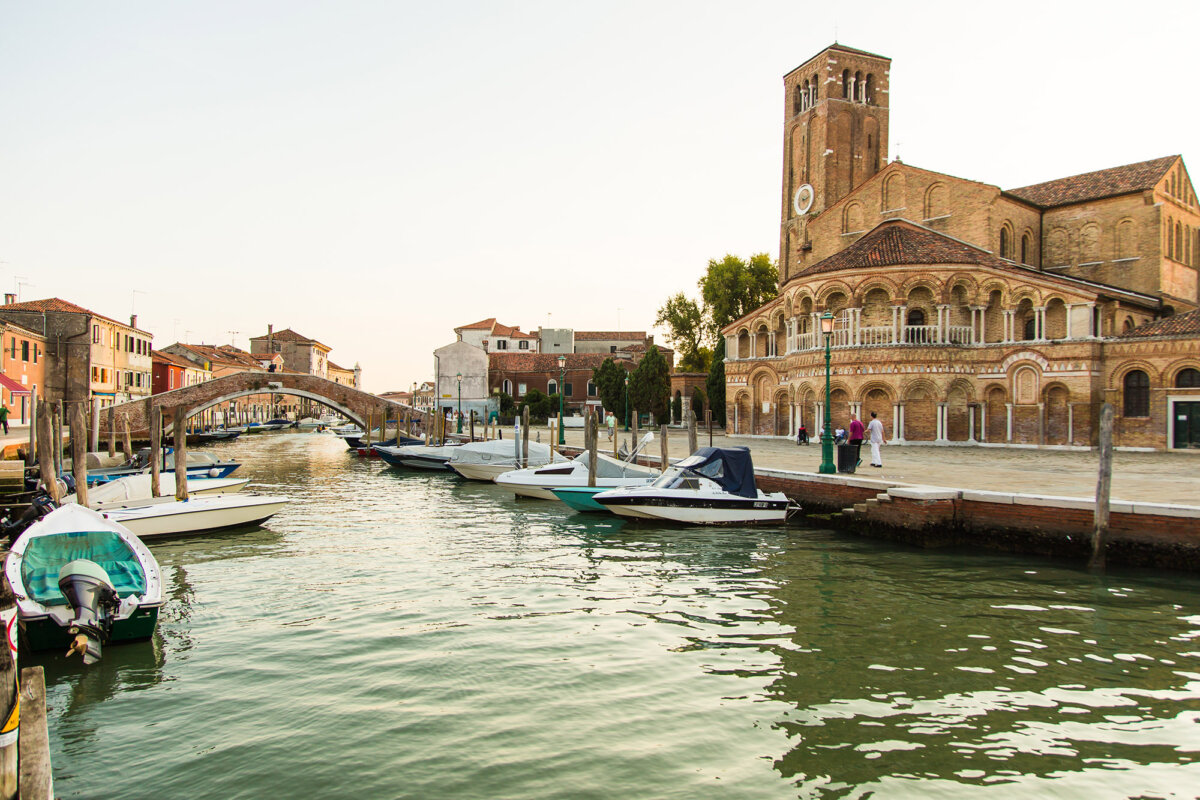
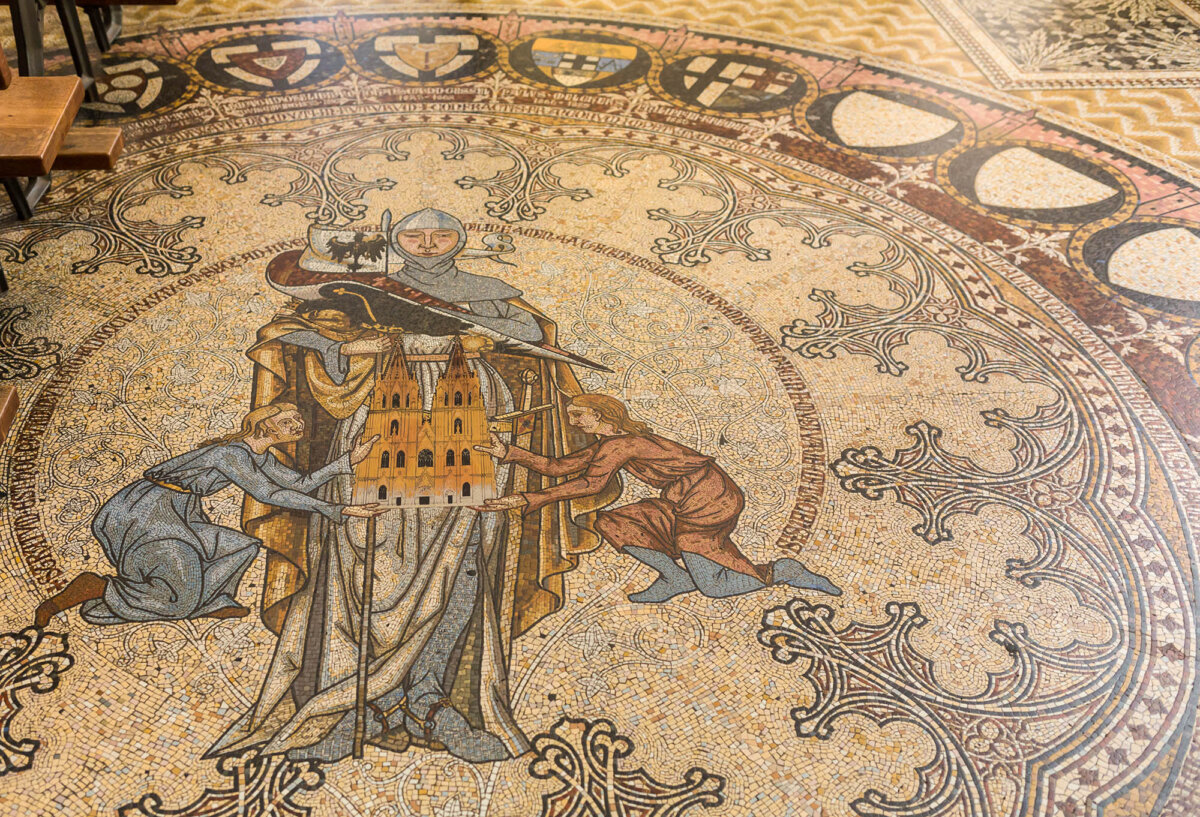
While you’re on the island, a brief visit inside the medieval Basilica of Saint Mary and Saint Donatus (Basilica Dei Santi Maria e Donato) is also recommended for its exquisite Byzantine mosaic floors and also—according to legend—the bones of a dragon slain by Saint Donatus back in the fourth century.
Evening
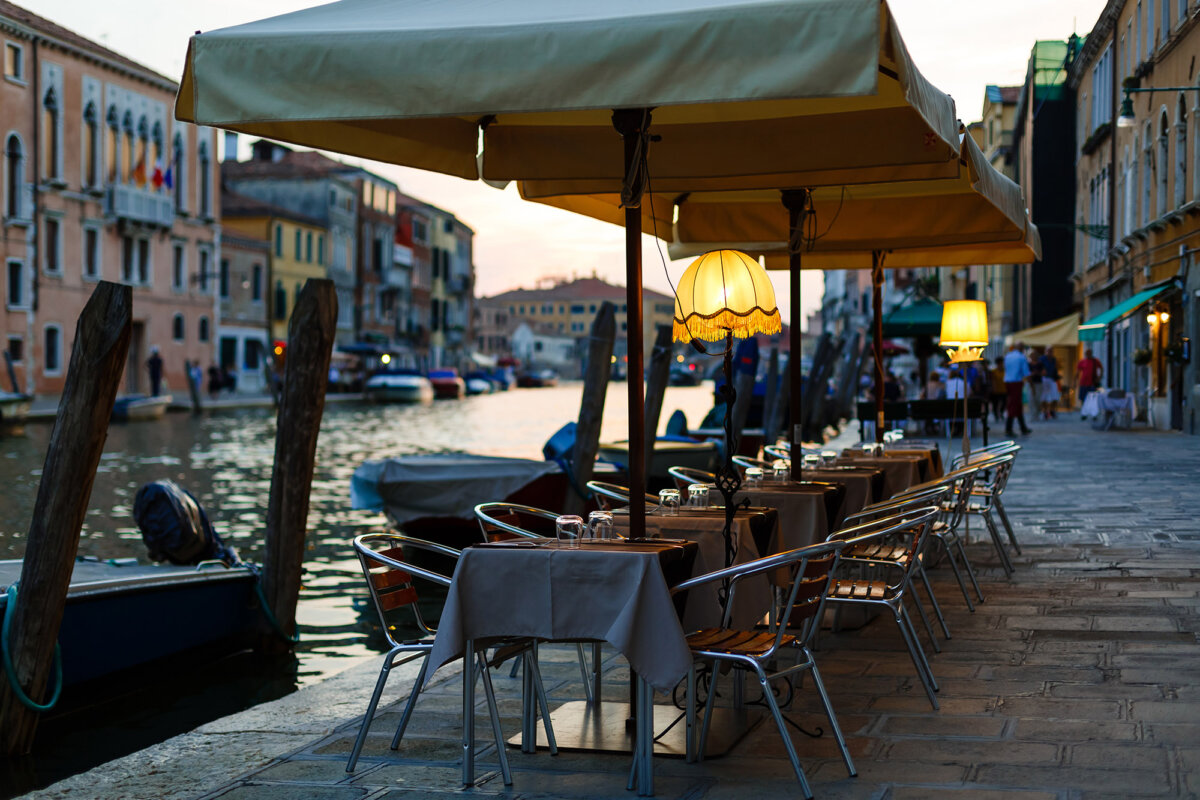
After a heavy lunch, dinner can be a simple affair. Even some Venetian street food should suffice. Many food stalls that line the lanes of the city sell cicchetti, small bites like tapas, such as meatballs and potato croquettes and, of course, cold meats and cheeses.
Pair it with a glass of red Corvina from the surrounding Veneto wine region, and you’re off to the races—or rather, the opera. After all, this city is home to Teatro La Fenice, one of the world’s most famous opera houses, and with good reason.
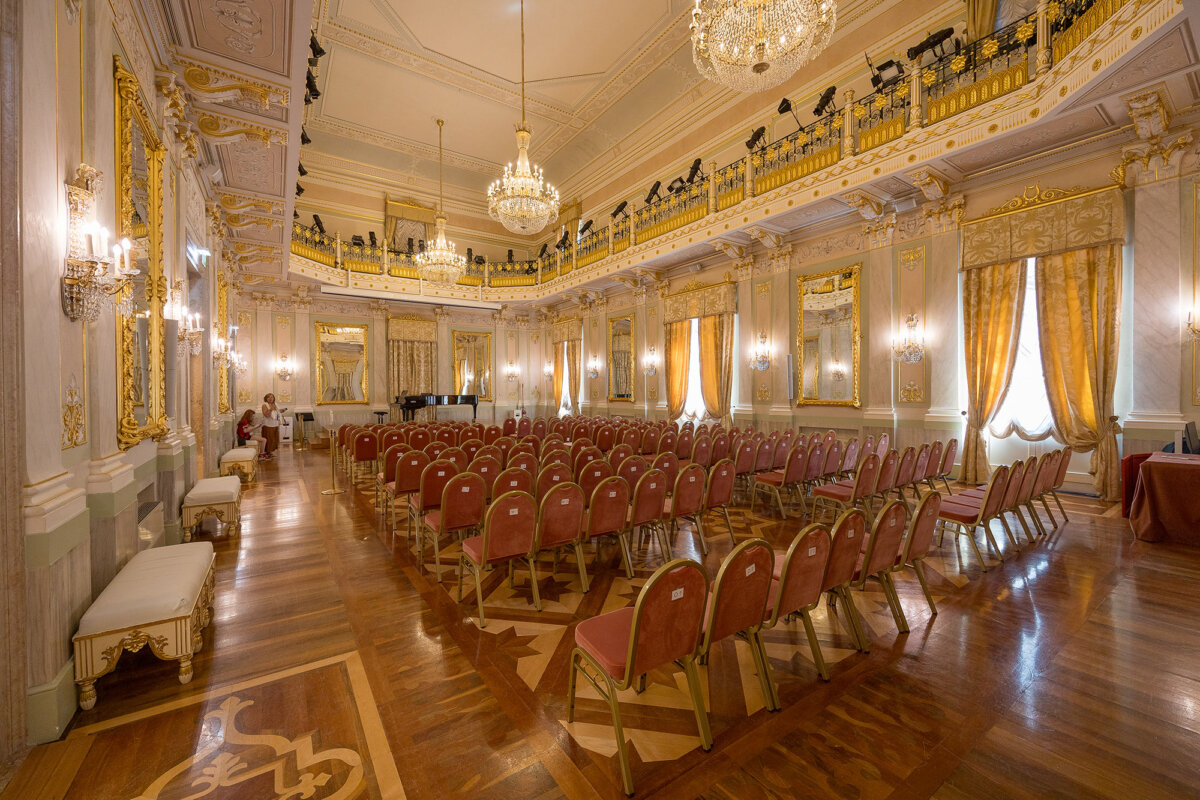
Just getting inside the building, gilded in gold leaf and stunning from every angle, is worth the price of the ticket. Everyone from Rossini to Verdi to Bellini premiered their work here. Although the current structure only dates to the early 2000s, rebuilt after a devastating fire, it gives truth to the name: La Fenice means “the Phoenix,” always rising from the ashes.
Afterward, the night is yours. Find a singing gondolier and take a ride, or just savor some gelato and zip up and down the Grand Canal on the Vaporetto water bus. There’s no bad way to end an amazing day in Venice.
____________
A Note on Language
Given the fact that this is one of the world’s top tourist destinations, almost everyone who works in Venice’s service industry speaks English. However, it’s always appreciated to learn a few words in Italian, especially thank you (“grazie”) and the all-encompassing “ciao,” which can be used for hello and goodbye.
Paying the Access Fee
Famously, Venice has begun charging visitors to access the city during peak days. The good news: It won’t cost you much. Day-trippers must pay 10 euros per person, or five euros if they’ve paid online at least four days in advance. And more good news: If you’re staying overnight, you won’t need to pay this as a separate charge.
