



I’m enjoying myself much more than I should be.
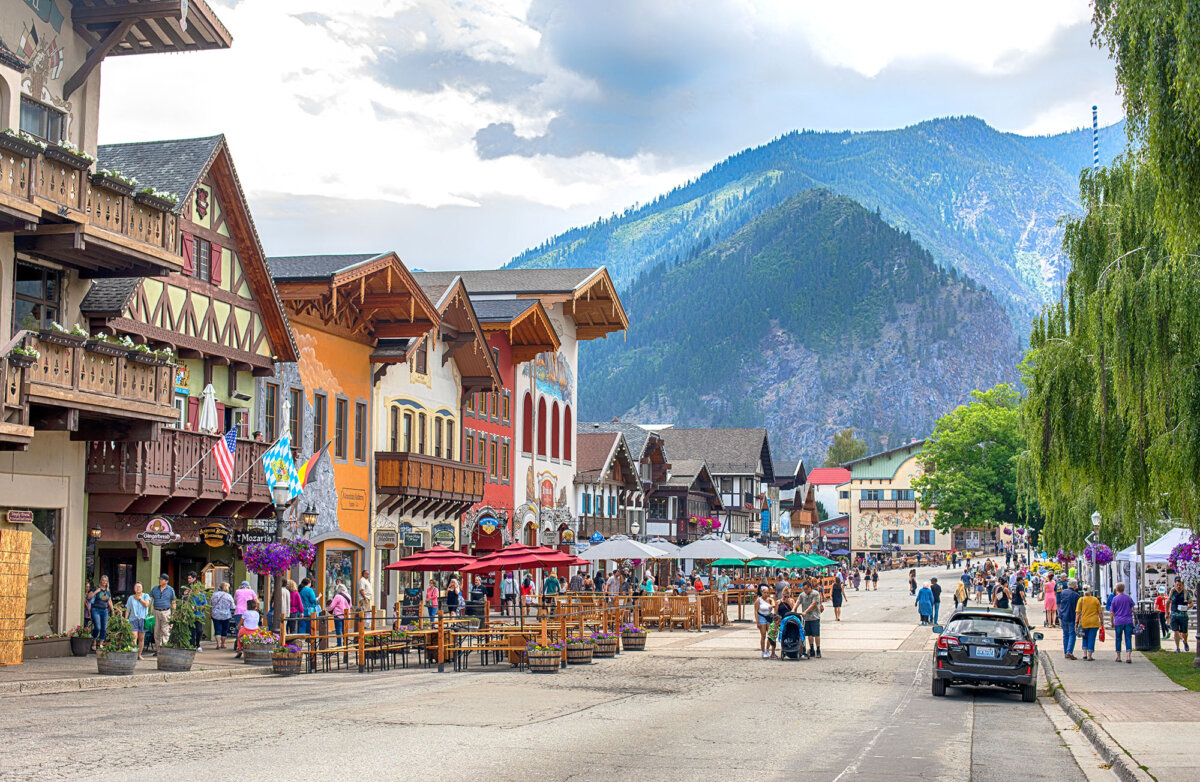
My wife Nicole and I are having dinner at a faux Bavarian restaurant in a faux Bavarian town in the mountains of the Pacific Northwest, 5,000 miles from Germany’s Bavarian Alps. Leavenworth, Washington, is a mining-and-timber enclave that fell on hard times and deliberately reincarnated itself as a tourist destination. The urbane view of this is that worldly travelers should shut their eyes while they speed through town as quickly as possible.
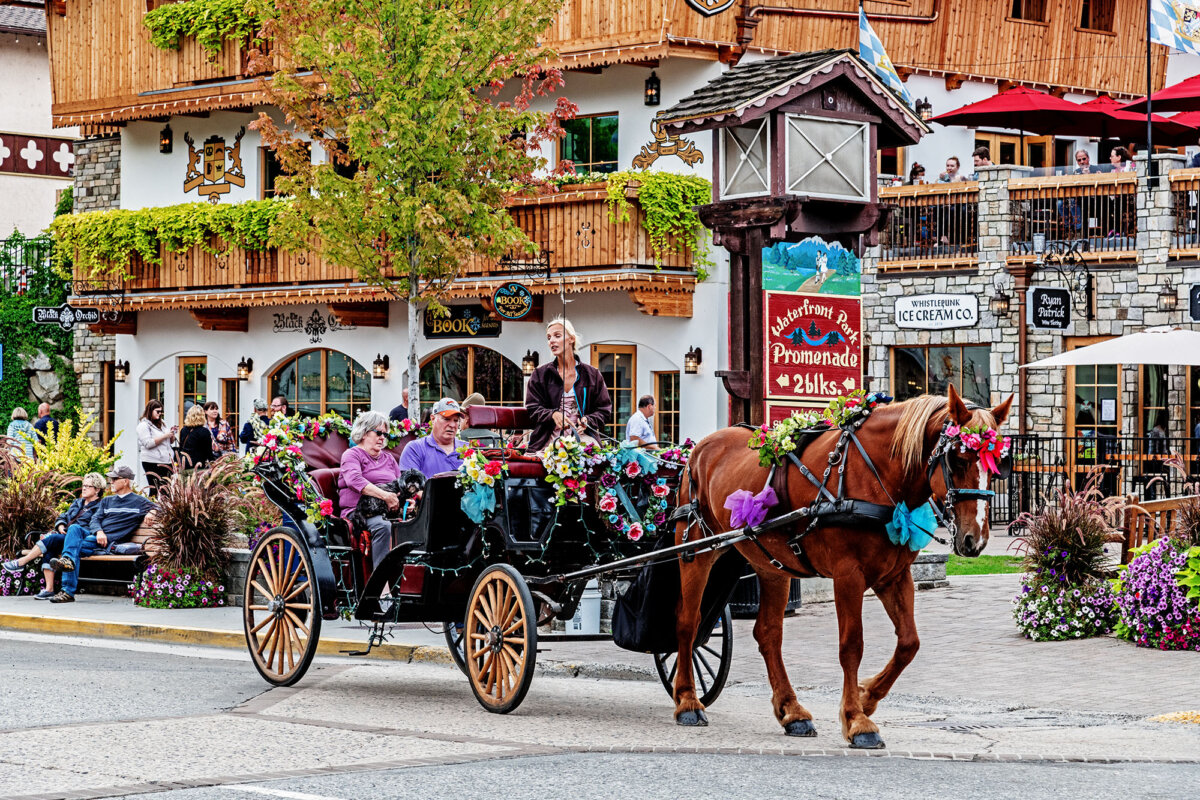
Plenty of faux frolic goes on here in Leavenworth. Locals dressed in embroidered dirndls and sheepskin lederhosen greet travelers in the cobblestoned old town. Oompah music echoes through the town square on weekends. High peaks climb to the sky nearby—not Alpine, though the North Cascades are sometimes labeled the “American Alps.” Icicle Creek cascades through town, and is very aptly named, so nothing faux about that.
I eye my plate of schnitzel and spaetzle in happy acceptance. Nicole has schupfnudeln—potato dumplings with forest mushrooms. Are these world-class examples of German mountain food? Not quite. But they are lightyears better than McDonald’s or Pizza Hut or even Der Wienerschnitzel.
We’ve had these dishes in actual Bavaria, along with many kinds of wurst (sausage), piles of sauerkraut, and Black Forest cake, which is actually a delicacy from an area neighboring Bavaria. But here in Leavenworth we drove just four hours, rather than flying 5,000 miles, to find more bratwursts per square foot than anywhere else west of Milwaukee. Plus, there are kindly old grandpas wheezing out polkas on accordions bigger than beagles. Quaint—and infinitely preferable to canned satellite music.
So it goes in American tourist towns, travel icons not quite duplicated anywhere else that I’ve been. Most are built on a single facet—music in Branson, Missouri, for example. Some ply one trade: Weddings in Eureka Springs, Arkansas, a delightful historic town draped on an Ozark hillock not far from Branson. Old time music fans can get married in Eureka Springs, then hie themselves to Branson, and do the two-step to The Famous Baldknobbers.
National Travel & Tourism Week is coming up (May 3–9), an occasion when all involved honor the industry and reflect on its significance. Global travelers tend to celebrate the virtues of little-known lamb-strewn vales in England’s Lakes District, or arcane festivals devoted to sea chanties in the hills of Western Massachusetts.
Well, not me; not this year. I’m here to sing the glories of America’s tourist towns, the places where tour buses outnumber pickup trucks on summer days, and no one hems or haws about the crucial economic significance of travel. If you like to travel, tourist towns are for us. No one whines about over-tourism. Everyone greets visitors with grace and gratitude. And despite obvious mass-market leanings, many hold a world-class institution or two.
Leavenworth, for example, is the home of Sleeping Lady Resort, one of the very finest mountain lodges in North America. The airy, light-filled timber-frame buildings line Icicle Creek, the rooms have every comfort but televisions, marvelous hiking trails lead up the creek from the lodge, and there’s not a speck of spaetzle or schnitzel to be found.
It’s easy to find surveys online where cynics vote for the worst of the bunch. Each of these towns has awkward facets that beg to be mocked. So does almost every tourist attraction on this planet. I favor the ones below for their honest embrace of what they are; in new age terms, they are self-actualized and completely congruent.
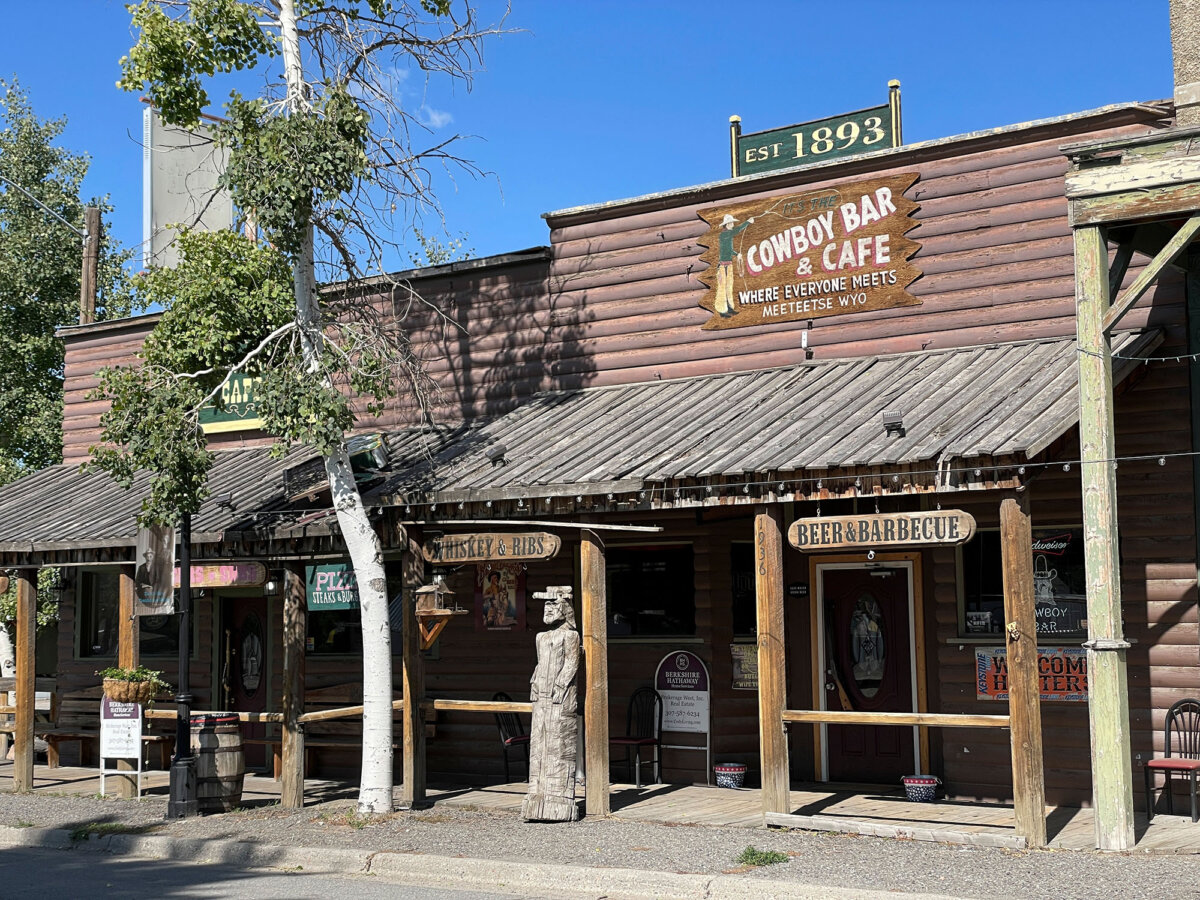
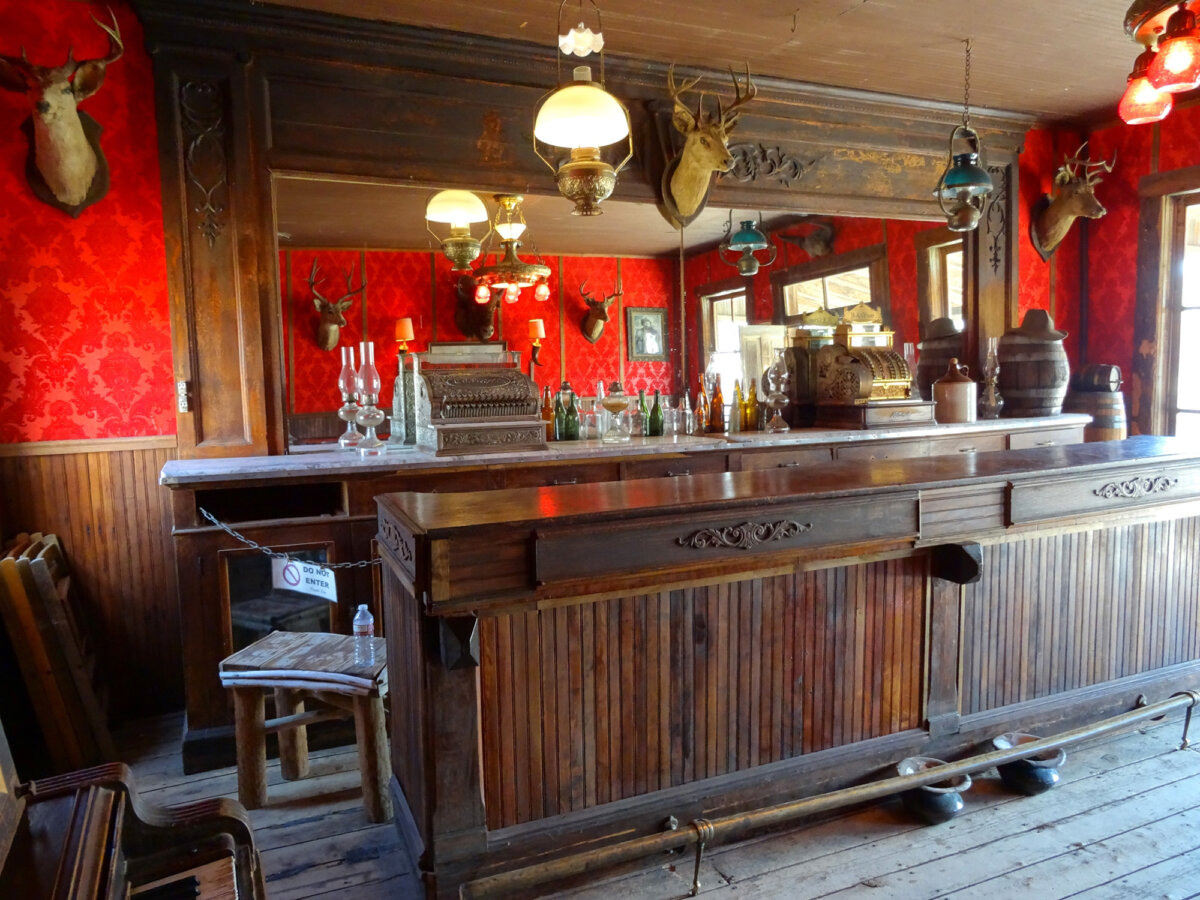
Cody, Wyoming
William F. Cody’s supposed life sounds like a movie script.
At 15, the young lad rode across the Western U.S. nonstop for the Pony Express, setting a new land speed record of 4 days, 17 hours, and 21 minutes. At 18, he headed West for good and personally killed 1 million buffalo with a black-powder sniper rifle, laying claim to his lifelong moniker, Buffalo Bill. At 37, he survived the Battle of the Little Bighorn. Later he repented of his war on bison and Indians, and tried to save both from extinction.
After creating the most popular touring Americana show in history, being personally knighted by Queen Victoria and Kaiser Wilhelm, and rescuing Annie Oakley from Deadwood trick shot wagers, he returned West and built his own namesake northwest Wyoming town, Cody. To this day, it’s a monument to this most colorful American character. Or charlatan, depending on your point of view. There’s no question he embellished his life story as much as possible (as have I).
Absurdly famous at his death, a battle erupted for Cody’s burial site. Denver eventually won, and there he rests on a ridge west of the city. Unless you believe the local legend that Cody partisans stole his coffin and reburied it near his namesake town.
The burial battle is bizarre but true, but some of the Buffalo Bill legend is nonsense. Though he’s legendary for his Pony Express exploits, historians debate whether he ever carried the mail across the country at all, never mind in record time. If he ever was a scout for George Armstrong Custer, he did a poor job, didn’t he? Buffalo Bill’s legend is as windy as Wyoming, but it’s vivid and memorable. It’s hard to think of another town anywhere founded by, named for, and still devoted to an individual American icon. Lean into the fables, I say, they are part of the show.
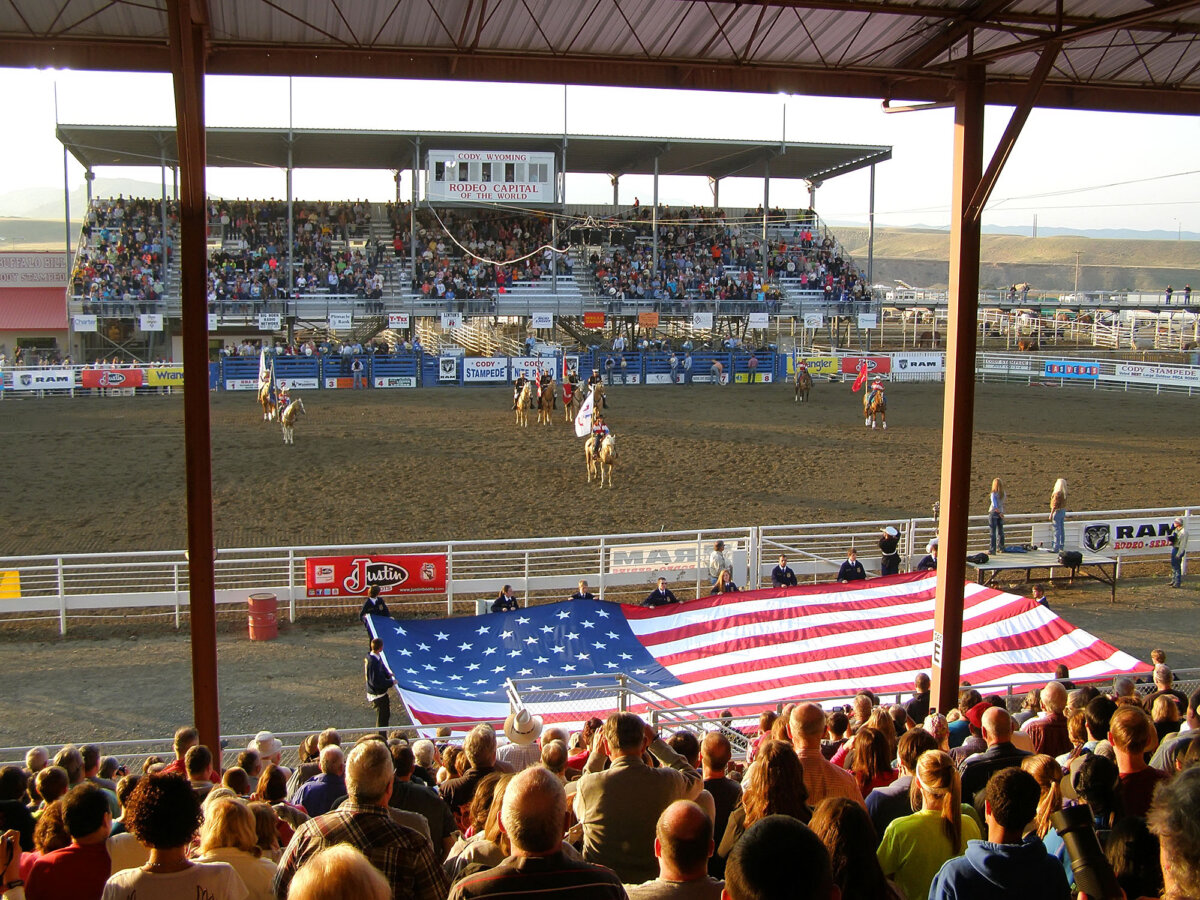
Cody is also a grand spot to savor the neo-authentic flavor of the West. A rodeo at the edge of town takes place every night in the summer; it’s a real competition rodeo with ridin’ and ropin’ and general carrying on. The gals do barrel racing, the kids chase calves around the arenas, and the announcers sound like Sam Elliott. Rodeo is a real-meal-deal lifestyle in the West, and it really does derive from actual ranching work. Most of it. Cowboys don’t ride bulls much.
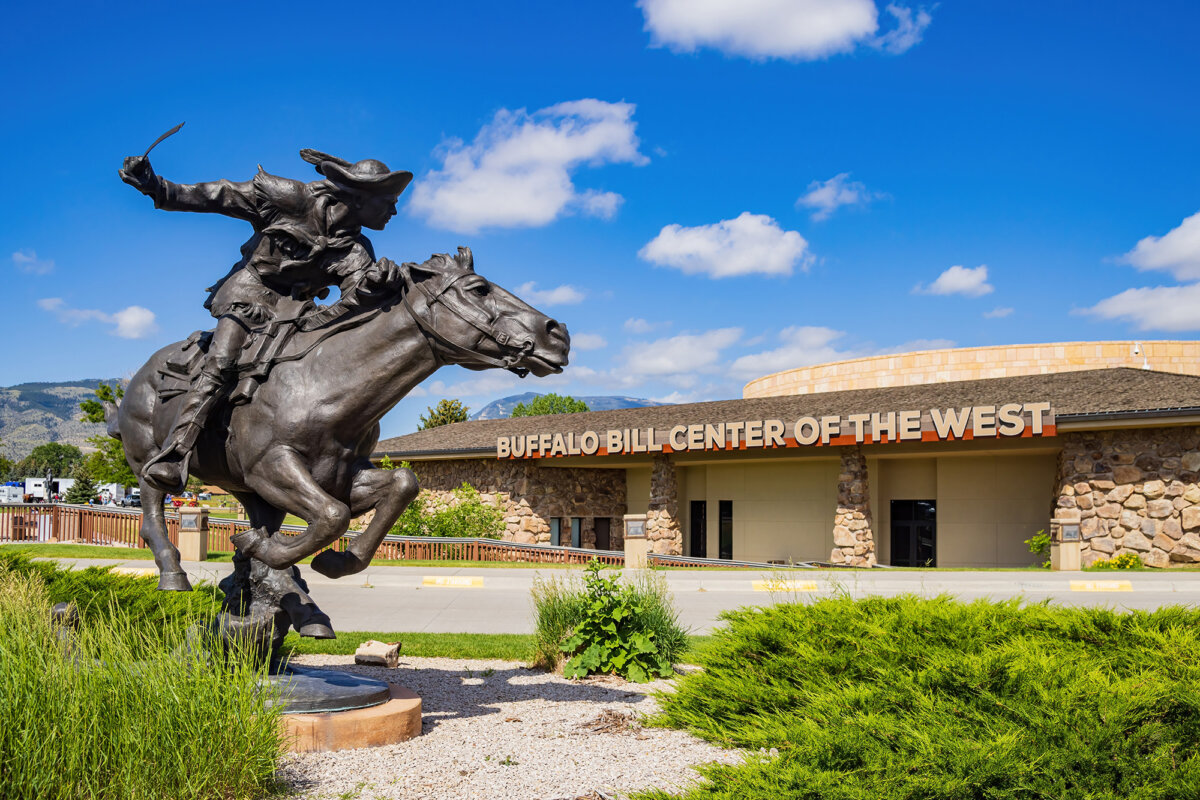
In Cody, the institution that unreservedly earns five-star status is the Smithsonian-affiliated Buffalo Bill Center of the West, an admirably compact but comprehensive group of museums devoted to Western art, Plains Indian culture, natural history, firearms, and of course Buffalo Bill himself. In particular, the Whitney Western Art Museum is simply outstanding, with a carefully chosen collection that measures up to any in the United States. Thoughtful art fans can happily spend a quarter-hour divining the many layers of meaning in “Custer and 20,000 Indians.” Luiseño artist Fritz Scholder didn’t include Buffalo Bill, but nearby you can gawk at a 1906 Italian poster that shows Cody riding a bucking bullfrog. Yes, really.
In Cody you can get a bison ribeye at a dozen or so restaurants, and I recommend it—medium rare, please. There’s even a drugstore soda fountain in the center of town where they serve up actual, honest-to-god phosphate drinks, the tangy precursor of modern sodas. They taste great, and you can sit out at sidewalk tables and watch the Winnebagos wind their way west. No wagon trains, though.
Last but definitely not least, this is the best and easiest gateway to Yellowstone, the world’s premier national park.
Solvang, California
Why did a large contingent of Danish immigrants choose to settle this verdant swale just inland from California’s Central coast in 1911? “Cheap land,” one of their descendants tells me in a local Danish restaurant (there are about a dozen). If the notion of cheap land in California seems incongruent, so does the idea of a Danish settlement here to begin with.
Nestled in a green valley between steep coastal ranges, flanked by horse farms and hay pastures, blessed by both winter rain and summer sun, Solvang is as aesthetically appealing as a place gets—but not a bit like Denmark.
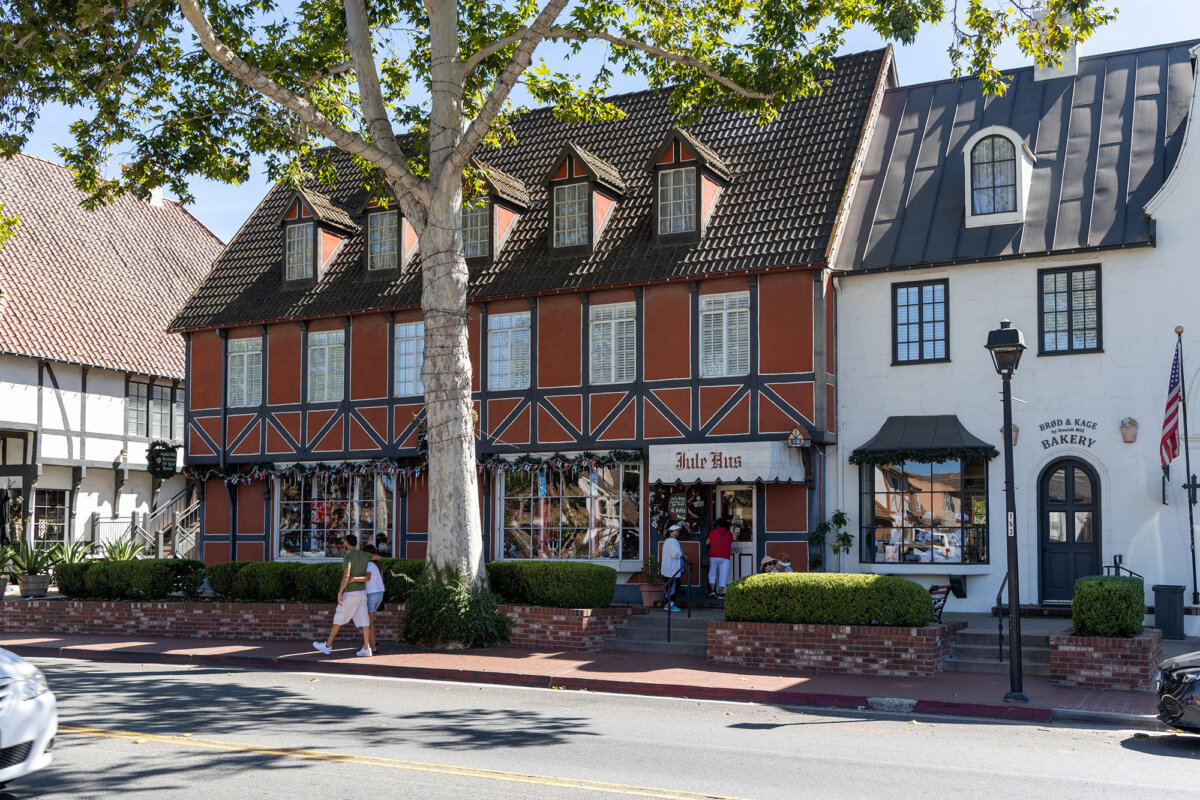
Save for the handsomely wood-trimmed quasi-Danish buildings lining the main drag. And the Danish food: There are few if any other places in North America you can get ableskiver, delectable round pancake batter concoctions featuring sugar, butter, and cardamom.
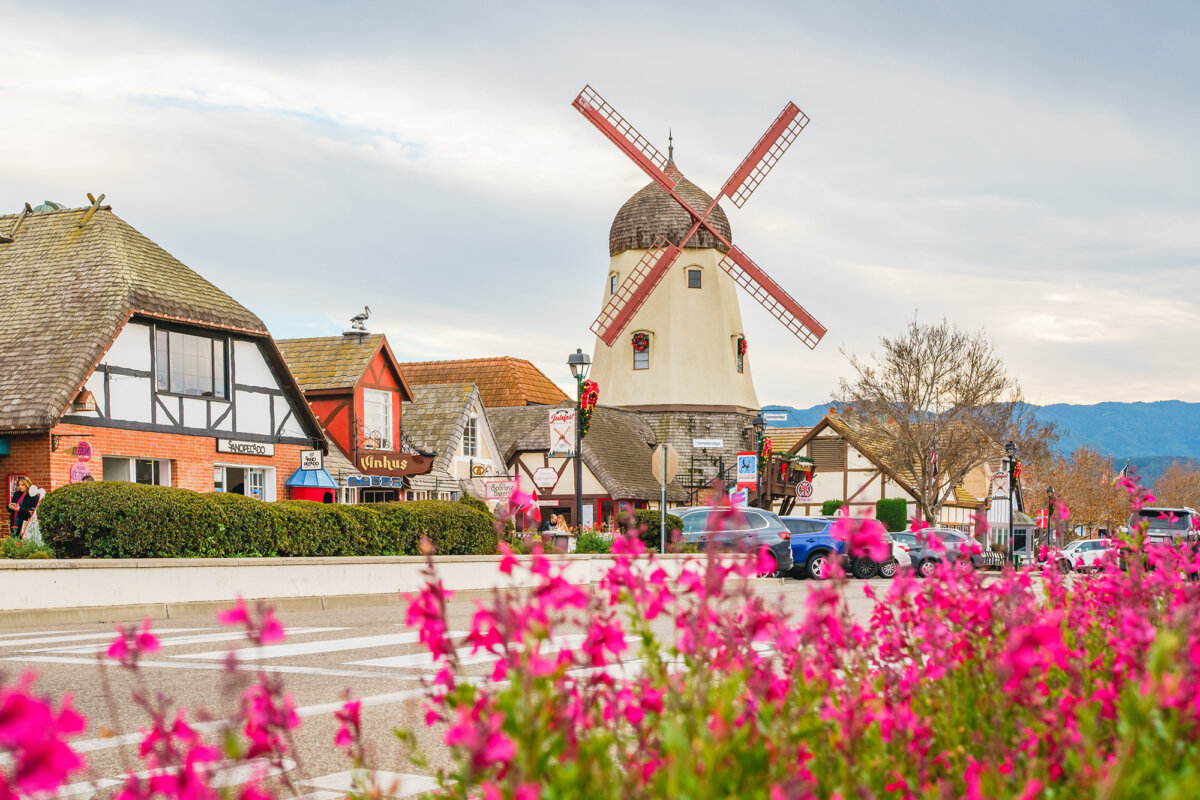
Estimates now place just 10 percent of Solvang’s 6,100 residents as of Danish extraction. No matter—the town’s commitment to its tourist identity is unswerving. Along with the restaurants, there are Danish knick-knack shops, plenty of bakeries, a few windmills, a Hans Christian Andersen Museum and an outdoor summer theater venue where, alas, Hamlet is not on the docket. Numerous boutique inns and small hotels offer tony lodging.
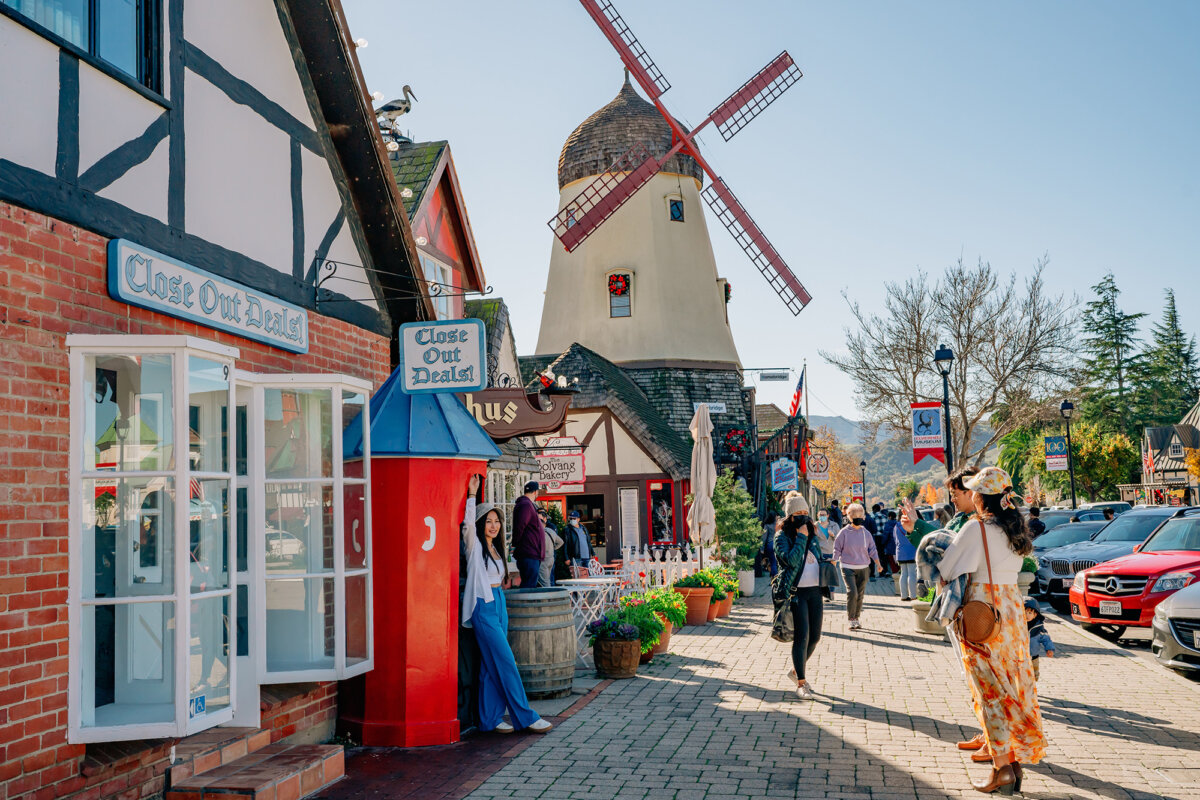
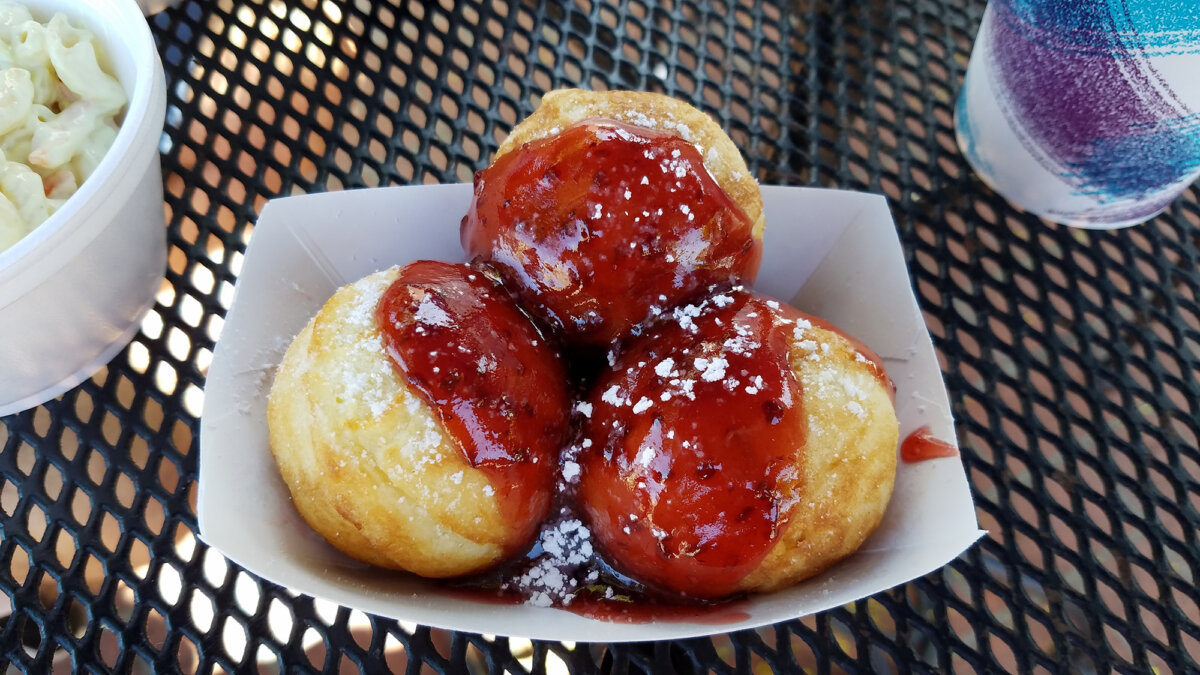
There’s one famous Danish icon in Solvang that’s much better than in Denmark: The Little Mermaid statue. Copenhagen’s original is one of the planet’s greatest tourist hoaxes: small, hard to see, and over-visited in the extreme. Solvang’s is perched at eye-level in a musical fountain in a pleasant patio in the center of town. Denmark is dandy, but if it’s this famous statue I want to see, I’d go to Solvang. Sure, it’s a replica; but the one in Copenhagen isn’t a real mermaid either.
Skagway, Alaska
On any given summer day the resident population of this Southeast Alaska historic port city is vastly outnumbered by visitors, almost all of whom arrive on the big cruise ships that ply these waters by the dozens from May through September. More than a century ago this was the departure point for fortune-seekers heading up to Klondike, the most fabled gold rush of all. Skagway became a classic boom town, and when the gold rush moved on, it declined rapidly.
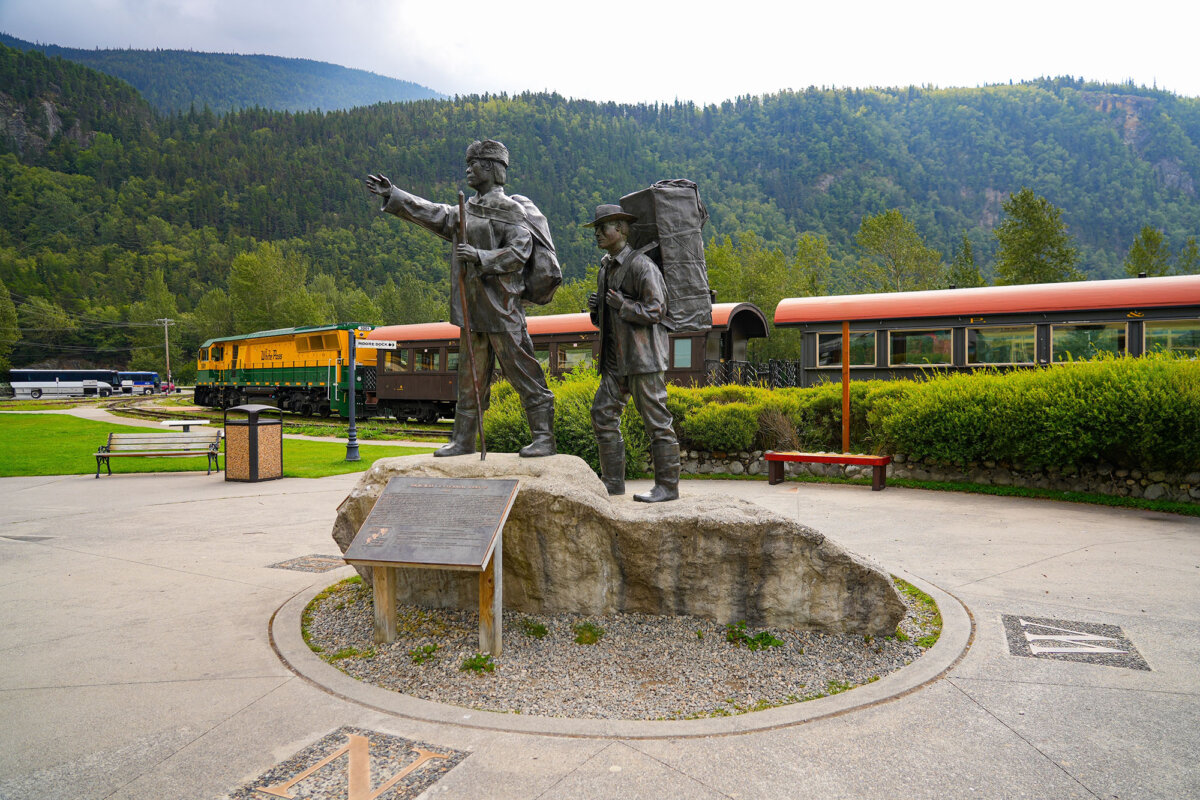
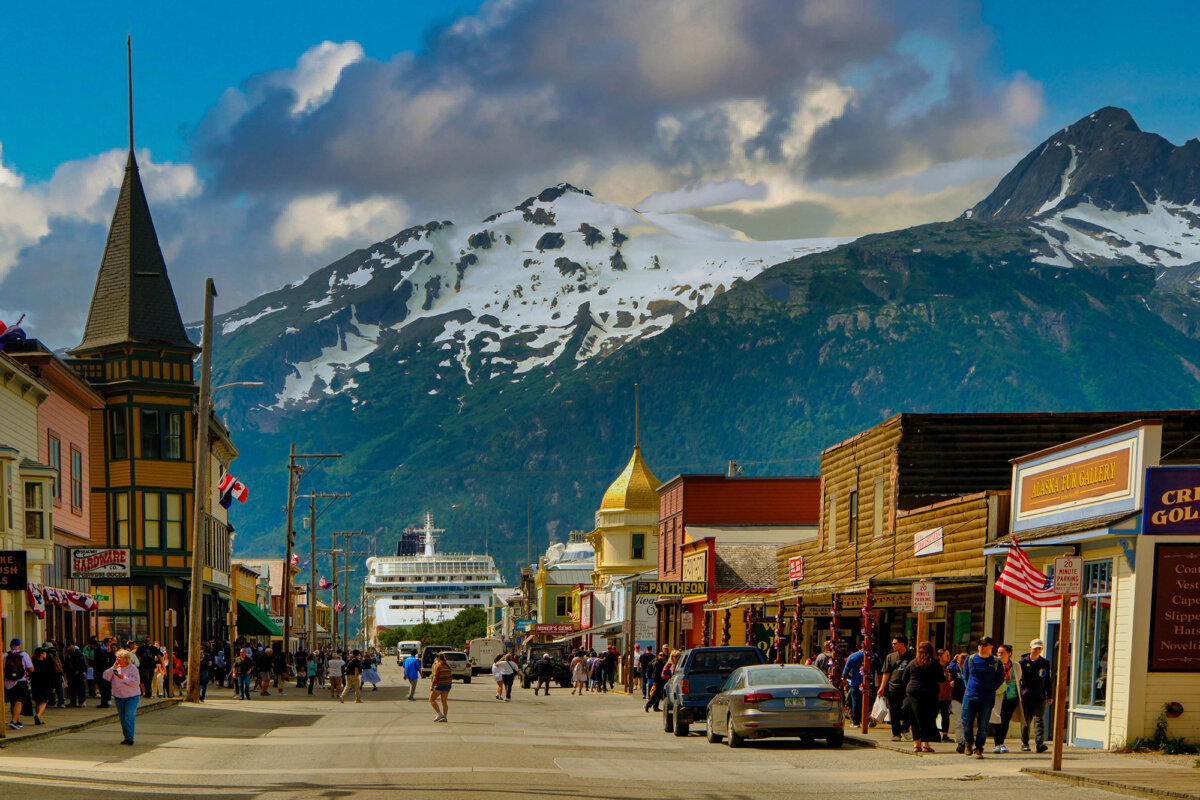
Now the whole town is a historic tourist attraction. Most is a national historical park, and vistors can also sample surrounding features such as the notorious Chilkoot Trail and nearby “Liarsville” camp where journalists hung out. Outside town is the departure point for the White Pass & Yukon Railway, widely considered one of the most memorable rail journeys on Earth.
The whole shebang is geographically compelling and physically authentic. The passage up 90-mile Lynn Canal, a sparkling fjord 2,000 feet deep bounded by glacier-clad 4,000-foot pinnacles, is stunning and exactly how gold rushers traveled. The buildings in town are mostly original (almost 100) and faithfully restored. Sure, they are filled with cafes and souvenir shops; and the visitor experience is chock-a-block with (overcooked) salmon bakes, cabaret shows in plank-floor saloons, and gold-panning venues where (surprise) the paydirt is salted with a half-dozen flecks.
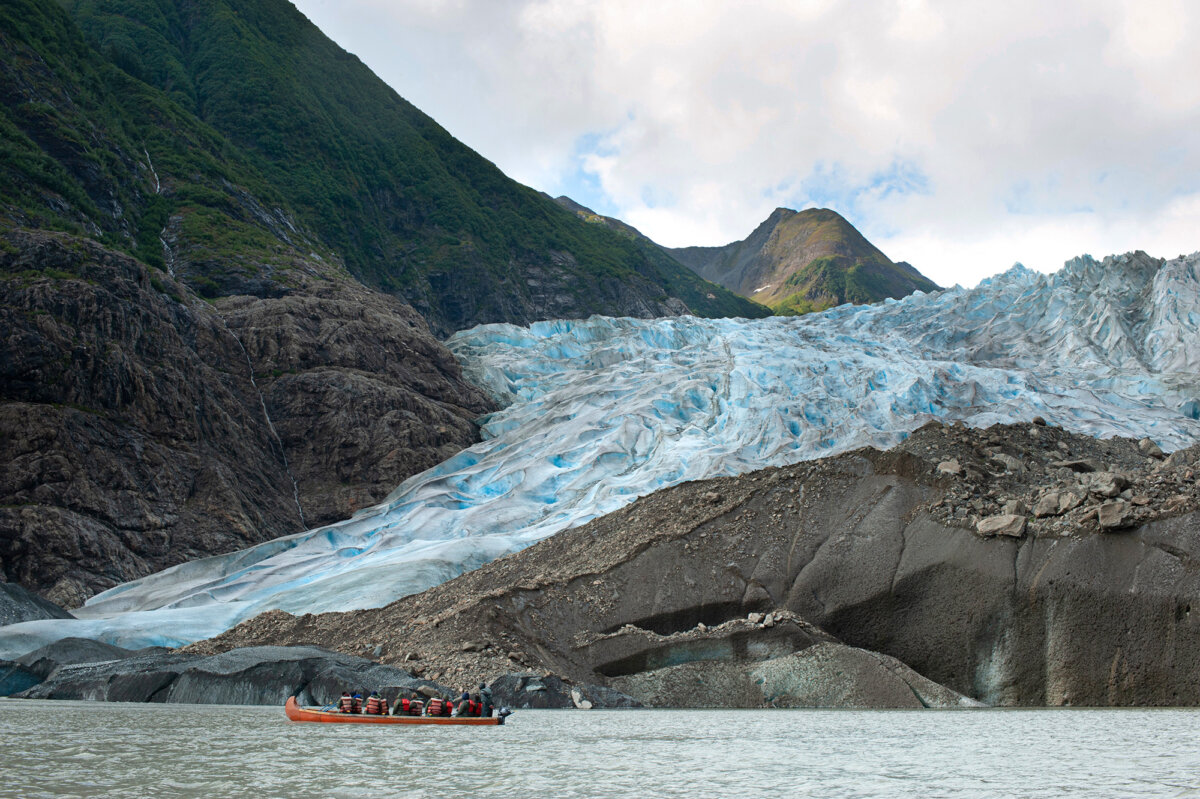
Visitors can also hop in a voyager canoe to see a nearby glacier, hike up short trails to scenic mid-mountain lakes, or test their mettle on the lower end of the Chilkoot Trail itself.
It’s a fascinating place to ponder the frantic pace of the sweep of history, and the weight of legend and fact. If you stay overnight (there are a few small inns) after the cruise ships sail, you’ll experience a wave of quiet almost historic in its embrace.
Key West, Florida
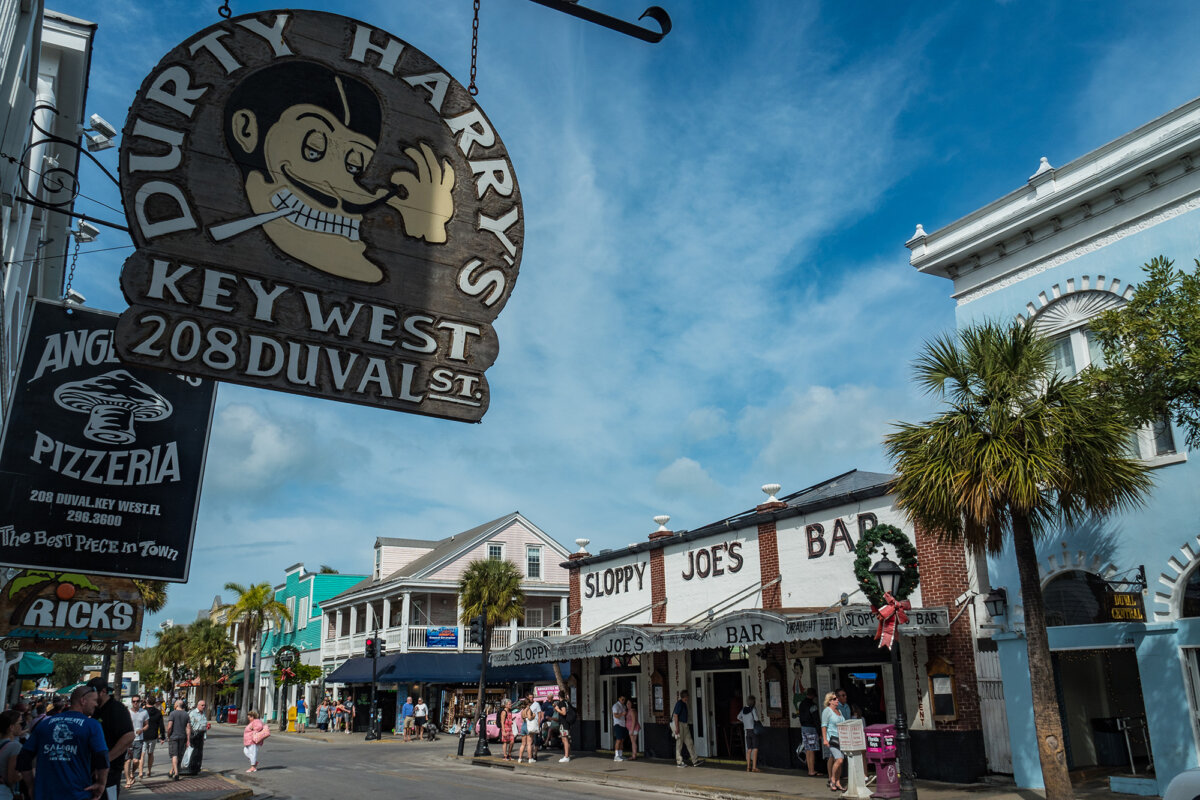
There are more T-shirts per square foot for sale on Duval Street, Key West’s main drag, than anywhere else on Earth. Even more than Estes Park, Colorado. Yes, I counted until I could no longer stand the raucous bar-band renditions of “Margaritaville” spilling out on the street like sargassum. Nor do I care how many cats Ernest Hemingway (60) or Tennessee Williams (1) had.
But this legendary end-of-the-road destination has several key virtues for tropical-island travelers:
- It really is tropical—the only city in the continental U.S. never to register a temperature of 32 Fahrenheit. In fact, it hasn’t been below 50 degrees Fahrenheit in over a decade.
- It’s the gateway to the mangrove maze of the lower Everglades. You can rent a kayak or canoe, push off from the edge of town, and be out in the saltwater wilderness in short order. Pelicans and herons, alligators and crocodiles, eagles and ospreys are your companions; the paddling is easy; and you literally won’t see anyone else. Bring a compass, lunch, and sunglasses. No singing bar songs.
Your reward that evening is:
- Key West is the birthplace and only real homeland of Key lime pie, and don’t let anyone tell you differently. There are reasons all other versions north of the Keys are flaccid, pitiful impostors: It must be made with Key limes, not grocery store green Persian limes, and the real fruits aren’t grown commercially. Instead, they are harvested from “wild” trees growing throughout the Keys and the juice is bottled by several local food companies. As a result of its home-town icon status, cooks here take Key lime pie very, very seriously, and visitors can profitably spend several days conducting intensive, necessary culinary research. Various versions include condensed milk or none, graham cracker crust or not, a chiffon topping or not. But they are all made with authentic Key lime juice. Nobody can say which is best without sampling as many as possible.
Is this the best dessert in America? It gives apple and cherry pie a run for the money, and this is the one and only place to find it. A long way to go for a dessert but … what’s life for?
But Wait! There’s More
Dawson City, Yukon: The Klondike stampeders who set off from Skagway were headed here, 440 miles north inland, and like Skagway, the town is almost totally dedicated to history-seeking tourists. So, salmon bakes, cabaret shows, plank-floor saloons await you. This is the land of grizzly bears and moose. Once here, be sure to ask in one of the many bars about the infamous “sourtoe cocktail.” No, I won’t describe it.
Estes Park, Colorado: Elk bugle in the nearby mountains in fall, and are often seen right in town. One of the country’s most famous historic hotels, the Stanley, is at the edge of town. The town’s souvenir shops give Key West stiff competition in the silly T-shirt Super Bowl; you’re better off having authentic old-fashioned malt at Penelope’s Old Time Burgers. It’s the gateway to Rocky Mountain National Park, and a very sensible overnight stop before you drive Trail Ridge Road, North America’s highest continuous paved highway.
Mystic, Connecticut: America’s best collection of tall ships is berthed here at the Mystic Seaport Museum, which is the largest such in the United States. Viewing them leads to wonderment at the intrinsic grace of sailing ships, old and new alike. It’s also a quaint historic village with numerous restaurants and small inns … and corollary souvenir shops. Before you go, ask yourself just how many ship-in-a-bottle souvenirs you really need.
Tombstone, Arizona: The daily reenactments of the 1881 Shootout at the OK Corral are dubiously histrionic at best—historians still argue about who instigated who to gun down who else and why, and the argument will never end. The key reason it’s famous is because decades later, Wyatt Earp retired in Los Angeles, and young film stars such as Tom Mix and William S. Hart sought him out as a consultant for their scripts. But there’s nothing ersatz about the Sonoran Desert of southern Arizona, perhaps the world’s most interesting. As in Skagway and Dawson City, it’s worthwhile to think about the intersection of history, legend, and modern leisure.
Pigeon Forge, Tennessee: Aside from one of the wackiest place names in the US, this Smoky Mountains foothills enclave is the home of Dolly Parton’s Dollywood, an estimable, pointedly inclusive family-oriented theme park that, among other things, costs half as much as Disney World and similar parks. And where else can you get awesome fried green tomatoes, hush puppies and pork rinds? Best after you ride the roller coasters.
