It could be a scene from the 18th century: A violinist in long black coattails sways and arcs his bow with passion under the glittering frescoed ceiling of a marble performance hall that reflects the light of thousands of glowing candles.
But the audience members are holding up phones to record the performance, and the musician might be playing Wolfgang Amadeus Mozart or he might be playing Imagine Dragons.
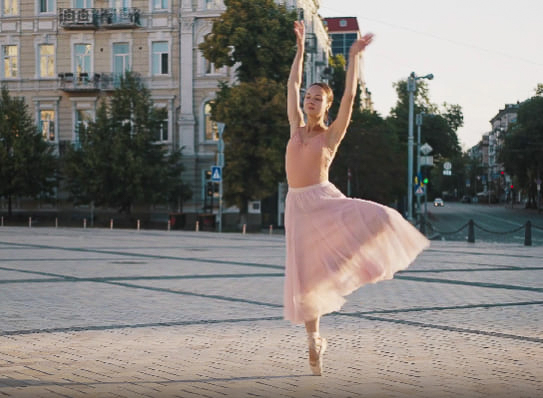
Welcome to the unexpected modern resurgence of (reimagined) classical music and dance.
Unexpected, because classical art, music, and dance have long been considered stuffy, inaccessible, and “uncool.” Even more unexpected, because the people driving this return are young.
Reimagining Stuffy as Cool
According to the report “Classical Pulse 2026: Classical Music Consumption Insights,” 88 percent of adults younger than 45 attended at least one classical music concert this past year. Conversely, baby boomers in the United States had some of the lowest levels of attendance. Less than 50 percent had attended in the past year.
A survey conducted by the Royal Philharmonic Orchestra confirms the Pulse findings. According to the orchestra, almost two-thirds (65 percent) of people younger than 35 listen to orchestral music regularly, while only 57 percent of those older than 55 do so.
Even more surprising, 77 percent of people younger than 35 are actively pursuing an interest in the performing arts in some way. This percentage is almost double that of their parents’ generation. Younger people are also more likely than their parents to listen to podcasts about the arts, teach themselves an instrument, take classes, or follow organizations or artists on social media, according to the survey.
The social media component is noteworthy. The recent classical craze has been driven—somewhat ironically—by the anything-but-traditional phenomenon of internet algorithms and networks. Social media feeds simmer with a “dark academia” aesthetic that features dusty studies and antiquarian objects set to 18th-century soundscapes, while the TikTok hashtag #classictok has garnered about 80 million views. Celebrity artists such as French violinist Esther Abrami snag followings of more than 350,000 on Instagram and 450,000 on TikTok. Another influencer, singer Babatunde Akinboboye, broke open the world of opera to his social media followers when he posted a video of himself singing Gioachino Rossini’s aria “Largo al factotum” on top of Kendrick Lamar’s track “Humble.”
The popularity of Candlelight classical music events—now operating in more than 140 U.S. cities—also speaks to the crescendo of interest in classical art. These concerts feature thousands of LED candles radiating outward from the performance area, a flickering sea of atmospheric light that dances to the music as the performers rock and sway, like magicians summoning their magic.
It’s not just about the music—it’s also about the beauty of the setting and the human connection that takes place at real-life concerts such as those by Candlelight.
“It’s all about the mix: spectacular venues, unmatched energy, thousands of candles, and a curated selection of songs played in a way you’ve never heard before,” the Candlelight website states. “Classical music, reimagined.”
Part of Generation Z’s fascination with classical music and dance is undoubtedly the fruit of pop music hybridization: Orchestral versions of pop hits have adorned the soundtracks of hugely popular TV shows such as “Squid Game” and “Bridgerton.” And it has a lot to do with aesthetics shared online, from the aforementioned “dark academia” to the highly popular balletcore fashion trend.
But it’s about more than just aesthetics—or, to put it another way, aesthetics are always the expression of deeper interior moods and attitudes.
Substance Over Stimulation
Modern young people are drawn to the aesthetics of classical music and dance because they value beauty and substance. Evidently, they’re not finding enough of these in contemporary pop culture, which for a long time has promoted ideals other than beauty and substance (flashiness, wealth, stimulation, excitement, and so on).
Young people’s interest in these aesthetics and genres may be shallow and “trendified” by social media, but it’s indicative of a real hunger for more substantive cultural engagement and an experience of art that transcends a single moment in time, a single fashion or fad. It’s about an impulse toward art that’s timeless, a yearning for culture that connects them to something bigger than themselves.

Andrew Kern, founder of the CiRCE Institute and a classical education researcher and consultant, said he believes that this hunger for substance lies at the heart of the trend.
“At the center of this shift is a simple point: People want substance,” he told The Epoch Times.
“Pop culture has often sold immediacy—catchiness, personality, sensation—while classical music trades in form, discipline, and depth. When a listener encounters [J.S.] Bach, Mozart, or [Ludwig van] Beethoven, the experience announces itself as creative genius. That perception sets a standard. Once people taste it, they stop asking whether the comparison is fair and start asking how to get more of it. This is the engine of the turn.”
Grace Chalmers is a member of Gen Z who has discovered a passion for opera. She first attended the San Diego Opera for a work project but found herself returning again and again.
“What began as an obligation became something I chose to return to,” she told The Epoch Times. “Part of the appeal, for me and I believe for others in many generations, is that opera offers a kind of experience that feels increasingly rare. It brings together multiple art forms in a single performance, combining music, art, storytelling, design, and live production at a very high level. At the same time, it creates a shared, in-person experience that stands in contrast to how much of our lives now take place online.”
Chalmers said that Gen Z hungers for experiences that are thoughtful, intentional, and authentic—a striking contrast to the speed, efficiency, and superficiality that characterizes much of modern life.
“There is also a growing appreciation for the sense of occasion that comes with attending performances like these,” she said. “Dressing up, being in a thoughtfully designed space, and participating in a live cultural event can feel both novel and meaningful.”
People in her generation, according to Chalmers, are less concerned with firmly defined genres, letting their interests range from Lizzo to Luciano Pavarotti, and they find meaning in both novelty and tradition.
“There is still a perception among people, young and old, that opera and similar art forms are elitist or outdated,” she said. “If anything, the perception surrounding the question, ‘Who attends the opera?’ is much more outdated than the art form itself.”
Chalmers recognizes that the timelessness of classical art forms allows them to transcend eras and age groups.
“Classics are timeless, sustained because they continue to resonate, not because they’re old,” she said. “Many in my generation are just as interested in depth, craft, and continuity as we are in novelty.”
The Luxury of Reality
What has led modern young people to feel deprived of deep cultural experiences and to seek them at an opera house?
“In the late 19th and early 20th centuries, parts of European thought embraced an aesthetic egalitarianism that discouraged cultivation of taste,” Kern said. “To train sensibility sounded like snobbery; to argue for hierarchy in the arts sounded like oppression.”
This aesthetic egalitarianism, among other factors, led to a decline in the fine arts and their abandonment in favor of a “lowest common denominator” approach to culture.
“In that climate, the idea of better and worse art lost coherence, and institutions lost confidence,” he said. “When a society doubts that higher standards even exist, it stops building the ladders that would carry people up to them. The result is a culture that struggles to hand down its best.”
But in a culture that has largely lost touch with its roots, that “struggles to hand down its best,” it’s understandable that youth seeking a stronger sense of identity would look to arts with a centuries-long heritage. These art forms provide a rootedness and experience of tradition and discipline that’s increasingly hard to find. Traditional music and dance fascinate the young precisely because they’ve been cut off from cultural tradition in so many ways, and something in them yearns for it.
“The growing interest among younger audiences may be less about rediscovering something new and more about reevaluating something that has been misunderstood,” Chalmers said.
Moreover, in a time when our lives are saturated with the artificiality and transience of the screen, young people long for the authenticity of an experience rooted in wood and string and breath and concrete history. Candice and Lauren Henry, young entrepreneurs and members of Sarasota Opera’s young patron group the DaCapo Society, describe this yearning for authenticity as “the luxury of reality.”
On their website, they wrote about the joy of attending opera: “The whole experience impressed upon us the luxury of reality. In a world of artificial and digitally rendered entertainment and experiences, there was something so refreshing about live arts. … It was real. It was unique to that moment, as no two performances are exactly the same.”
They also mentioned the teamwork and human connection that go into a successful live performance of this nature. Ana Elisa Martinez De la Peña, managing director at Star City School of Ballet, agreed that the desire for human connection is part of what’s driving the trend.
“I believe that the reason that these new generations are going back to choosing arts and performing arts, specifically, is because we are looking for human connection,” she said. “Nothing beats the feeling of achieving human connection.”
She also noted the way that classical music and dance help young people achieve peace and mindfulness.
“The brain goes into an alpha state when we listen to what is commonly named classical music,” she said. “The instruments are recorded live, the humans that play them also project an amount of energy to the performance. Ballet, on the other hand, is slow. It slows your mind to a state of almost meditative concentration where you connect with each movement each part of your body has to achieve.”
Young dancers find great satisfaction in achieving the graceful, fluid motions of ballet through hard work and concentration.
In other words, the experience of these art forms speaks for itself.
As Kern put it: “When a listener hears a Bach fugue resolve inevitable tension through inevitable means, or a Mozart aria balance clarity with surprise, or a Beethoven development seize and transform a motif until it changes the air in the room, the mind recognizes mastery. That recognition reeducates desire. After it, lesser satisfactions feel thin.”
Mastery, discipline, presence, community, beauty, heritage—these are the qualities that the new generations are pursuing. This is the hunger driving them, a hunger that isn’t satiated by the vapidity and repetitiveness of much of popular culture. It’s a testament both to the timeless potency of traditional arts and a quiet indictment of contemporary cultural activity that has been drained of meaning, community, and tradition.
What arts and culture topics would you like us to cover? Please email ideas or feedback to features@epochtimes.nyc.