




Joel and Clementine met by chance on a beach in Long Island, New York. What began as a casual fling turned into love. Then, after two years of living together, the couple parted ways.
To avoid the pain of their breakup, they decided to undergo a medical procedure to erase the memory of their acquaintance and relationship. But this is where the plot of the film “Eternal Sunshine of the Spotless Mind” gets complicated. As it turns out, the memory-erasure process is far from simple.
In real life, we face a similar challenge: unwanted thoughts and memories can pop up and invade our minds. They can be a festering unresolved conflict with a colleague, a painful childhood memory, or even thoughts about sugary cakes while we’re determined to lose weight. They spring up on their own or as a result of some trigger, such as a word someone said, a place we once visited, or even a scent.
This familiar experience was reaffirmed in psychologist Daniel Wegner’s famous experiment on white bears. Wegner, known for his theory on the illusion of conscious will, was reading Dostoevsky’s 1863 work “Winter Notes on Summer Impressions” when one sentence caught his attention: “Try to pose for yourself this task: not to think of a polar bear, and you will see that the cursed thing will come to mind every minute.”
“I was really taken with it,” he later recalled. “It seemed so true.”
Wegner was so intrigued that he decided to test Dostoevsky’s 100-year-old claim in a controlled experiment. The question he posed in the study was: “Can people stop thinking about white bears when instructed to do so?”
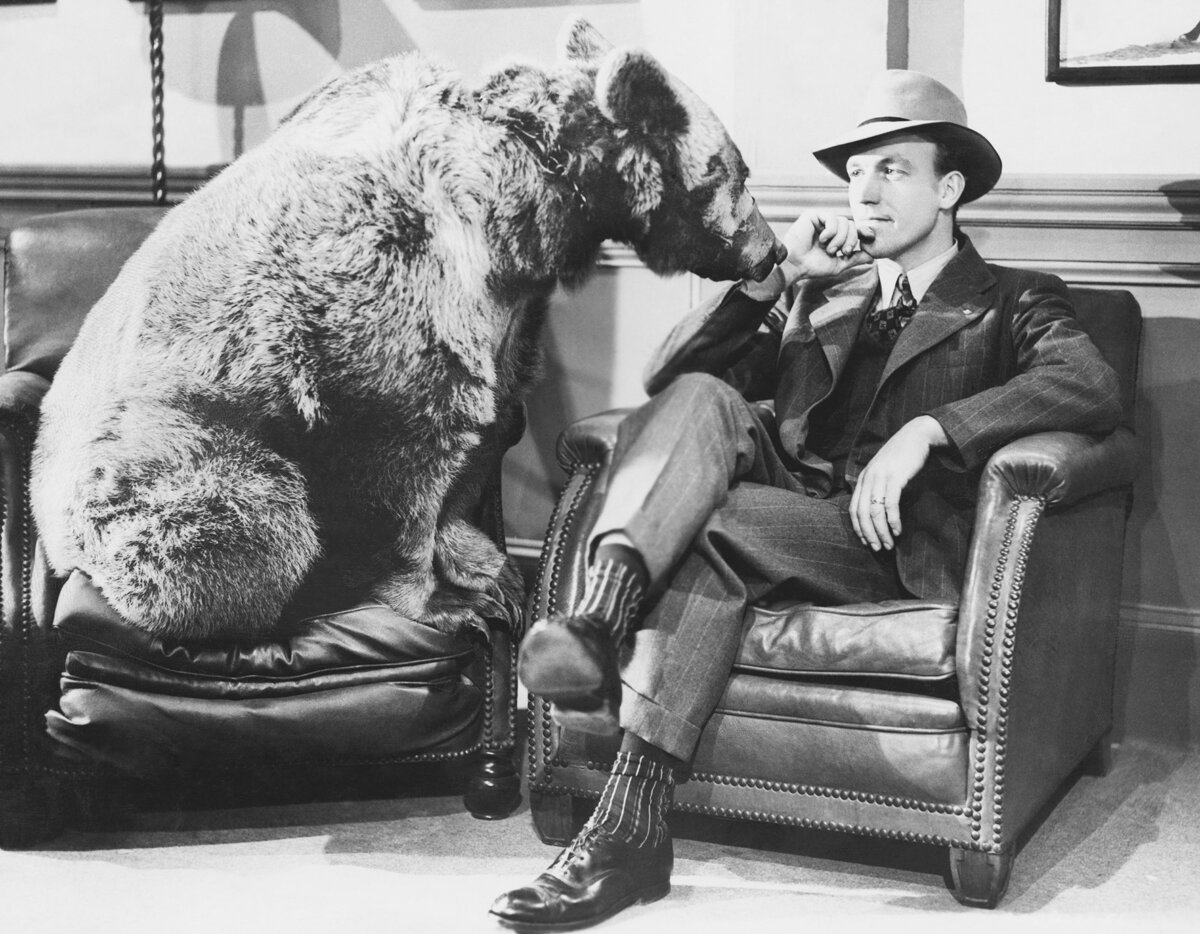
The 34 participants in the experiment were divided into two groups. Over the duration of five minutes, Group A, after being instructed not to think about white bears and to ring a bell whenever the thought of a white bear came to mind, were asked to report their stream of thought. Group B was tasked with the opposite–to think about white bears. It turned out that Group A participants thought of white bears more than once every minute, on average.
In the next phase of the experiment, Group A participants were asked to think about white bears for five minutes, and researchers then compared this group’s results with those of Group B from the previous phase. The results showed that Group A thought about white bears more often than Group B participants, indicating that trying to avoid thinking of a particular thing can actually make the thought stronger.
For many years, the results of Wegner’s experiment were accepted as proof that it is indeed difficult, if not impossible, to dismiss unwanted thoughts or memories. But in 2001, Michael Anderson, a psychologist at the University of Oregon, devised a new version of the white bears experiment that proved it is possible to stop unwanted thoughts, depending on how much effort is put into the task.
A Better Way to Forget
Anderson’s emphasis was on the conscious dismissal of thoughts, as opposed to traumatic thoughts and memories that have been suppressed into the unconscious, as Freud described in his theory of repression as a defense mechanism. The task that Anderson and his colleagues gave to participants was dubbed the “think/no-think” task. They projected 40 pairs of unrelated words—for example, “swing-cockroach”—on a screen in front of 32 students and instructed them to memorize the word pairs. In order to do that, participants learned to associatively link the words. In this way, the first word in each pairing became an associative trigger for the second word.
Then the game began. When the first word in each pair appeared (for instance, “doctor”), participants were asked either to “think” of the second word (“umbrella”), or alternatively to “not think” and actively erase it from memory if it came up.
When the instruction was to “erase,” the researchers stressed that participants must absolutely not allow the second word to enter their consciousness. If a participant mistakenly said the second word, they heard a sharp ring signaling “error.” Conversely, participants were instructed to fully focus on the first word for the entire time it appeared on its own on the screen (four seconds), so that their thoughts would not drift to the second word.
The purpose of the “think/no-think” task was to determine whether preventing a particular memory from entering consciousness would prevent its recurrence later on. To test whether participants had truly forgotten the second word in the pair, in the next phase of the experiment, participants were told that the “no-think” instruction was no longer relevant, and that whenever they were shown one word from the pair (for instance, “doctor”) they were required to say the second word (“umbrella”).
According to the study’s conclusions, participants who had been given the “no-think” instruction successfully forgot, to some extent, the words that they had actively tried to forget. The more participants repeated the “no-think” exercise, the more their forgetfulness increased. The more they practiced forgetting, the more they succeeded in forgetting. Sixteen attempts at forgetting led to a memory decline of approximately 13 percent.
The results of the experiment echo the familiar experience of a thought or memory popping into our minds in response to an environmental stimulus (a particular word, sound, or sight), and they demonstrate that we can choose whether to allow the thought or memory to persist in our minds or to actively push it out.
“The think/no-think task enables suppression because the use of cues means that people are not reminded directly of the memories they are trying to shut out,” Daniel Schacter, a psychology professor at Harvard University and a leading expert on human memory, explained. Conversely, “in white bear, you are trying to suppress ‘white bear’ itself, so you are thinking about ‘white bear.’ That may prime it for later recovery [in memory] in a way that doesn’t happen in think/no-think.”
Anderson and his colleagues later repeated the experiment and got similar results. They subsequently conducted another experiment in which they examined the biological basis of forgetting. An MRI device scanning participants’ brains during the experiment revealed that in the part of the brain known as the hippocampus (near the temporal bone, on each side), there was a decrease in activity among participants who performed the “no-think” task. The hippocampus plays an important role in one’s acquiring new memories and forming connections between memories.
The Ripple Effect of Forgetting
In a follow-up experiment, Anderson and his colleagues slightly modified the procedure—and the results were surprising. This time, a total of 381 participants underwent a similar “think/no-think” process, but unlike the earlier experiment, after each word pair and the “think/no-think” instruction, they were shown a random image (for example, a parrot in a parking lot or a soccer ball on a coffee table) and were asked to imagine how the object ended up in that location. Throughout the experiment, the researchers scanned participants’ brains with an MRI device.
The surprising outcome of the experiment was that the drop in hippocampal activity resulting from the “no-think” instruction (regarding the second word) subsequently caused a decrease in memories formed both before and after the “no-think” instruction–for example, memories of the random images (parrot in the parking lot, etc.). The experiment showed that among participants who received the “no-think” instruction, their ability to recall images decreased by 45 percent.
Anderson termed this phenomenon the “amnesic shadow.” It is not yet clear how long the amnesic shadow lasts; in this experiment, researchers claimed it persisted for at least 24 hours.
Justin Hulbert, a co-author of the aforementioned study and associate professor of neuroscience at Bard College (now at Bates College), explained the importance of understanding the amnesic shadow phenomenon and how such knowledge can illuminate our daily struggles. “So one might have trouble remembering whether they were supposed to pick up the kids at 3 or 5 in the afternoon simply because that arrangement was discussed near in time to a person suppressing thoughts about an earlier argument they had with someone.”
Hulbert explained that the amnesic shadow can also be harnessed for our benefit. Suppose you want to stop thinking about cakes. Every attempt to kill the thought will be like trying not to think of white bears. He suggested using the word-pair technique from the earlier experiments: pick two words and memorize them; then, whenever the first word comes to mind, actively try to forget the second word.
Next, add a word, sound, or smell that calls “cake” to mind. Now, because the hippocampus is underactive, you will be more prone to forget the unwanted thought-the cake.
For those who may find this approach too cumbersome, Hulbert and his colleagues proposed a simpler alternative: generating distracting thoughts, an approach that also avoids the “amnesic shadow” as a side effect. Take, for example, someone on a diet who is exposed to the delicious aroma of fresh pastry that reminds them of donuts. Instead of thinking about donuts, they can train themselves so that every time they experience the fresh pastry scent that reminds them of donuts, they will automatically think of something else, like red roses.
More Ways to Stop Unwanted Thoughts
Wegner, the psychologist behind the white bears thought-dismissal experiment, subsequently proposed several additional approaches that have been studied and can help in dismissing unwanted thoughts.
The first option is by way of negation. It is commonly believed that intensive engagement in mental tasks—at work or in life—can distract a person from unwanted thoughts. But based on various studies, Wegner argued that the opposite is true. Cognitive overload and stress can actually make it harder for a person to focus on dismissing unwanted thoughts–such as generating alternative thoughts, as Hulbert suggested–and paradoxically increase their occurrence.
This idea is linked to research showing that when people suffer from sleep deprivation, they experience more unwanted thoughts and memories. In addition, unwanted thoughts and memories disrupt sleep, “so it becomes a vicious cycle,” Scott Cairney, a cognitive neuroscientist and collaborator on the study, explained.
Another suggestion is to arbitrarily set a specific time to deal with unwanted thoughts. This option has been studied primarily in connection with worrisome thoughts. Researchers found partial success in studies where subjects set a designated time of day to face worrisome thoughts and then tried to focus on the present for the rest of the day.
Other more familiar techniques include various methods for achieving mental calm, such as breathing and meditation exercises. Michael Mrazek, a research associate at the University of California, Santa Barbara, found that certain meditative processes can help increase concentration and dismiss unwanted thoughts. In an experiment, he demonstrated how eight minutes of mindful breathing noticeably reduced mind-wandering, compared to reading or passive relaxation. The underlying assumption is that heightened concentration and mental calm can help cope with unwanted thoughts.
It is important to remember, as the researchers noted, that the process of eliminating unwanted thoughts and memories is possible, but it requires time and effort. Dismissing negative thoughts and focusing on the present may be a challenging process, but it is nonetheless one that is worth pursuing.
