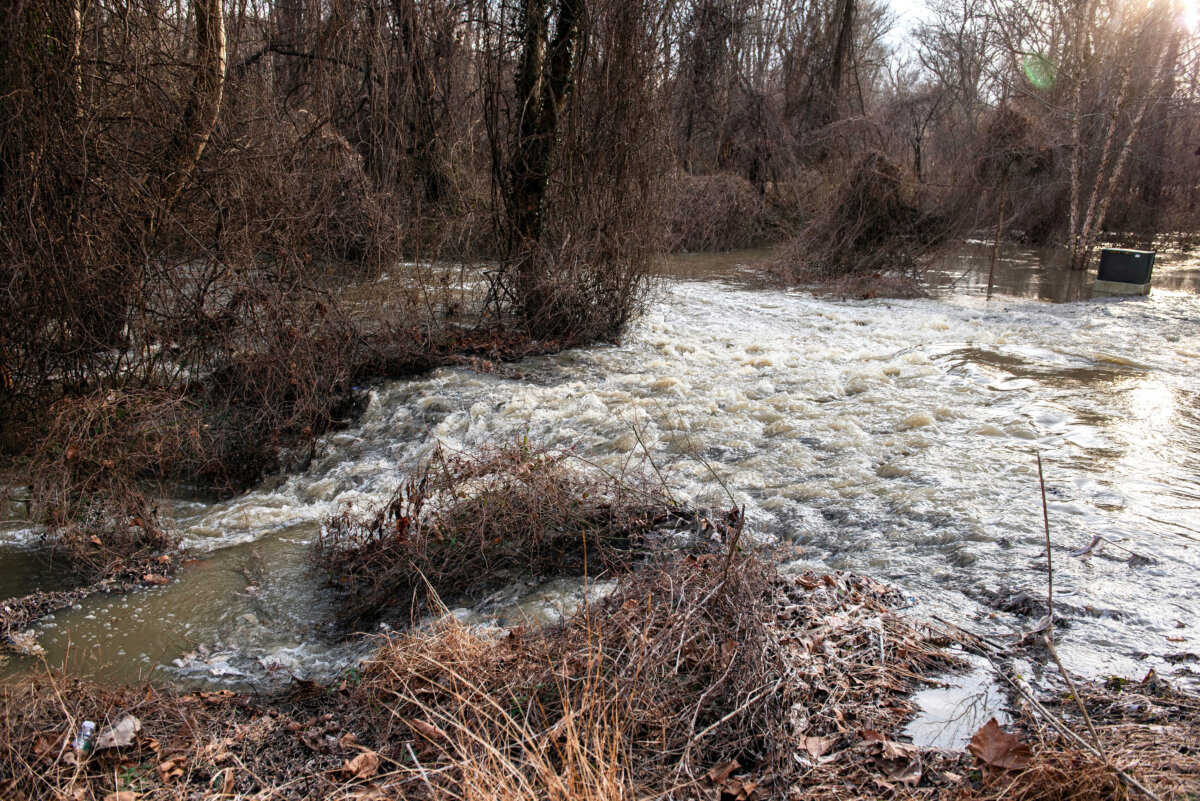
Beneath city streets and suburban neighborhoods, a vast network of pipes and wastewater treatment systems is reaching the end of its life. This subterranean infrastructure is already suffering tens of thousands of failures per year, while exposing millions of Americans to contamination risks.
Utilities, plumbing experts, and environmentalists warn that the scope of the problem has expanded rapidly in recent years. As of 2024, the Environmental Protection Agency (EPA) estimated that $630 billion in wastewater infrastructure investment would be needed to repair and replace deteriorating systems. At the same time, extreme weather events and growing populations were putting additional strain on aging U.S. pipes.
The American Society of Civil Engineers (ASCE), in its 2025 report card, gave U.S. wastewater infrastructure a D-plus, which the group largely attributed to a lack of funding to meet the needs of communities with failing systems.
Average utility prices for wastewater consumers increased to nearly $65 per month from $35 per month between 2010 and 2020, ASCE researchers found. Even still, they said, rising utility prices aren’t “keeping pace with the growing costs for utilities to provide routine operation and maintenance.”
Paradoxically, as household water and sewer bills increased by more than 24 percent between 2020 and 2025, wastewater infrastructure renewal and replacement rates for large-scale projects actually decreased over the past decade, to 2 percent from 3 percent, according to the ASCE analysis.
The scope of the problem becomes clearer when considering the sheer volume of sanitary sewer overflows. As of April 2025, the EPA estimated there were between 23,000 and 75,000 overflow incidents per year, and that didn’t include sewage that backed up into buildings or residential homes.
Some of the reasons for these spills included blockages, line breaks, design defects, and overloaded treatment systems.
A spokesperson for the EPA told The Epoch Times that the agency is “committed to accelerating investments in water infrastructure by stewarding federal funding appropriated by Congress.”
Recent funding highlights from 2025 include the Clean Water State Revolving Fund and Water Infrastructure Finance and Innovation Act, which committed $13 billion for infrastructure improvements in communities across the nation, according to the EPA spokesperson.
When asked about the staggering volume of sewer overflows per year, the agency representative emphasized the value and importance of this network.
“EPA estimates that our nation’s sewers are worth a total of more than $1 trillion,” the representative said. “The collection system of a single large municipality is an asset worth billions of dollars and that of a smaller city could cost many millions to replace.
“Ongoing maintenance and rehabilitation can add value to the original investment by maintaining the system’s capacity and extending its life. The costs of rehabilitation and other measures to correct [sanitary sewer overflows] can vary widely by community size and sewer system type.”
The U.S. wastewater pipe network is a part of the national infrastructure that has been neglected for years and suffers from “chronic underinvestment,” according to the Association of State Floodplain Managers.
The country has roughly 800,000 miles of sewer pipes, according to ASCE’s 2021 report card. For perspective, the National Highway System only covers an estimated 164,000 miles, according to the Department of Transportation.
Within that sprawling web, the average age of sewer pipes is about 45 years, ASCE’s 2021 report found. But in some U.S. cities, sewer systems date back a century or more: In St. Louis, for example, some sewer lines were built around the time of the Civil War. And parts of Philadelphia’s working sewer system date back to 1800, Municipal Sewer and Water reported in 2025.
“Wastewater treatment systems are meant to act as a barrier to disease both for public health and environment,” Laura Underwood, director of digital water solutions for Locus Technologies, told The Epoch Times. “If you have overflows or failures, these events can release pathogens into waterways and increase the risk of gastrointestinal illnesses, skin infections, and contamination of recreational or drinking waters.”
Close to Home
Underwood has worked within the utility space as a compliance director for water and wastewater treatment operations. She didn’t sugarcoat the reality of what further delays in upgrades will cost Americans.
“You will continue to see more frequent overflows and plant bypasses. These spills and untreated discharge events can lead to degraded waterways with increased contamination risks to the public and environment,” she said.
This isn’t some speculative future problem. In January, more than 250 million gallons of sewage entered the Potomac River near Washington. The event was one of the worst incidents of its kind in U.S. history; President Donald Trump called it a “massive ecological disaster.”
In an account published on the American Rivers website, a witness to the Potomac River disaster, Gary Belan, recalled arriving at the site of the sewage overflow and seeing “several massive pumps” diverting raw waste into the C&O Canal area, which runs parallel with the river.
Belan said that the area is a “popular spot to walk, bike, and access the river for fishing and boating.” He said he has been taking his kids there since they were toddlers.
“There is a literal river of sewage flowing open along the towpath that parallels the canal,” he wrote. “The estimated repair time is going to be 9 [to] 10 months, disrupting the communities nearby. This doesn’t include time for the environmental remediation.”
Some industry insiders say surface water contamination is far from the only hazard of aging sewer system failures.
“The biggest challenge I see on the ground is aging pipes, specifically the catastrophic failure of cast iron and clay sewer laterals that connect individual properties to the main municipal line,” master plumber Steven Morgan told The Epoch Times. “These pipes were installed 50 to 80 years ago and are now collapsing, cracking, and being invaded by tree roots.”
Morgan is head of technical training and development at 24hr Supply and deals with the ugly truth of the antiquated U.S. wastewater network regularly. He said a lot of people don’t understand how aging sewer infrastructure can cost them directly and dearly.
“Homeowners don’t realize they’re responsible for the section from their house to the street, and when it fails, they’re looking at $8,000 to $25,000 in emergency repairs,” he said.
Morgan said he believes that the real problem is that these failures create blockages and backups that force raw sewage into basements during heavy rains.
“Multiply that across an entire neighborhood with aging infrastructure, and you’ve got a public health crisis waiting to happen,” he said.
“The pipes aren’t just old, they’re fundamentally incompatible with modern water usage patterns and climate realities like increasingly intense storms.”
Direct contact with contaminated water spills in places such as basements, lawns, streets, or recreational areas can cause serious health concerns. Contaminated water can contain bacteria, viruses, parasites, worms, and industrial chemicals such as per- and polyfluoroalkyl substances, commonly known as PFAS or “forever chemicals.”
Official data put the number of Americans affected by waterborne pathogens annually at 7.15 million, according to the Centers for Disease Control and Prevention. Within that group, about 118,000 are hospitalized, and 6,630 die from related illnesses.
Long Range Impacts
Leaky pipes take on a whole new dimension when it is toxic sludge entering rivers and other water resources. Groundwater contamination is prevalent at 85 percent of EPA Superfund project cleanup sites.
“Failing sewer lines or poorly maintained [wastewater] lagoons can allow untreated sewage to seep into groundwater. However, this is typically a smaller-scale localized contamination,” Underwood said.
“I would say there is a larger contamination risk with [treatment] plant bypasses where a portion of untreated wastewater is discharged to a surface water outfall.”
A 2023 study from the University of Parma observed that leaky sewers negatively affected not only surface and groundwater but also subsurface aquifers.
“Sewer pipeline ruptures are a severe risk to groundwater quality. When sewerage deterioration conditions occur, aquifers can be contaminated by contaminants contained within sewer water,” the study reads.
Bland Warren, CEO of Plastic Fusion Fabricators, is on the front lines of the U.S. sewage infrastructure crisis. His company specializes in creating and installing thermoplastic containment systems for wastewater treatment facilities. He told The Epoch Times the need for total upgrades is a “common challenge” he encounters.
“Much of the nation’s wastewater infrastructure was built decades ago using materials … that are vulnerable to long-term corrosion from wastewater exposure,” Warren said.
Many utilities are repairing or upgrading manholes, piping systems, and containment structures with more durable materials.”
He said that a lot of municipalities are racing to invest in these improvements.
“As communities expand and weather patterns shift, wastewater systems and storage infrastructure are often required to manage higher volumes and more variable conditions.”
A 2025 congressional report states that a lack of complete data is a barrier to understanding the full scope of the problem and creating a realistic budget to address it.
Recent actions have been taken at the state level to upgrade and strengthen wastewater infrastructure. In January, Rep. Don Davis (D-N.C.) voted to pass a bipartisan package that will deliver $5.36 million for clean water infrastructure and public safety projects across eastern North Carolina. That same month, Sen. Susan Collins (R-Maine) secured more than $59 million in congressionally directed spending for drinking water and wastewater infrastructure projects throughout Maine.
According to Underwood, these are areas where upgrades are needed urgently.
“Coastal areas or other regions vulnerable to flooding” are vital to improve, as they can “overwhelm treatment plants.”
“Areas in the U.S. with very old infrastructure networks, such as New England and the rust belt,” also need upgrades quickly, she said.
From Morgan’s perspective, taking action to upgrade ancient U.S. sewer systems is no longer an option.
“People don’t think about their sewer line until it backs up into their home, and municipalities don’t prioritize underground infrastructure until sinkholes start appearing in streets,” he said. “We’re playing a very expensive game of whack-a-mole instead of proactively replacing systems that are decades past their service life.”
 Friends Read Free
Copy
Facebook
Tweet
Friends Read Free
Copy
Facebook
Tweet