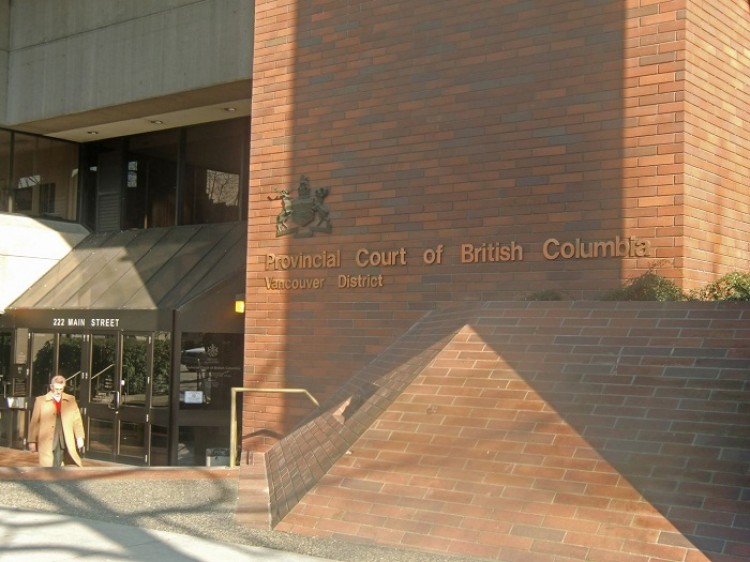
Although the province has restored 34 full-time deputy sheriff positions that were cut last month, some rioters could end up walking free because of unreasonable delays due to a severe shortage of judges and supporting court staff.
In order to balance the budget, in May the government reduced the hours of 52 auxiliary deputy and part-time sheriffs, equivalent to eliminating 34 full-time positions. This resulted in at least 28 trials being cancelled or delayed throughout the province because deputy sheriffs were not on hand to provide security.
Those positions were quietly restored last week, but huge backlogs in the court system mean the move is not enough to deal with the volume of riot-related cases, says Leonard Krog, NDP critic for the Attorney General.
“A number of those will potentially end up walking because it will be such a delay between the time of laying the charge—if they don’t plead guilty, of course—and having a hearing,” says Krog.Right now trials are being set so far down the court list that provincial court judges are estimating 2,100 – 2,300 criminal cases may be dismissed because of the length of time between the initial charge and the trial date, Krog says.
In the last few years, numerous cases, mostly impaired driving and drug dealing, have been dismissed because of delays of up to two years, sometimes more, to get to trial.
It has come to the point that judges have been denouncing the situation in the course of their decisions in court.
“The backlog is so great and the courts so crowded that in many cases there will be an unreasonable delay should there be even one adjournment on a trial date,” Surrey Provincial Court Judge Peder Gulbransen said after tossing out charges against an impaired driver whose case took 32 months to get a trial date.
Although five new judges were appointed last fall, others have retired or died so the new positions only serve to “fill the natural attrition” without helping alleviate the problem, says Krog. The number of sheriffs has dropped from 525 a few years ago to approximately 385 now, primarily due to a hiring freeze.
In budget estimates last November, then-Attorney-General Mike de Jong acknowledged the problem and committed to ensuring that adequate resources would go toward addressing the judge shortage.
But earlier this month, Attorney-General Barry Penner said there is no more money available to deal with the issue. It costs a hefty $1.6 million to maintain one judge in court, along with support staff, for a year.
 Friends Read Free
Copy
Facebook
Tweet
Friends Read Free
Copy
Facebook
Tweet