
Now it has been criticised as being a fig-leaf for the cuts, which some charity workers say ultimately will undermine its success.
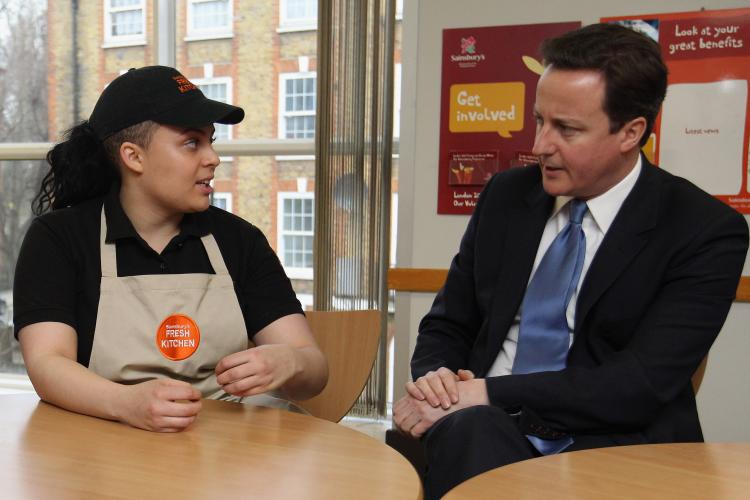
But Prime Minister David Cameron is having none of it, determined to push forward with his Big Society mission with evangelistic zeal.
He has been on the offensive, setting out once again what the Big Society means and trying to fend off the criticism in a series of articles, speeches, and interviews.
Mr Cameron said that the need to cut public spending and the Big Society initiative were not related. Describing the initiative as his “passion”, he said he had been talking about it since he had been elected as Tory leader five years ago.
"It's not a cover for anything, it is a good thing to try and build a bigger and stronger society whatever is happening to public spending," he said at an event for social entrepreneurs.
Taking Responsibility
He said he kept talking about the Big Society "because it is what I care about" adding that was why it was in his manifesto "rather than just because it makes a great headline on the Ten O'Clock News".
But the initiative has been a tough sell for Mr Cameron in the past because it does not have a single simple overarching area of action.
He tried to explain the broader concept behind it in a statement: “Too many people have stopped taking responsibility for their lives and for the people around them. Why? Now I don’t think this has happened because we’ve somehow become bad people. I think at its core, it’s the consequence of years and years of Big Government.
"As the state got bigger and more powerful, it took away from people more and more things that they should and could be doing for themselves, for their families and their neighbours. It’s the culture of rules, targets, laws, tick boxes, and perverse signals that pay people to sit on the sofa rather than go to work.”
Next The concrete changes lie in three main areas
 Friends Read Free
Copy
Facebook
Tweet
Friends Read Free
Copy
Facebook
Tweet