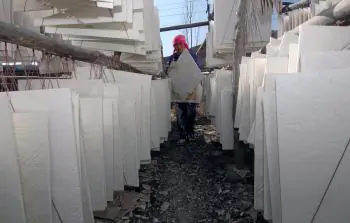

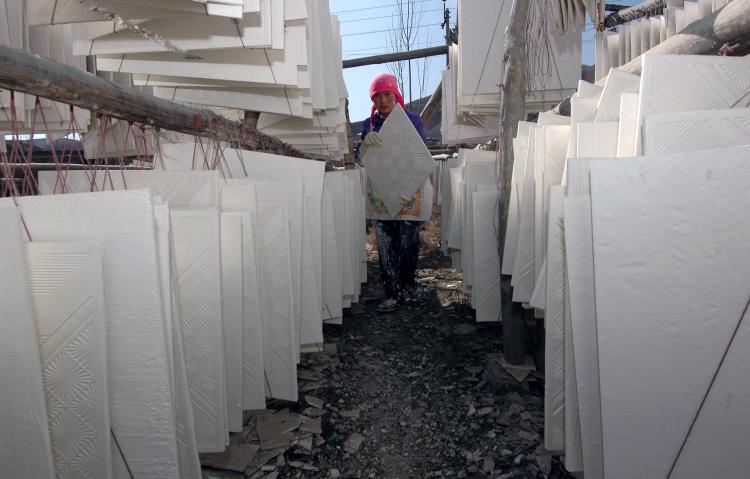
A New Orleans judge awarded seven families more than $2.6 million in losses caused by toxic Chinese drywall in their homes Thursday.
Judge Eldon E. Fallon ruled against defendant Taishan Gypsum Co. Ltd., the Chinese manufacturer of the drywall.
“We’re very excited and very grateful for Judge Fallon for coming to a great conclusion,” said Lisa Orlando, one of the homeowners in the lawsuit.
But, there is no guarantee that the families will get the money, Orlando said. There is no recourse if the defendants refuse to pay. “We can’t do anything without the money,” she said from the home the family is now renting. Taishan Gypsum did not contest the lawsuit.
Feds Say Toxic Drywall Should Be Taken Out
The judgment comes less than a week after the Consumer Product Safety Commission (CPSC) recommended Chinese drywall-tainted homes be gutted.
The CPSC report called for removal of all possible drywall with issues, all fire safety alarm devices, all electronic components and wiring, and all gas-service piping, as well as the fire-suppression sprinkler systems.
Some Chinese-manufactured drywall types were found to emit significantly larger amounts of hydrogen sulfide, the chemical believed to cause corrosion, compared to other drywall. Certain samples tested by investigators showed 100 times higher levels of hydrogen sulfide compared to the drywall manufactured outside of China that was tested.
Dream Retirement Home
The Orlandos bought their home in Williamsburg, Va., for $369,500 in June 2009. Fred Orlando had gotten a job promotion and the family moved from upstate New York to the Mid-Atlantic.
Excited about the shift and expecting it was the home they would retire in, they paid $50,000 to have the in-ground pool built within weeks of moving in.
Not long after the finishing touches were made on the pool, the family received a letter from Dick Ashe, the builder of the home—there were possibly 172 sheets of toxic Chinese drywall in their home. The Orlandos discovered that the drywall had Venture Supply (i.e. Taishan) stamped on the back—proving it was manufactured in China.
Opening the windows to get fresh air into the home during 90-degree heat brought neighbor Bill Morgan over to inquire if the family had Chinese drywall in their home. The Orlandos were not alone.
They had first noticed a smell when they toured the house and thought it was from the previous owner's two children in diapers. After they moved in, the smell got progressively worse.
The Orlandos had all the carpets in the home cleaned, but the smell did not go away. Mrs. Orlando describes the odor as similar to the smell of spent fireworks. Headaches and rashes followed, as well as failure of their water heater and problems with the HVAC unit.
Seven months after moving in, the Orlandos moved into a rental home and their health improved within two weeks, said Orlando.
She said the family wants to fix/rebuild the home rather than sell it.
“We really like it and we put in a new pool when first moved in,” she said. “I am just thankful for the judgment. It’s the beginning of the process of us becoming whole again.”
Assuming remediation of their home is complete within six months of the trial, the Orlandos are entitled to $307,905.44 in damages, plus an award for loss of use and enjoyment of the home and personal property to be determined by the court.
Judge Fallon is presiding over about 600 lawsuits that have been packaged from different areas.
Getting Out
John Willis, a lawyer who moved out of his Parkland, Florida, home in April 2009 after his family suffered serious health problems, is part of another lawsuit.
He has been trying to short sell his house since last July and the bank has just agreed to accept $330,000. The Willis’ bought their house for $907,000.
Willis said they will be taking a huge hit financially and their credit rating, once in the 800s, would be in tatters. But he is adamant to get rid of the house.
“As sick as my children were, and the surgery they had to have, even if I had the money I don’t think I would rebuild this house,” he said. Willis said he would be concerned that if his kids woke up with a cough it would be the result of the remediation not being enough to eradicate the toxic effects of the drywall.
“You can’t have that type of lack of peace of mind in a home.”
Of the 90 homes in their neighborhood, more than 50 had been built with the Chinese drywall. About half of those homes now stand empty.
“It’s still pretty much a quagmire,” he said. “The only possible glimmer of light is that Knauf is participating in the litigation in New Orleans.”
Knauf is the German-based parent company of the Chinese manufacturers.
“The Chinese part of this has never even showed up in court,” Willis said. “The Chinese seem to be basically laughing this off.”
The Consumer Protection Safety Commission (CPSC) has received about 3,082 reports from residents in 37 states, the District of Columbia, American Samoa, and Puerto Rico, who believe their health symptoms or the corrosion of certain metal components in their homes are related to problem drywall. State and local authorities have also received similar reports.
Affected residents largely report that their homes were built in 2006 to 2007, when an unprecedented increase in new construction occurred in part due to the hurricanes of 2004 and 2005.
 Friends Read Free
Copy
Facebook
Tweet
Friends Read Free
Copy
Facebook
Tweet