The State Department’s Nov.10 announcement to postpone the planned transnational Keystone XL oil pipeline brought mixed reactions from parties of interest, revealing a complexity to the broad political, environmental, economic, and local implications that could cost—or save—Americans more than just money.
The State Department, with direction from the White House, will push approval for the project into the first quarter of 2013, just after the 2012 elections. The department said it needed time to examine alternative pipeline routes.
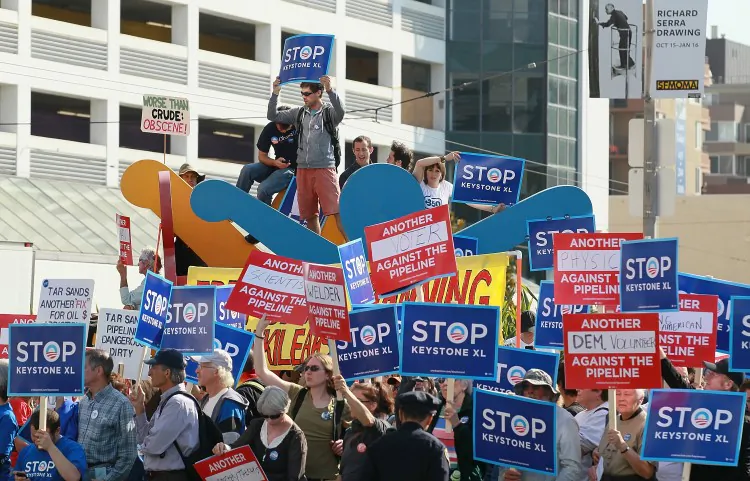
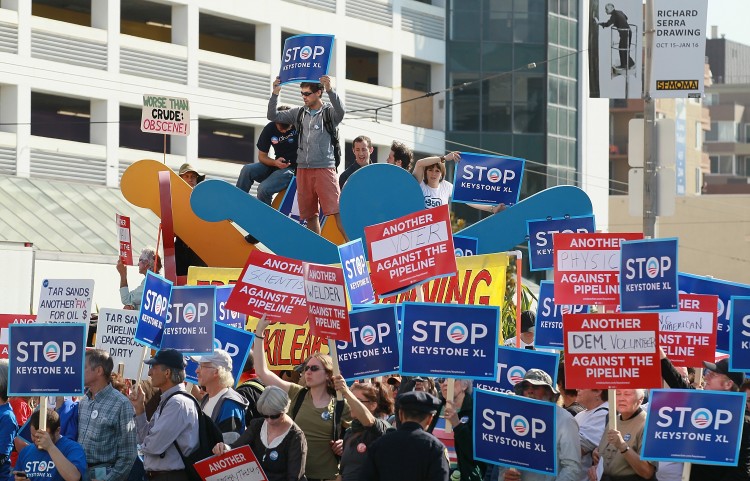
The decision to delay the project was hailed as a major victory for environmental groups, as thousands of demonstrators turned out en masse at the White House Nov. 6—two days before the State Department’s announcement.
“You are the cause of that victory; you upended enormous odds,” said Bill McKibben of pipeline activist group Tars Sand Action, in a website statement titled, “Big news: We won. You won.”
The project is promoted by supporters for its importance in further developing energy and oil independence from foreign sources, and strengthening security. It is also seen as a much-needed creator of short- and long-term employment for states impacted by the ambitious plan.
The approximately 1,700-mile Keystone XL oil pipeline is the latest leg of a multiphase, $13 billion project by oil pipeline and energy company TransCanada to pump tar sands crude oil from Alberta, Canada, to the Texas Gulf Coast for refinement.
TransCanada held a press conference Sept. 28 at the University of Texas to discuss the benefits of the project. The company referred to economic data from a study compiled by the Perryman Group.
“Keystone XL will create 20,000 construction and manufacturing jobs in the U.S., along with 118,000 spin-off jobs, inject $20 billion into the American economy and pay out over $5 billion in taxes to local counties over the project’s lifetime,” TransCanada stated in its media advisory.
Critics have accused the administration of playing politics, delaying the responsibility of approving the project until after the presidential election. Whether true or false, the pipeline has brought about a division between cornerstones of the Democratic Party base: unions and environmentalists.
“Environmentalists formed a circle around the White House and within days the Obama administration chose to inflict a potentially fatal delay to a project that is not just a pipeline, but is a lifeline for thousands of desperate working men and women,” said Terry O’Sullivan, general president of the Laborers’ International Union of North America (LIUNA).
He went on to describe the decision as “job-killers win, American workers lose.”
The United Association of Journeymen and Apprentices of the Plumbing and Pipe Fitting Industry (UA) believe environmentalists and State Department officials are way off in their assessment.
“The State Department’s decision to delay the project for purported health and safety concerns is wholly unfounded,” said Union Association General President William P. Hite in a recent Union Association press release. “The bottom line is that the environmental groups are way off base on this project.”
One aspect of the project that the UA and environmentalists unknowingly agree on is the dangers posed by current pipelines. Hite considers current 40–50-plus-year-old pipelines thousands of miles in length dangerous, and in need of replacement.
“We’ve already seen recent explosions in old gas lines that have taken lives and evidence of dangerous toxins leaching into our water systems due to worn out pipes,” continued Hite. “These are virtual time bombs waiting to happen and should be addressed by government and those who truly care about the environment.”
Even among supporters of the decision, there is suspicion of politics. “Some in our movement will say that this decision is just politics as usual: that the president wants us off the streets—and off his front lawn—until after the election, at which point the administration can approve the pipeline, alienating its supporters without electoral consequence,” McKibben stated. “The president should know that if this pipeline proposal somehow re-emerges from the review process we will use every tool at our disposal to keep it from ever being built.”
Next… Nebraska’s Grassroots Resistance
 Friends Read Free
Copy
Facebook
Tweet
Friends Read Free
Copy
Facebook
Tweet