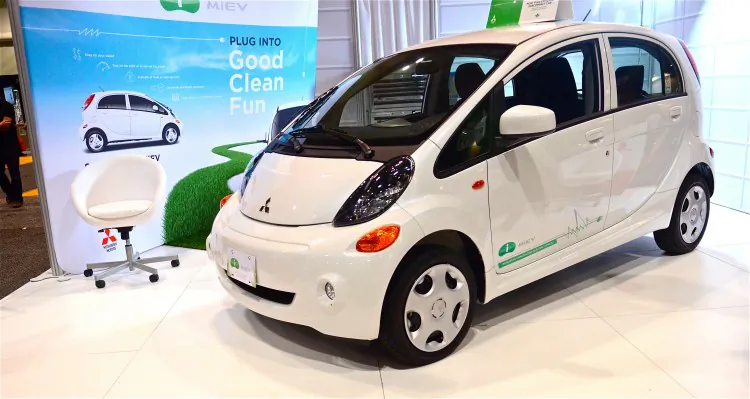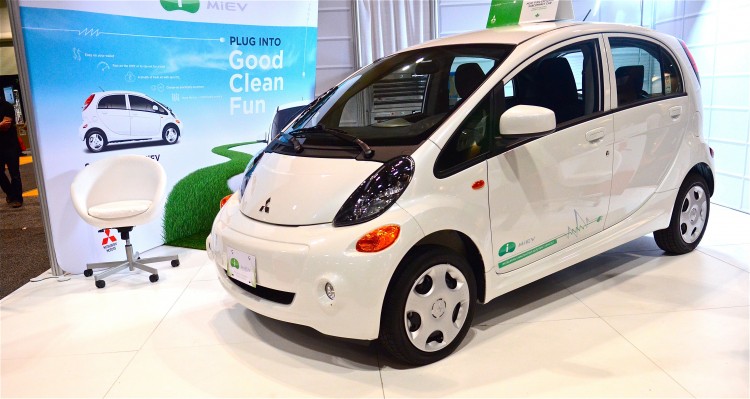

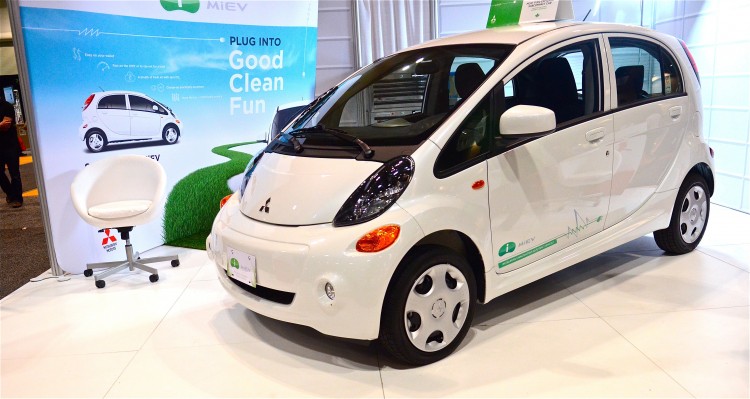
TORONTO—The journey from gasoline to electric vehicles is underway, but despite the best efforts of manufacturers and electric vehicle advocates, sales to date are dismal and unlikely to change any time soon, according to a top auto market analyst.
This Sunday, Aug. 12, Toronto will host the first annual Electric Vehicle (EV) Day at Yonge-Dundas Square, a featured event of Plug’nDrive Ontario, a provincial initiative aimed at raising awareness of the economic and environmental benefits of EVs.
The event aims to get people excited about EVs and to promote their use. Despite sales that total under 1,000 cars for the entire country, supporters like Brian Millar are enthusiastic.
“They’re safe, reliable, and you’ll no longer burn gasoline if you go electric,” says Millar, a spokesperson for Plug’nDrive.
Terrible Sales of EVs
But Dennis Desrosiers, founder of DesRosiers Automotive Consultants, says EV sales are currently abysmal and EVs make up less than 0.1 percent of Canada’s vehicle market. That makes them “one of the most hyped technologies ever,” he says.
As far as market share goes, DesRosiers says EVs are virtually invisible.
“The consumer, to this point, has not accepted plug-in electrics. There are a few enthusiasts out there, but from a broader market perspective, they’ve failed, and failed miserably.”
He says the continued push by manufacturers to promote EVs is mainly an effort to get green street cred with consumers and win over policymakers who face of heavy public pressure over climate change.
Politicians are in love with EVs and willing to throw money at EV initiatives, he says. By promoting these initiatives, companies can keep government from regulating other aspects of their business, or forcing them to develop other technologies that would cost more than the billions they’ve invested in EVs, says DesRosiers.
“It’s a really good example for the worst case of government involvement in the market. Government is forcing them to invest in technologies that ultimately lose money.”
Possible Breakthrough for EVs
Despite poor sales, EV tech is “good and improving,” says DesRosiers, though he puts a long time frame on the EV revolution that enthusiasts like Millar are hoping for.
While Millar expects EVs will drop in price as the technology evolves, DesRosiers says significant change will take decades, even if there were a relatively quick improvement in battery technology, a critical factor for EVs.
EV batteries have an average life expectancy of eight years or so, and replacing the battery can require replacing the car.
“If everything lined up and came together as planned, you’re still looking at 25 years before they have a significant market share, meaning 25 to 30 percent [of the market]. I honestly think it’s going to be twice that length of time,” DesRosiers says.
Millar argues the technology has already reached a point where it should be marketable.
“The technology advanced to the point that it became cheap enough for people to purchase, and became cheap enough to manufacture,” he says.
Millar suggested the biggest reason Canadians are not buying electric cars is that they are accustomed to gas vehicles.
DesRosiers says it is a matter of value.
EVs are generally $8,000 to $12,000 more than gasoline cars, too much money for the sacrifice in performance, power, range, styling, trunk space, and vehicle selection, he says.
“It’s not just that they’re more expensive, and they indeed are, but when you buy one, you have to make a serious compromise in some way,” DesRosiers says.
EVs Will Win, Eventually
Despite their relatively poor showing in Canada, hybrids and EVs are beginning to capture a larger portion of the total vehicle market around the world, according to a Pike Research report.
“[The sales of hybrid and electric cars] will reach 5.2 million units by 2017, up from just under 114,000 vehicles in 2011 (worldwide),” Pike Research estimated in its report.
Despite those findings, DesRosiers has found that in Canada, out of the 20 million vehicles sold in the last 12 years, only 40,000 were hybrids and less than 1,000 have been electric.
There is now pressure for those sales to turn around. If these companies can’t turn a profit from EVs, they will have difficulty maintaining the other benefits of manufacturing the vehicles, namely public relations and government relations.
“At some time, you’ve got to make money,” DesRosiers says.
Part of the problem EVs face is the competition from gas-powered vehicles that keep getting more efficient.
Despite that, it is cheaper to run an EV, and electric engines are more efficient than gasoline. One point Millare and DesRosiers agree on is that electric is the future of vehicles.
“All roads lead to electric. It’s just that the road is very long, and very winding,” DesRosiers says.
“It just requires a change in attitude,” Millar says.
The Epoch Times publishes in 35 countries and in 19 languages. Subscribe to our e-newsletter.
 Friends Read Free
Copy
Facebook
Tweet
Friends Read Free
Copy
Facebook
Tweet