
It’s only been 66 years since our little nation was occupied for five years (1940–1945) by our German neighbors. On May 10, 1940, the Germans, despite efforts to remain neutral, attacked our country.
The small and poorly equipped Dutch army tried to resist the Germans for a couple of days but on May 15, the Dutch army officially surrendered after the second largest city in the Netherlands, Rotterdam, was bombed in a crude display of power.
During the second world war one of my grandfathers was sent to Germany to work in a factory. My other grandfather, who was across the globe teaching in Indonesia (a Dutch colony at that time), was sent to a concentration camp in Japan.
Both my grandfathers survived the war but neither wanted to talk about it. Their wartime writings also have not given much insight into their personal experience of history. When he was a child, my father found a stack of letters that my grandfather sent to his girlfriend, my grandmother, from Germany. According to my father, these letters are full of my grandfather’s passion for my grandmother and say very little about the war.
My other grandfather kept a diary while imprisoned in Japan but it reads like a logbook. My grandfather meticulously kept track of what he ate, had in stock, and traded with other prisoners on a given day, but his words reveal little or no feelings or inner thoughts.
So I learned most of the war history I know in school, from Dutch literature, documentaries, and movies.
One story that is engraved particularly deeply in the collective Dutch memory is the story of Anne Frank, a Jewish girl in Amsterdam, who kept a diary while hiding with her family in an attic; her experiences still touch the hearts of many Dutch.
Also deeply engraved is a dislike of, Hitler who is the worst crook ever in the minds of [most] Dutch people and Nazism is the greatest evil in history. The second world war is a classical example of good and evil; the kind you would only expect in a Hollywood production or a children's story, not real life.
As for our relations with the Germans, by now, much of the animosity towards them has dissipated. Only when our national soccer teams play against each other does a sense of rivalry assert itself.
Rotterdam, whose city center was destroyed by German bombs, is now home to the highest skyline in the Netherlands and world-famous for its modern architecture. Few among the younger generation give a second thought to what happened to the old city center.
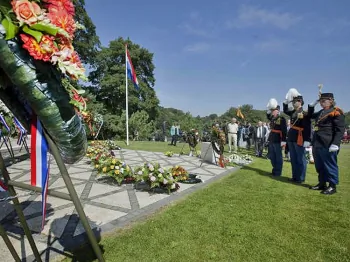
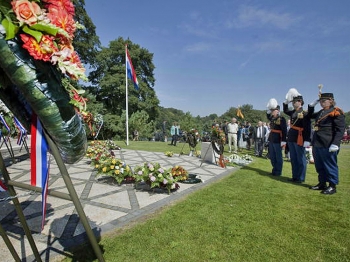
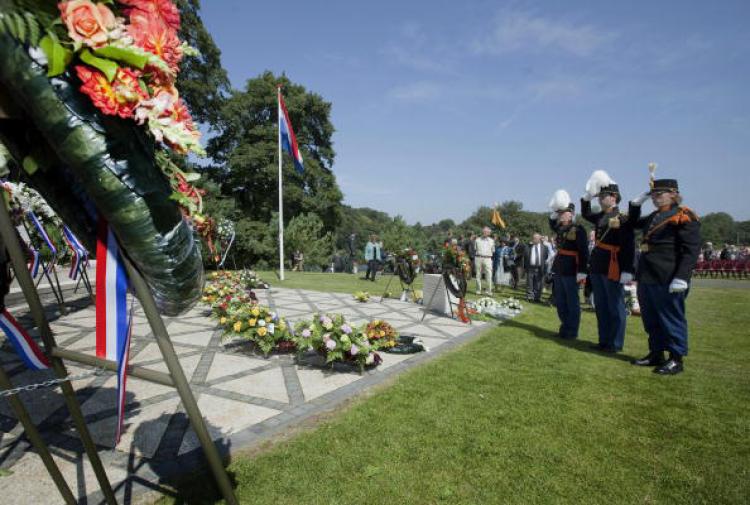
Once a year we commemorate these past events to keep alive the memory and to make sure it will never happen again. I assume that when Hitler rose to power, the majority of people that supported him would never have expected the things to come. It is hard to see wood for the trees.
This lesson, I think, is still applicable today, and we are still learning how to identify the good and guard against the destructive. And, when we concentrate on form, or on history, we risk overlooking present evil in another shape.
Evil doesn’t always have a mustache, or a beard.
 Friends Read Free
Copy
Facebook
Tweet
Friends Read Free
Copy
Facebook
Tweet