
The Immigrant Council of Ireland welcomed the launch of a new European strategy to eradicate trafficking in human beings.
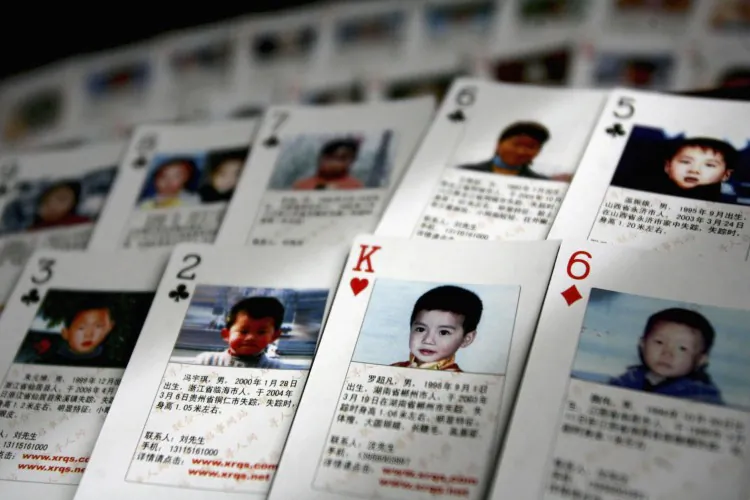
Human Trafficking is a very serious problem in Europe. “Trafficking in human beings is a lucrative form of crime that generates billions of euro for the organisers each year. Latest estimates from the International Labour Organisation – covering the period 2002 to 2011 – put the number of victims of forced labour and sexual exploitation at 20.9 million at a global level, with an estimated 5.5 million children being trafficked, Denise Charlton, CEO of the Immigrant Council, who took part in the EC Group of Experts in Human Trafficking said.
In the European Union, hundreds of thousands are believed to be victims of human trafficking.
“Unfortunately slavery hasn’t yet been left to the history books. It is appalling to see that in our times human beings are still being put up for sale and being trafficked into forced labour or prostitution,” European Union Home Affairs Commissioner Cecilia Malmstroem said.
The Commission said preliminary data showed that 76 per cent of them faced sexual exploitation in the EU in 2010 compared to 70 per cent in 2008.
“The EU strategy confirms the prevalence of trafficking for sexual exploitation and the disproportionately high percentage of women and young girls that are exploited in this way. The pattern for Ireland is no different to that highlighted in the strategy,” Denise Charlton, CEO of ICI said.
Some 14 per cent of those trafficked in the EU were forced into labour in 2010, while 3.0 per cent were made to beg on the streets and 1.0 per cent were in domestic servitude.
In another form of human Trafficking children are forced into criminal activity and “traded as commodities with a 20,000 euro price tag”, TheParliament.com reported.
Even though police across Europe are saying that the number of incidents of human trafficking are rising the number of convictions have dropped in recent years from 1,500 in 2008 to 1,250 in 2010, according to EU information. “This is a real scandal,” Commissioner Malmstroem said at the presentation of the strategy.
In order to change this situation the EU Strategy towards the Eradication of Trafficking in Human Beings, 2012-2016 was launched this week. It sets out five priorities:
1. Identifying, protecting and assisting victims of trafficking;
2. Stepping up the prevention of trafficking in human beings;
3. Increased prosecution of traffickers;
4. Enhanced co-ordination and co-operation among key actors and policy coherence; and
5. Increased knowledge of an effective response to emerging concerns related to all forms of trafficking in human beings.
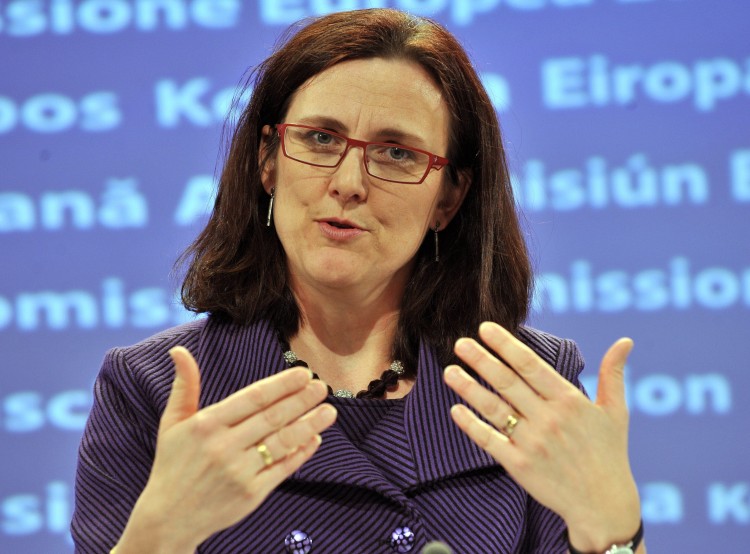
Denise Charlton of ICI welcomed the launch of the strategy. Concerning its implementation in Ireland she said, “In order to meet this objective, new measures need to be taken in Ireland to improve the identification of victims of trafficking.”
Under the current approach, victims of Trafficking may not be correctly identified because persons from within the EU or Asylum seekers are precluded from the possibility of being recognised as victims. According to Ms Charlton this is the reason for the surprisingly low number of identified victims in Ireland.
“The strategy has a markedly victim-centred approach, which requires that services are based on the ‘individual needs’ of the victims, rather than on their nationality and legal status, which appears to have been guiding the response to the needs of the victims in Ireland up to this,” she said.”
The Strategy also addresses the demand side of human trafficking. This concerns the goods and services produced by victims. The strategy will try to ensure that suppliers adhere to ethical standards and protect migrant workers from abuse and exploitation. In this regard the strategy references “Buy Responsibly”, a campaign of the International Organisation for Migration asking “What lies behind the things we buy?”, urging consumers to play their role in ending human trafficking.
IOM Director General William Lacy Swing also lauded the new strategy: “IOM fully backs the five key priority areas identified in the EU strategy and will actively co-operate with the EU Institutions and Member States in working to implement the measures.”
The Epoch Times publishes in 35 countries and in 19 languages. Subscribe to our e-newsletter.
 Friends Read Free
Copy
Facebook
Tweet
Friends Read Free
Copy
Facebook
Tweet