
As construction of a controversial tourist attraction continues in Jasper, Alberta, local opponents of the project have taken to the streets to hand out flyers criticizing private development in the famed national park.
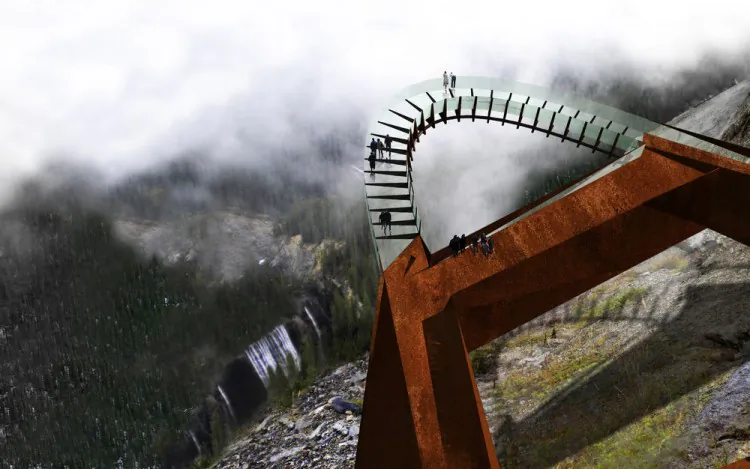
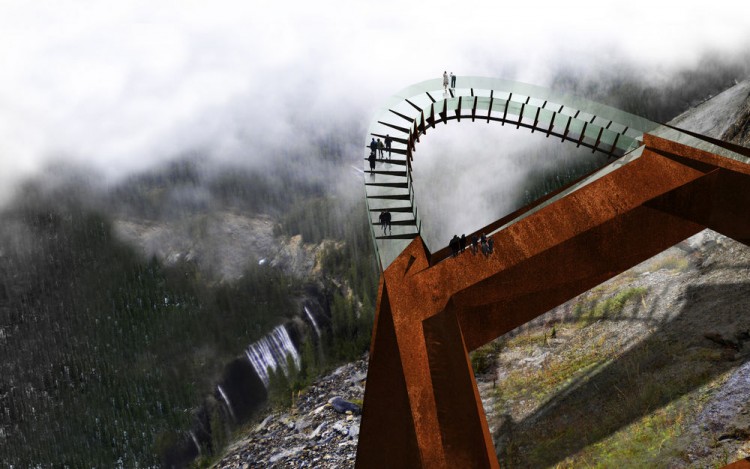
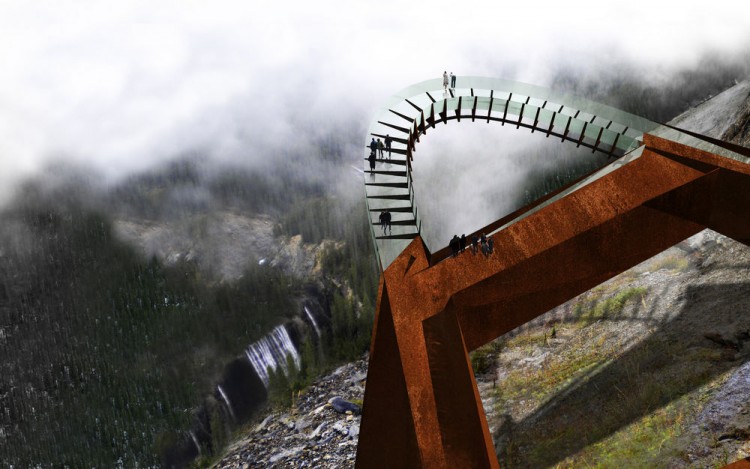
The Glacier Discovery Walk is a glass-bottomed observation deck being built into the Tangle Ridge Viewpoint overlooking the picturesque Sunwapta Valley along Jasper National Park’s Icefields Parkway, a world heritage site.
Owned and operated by Brewster Travel Canada, the walkway has been heavily criticized by local residents and environmentalists, whose online petition against the project has garnered over 182,000 signatures worldwide.
“The opposition from Jasper has been tremendous on this,” says Jill Seaton of the Jasper Environmental Association, who helped organize the flyering effort.
“They’re privatizing a public viewpoint. We can’t stop it, but we want people to know what’s happening in their national parks.”
The flyer warns tourists that the project could start a “dangerous precedent” of private development in Canada’s national parks, and raises concerns about how the attraction will affect the local wildlife, particularly the mountain goats and bighorn sheep in the area.
“The [environmental] study they did lasted for four months. You cannot do a goat study in four months, you’ve got to have it running over a full year—at least a full year,” says Seaton.
Once completed, the 400-metre walkway along the cliff face will lead up to the main observation deck, and visitors will pay $15–$30 for a view of Sunwapta Valley. Private cars will no longer be able to access the popular point; instead, visitors will need to take a shuttle bus from Brewster’s Icefields interpretive centre.
“People pay to come into the parks and should be able to have free views. This free view is now being taken over by Brewster,” says Seaton, adding that she believes the private development aims to compensate for federal cuts to Parks Canada earlier this year.
“These parks are so underfunded now that they’re having to call business interests in to set up gimmicks like this, and we don’t feel that’s right. This is a world heritage site.”
‘Robust’ Review Process
Brewster has been operating in the Canadian Rockies for more than a century, and says it is dedicated to sustainable development. Brewster CEO Michael Hannan says the company has met all requirements from Parks Canada and held public consultations before the project was approved.
“The regulations set by Parks Canada are very important to the preservation and also the public use of our national parks,” Hannan said in a press release.
“We share Parks Canada’s desire to protect the area for future generations. The Glacier Discovery Walk will offer visitors the opportunity to enjoy and learn about the park through a fantastic new interpretive experience that is highly sensitive to the surrounding landscape.”
Environment Minister Peter Kent described the review process for the project as “robust and inclusive.”
“During the public consultation process, we heard from many Canadians representing many perspectives. We recognize and appreciate the passion all Canadians feel for our national parks,” he said in February when approval of the Glacier Walk’s was announced.
The public engagement included four open houses held over four consecutive days in Jasper, Banff, Calgary, and Edmonton in early 2011. A fifth was held in Jasper on the eve of the deadline for commenting on the draft Environmental Assessment.
Brewster also maintained a toll-free phone line and website dedicated to providing project information and updates.
Public Input ‘Ignored’
Seaton says the public consultation and criticism of the project has been ultimately ignored.
“They consulted with us, they did, they offered public input, and we gave it to them—190,000 people either wrote, telephoned, emailed or signed a petition against this thing. They paid no attention at all. They then had an environmental assessment and they offered public input on that. Parks [Canada] ignored all that public input as well.”
A February statement from Parks Canada said the public consultation process was “not a plebiscite.”
“Although the majority of comments reflected a lack of support for the proposal, numbers for or against were not the only factor that Parks Canada considered when evaluating public response,” the statement reads.
“All comments were taken into account when making the determination, but in the end, the consultation process is not a plebiscite. Parks Canada considered the validity, scope and new information presented relevant to the assessment.”
The Epoch Times publishes in 35 countries and in 19 languages. Subscribe to our e-newsletter.
 Friends Read Free
Copy
Facebook
Tweet
Friends Read Free
Copy
Facebook
Tweet