
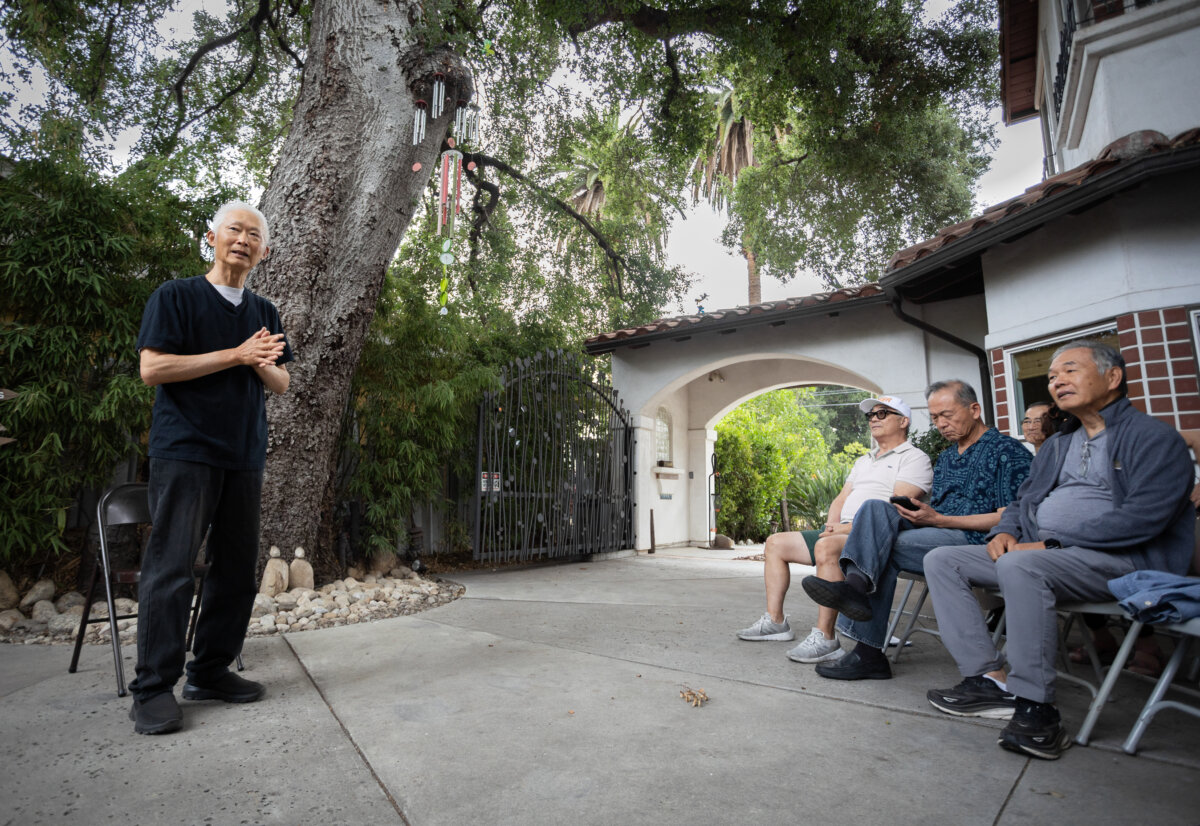
ARCADIA—Surrounded by family and friends, including former college classmates, Edward Huang stood beneath one of his towering oak trees as he prepared to brief his audience for a tour of his “eco home,” a living space using minimal amounts of energy and materials from surrounding landscapes.
“This oak tree not only brings in ecological values of shade and beauty, but also cultural value,” Ed Huang said. “The Native Americans that lived in this area used the shade of these trees to not only work and cook, but also meet together, as we are.”
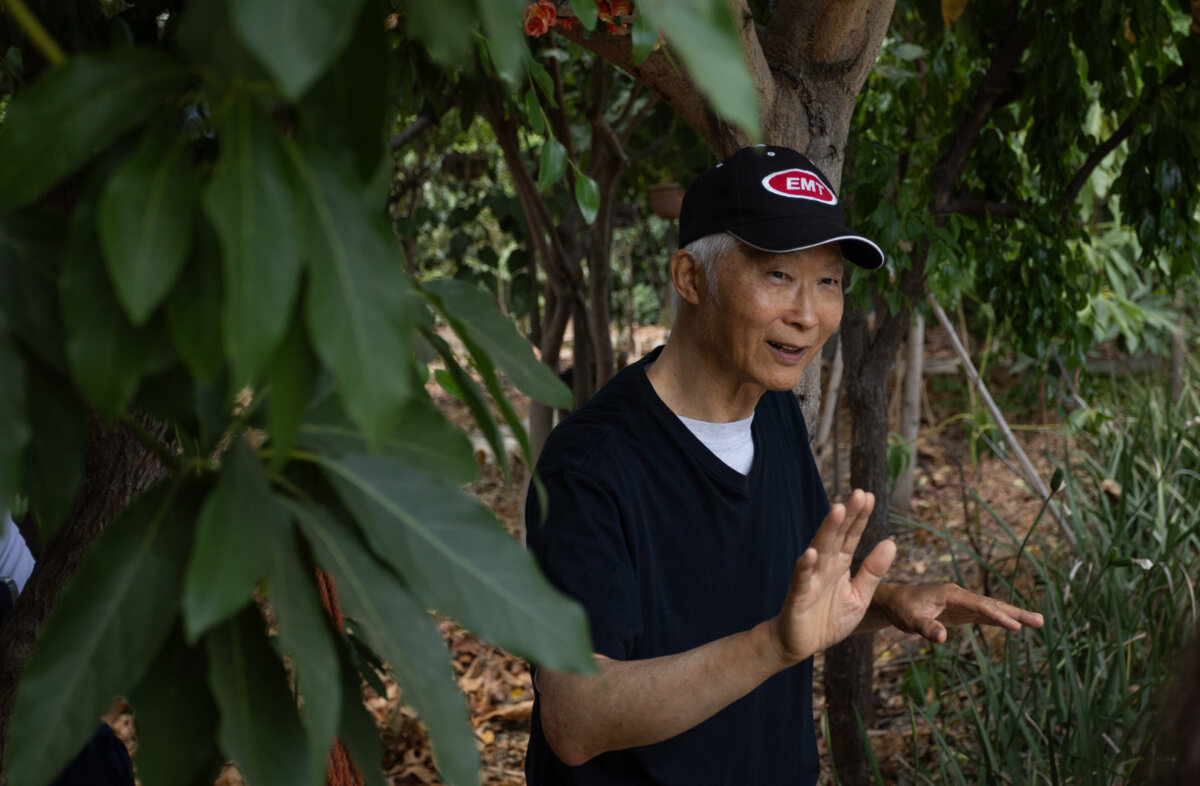
For Ed Huang, creating a home immersed in ecology started long before he and his wife, Caroline, officially moved into their two-story, Spanish-styled home in 2005.
Ed Huang grew up in poverty, so learning to recycle and reuse things came naturally to him. An architect with decades of experience working with the City of Los Angeles, Huang also taught in universities before he took his love for ecology and embedded it into the building of his Arcadia home.
Two decades later, he told The Epoch Times that the home design has “really paid off.”
“The ecology around your home not only brings beauty, but it also brings in value,” he said. “The landscaping and building materials we used in the building process reduced things like water and energy usage, which of course lower our monthly bills.”
As cost-of-living rates in the Southern California area have been increasing, the Huang home has operated at low expense. This is an economical plus, as Los Angeles residents face a cost of living that is 50 percent higher than the national average, according to Payscale.com.
Economical Ecology
On the western side of the Huang home, a row of trees was planted in the early stages of construction to be timed with seasonal blooms.
In the summer, blooms full of leaves provide shade for the home, and in the winter months, the leaves fall to the ground and allow sunshine to enter and warm the interior.
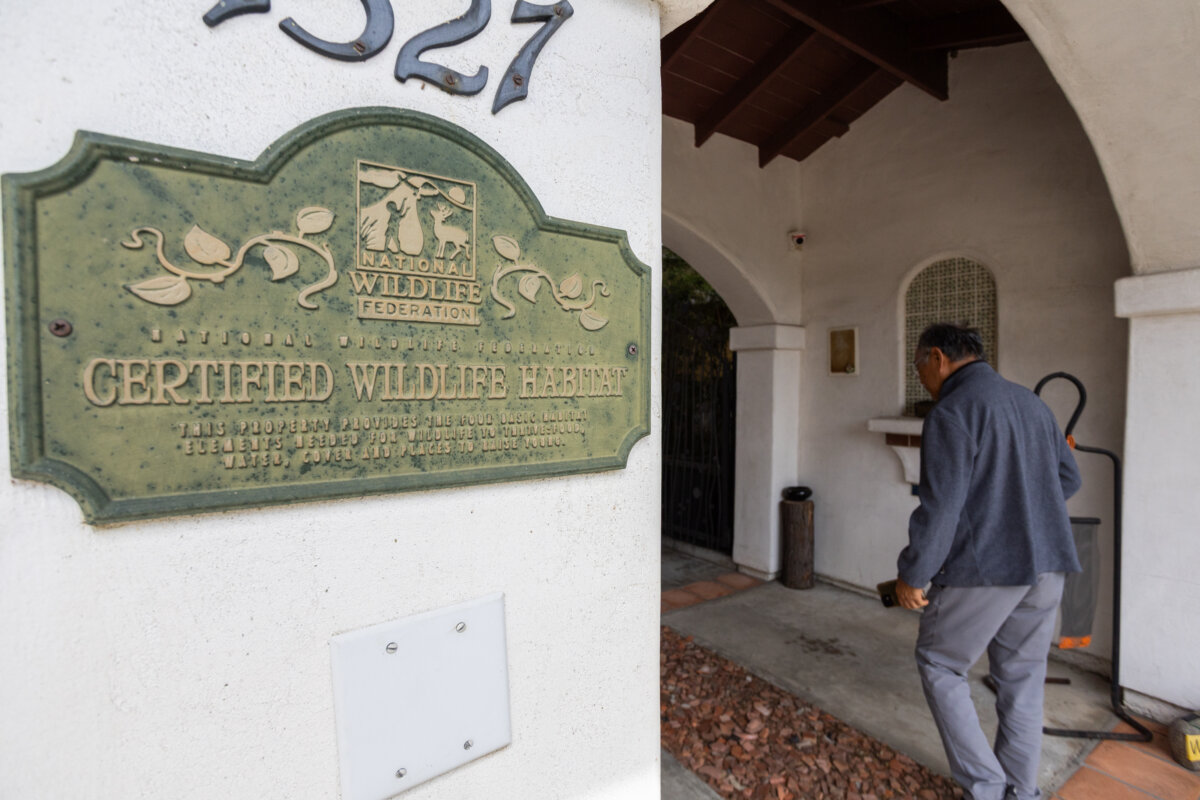
The row of trees also created a wildlife corridor allowing for coyotes, birds, and squirrels to pass through a forested pathway uninterrupted. The National Wildlife Foundation has declared the home a Certified Wildlife Habitat.
On the roof, terra-cotta shingles layered over plywood lined with foil also help maintain comfortable temperatures within the house, to the point at which the family has no need for air conditioning.
The Huangs were also early fans of rooftop solar panel technology, which also greatly lowered the family’s electricity bills and allowed for tax benefits.
“When Ed was designing the home, I was unfamiliar with solar roofing and remember questioning him about it,” Caroline Huang said. “And now, over 20 years later, we are receiving tax credits because of it!”
From Recycle to ‘Upcycle’
Caroline Huang recalled that over the course of constructing their home, she and her husband filled only one trash dumpster.
To date, homes similar to the Huang home in size use an average of three 16-foot dumpsters full of refuse during the building process.
She credits her husband’s childhood struggles for helping the family save resources in the process. They also used materials discarded from local worksites.
“It’s not hard to use extra building materials for other purposes,” Caroline Huang said as she looked at terra-cotta tiles used throughout the home’s wall decorations.
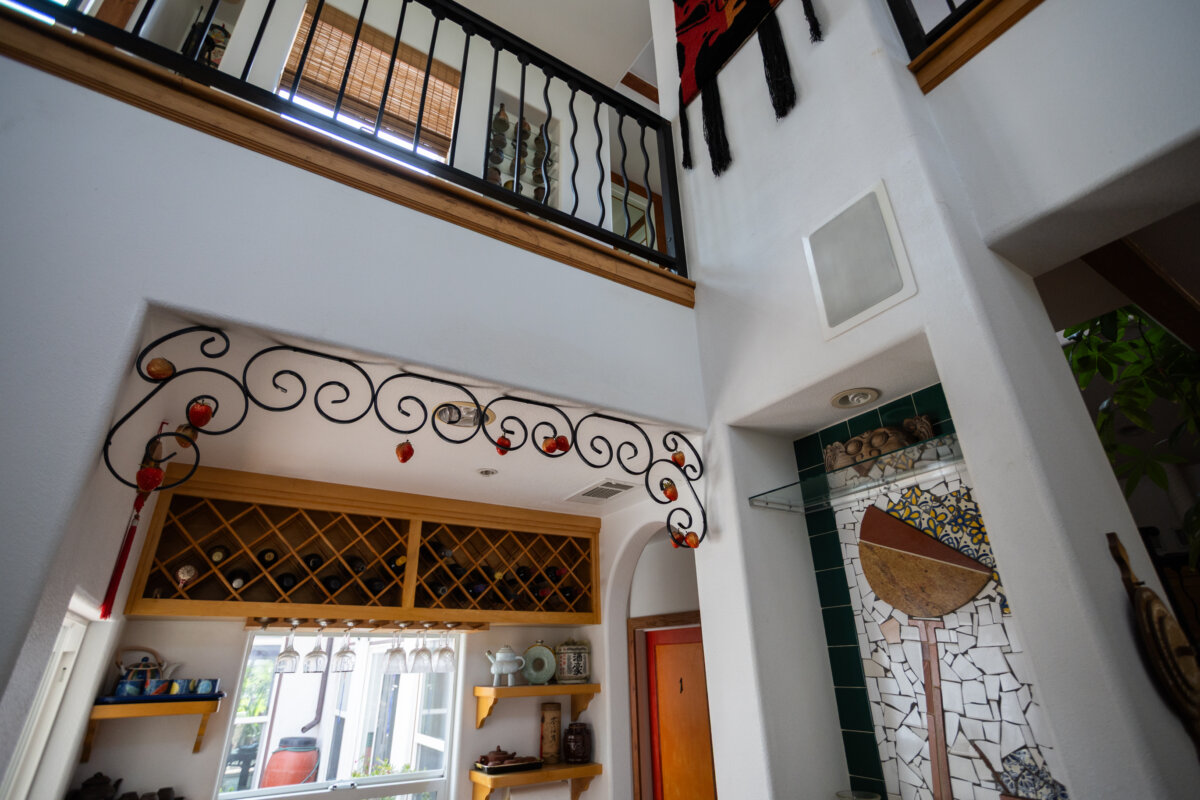
“If you take a look at these designs on the walls and the floors, Ed found these extra materials that were going to be thrown away from a nearby construction site and repurposed them for our home.”
Ed Huang calls the process “upcycling,” or reusing refuse for different purposes that can include decoration.
Instead of passing refuse off to the sanitation department as trash, Ed Huang enjoys giving the items and materials new uses.
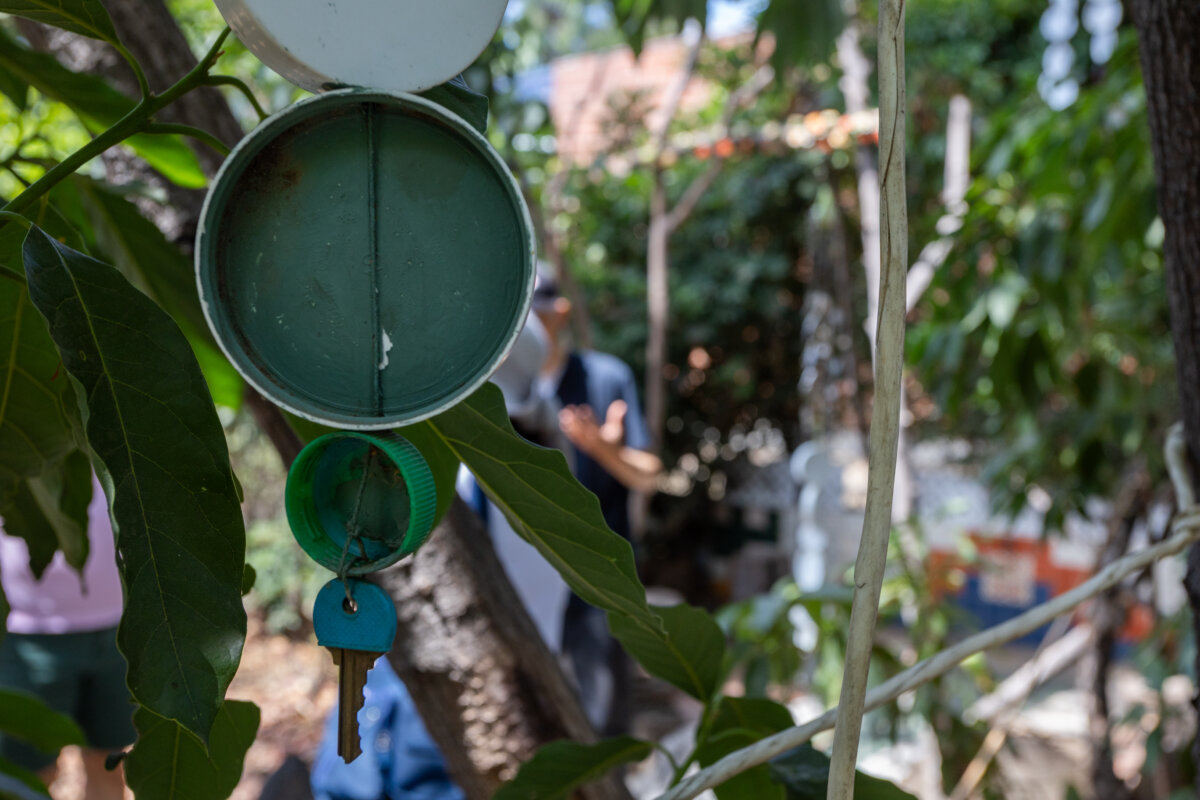
In the backyard, plastic caps from food jars are now used as wind chimes.
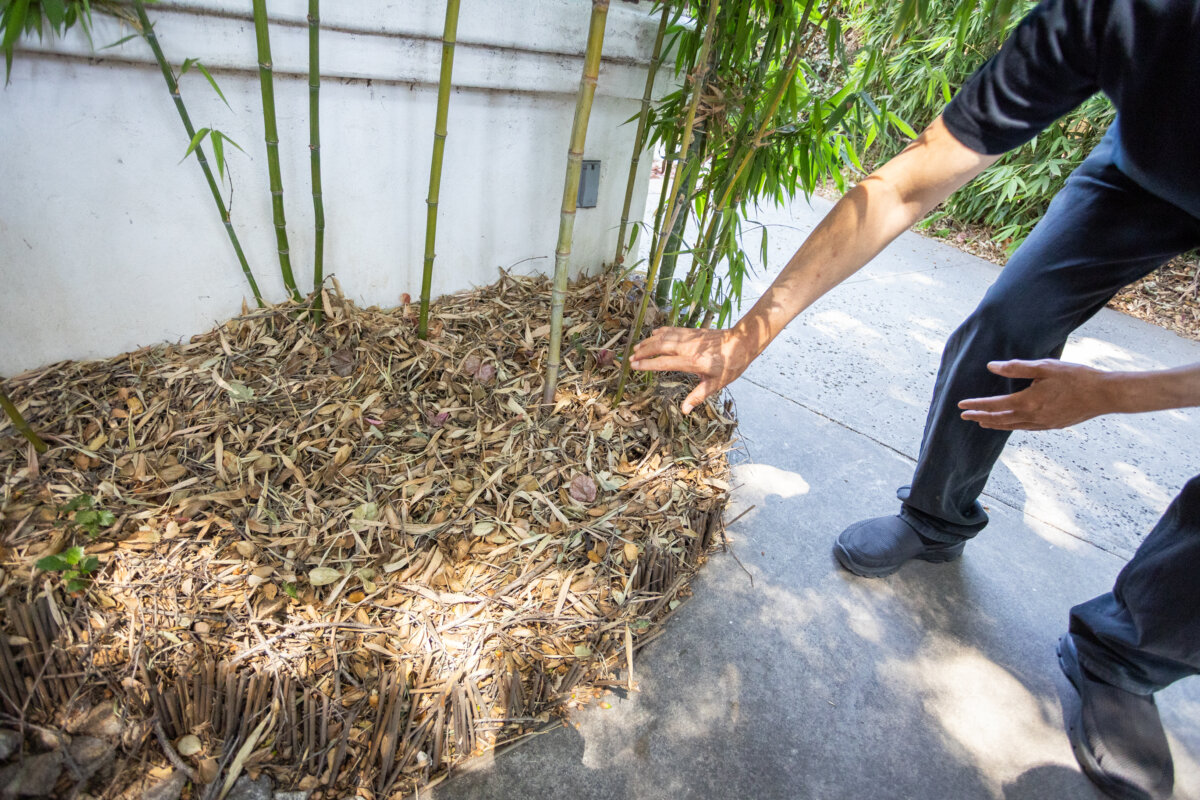
Near the side entrance, neatly placed chopsticks lined the edge of a garden. They were holding in mulched leaves as they slowly composted back into the grounds of the gardenscape to feed several plants.
“I like how my uncle was able to take things like chopsticks and reuse them in ways we never thought of,” Jesse Huang said. “These were from many great family dinners we had together, and it’s truly great to see that those memories are now a part of my uncle’s gardens, which I can really appreciate.”
2 Passions
The passion of saving resources came long before Ed Huang’s love for ecology.
When it came to building his home, he was excited to use both passions inside and outside.
Along with rain barrels, plants and trees that surround the home use “still water” that goes through a seeping process in which the water moves from the soil in the backyard to plants and trees in the front.
“In this process, the plants in the backyard of the home that need more water like our fruit trees make contact with the water first,” Ed Huang said. “The water then moves to the front yard of the home, where it contacts the plants that need less water, like our cactuses and some of our other trees.”
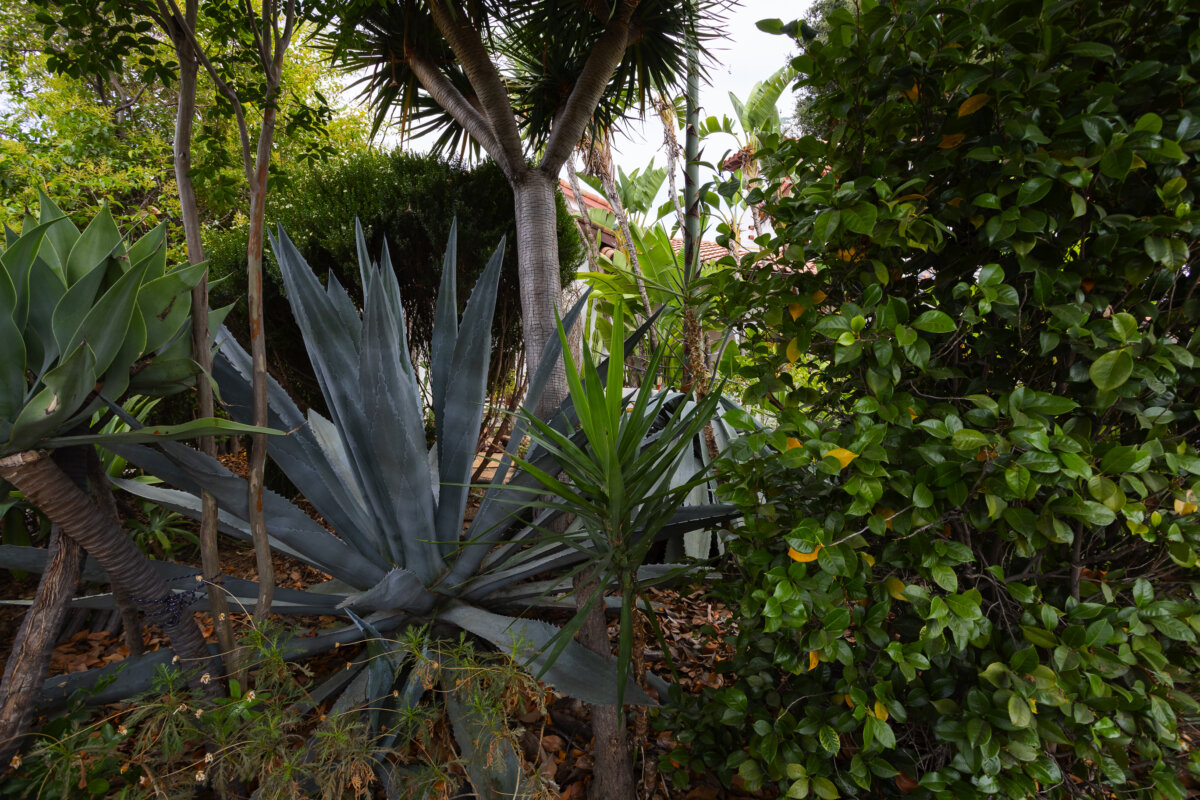
The front yard has a tree not often seen in the Los Angeles area: a dragon tree. This umbrella-shaped, deciduous flowering tree native to Southeast Asia and the Middle East has naturalized in parts of the United States.
Because the tree has pharmacological properties, according to the National Library of Medicine, the Huangs considered it a “good contribution” to the home.
Next to the dragon tree, a blue agave plant with a long, narrow stem stretching nearly two stories high was preparing for its “final appearance,” according to Ed Huang.
“What’s happening is called a ‘death bloom,’” he said. “It’s a rare opportunity to see this because when the agave tree has reached the end of its life, it spouts a long stem for its final bloom.”
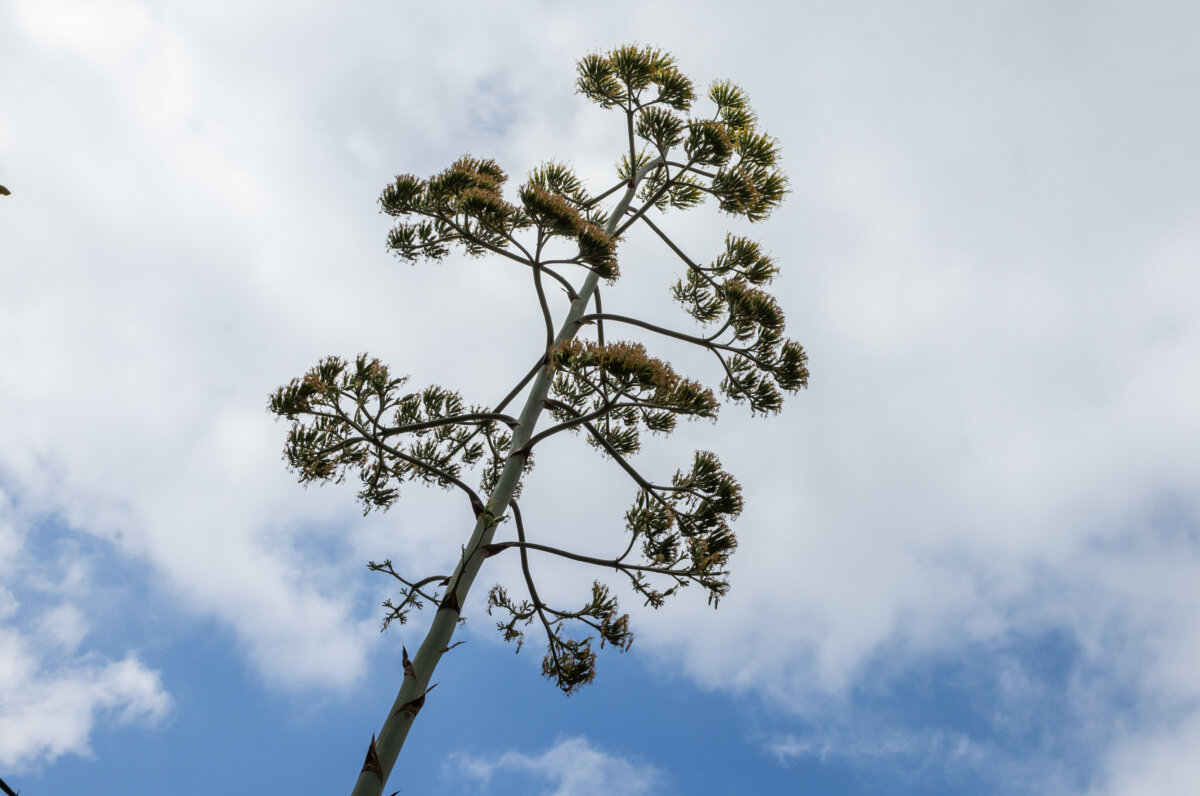
After death blooms, agave trees are known to spread their seeds and create new generations, according to Roger’s Gardens, a nursery in Newport Beach.
Nicknamed the century plant by the botanist community, some agave trees are known to take up to 80 years to produce flowers, an essential ingredient for distillers in creating tequila. The nectar is also used to create agave syrups, a sweetener now in commercial production around the world.
“This is a rare sight,” Ed Huang said with a smile.
What looked like pieces of torn cloth were blowing in a soft breeze on the side of the home. They once belonged to a now deceased relative and had been “upcycled” by Huang several years before. The strands of cloth now move in the wind daily before his eyes.
“Everything has a purpose in our gardens,” he said. “We hope that this can help and inspire others who are interested in creating similar living spaces.”
 Friends Read Free
Copy
Facebook
Tweet
Friends Read Free
Copy
Facebook
Tweet