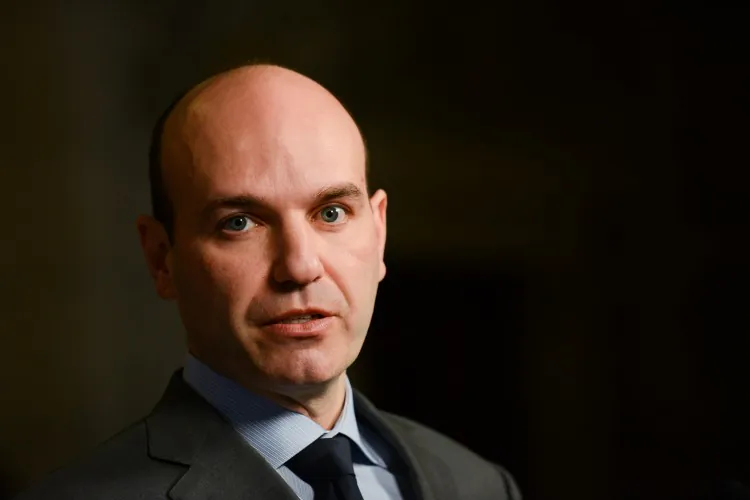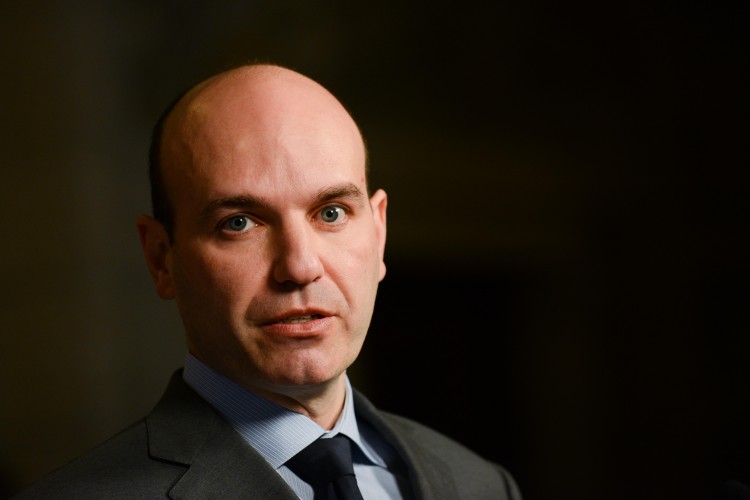

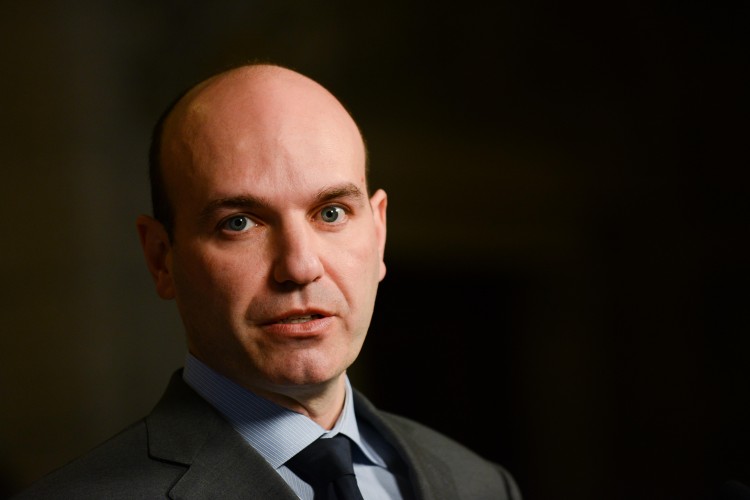
PARLIAMENT HILL, Ottawa—Parliament’s referee needs the power to crack down on the partisan headshots, says the NDP in a call to increase the powers of the Speaker of the House of Commons.
An NDP motion tabled Tuesday aims at improving civility in the House by giving the Speaker the power to suspend members of Parliament for up to 20 days without pay if they repeatedly misbehave.
Misbehaving includes threatening, launching personal attacks, or misrepresenting facts in the extreme, particularly during the 15 minutes MPs can rise and give one-minute statements before question period and throughout the 45 minutes of QP itself.
MPs would receive a warning for a first offence; be suspended from the House for one day for a second offence; five days for a third offence; and twenty days for a fourth offence.
They would also lose their “sessional allowance” or salary during the period of suspension.
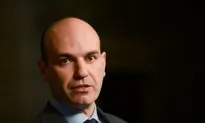
NDP House Leader Nathan Cullen likened the changes to efforts to clean up the NHL.
“In hockey, minor offences land a player in the penalty box for two minutes. The more serious stuff, headshots, is getting cracked down [on]. Repeat offenders get longer suspensions and in fact lose salary as a deterrent. What we are proposing is similar. We’re trying to take the political headshots out of Parliament.”
Suspending an MP hurts the whole party, Cullen said. During question period, a party may lose a question as a result, or lose MPs who frequently answer controversial questions for the government.
For changes to take place, Cullen said other parties have to get on board.
Voter Cynicism
Cullen said the lack of civility disappoints Canadians and lowers voter turnout. He pointed to a study of MP exit interviews by Samara Canada that found 40 percent of MPs did less in their jobs due to heckling.
“Other MPs talked about being de-motivated, disengaged in the House, when they hear the heckling,” he said. “Canadians tune out as well.”
But Cullen may have misquoted some facts in support of his argument when he referenced an Environics Institute study from 2012.
“Only 17 percent of Canadians trust Parliament and attributed the lack of trust to the explosive and partisan bickering of the minority parliaments between 2004 and 2011. This has only increased under the current government’s regime,” he said.
But the study did not look into why trust in Parliament was falling. Trust has marginally improved rather than worsened in recent years, noted Keith Neuman, executive director of the Environics Institute.
Neuman said it was difficult to conclude why trust in parliament fell, but said attributing it to partisanship was a reasonable interpretation.
“It’s entirely plausible it is a factor, but difficult to nail down,” he said.
“Negativity, fighting, and conflict between parties is certainly not something Canadians are happy to see.”
Some MPs leave the House crying due to the insults and personal attacks, said Cullen.
“There is no workplace in the country that would accept that kind of behaviour.”
Other groups concerned with democratic reform have suggested broken election promises and Canada’s first-past-the-post electoral system are to blame for low turnout. Elections Canada has said civic education would improve turnout.
Civility hit a low point Dec. 5, 2012, when Government House Leader Peter Van Loan stormed across the floor of the House to call out Cullen. Van Loan and NDP leader Thomas Mulcair both swore during the event, which some news outlets described as a near brawl.
But Cullen noted the NDP make mistakes also, and that all parties could improve. He dismissed concerns that a heavy-handed speaker could abuse those additional powers in the future.
Speakers Struggle with Unruly MPs
Current Speaker Andrew Scheer has raised the issue several times, and campaigned for the role of speaker in part on a pledge to crack down on MPs that misbehave.
Last December, he told MPs he needed their cooperation to maintain civility.
“My authority to enforce the rules depends on the co-operation of the House,” he said. “Our electors expect all members to make greater efforts to curb disorder and unruly behaviour.”
He warned of the dangers of that behaviour almost exactly one year earlier in 2011.
“Left unchecked, a deterioration in order and decorum risks impeding the work of the House,” he said.
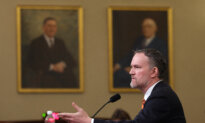
The NDP’s motion may not get much traction with the Conservatives, but it has the support of Peter Milliken, one of the most highly regarded men to hold the Speaker’s post.
Milliken said he had advocated for increased authority for the Speaker years ago, perhaps even before his time as Speaker.
Current penalties don’t work, he said.
“The speaker’s power is to throw the member out for the day, that is the punishment, and then they are back the next day and everything is fine again.”
Some MPs would even try to get tossed in order to attract media attention to their issue, he said.
“Then they can go and hold a press conference and say, ‘Yeah, they threw me out because I used language that was unparliamentary, but what I said was absolutely true.”
“There is no penalty. If you are out for the rest of the day, big deal,” he said.
“You are not kicked out of the building. You are not kicked out of your office. You could get on a plane and fly to Vancouver and spend the rest of the day there at the taxpayers’ expense. There is no punishment in it in my view. There is certainly no docking of pay.”
He said if MPs knew there was a more serious punishment, they would be much more reluctant to get thrown out.
Speakers used other measures in the past. He remembers an MP called the prime minister a liar and refused to withdraw the comment. Milliken didn’t throw him out, but never recognized him again for the 14 months he remained in office.
“He never spoke again. He never got to make another speech or ask a question.”
But Milliken is not sure the Speaker could do that now, because the party whips would vigorously object.
Tories Open To Proposal
Government House Leader Peter Van Loan didn’t dismiss the motion, but did use it as a point of criticism against the NDP.
“The motion raises a concern about ‘extreme misrepresentations of facts or positions in the House’ that Canadians are rightly concerned about. After all, the NDP is a party who wrote a $21 billion carbon tax in their platform, only to spend months denying it in the House,” wrote Van Loan via email.
He pledged the Tories would continue to expose that kind of misrepresentation on the part of the NDP. He also left the door open to looking into the NDP’s proposal.
“Although the Speaker already has most of the authority suggested by this motion, we are open to study this idea.”
The Epoch Times publishes in 35 countries and in 21 languages. Subscribe to our e-newsletter.
 Friends Read Free
Copy
Facebook
Tweet
Friends Read Free
Copy
Facebook
Tweet