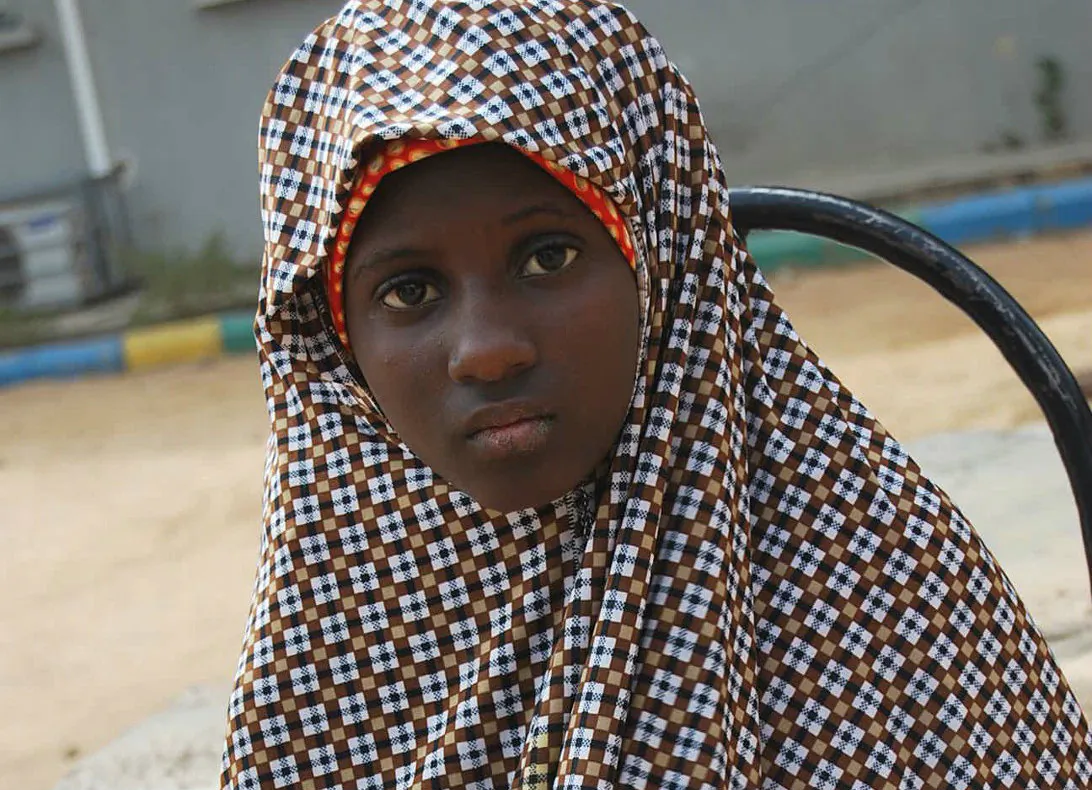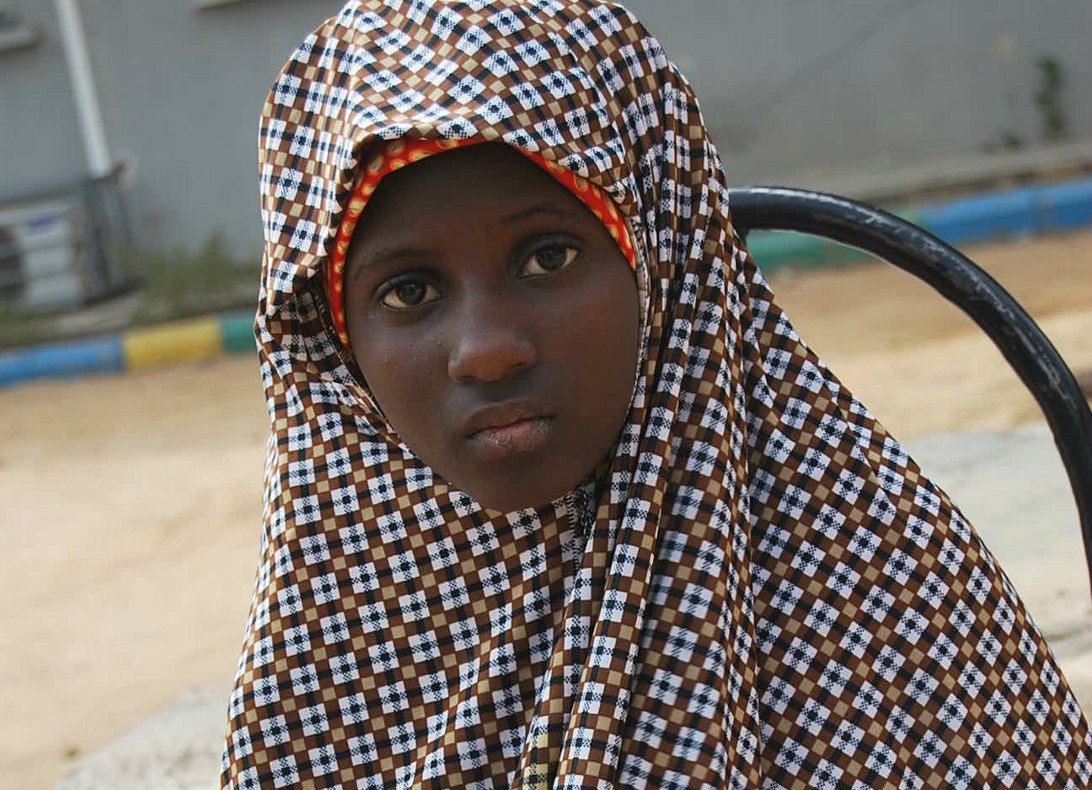

The number of children involved in Boko Haram suicide attacks has increased dramatically, said a UNICEF report on April 12.
The number increased from 4 in 2014—to 44 in 2015. UNICEF reported that over the past 2 years, 1 in 5 suicide bombers was a child and 75 percent of the children involved in Boko Haram attacks were girls.
“Let us be clear: These children are victims, not perpetrators,” said Manuel Fontaine, UNICEF regional director for West and Central Africa.
“Deceiving children and forcing them to carry out deadly acts has been one of the most horrific aspects of the violence in Nigeria and in neighboring countries,” he added.
 Salta Bintou Hassan is 11. She lost her arm after a suicide attack on Baga Sola market in October 2015. After spending two months in the hospital of N’Djamena, she is back with her family. Yet, her life will never be the same. (Photo courtesy: UNICEF)
The report, “Beyond Chibok,” released two years after 200 schoolgirls were kidnapped in Chibok, shows the “alarming trends” in four African countries terrorized by Boko Haram.
Between January 2014 and February 2016, Cameroon had the highest number of child suicide attacks, 21. Nigeria followed with 17 and Chad with 2 attacks.
Suicide bombing attacks also extended beyond Nigeria. The occurrence of all suicide bombings went up from 21 in 2014 to 151 in 2015. Last year, 89 of the bombings were in Nigeria, while 39 attacks happened in Cameroon, 16 in Chad, and 7 in Niger.
.@UNICEF reports tenfold increase in children used in ‘suicide’ attacks in #Nigeria conflict https://t.co/MalnxajjDt pic.twitter.com/dU445LsYgZ
— UN News Centre (@UN_News_Centre) April 12, 2016
The report said the use of children who may have been pressured to carry out attacks has created an environment of fear and suspicion. The negative atmosphere makes it harder for girls who survived captivity and sexual violence by the terrorist group, as they are often seen as potential security threats and are challenged by stigma and discrimination in society.
“As ‘suicide’ attacks involving children become commonplace, some communities are starting to see children as threats to their safety,” said Fontaine.
“This suspicion towards children can have destructive consequences; how can a community rebuild itself when it is casting out its own sisters, daughters, and mothers?” he added.
There was one reported case by the Associated Press in which a young woman was freed by soldiers after an attack on a Boko Haram-held village. She was reunited with her family and told her mother she had been trained as a suicide bomber. Her mother was too scared of her daughter so she turned her in to the military.
 Police officers stand guard following a suicide bomb explosion at a bus station in Kano, Nigeria, Feb. 24, 2015. (AP Photo/Sani Maikatanga, File)
An estimated 1.3 million children have been displaced in the four countries affected by Boko Haram. About 1,800 schools have been closed, and 5,000 children were reportedly unaccompanied or separated from their parents.
In six years, Boko Haram has killed 20,000 people and has displaced 2.8 million from their homes.
The Associated Press contributed to this report.
 Friends Read Free
Copy
Facebook
Tweet
Friends Read Free
Copy
Facebook
Tweet