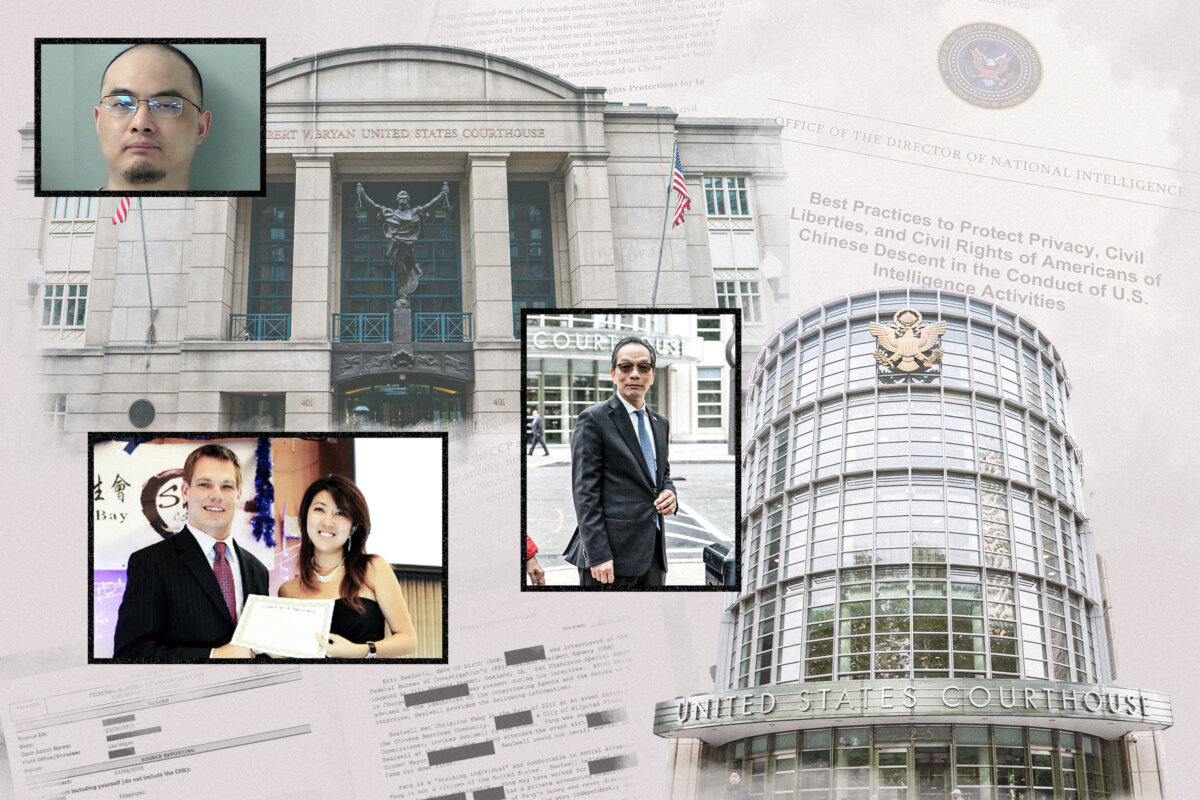
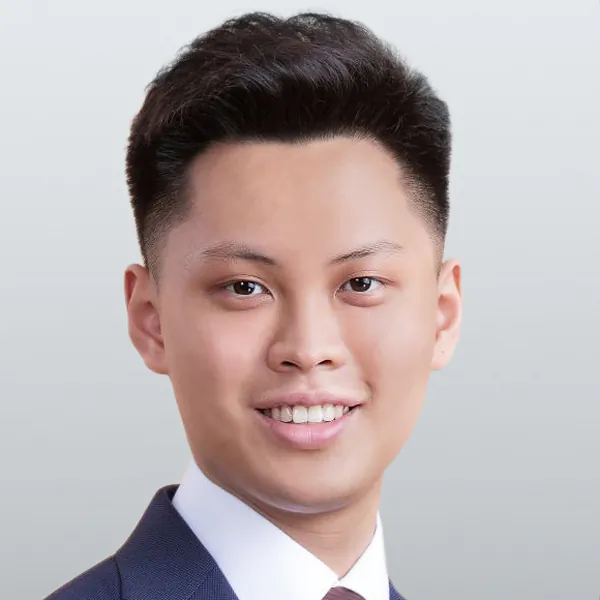
An American journalist who spent 16 years in China as a columnist and editor for its state media was, for seven of those years, also on the payroll of the Chinese Ministry of State Security (MSS)—the civilian agency that runs Beijing’s foreign intelligence, counterintelligence, and secret-police work.
What made Thomas Weir Pauken II, 51, valuable to the Chinese regime was that he could enter the United States whenever he wanted.
On Sept. 1, a federal judge in Alexandria, Virginia, sentenced Pauken—arrested at a Washington hotel in February—to two years in prison.
“[Pauken] exploited his U.S. citizenship and corresponding ability to travel to the U.S. without restriction,” Assistant Attorney General John A. Eisenberg said.
From at least 2019 until February 2026, Pauken was paid at least $100,000 by a Chinese state handler he knew as “Cathy,” according to the Justice Department. His tasks were to travel from Beijing to the United States, meet people who might become intelligence assets, hand them communication devices, and pass along what Beijing wanted to know.
Experts told The Epoch Times that Beijing conducts most of its U.S. intelligence operations through people already living inside the country, relying on tasks that are largely lawful—making introductions, hosting events, logging attendee lists, or looking up individuals.
These activities unfold across student clubs, hometown associations, campaign fundraisers, and university forums—the very institutions an open society intentionally keeps accessible. In Pauken’s case, his role was to identify individuals the Justice Department called “new recruitment targets” for his Chinese handlers.
For Beijing, two jobs run parallel in the United States. One is aimed outward at U.S. politicians, campuses, and defense firms. The other is aimed at the Chinese diaspora, whose gatherings are tracked and reported back to Beijing.
Below the Legal Line
To carry out those two jobs, Beijing works through two kinds of people: trained professionals and informants, Chen Pokong told The Epoch Times.
Chen helped organize the 1989 democracy protests in Guangzhou, China, and was jailed twice before his exile to the United States in 1996. An author and longtime commentator for Radio Free Asia and Voice of America, he has spent three decades inside the overseas Chinese dissident community.
The Chinese Communist Party (CCP) uses the second kind in numbers—what Chen called the CCP’s “human-wave tactic.”
“These informants are everywhere: in the Chinese community, at democracy-movement meetings, at all kinds of academic conferences in the United States, in all kinds of university forums,” he said.
“What these informants do is walk along the edge. He can say he is acting legally.”
Pauken fell between them. He was not a trained officer, and he was not walking on the edge either: He was a recruited agent—paid, run by a handler and given assignments—and what Beijing wanted from him was more people.
Chen Pokong, Chinese dissident author and commentator
He also sold reports to a Wuhan group seeking information on American technology and the U.S. Department of Justice and to an expert who could help the group “engage in cyber espionage.”
Prosecutors said he encouraged a Trump administration official to contact a woman in China he believed was a Chinese intelligence officer. The Justice Department stated that he admitted trying to “infiltrate U.S. political circles” for access to classified information.
Pauken pleaded guilty in June to acting as an agent of a foreign government in the United States without notifying the attorney general. At his sentencing before Judge Leonie Brinkema, Pauken did not dispute what prosecutors found out about what he did.
“I learned a lot of secrets, and I did tell the Chinese about these secrets,” he said, referring to non-public information he shared that did not constitute national defense information.
“I thought I was helping, but now I realize I could’ve caused even more damage, including war.”
No Espionage Act count was brought. That statute reaches the delivery of “information relating to the national defense” to a foreign power and is punishable by death or life in prison.
Pauken’s lawyer, Charles Burnham, told The Epoch Times on Sept. 1 that “as the government agreed in court today, Mr. Pauken did not provide any classified information to the Chinese.”
The charge he pleaded to carries a maximum of 10 years. Prosecutors asked for three. He received two.
Nothing Beijing asked of him required breaking into anything, and that’s not a quirk of his case.
In 1999, two senior colonels in the People’s Liberation Army (PLA), Qiao Liang and Wang Xiangsui, published “Unrestricted Warfare” through the PLA’s own publishing house. They wrote that the boundaries “between the two worlds of war and non-war, of military and non-military, will be totally destroyed.”
Why the work is shaped this way is the subject of an upcoming Epoch Times exclusive research report titled “The Structure of the CCP’s Security Apparatus: From Central Rosters to Front-Line Operational Units.”
The report’s central finding is that the CCP does not concentrate its intelligence or security work in a single all-powerful agency. Beijing sets the agenda and defines the threats; the work is parceled out to front-line units—provincial and municipal state security offices—and to ordinary people.
In the united front, religious, and school arenas, the report states that “social control does not always wear a coercive face.” It appears instead as liaison, heart-to-heart talks, and the cultivation of “representative figures”—the same channels that the American cases run through.
The same division of labor extends past China’s borders. Those local security offices handle ports of entry, universities, research institutes, foreign companies operating in China, and the diaspora communities that emigrated from their own territory. They have “their own origins, networks, and target sets,” the Epoch Times report found.
There is a legal engine behind it all. China’s 2017 National Intelligence Law requires its citizens and organizations to support and cooperate in state intelligence work.
The FBI has written down what that looks like on the ground.
The 1st Step: Cultivating Access
A key element of the CCP’s human-wave tactic, Chen said, is overseas Chinese students, who are given small tasks to complete at events—such as networking, recording videos, and collecting business cards.
“Back in China, they can turn it in for credit,” he said.
He called it “zuoye,” meaning homework.
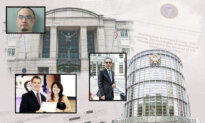
What that is worth is set out in nearly 150 pages of FBI records on Christine Fang, declassified by the White House and released on Aug. 17. They document four years of investigation into a Bay Area woman the FBI assessed as having suspected ties to the MSS and whose parents were intelligence officers.
Fang founded a Chinese student association at a state university and grew it past 700 members. The Chinese Consulate in San Francisco named her the best such president on the West Coast. She threw galas with the mayor of San Francisco and raised campaign money for a young then-Congressman Eric Swalwell (D-Calif.).
Not one of those instruments was illegal. But across those years, by Fang’s own account in the file, they put her in rooms with a governor, two mayors, and a member of Congress.
Matthew Brazil, a former U.S. Army officer and diplomat who co-wrote “Chinese Communist Espionage: An Intelligence Primer,” told The Epoch Times that diplomatic missions have ordinary reasons to court such groups, “but they also allow for intelligence spotting and assessment.”
“Fang’s activity looks like long-term cultivation instead of intelligence source recruitment and collection,” he said. “Potential sources are first identified and assessed before they are ‘pitched’ and recruited.”
What that work was worth, he said, is shown by one fact: Swalwell ended up on the House Intelligence Committee.
He resigned from Congress in April over sexual misconduct allegations unrelated to this case.
In February 2017, the FBI retitled the case.
“Investigation to date has not found violations of federal corruption statutes perpetrated by Congressman Eric Swalwell,” it stated.
When the case closed that May, agents wrote that the evidence showed Fang had violated criminal laws, including campaign-finance, false-statement, and bulk-cash-smuggling provisions, as well as Section 951—the charge under which Pauken was sentenced. Investigators found no evidence of “a quid pro quo exchange between Fang and the Congressman or his office.”
Nobody was charged. Fang fled the country and was subsequently barred from returning. Prosecution was “non-viable due to national security reasons,” the FBI stated.
The FBI declined to comment on the case.
Her case is the method in full. Every instrument she used is one that an open society hands out freely—a campus club, a consular honor, and a seat at a fundraiser. Nothing had to be stolen, and by the time the FBI understood what the pieces added up to, the access was already in place.
Then Comes the Ask
Access is the first half of the work. What Beijing asks for once it has been built depends on who is asking.
What a local office specializes in, The Epoch Times report found, “depends heavily on its region.” A province with an aviation industry pursues aviation. A province whose emigrants built communities in California has a reason to be interested in California.
Jiangsu, China, has an aerospace base. Ji Chaoqun arrived in Chicago on a student visa in 2013 to study electrical engineering at the Illinois Institute of Technology. The Jiangsu State Security Department, the provincial arm of the MSS, tasked him with compiling background on eight Chinese nationals working in the United States as engineers and scientists, several at U.S. defense contractors, for possible recruitment.
None of that required breaking into anything. A student visa, a graduate program, names gathered on eight people—the work Beijing wanted was work anyone could do.
What exposed Ji was something else. In 2016, he enlisted in the U.S. Army Reserve under a program for foreign nationals with special skills and lied about contact with a foreign government. Arrested in 2018, he was convicted in 2022 of acting as an unregistered agent and lying to the Army. He was sentenced the following year to eight years in prison.
The officer directing Ji was Xu Yanjun, a deputy division director in the Jiangsu office—the only serving Chinese intelligence officer the United States has ever convicted. His target was the composite engine fan module at GE Aviation in Cincinnati, technology that the Justice Department said “no other company in the world has been able to duplicate.”
Xu’s method was the same as Fang’s. He found engineers at American aviation companies, invited them to China to lecture, and paid their travel and a stipend. Unable to arrest him in China, the FBI drew him to Belgium in 2018 with the promise of meeting a GE engineer, and he was extradited to Ohio, convicted under the Economic Espionage Act, and sentenced to 20 years in November 2022.
The 2nd Job: Targeting Chinese Diaspora
The second of the two jobs points the other way. Where the first reaches outward for access and information, this one reaches inward for control—and where the MSS collects intelligence, this work runs through Chinese consulates and the Chinese Ministry of Public Security, China’s police.
Chinese dissident groups in the United States sign people in at meetings. Where those groups have been infiltrated, Chen said, the organizers photocopy the book and hand it to the CCP side.
Hometown associations, the province-based clubs in Chinese communities, are “manipulated from behind the scenes by the CCP’s consulates and embassies, which supply the funding and hand out the honors,” he said.
On May 13, a federal jury in Brooklyn convicted Lu Jianwang, a U.S. citizen from the Bronx, of acting as an illegal agent of the Chinese regime and of obstructing justice.
Prosecutors said he helped run an undeclared police station out of a building on East Broadway in Manhattan’s Chinatown, used to monitor Chinese dissidents abroad and to locate a pro-democracy advocate who had fled to the United States. He faces up to 30 years in prison.
“We will not allow secret ‘police’ sent by a foreign country to harass people in the United States,” said Eisenberg, the same U.S. official who announced Pauken’s sentence.
The CCP officials behind such campaigns are harder to reach. In separate complaints in April 2023, the Justice Department charged 44 people, 40 of them officers of the Ministry of Public Security, over campaigns to harass and silence people living in the United States.
“[They] are believed to reside in the [People’s Republic of China] or elsewhere in Asia and remain at large,” the department stated.
Chen Pokong, Chinese dissident author and commentator
Chen was asked if there’s a point at which an informant crosses a line into intelligence work.
“It is hard to say there is any boundary,” he said. “Between informants and spies—that is, between irregular CCP personnel and regular CCP personnel—the line really is very blurred.”
Gaps in US Laws
That blurred line is the one a prosecutor has to find; two U.S. statutes require it.
Section 951 of Title 18 is the charge Pauken pleaded to and the U.S. government’s main tool against people secretly working for a foreign state.
The Foreign Agents Registration Act of 1938 (FARA) is weaker. It requires people working for a foreign principal to disclose it and was barely used for most of its history: seven criminal cases in the 49 years leading up to 2015, by the Justice Department’s own count.
Neither statute makes the work itself a crime. Under Section 951, working for a foreign government is lawful; the offense is doing so without telling the attorney general. FARA asks only for a public registration.
The introduction, the event, the note of who attended—the ordinary business of the network—sits outside both statutes. And where a statute does apply, it requires proof that the person acted under the direction or control of a foreign government, the one thing a large network of minor actors is good at hiding.
That is the space Beijing works in.
David Keating heads the Institute for Free Speech, which litigates against federal disclosure and election laws on First Amendment grounds. He asked the Justice Department last year to narrow FARA. He was speaking about the statutes rather than any particular case.
Asked whether the statutes could reach too little and too much at once, Keating told The Epoch Times that both could be true and that vagueness is why. Conduct that “arguably should be covered” may or may not be, he said.
Nina Shea sees a different problem in Beijing’s pressure on religious communities inside the United States. A Hudson Institute senior fellow, she served seven terms as a U.S. commissioner on international religious freedom.
“The Justice Department is investigating some of these, but only a tiny, tiny fraction do they investigate and bring charges on, much less take to court,” she told The Epoch Times.
“And if they do bring charges, they’re lesser charges—charges like lying to the FBI, for example, or not registering as a foreign agent of China under the FARA law.”
The two remarks point in opposite directions. Shea’s complaint is that far too few of these cases are ever charged. Keating’s is that a wider law would reach ordinary Americans instead.
Disrupted, Not Stopped
Where charges could be brought, they stick. Xu drew 20 years and Ji eight. A Brooklyn jury convicted Lu. Fang was never charged, but she was identified and kept out.
What none of it did was stop the work at its source.
On Nov. 27, 2024, Xu and Ji were flown home in a prisoner exchange with a third Chinese national; Beijing released three Americans whom it had held for years.
Brazil, the former U.S. Army officer and diplomat, did not see the swap as a loss.
“The 2024 trade was not a defeat, as spy swaps have long been a commonplace calculation since before the Cold War,” he said.
Beijing had priced it in.
What was charged is the more revealing thing: rarely the work Beijing wanted done, usually something at its edge. Ji was convicted of lying on an Army form, Xu of trade secrets rather than of running an agent, and Pauken of never telling the attorney general that he worked for Beijing—after seven years of doing so. Lu was convicted outright, but he was the one within reach; the 44 charged in 2023 are believed to be in China and remain at large.
Against those charges sits what the work produced. A congressman who later served on the House Intelligence Committee. Material from engineers at American aviation companies, and the names of eight more, several of them at U.S. defense contractors. The attendance book from a dissident meeting.
None of that is a record of enforcement failure. It is a measure of how much of this work never has to break a law at all.
The Epoch Times research report places the two jobs within a single lineage. The CCP’s security organs, it found, did not begin in foreign intelligence. They began as “a common source for both collection directed outward and control directed inward.”
A student club in California and a sign-in sheet at a dissident meeting are not two separate operations. They are one apparatus doing the two things that it was built to do—in a country that keeps its doors open on purpose.
Gu Xiaohua contributed to this report.
 Friends Read Free
Copy
Facebook
Tweet
Friends Read Free
Copy
Facebook
Tweet