



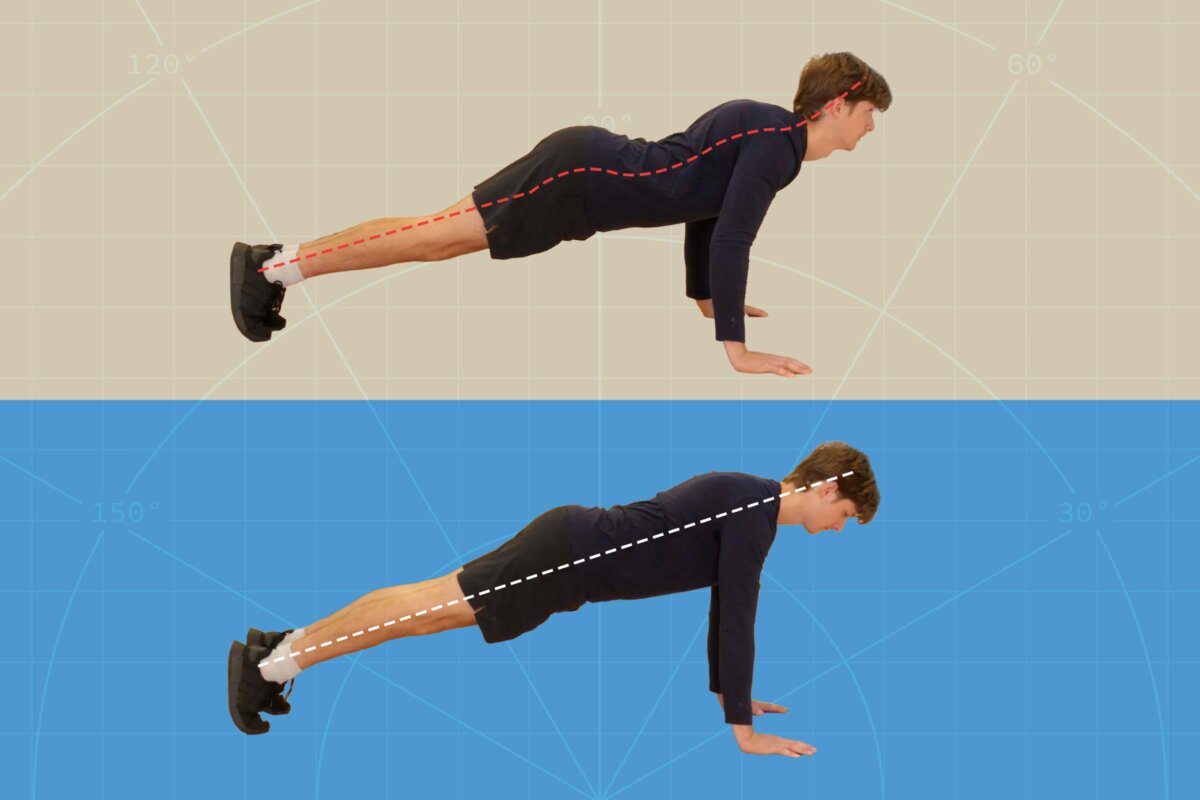
I worry about form. Having performed thousands of treatments over the years, I’ve spent endless hours coaching patients through proper form during movements, including exercises. In the end, good form is critical not only for getting the best overall benefit from exercises, but also for staying safe. Performing a good exercise with bad form risks missing its best benefits, but also potentially injuring yourself.
Let’s dissect the classic push-up. It’s a magnificent body-weight exercise—one of the all-time greats. It has many nuances that need to be kept in check to keep it effective and safe—though it isn’t difficult with a little practice.
The Benefits of a Properly Done Push-Up
I’ve always been a major fan of the classic body-weight exercises, and push-ups hold a dear place in my heart. Why? Because they offer many benefits:
Convenience: Readers of my articles will understand that I love exercises you can do almost anywhere, almost any time, and that almost anyone can do. The push-up falls firmly into that category, either in its classic form or in modified versions.
Bone Health: Routine exercises such as push-ups can help maintain bone density, especially as we age.
Heart Health: The continuous exertion during push-ups can help strengthen your cardiovascular system. Once you try some, you’ll quickly understand how fast they can leave you short of breath. A study found an association between push-up ability and the risk of future cardiovascular disease.
Upper Body and Arm Strength: Given that your core, chest, shoulder, and arm muscles are involved in the exercise, much of your upper body gets a share of the strengthening.
Enhanced Core Strength and Toughness: Push-ups demand hard work from your core. Your core gets all the benefits of the classic plank movement, while having to work to maintain postural alignment through the eccentric and concentric phases. I consistently find that maximizing core strength in my patients greatly improves their strength and postural control, increasing their effectiveness in functional activities.
Postural Benefits: Strong core, shoulder, and back musculature contributes to an enhanced ability to maintain proper posture, especially while standing.
8 Common Push-Up Mistakes
During a proper push-up, as you lower your body, your pectoral (chest), anterior deltoid (front shoulder), and triceps muscles lengthen. When you lower into a push-up, your pectoralis (chest), anterior deltoids (front shoulder), and triceps muscles lengthen. When you push up, these muscles shorten as you contract them to overcome gravity. Your core muscles remain activated the entire time to maintain proper trunk positioning.
Some of the most common problem areas you may encounter during push-ups are:
2. Sagging: Occurs when you allow your trunk muscles to relax too much in the push-up position, allowing your midsection to drop toward the floor.
3. Fingers Touching: Placing your hands on the floor with all your fingers touching can reduce your hands’ ability to stabilize your upper body during push-ups, even with proper hand spacing.
4. Feet Touching: Placing your feet together can make it harder to maintain postural control, especially as you move through the eccentric and concentric phases. While some people advise keeping your feet together, I prefer some foot separation for better balance and control.
5. Hands Too Close: Placing your hands close together is similar to placing your feet close together in that doing so decreases your ability to control your posture as you move through the exercise. The only exception is versions such as the diamond push-up, which specifically focus on narrow hand placement for targeted purposes.
6. Hands Too Far Apart: Having the hands too far apart can prevent the chest, shoulder, and serratus anterior muscles from being properly engaged, which allows your shoulders to move into retraction and your scapulae (shoulder blades) to move closer together.
7. Shoulder Shrugging: Avoid allowing your shoulders to shrug. As with shoulder retraction and scapular adduction, trying to do push-ups with your shoulders elevated can interfere with the exercise’s normal joint mechanics.
8. T-Arm/Elbow Flare: This happens when you rotate your hands too far inward and flex your elbows outward instead of keeping your hands in a neutral position and bringing your arms up by your sides when moving upward or downward.
9. Head Looking Up: This causes excessive extension of the neck and lower back.
Proper Form
Follow this simple guide to perform push-ups with good form:
Assuming the Position
-
Ensure that your arms are below your shoulders, your
-
your fingers are spread apart, and your feet are separated properly (approximately 1 to 1 1/2 feet apart).
-
Rise onto your hands and feet by straightening your knees, being sure to form a straight line from your neck to your feet.
-
Ensure that your trunk is neither sagging nor arching (piking).
-
Ensure that your shoulders are not sagging down (retracting) by pushing up as far from the ground as you can, and hold your shoulders down while avoiding moving into shrugged shoulders. Being aware of both shoulder shrugging and retraction will come naturally with practice.
-
Keep your head looking down rather than looking forward, to keep your spine in line with your trunk. Looking up or holding your head high can interfere with proper joint mechanics.
Steps
-
Slowly lower down by keeping your arms close to your sides and allowing your elbows to bend to approximately 90 degrees before pushing back up into the starting position. If you can’t push up from that low, only lower as far as you comfortably can before rising back up into the starting position.
-
Pay particular attention to proper posture and biomechanics during movement. There’s a lot to think about, but the learning curve is fast. You will feel your way into a proper push-up more than you’ll think your way there.
-
Try to perform five repetitions of this exercise. You can perform fewer if needed, or more if you’re getting into the groove.
Variations
Now that we’ve examined the classic push-up, let’s explore a few push-up variations, conveniently featured in this article.
Considerations
Not everyone will be able to perform every exercise. Many variables can get in the way, including old and new injuries, illness, and conditions such as arthritis. Here are some ideas to make push-ups work better for you:
-
If your shoulders struggle to bear weight, stick with the counter push-up, which is much easier on tired or painful shoulders.
-
If you want to try the harder push-ups but can’t move up or down very far, just move as far down as you can before rising back up.
-
Only perform as many push-ups of any kind as you comfortably can. Don’t push into pain, as that can injure your muscles and joints.
-
Limit each set to a maximum of only five push-ups at first, and rest well between sets.
-
At first, it’s a great idea to have someone spot you and help cue you into the best posture when performing push-ups. Choose someone who can gently cue you, not someone who frustrates you with impatience or improper cues.
-
You can start your push-up journey by simply holding the starting position without moving into eccentric or concentric movements. Planking alone can build a lot of strength at the start, preparing you for more strength-building later. A plank hold on a counter is a wonderful way to build strength, even if you think you’re too weak to do regular exercises.
I hope you now better understand the classic push-up and how it benefits you. Good luck!
Fitness Model: Parker Miller
Views expressed in this article are the opinions of the author and do not necessarily reflect the views of The Epoch Times. Epoch Health welcomes professional discussion and friendly debate. To submit an opinion piece, please follow these guidelines and submit through our form here.