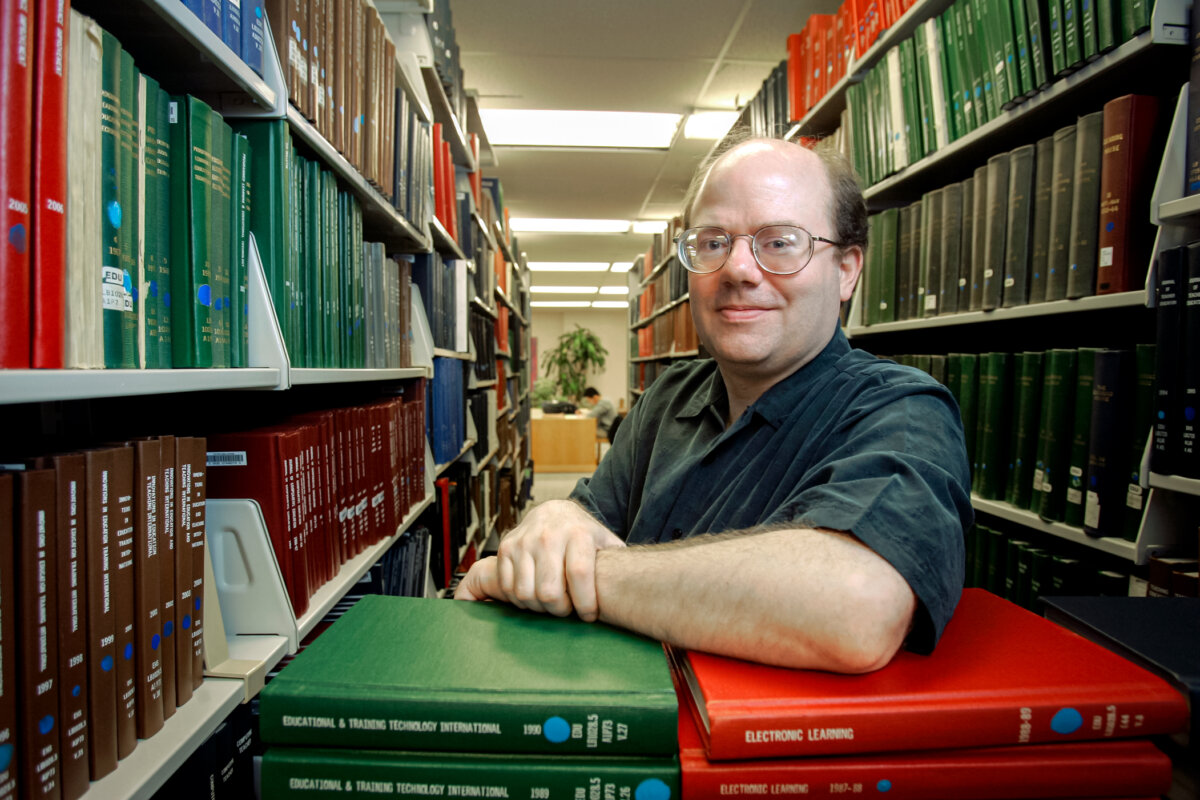

Wikipedia, a popular online encyclopedia that millions of people treat as an authoritative source of information, is systemically biased against conservative, religious, and other points of view, according to the site’s co-founder, Larry Sanger.
Sanger, 57, who now heads the Knowledge Standards Foundation, believes Wikipedia can be salvaged either by a renewed emphasis on free speech within the organization or by a grassroots campaign to make diverse viewpoints heard.
Failing that, Sanger said, government intervention may be required to pierce the shell of anonymity that now protects Wikipedia’s editors from defamation lawsuits by public figures who believe the site portrays them unfairly.
In an Oct. 9 interview with Jan Jekielek, host of EpochTV’s American Thought Leaders, Sanger discussed Wikipedia’s derailing and what could get the site back on track.
Systemic Bias
Wikipedia, launched in 2001, was co-opted by a globalist, academic, secular progressive worldview in the early 2000s, Sanger said.
He added that it got worse following the 2016 U.S. presidential election, when many media outlets began to abandon the notion of impartiality.
Though the site is overseen by the nonprofit Wikimedia Foundation, Wikipedia describes itself as a self-governing project and states, “its policies and guidelines are intended to reflect the consensus of the community.”
Sanger said that eventually, the site’s original neutrality rules, which he authored, were rewritten to instead forbid “false balance.”
“Basically, it’s required now, even for the sake of neutrality, that they take a side when [they believe] one side is clearly wrong,” Sanger said. “Pretensions of objectivity are out the window.”
One way this is enforced is through a color-coded rating system that favors or bans certain sources, Sanger said.
“You simply may not cite as sources of Wikipedia articles anything that has been branded as right-wing,” he said. “I don’t think that The Epoch Times, for example, is particularly right-wing, but it is colored red on this list.”
Information from some “green” sources is taken as fact and repeated without attribution, Sanger said.
“Even now, people are still sort of waking up to the reality that Wikipedia does, on many pages … act as essentially propaganda,” he said.
As evidence, Sanger listed a host of public figures, including novelist Philip Roth, journalist John Seigenthaler Sr., and filmmaker Robby Starbuck, who complained to him that they were misrepresented on Wikipedia.
In 2022, Wikipedia deleted its page on U.S. Senate candidate Kathy Barnette, a Republican, saying she was not a notable person. The page was later restored.
The same year, editors deleted an entry for Hunter Biden’s investment company, Rosemont Seneca Partners, saying it was not notable. An editor said keeping the page online could turn it into “a magnet for conspiracy theories about Hunter Biden.” That editor didn’t elaborate or provide any evidence.
Wikipedia did not respond to The Epoch Times’ request for comment.
Lack of Transparency, Accountability
The way Wikipedia is organized creates a self-perpetuating cycle that Sanger described as an “irrational bureaucracy.”
He said the application of Wikipedia’s editorial rules has become a way to enforce ideological conformity and that some rules need to be revived and others abolished.
One problem is the platform’s policy of preferring secondary sources over primary or original sources. This is contrary to the approach of journalists and higher education institutions, who favor original sources, such as direct quotes from public figures, documents written by historical figures, and original research.
Wikipedia, by contrast, favors sources that have already interpreted original sources, such as magazines and newspapers.
The anonymity of the majority of Wikipedia’s 62 most influential editors perpetuates the problem, Sanger said, noting it creates a situation in which no one is held responsible for the potential harm the site’s content may cause.
“Eighty-five percent of them are anonymous. So you can’t sue them,” Sanger said.
Section 230 of the Communications Decency Act of 1996 shields companies from lawsuits related to user-generated content, meaning the Wikimedia Foundation cannot be sued either.
Ideas for Reform
Wikipedia’s current policies effectively make it insular and ideologically exclusive, according to Sanger.
—Lawrence Wilson; Jan Jekielek; Stacy Robinson
BOOKMARKS
The Supreme Court has agreed to hear arguments about the constitutionality of a federal law that prohibits drug users from owning firearms. Check out Matthew Vadum’s latest report to scope the details of the case.
Some states are warning that the government shutdown could interrupt Supplemental Nutrition Assistance Program (SNAP) benefits—better known as food stamps. Agriculture Secretary Brooke Rollins told reporters last week that the program could run out of money at the beginning of November.
President Donald Trump and Australian Prime Minister Anthony Albanese struck a $3.1 billion rare earth mineral agreement on Oct. 20. “In about a year from now, we’ll have so much critical mineral and rare earths, and you won’t know what to do with them,” Trump said on Monday.
Energy ministers in the Council of the European Union have agreed to support a plan to stop importing Russian gas by 2028. “An energy independent Europe is a stronger and more secure Europe,” one Danish official said.
An appeals court has ruled that Trump can send the National Guard into Oregon, in light of ongoing anti-immigration enforcement protests. “Some of these protests have been peaceful, but many have turned violent, and protesters have threatened federal law enforcement officers,” the ruling said.
—Stacy Robinson
 Friends Read Free
Copy
Facebook
Tweet
Friends Read Free
Copy
Facebook
Tweet