



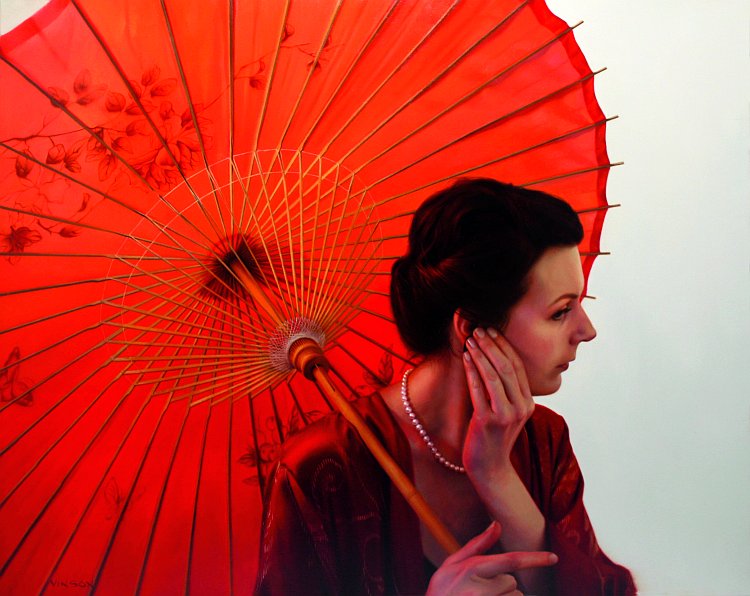
NEW YORK—Thirty-five years since it opened its doors in SoHo, the Eleanor Ettinger Gallery is a rarity in New York City. It is one of the last bastions of realist and representational art in a market dominated by abstract and pop art. But the gallery says the tide may be turning.
“It’s really changed over the last 15 years. There’s a resurgence, and the genre is taking a more substantial role, taking its more rightful place, but it’s still a struggle,” said Frann Bradford, the gallery’s co-owner.
The gallery is now owned and run by Eleanor Ettinger’s daughter Frann Bradford and son-in-law James Umphlett, who are fascinated with realism and are well-known for their dedication to exhibiting classic works with a modern voice.
Eleanor Ettinger, however, had a somewhat different direction back when she started out.
Ettinger firmly established her company in fine art lithography when she opened in 1975 with America’s beloved realist artist Norman Rockewell as her first artist.
“My mother was an artist herself. The first artist she represented was Norman Rockwell. She was the official publisher of his limited-edition, hand-signed lithographs,” Bradford said.
“Staying true to the original techniques of lithography, she outfitted the atelier she set up with two flatbed Voirin presses from Paris,” James Umphlett, Bradford’s husband said.
“Our passion was more in paintings. When my mother retired, we began to change the company’s focus on lithographs to contemporary realist artists,” Bradford said.
Out of SoHo
Bradford and Umphlett also wanted to move the gallery out of SoHo in July 2010.
“We were in SoHo for 27 years but decided to leave. SoHo just wasn’t the art center of the city anymore,” Bradford said. “We wanted a gallery in both Chelsea and Midtown.”
So instead of choosing between the two, they made a bolder move and did both.
“Chelsea is still a developing area, with things like the highline, and traditionally it’s had more abstract and experimental art galleries, so we wanted to be the bastion of representational artists there,” she said, noting that there are a few other such galleries there as well.
“Midtown is the long-established art center of New York. There are dozens of galleries within blocks. And the area is more attuned to representational work, both modern and historic,” Bradford said from her elegant 57th Street gallery.
‘Constant’
The gallery’s artists are all contemporary realist and representational painters working in the genres of figurative art, still life, and landscapes.
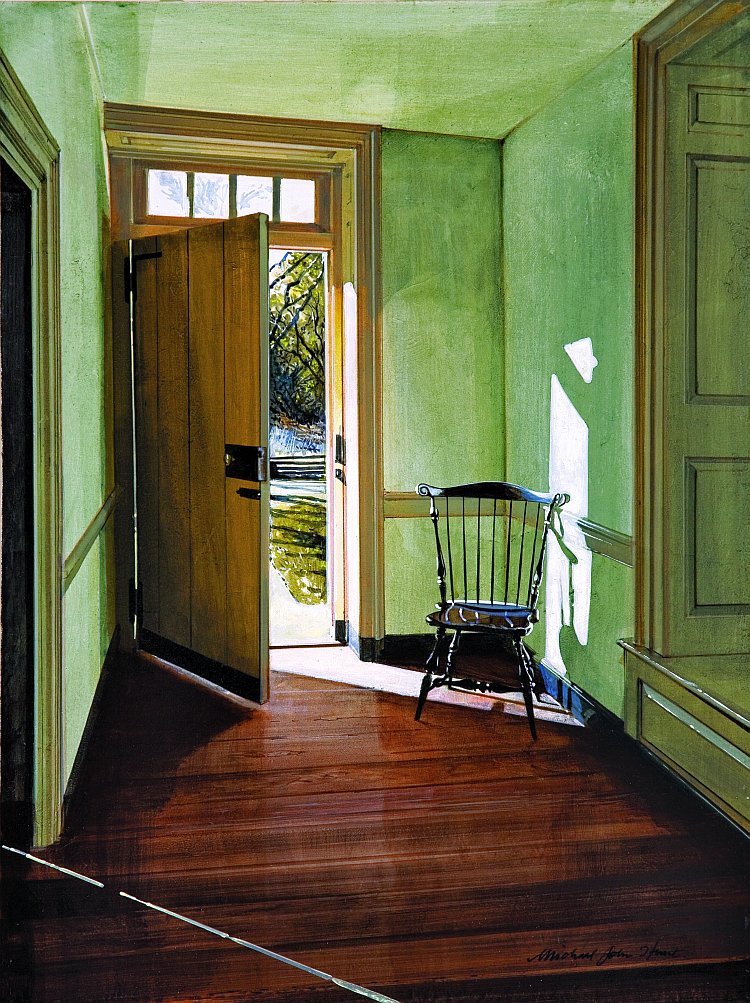
The couple’s passion for this type of art comes from a deep understanding of what it means to humanity. The traditional forms and methods followed by many of the gallery’s artists require incredible skill and training. That is part of what allows the timeless art to reach people.
“Representational art is a constant. As far back as we can trace it—going back to cave paintings—man has needed to mirror our life through art, mirror our lives and times and what we find sacred,” Bradford said.
“No matter how many other artistic styles come and go, that tradition holds true to us. The skill of this art is also more accessible to everybody. It’s a more universal way of communication than other styles, like abstract, for example,” Bradford explained. “There’s no need for higher education to understand it. It’s more universal. Abstract and other modern art can be more elitist.”
But the level of training, skill, and talent needs to be much higher to have that effect. The subject matter and composition also need to offer insight.
“The key to the power of representational work is the draftsmanship. The artist has to be a skilled draftsman. Then, with that foundation, the artist needs to have the ability to say something unique or to express a different take on things to be great,” Bradford said.
To a modern audience, that’s where the difference and relevance lies. Artists are bound to be shaped and influenced by the times in which they live. Using traditional painting styles, the possibilities for a subject are boundless.
