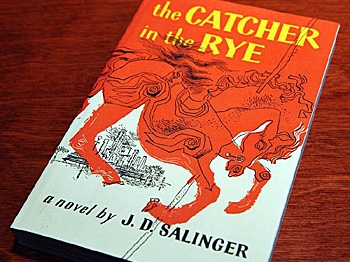
Catcher in the Rye draws the reader into the inner dialogue of a generally dissatisfied young man who finds brief moments of joy in some of the simplest and somewhat unexpected things. The letter to Mitchell presents the same flavor of cynicism tempered by peculiar delights.
Salinger was already in his forties when he wrote from the perspective of his young protagonist, Holden Caulfield. Caulfield may be a fictional character, but the critical observations he makes about all the “phonies” around him were spawned in the mind of Salinger, who did indeed become very withdrawn and reclusive suggesting a similar repulsion for the New York society both he and his fictional character were reared in. He eventually moved to New Hampshire where he lived until his death in January 2010 at the age of 91.
If Catcher in the Rye gives us a glimpse of how Salinger may have thought and felt when he was a 16-year-old in New York City, the letter now on display at the Morgan is a complete nonfiction, and provides a snapshot of that same mind as a 75-year-old recluse living in New Hampshire.
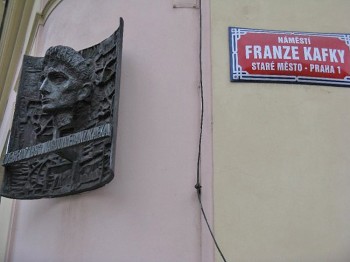
“[I] was relieved to no end that Kafka never lived to see or even suspect the tourist trap the town fathers would one day make of his house,” crooned Salinger.
He was evidently unimpressed with the way the Czech-Austrian author’s house had become a site for literary pilgrimage, and it is safe to say no Salinger fan should seek out his former dwelling.
After Caulfield describes to his sister all the things he doesn’t like about his schools or living in the city, little Phoebe replies, “You don’t like anything that’s happening. … You don’t like any schools. You don’t like a million things. You don’t.”
Caulfield likes sitting and talking to his sister. He likes his deceased little brother. He likes the idea of being the catcher in the rye: a strange dream inspired by the chorus of a song. He sees himself standing on the edge of a field of rye where a cliff drops off and catching children running through the field before they topple over the edge.
Salinger’s eyesight was going, he reports, and his hearing, and he couldn’t find a decent salad in any European restaurant. But, he did like the little cobblestones in Antwerp and Prague.
“Moron that I am, what I liked best, relished most about the whole jaunt were the little 1-1/2, or 2-inch square cobblestones used for paving in the town squares. … So beautifully undersized, symmetrical, replaceable, practical,” wrote Salinger.