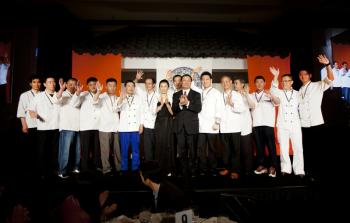
But local foodies were in luck, as Chinese language television network, NTD’s annual International Chinese Culinary Competition held live in Times Square ended in a 10-course banquet prepared by the award-winning chefs on October 3.
The event attracted many food connoisseurs who were anxious to experience Chinese cuisine cooked in an ancient traditional manner that has largely been neglected and ignored in today’s era of fusion and experimental cooking.
Jeffrey Steingarten, renowned food critic at Vogue magazine and judge for Food Network's Iron Chef America, was also at the banquet on Sunday. Having made many trips to China, he was disheartened to find that the Chinese food offered in the West was not authentic at all. On one particular trip, he traveled to Chengdu, capital of Sichuan province, and tasted authentic Sichuan cuisine for the first time. "I found, when I went to Chengdu for 10 days, there was almost no Sichuan food in America…I was so happy to go to Chengdu and have the real food, and then I was so happy tonight, because after one taste you know that it’s the real thing."
The Feast
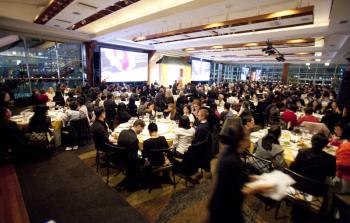
A silent auction of ancient Chinese items, including jade necklaces to replicas of Qing dynasty vases from the National Palace Museum in Taipei, preceded the culinary competition banquet.
After the winners were presented with their medals and certificates at the award ceremony, the banquet began with six appetizers from the Huaiyang, Northeastern, Shandong, and Sichuan cuisines. Both of the Sichuan dishes were particularly memorable. The “sea conches in chilly oil” featured the classic numbing spiciness, a sensation that tingles the tongue, thanks to the Sichuan peppercorn. The conches were done to perfection–crunchy but not overly chewy, flavored with just the right amount of spice to shock your taste buds. The “scallops in fragrant scallion oil” was similarly delightful, with the green scallions ground into a paste and topped onto the scallops. 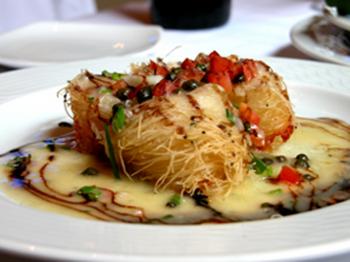
The Northeastern dish, “braised double mushrooms” was also a wonderful treat, perfect for vegetarians. The mushrooms were just the right texture, not too hard or soft, and seeped with flavor. The mushrooms were complemented with pine nuts, which was a pure match made in heaven.
A personal favorite was the “Nanjing salted duck,” a Huaiyang cuisine dish. The duck was oh-so-tender, and not fatty or oily (a common mishap in duck dishes), which made for a healthy and delectable mouthful.
The main courses began with “soup with sea delicacies” of the Shandong cuisine, made with shrimp, scallops, and oysters. For the main courses, the Sichuan dishes were once again the most exceptional, no doubt because of gold winner Yongji Jiang’s extraordinary skills. The “dry-sautéed prawns” offered an explosion of spicy, savory goodness in every bite. In fact, one could distinctively taste the spices used in the dish. The “Chilean sea bass in Yushiang sauce” was a sweet and tangy delight, with a touch of spice. The fish was soft but not mushy, and even a reluctant fish-eater like myself found it enjoyable. The “Sichuan dumplings,” drenched in red chili oil, was also of the sweet variety. The dumplings were juicy and not too meaty, and also wrapped beautifully.