



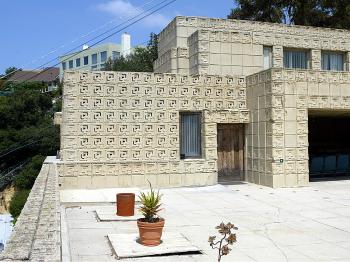
Wright was born on June 8, 1867, in Richland Center, Wisconsin. He died April 9, 1959, in Phoenix, Arizona. From small town America to Tokyo, remnants of Wright can still be discovered and appreciated.
Over his 91 years, Wright designed a total of 1,141 structures, authored twenty books, published numerous articles, lectured across the world, and founded an architectural apprenticeship program at both of his homes, Taliesin in Spring Green, Wisconsin, and Taliesin West, in Scottsdale, Arizona. If that is not enough, he also designed furniture, linens, art glass, lamps, and dinnerware.
But Wright’s greatest accomplishments were only outward manifestations of his inner philosophy. It seemed he felt “noble” architecture was a necessity for society to thrive, and he was one who was able to create it.
“Noble life demands a noble architecture for noble uses of noble men. Lack of culture means what it has always meant: ignoble civilization and therefore imminent downfall,” Wright said.
Wright believed strongly in U.S. democracy, and felt architecture could reflect democratic principles and values—freedoms which could also be found in nature.
“Maybe we can show government how to operate better as a result of better architecture,” he said.
Wright remained loyal to the environment by using natural materials, and he allowed his designs to follow nature’s patterns. Look no further than to his “Prairie Houses” as odes to harmony of structure and landscape; these homes stretch out horizontally with the prairie itself.

The Frank Lloyd Wright Foundation shares, “Wright preached the beauty of native materials and insisted that buildings grow naturally from their surroundings.
“He freed Americans from the Victorian "boxes" of the 19th century and helped create the open plan with rooms that flowed and opened out to each other.”
Wright often called the United States, Usonia. In fact, he created a series of middle-income, family homes that he named, “Usonian Homes.”
