



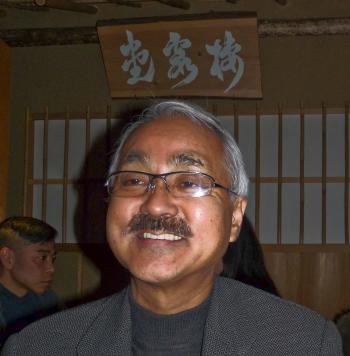
His comment, “I am the last immigrant from Japan,” aroused my curiosity. He referred to the year 1968, a year of upheaval and skirmishes in his homeland, when the United States pressured Japan to halt Japanese immigration into the United States.
As sometimes happens in life, unexpected twists and turns change one’s fate. Yagi missed his Japanese college entrance exam by ten minutes. Since he was not interested in the events of Japan’s political upheaval then, he took his college tuition money and, like many before him, decided to come to the United States. He sailed from Yokohama to Honolulu, then on to San Francisco, a 12-day voyage. On arriving in San Francisco, he immediately boarded a bus to the ghettos of Philadelphia, where the African-American soldier he met in Japan lived. He hoped this person would be his connection to Yagi’s yet undetermined American future.
America, the dream destination for so many immigrants, proved an initial disappointment. Instead of encountering streets paved with gold, he found huge differences between the haves and the have-nots and racial discrimination.
Because of his promise never to return to Japan unless he was successful, he held menial jobs at a small diner in Philadelphia and eventually advanced to the position of short-order cook.
His experience making omelets and burgers made him realize the untapped potential of introducing Japanese food to American palates. A better-paying job as bartender allowed him to save money. He traveled the globe to get a feel for what people around the world eat, and what they might want to savor in the future.
Having trekked through Europe, the Mediterranean, Turkey, India, and Pakistan, he returned to Japan, making and selling jewelry in the streets of Tokyo. That venture brought him sufficient capital to return to the United States and open his first restaurant, Mr. Yakitori, at Martha’s Vineyard, a seasonal operation.
The venue introduced American diners to the Japanese specialty Yakitori, chicken on skewers. He brought a special piece of equipment for this process from Japan. One New York restaurant is still using this machine today. No one else served this style of Japanese food then. The Tapanyaki-Benihana style of food preparation was popular, using a flat metal tableside griddle. Once again he lacked money to open a Yakitori restaurant in New York, but his best friend Wakayama, who now owns East and Teriyaki Boy, helped him.
These two innovative friends doubled the number of scarce Japanese vegetable vendors in the city, from two to four. They had no start-up costs and charged $1 per bag of produce delivered. Their business grew rapidly.
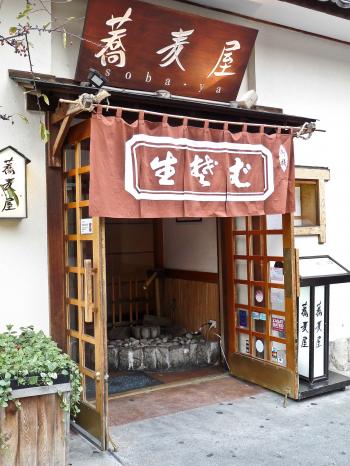
That was when his restaurants expanded around ninth and 10th streets in New York's East Village. Many other Japanese restaurants offering all types of regional Japanese cuisine in one place existed, but they failed because they all had the same menu. Wisely, Yagi decided to have each of his restaurants specialize in a particular regional, traditional Japanese cuisine.
Yagi prides himself by applying traditional and original tried-and-true methods used in Japan. One can see his passion for tradition as he speaks of using of the best ingredients; of taking time to making the sauces, like the miso sauce, which, with certain adaptations, he lets ferment an extra three days; of his using small amounts of sugar, or depending on the weather, of his adding more salt. He succeeds in taking American palate preferences into consideration.
Yagi said, “I spend time studying and researching the best recipe for me … and for my diners. I do it because I take pleasure in watching them enjoy my food. I am proud of what I do, and do this to bring to this city that I love things from home."
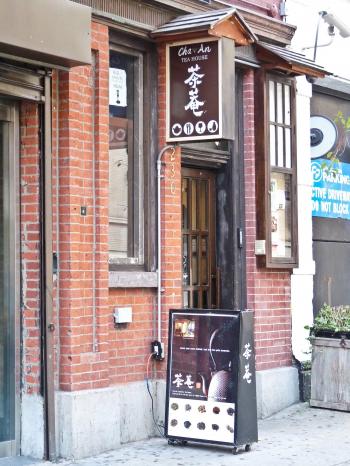
Cha-An was constructed the way monks and their masters had built teahouses hundreds of years ago in Japan. My visit happened at the beginning of the year, so Yagi ordered condensed Matcha and green tea truffles that were refined and delicious. According to Yagi, Matcha is the powdered green tea used in ancient Japanese tea ceremonies. It was brought to Japan from China in 1191. He mentioned that the Chinese honor the smell of tea while the Japanese honor the taste.
The thick beverage arrived in earthenware, handmade mugs. According to tradition, the cup has to sit on your left palm while holding it with your right hand. Then one has to turn it halfway three times clockwise, drink it all at once, and then turn it counterclockwise halfway once. As we sat talking, Yagi pointed at the interior, elaborating that these places were customarily built from what nature provided in and around the places monks and their masters lived.
