



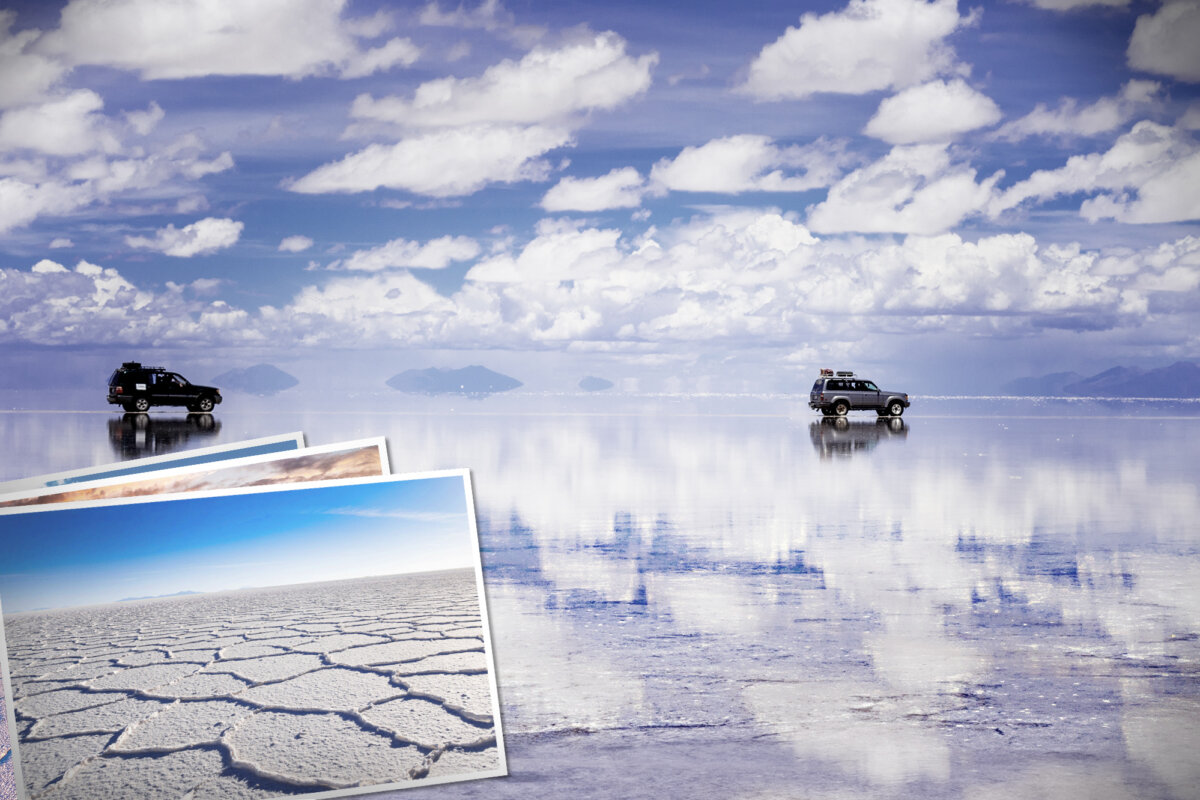
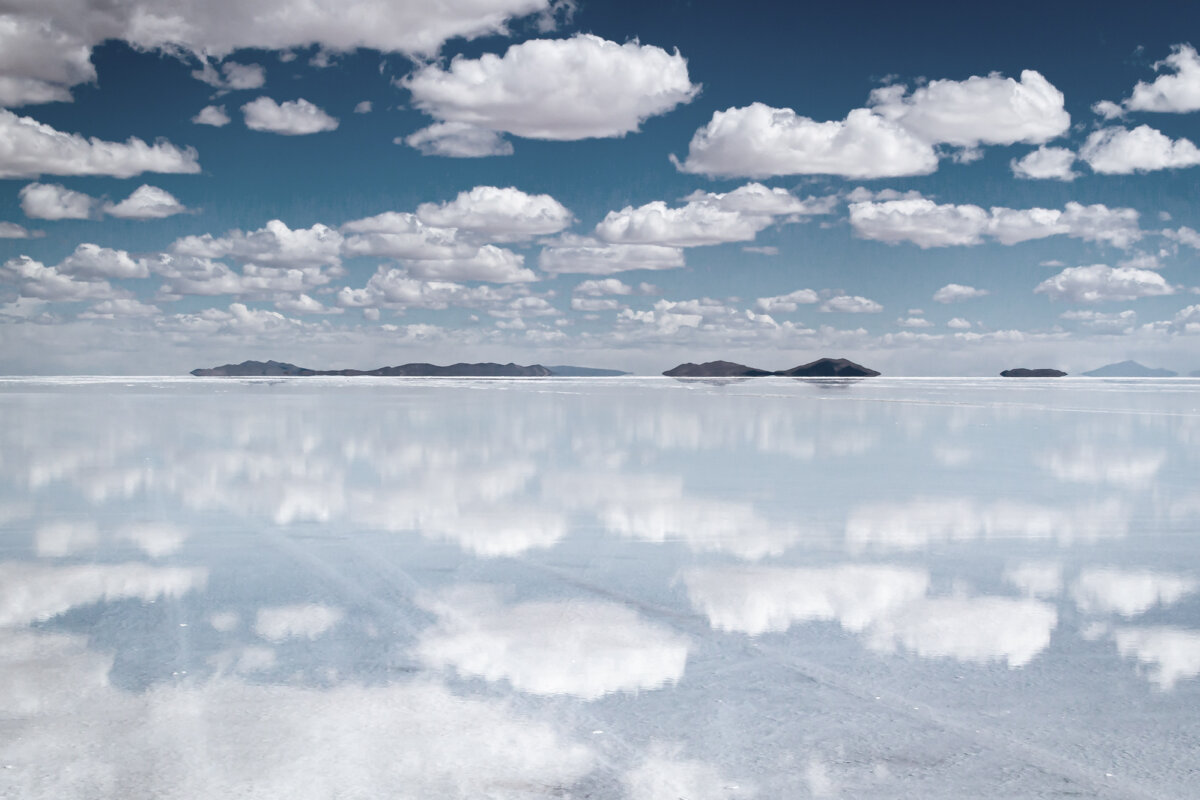
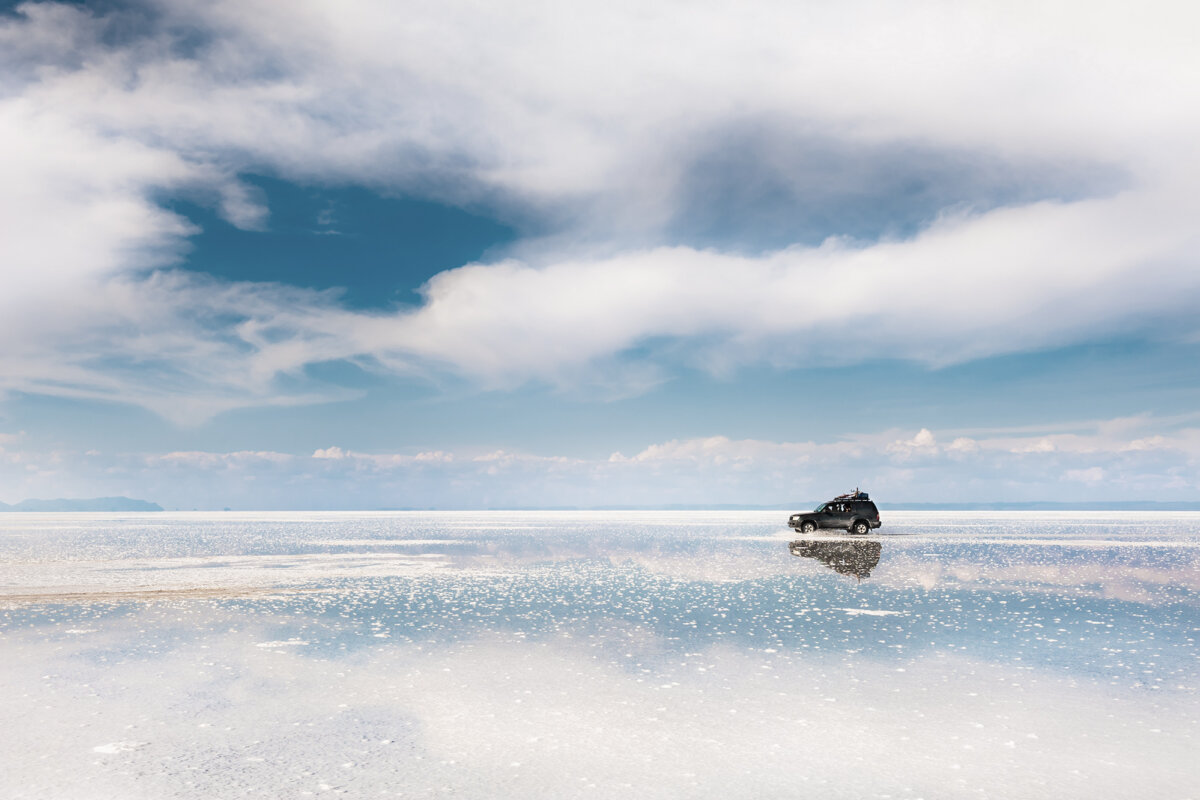
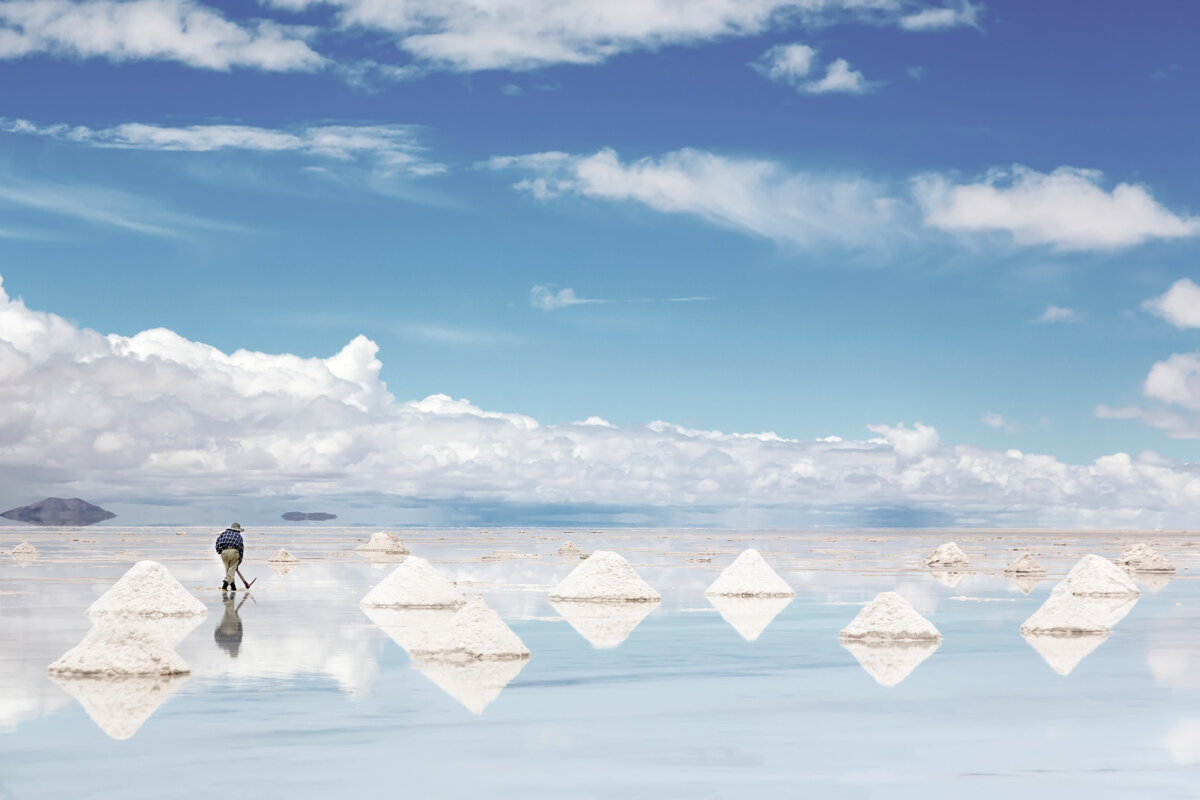
Stepping onto the world’s largest salt flat is just like standing on a giant mirror. On a still day in Bolivia’s rainy season, a thin layer of water covering the plateau flats of Salar de Uyuni transforms it into a vast reflection of the sky. When this happens, it can be almost impossible to distinguish where the land ends and the sky begins.
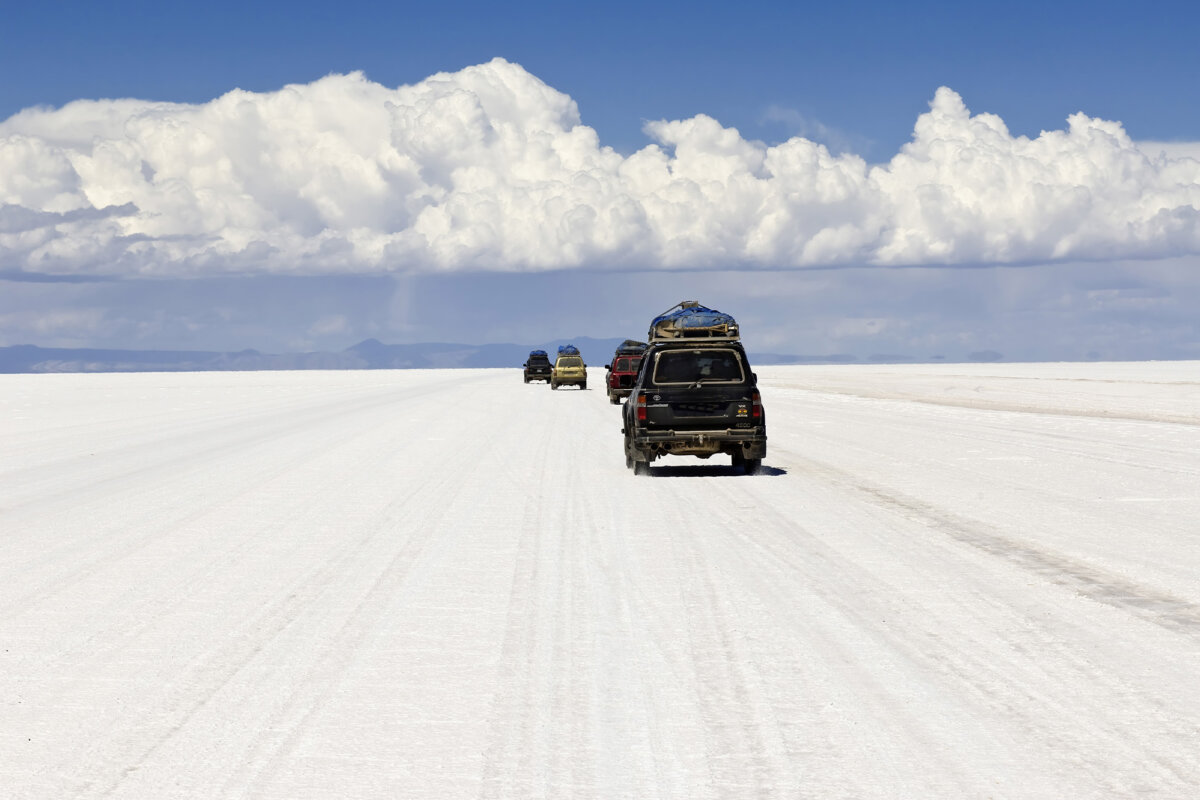
One of the most otherworldly places on Earth, Salar de Uyuni covers a seemingly endless salt plain which only serves to emphasize the dazzling optical illusion. Stretching across 4,050 square miles of the Altiplano region, in the country’s southwest, it sits 4,000 yards above sea level, near the crest of the Andes mountain range. The salt flat is so big that 150 different countries could fit inside it, including Jamaica, Qatar, and the Bahamas.
Salar de Uyuni can even be seen from space. Neil Armstrong and Buzz Aldrin said that it looked like an immense white sheet when viewed from the moon. Although unsure exactly what the site was, mistaking it for a giant glacier, Armstrong vowed that upon returning to Earth he would visit it. Fulfilling this vow, the famous astronaut later became one of the first tourists to visit Salar de Uyuni and was awestruck by its beauty.
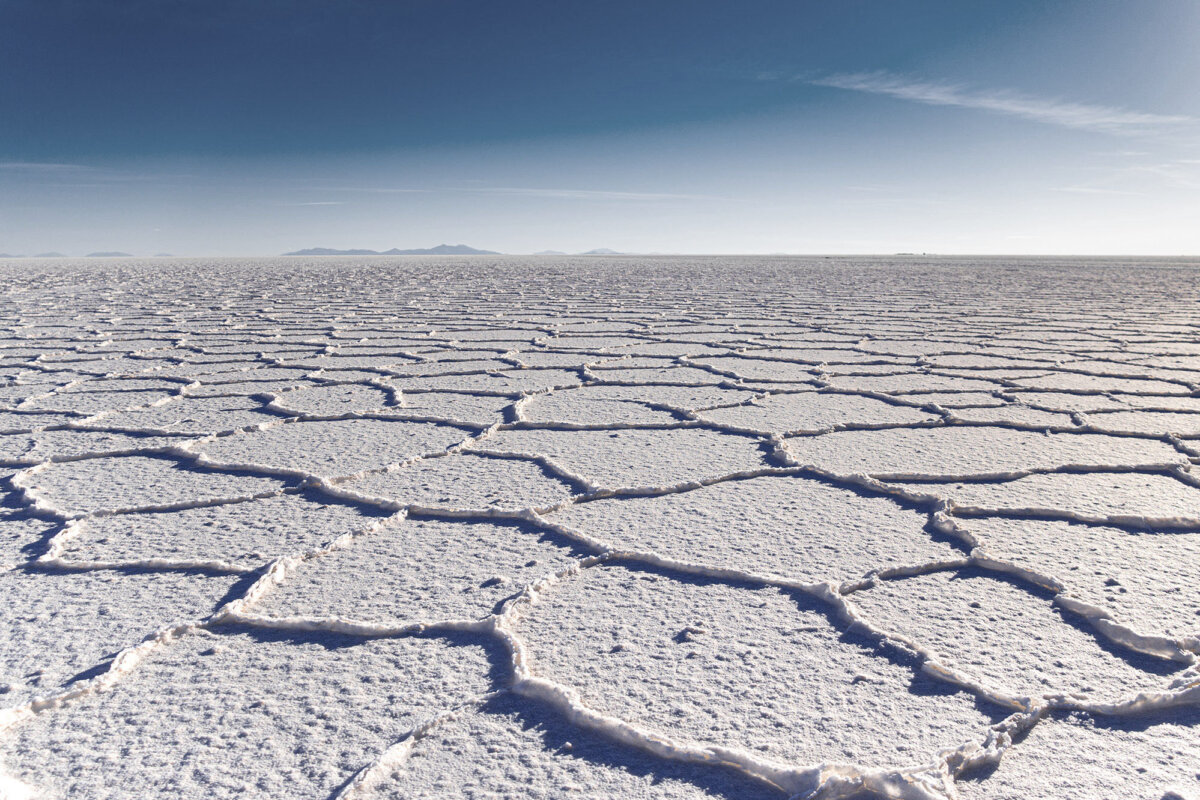
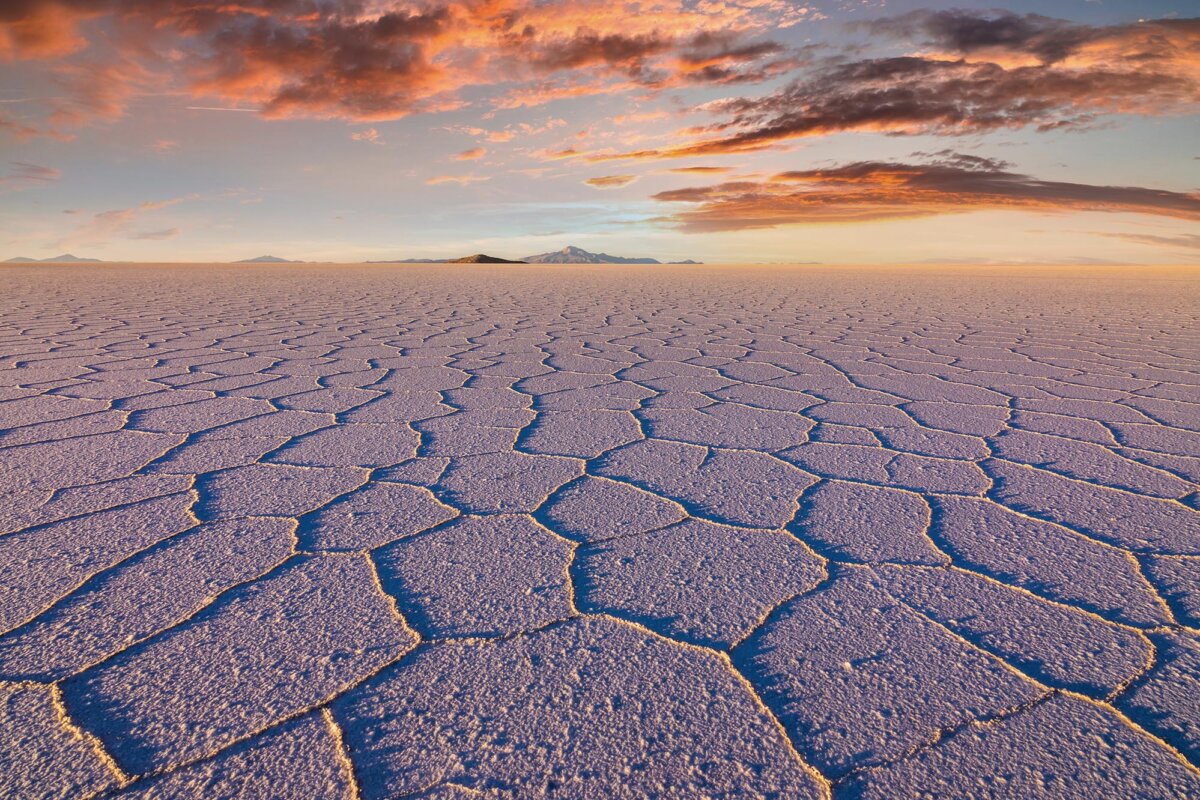
In the high plateau region of the Altiplano, Salar de Uyuni was formed by prehistoric lakes going dry, leaving behind a desert-like landscape of thickly crusted salt in hexagonal patterns. Between 30,000 and 42,000 years ago, water from surrounding mountains gathered here. As there were no drainage outlets, the enormous land mass was filled by Lake Minchin.
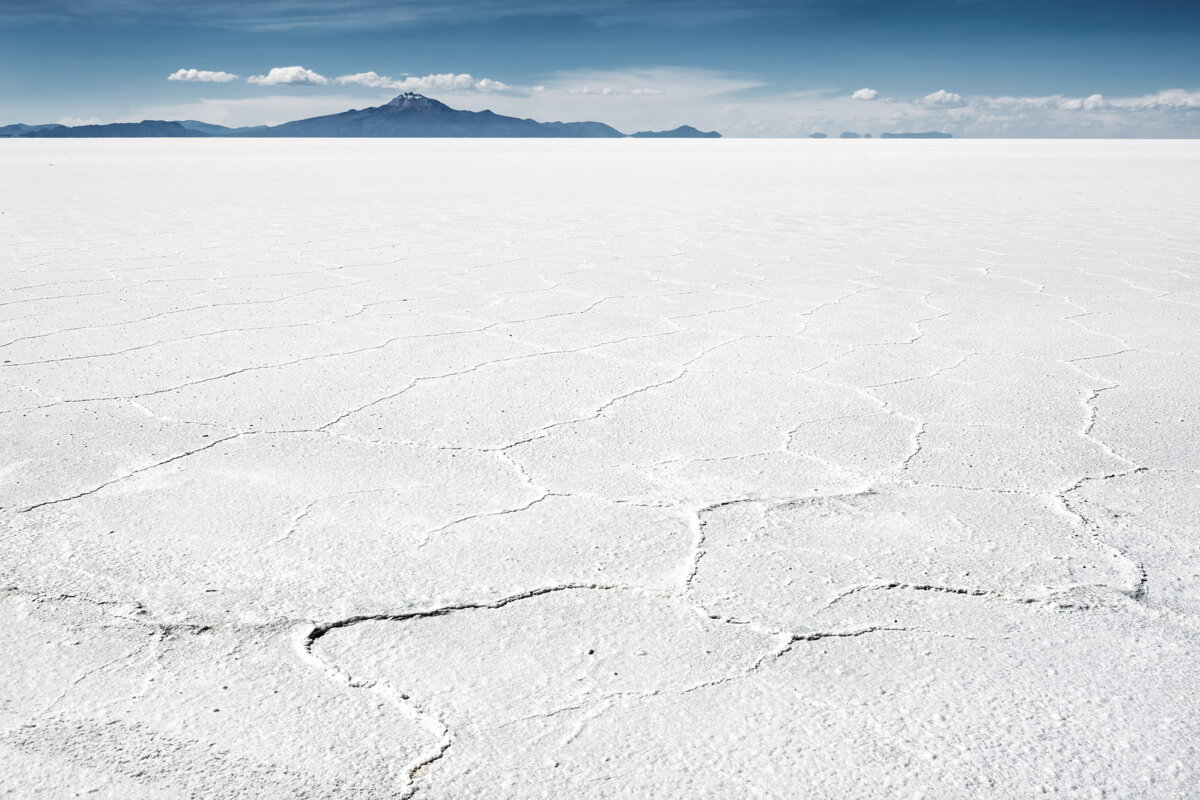
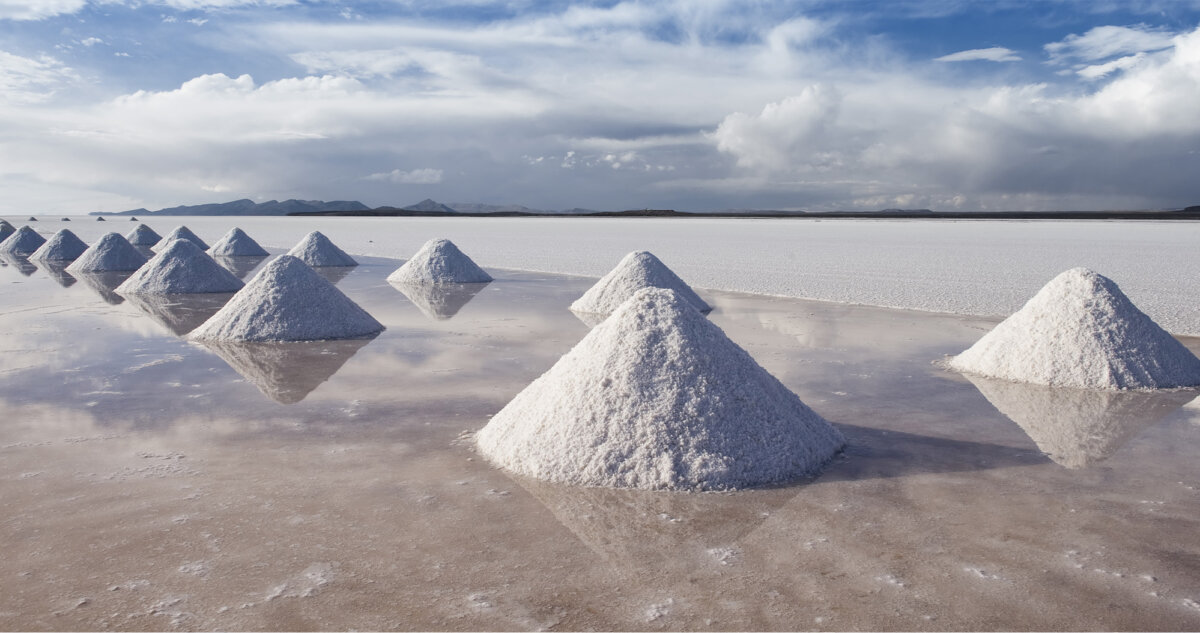
This eventually became Lake Tauka and other prehistoric lakes. Over time, aridity and rising temperatures caused the waters to evaporate. As the moisture vanished, it left behind a thick salt crust. Even today, water underneath the surface continues to evaporate at a rate exceeding precipitation 10-fold, making Salar de Uyuni a never-ending salt source. It is estimated that the pan holds an incredible 10 billion tons of salt, with around 25,000 tons extracted annually.
Concealed beneath the layer of crusted salt are large reservoirs of lithium-rich brine. Part of the “lithium triangle”—spanning regions in Argentina, Bolivia, and Chile—Salar de Uyuni is the largest source of lithium in the world, providing 70 percent of the Earth’s supply. Mining for lithium—sometimes called “white gold”—began several years ago, as this key mineral is used for powering electronic devices such as smartphones and electric cars. The first state-owned, industrial-scale lithium mining plant opened in December 2023.
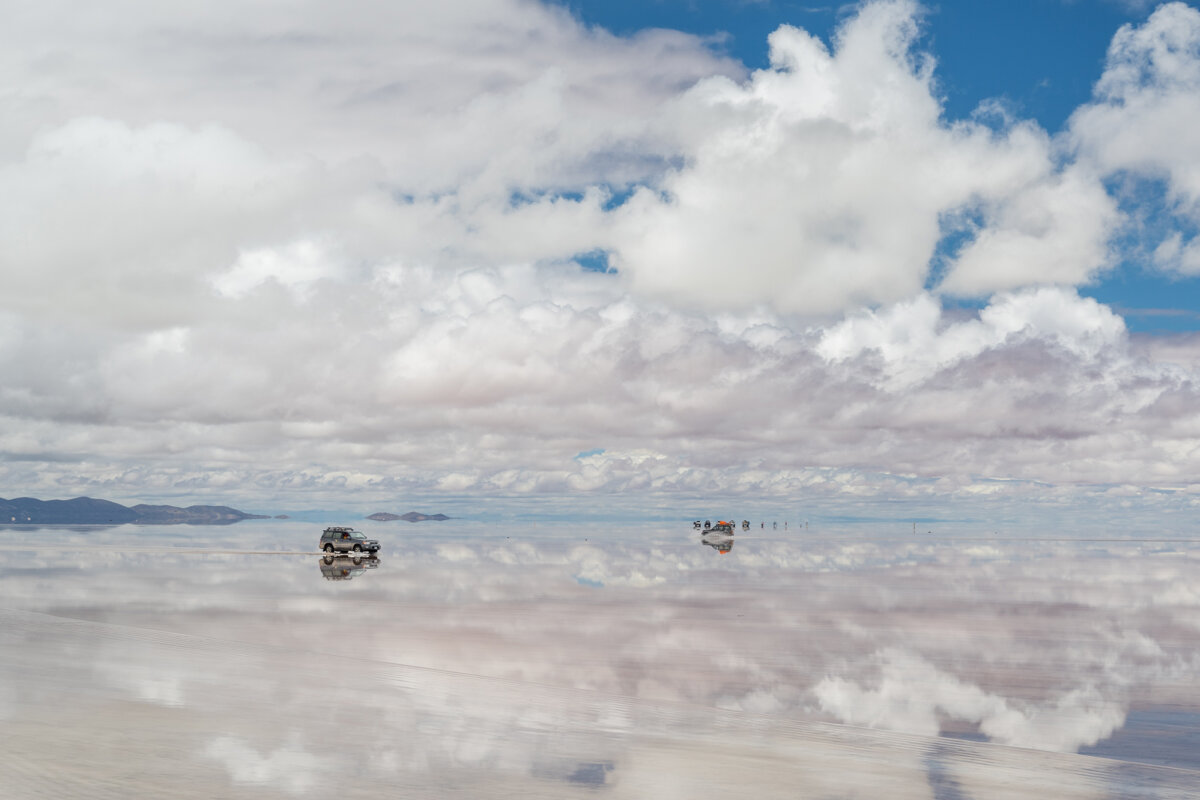
While there are concerns surrounding the lithium mine’s impact on the region’s limited freshwater supply, tourists nevertheless keep arriving, drawn by the opportunity to “walk on clouds.”
Equipped with a pair of Wellington boots, travel blogger Joel Friend expressed astonishment as he journeyed across what has been called the unofficial Eighth Wonder of the World:
“As far as you can see, it’s just a reflection of the clouds,” he said. “I’ve never seen anything like this before.”
The period between November and April is the best time to view the optical illusion of the converging sky and land. A reflective symmetry miraculously appears because a layer of rainfall amplifies the reflection. To experience the surreal dreamscape, many visitors opt to stay at one of the local white salt hotels constructed entirely from blocks of salt.
Share your stories with us at emg.inspired@epochtimes.nyc, and continue to get your daily dose of inspiration by signing up for the Inspired newsletter at TheEpochTimes.com/newsletter
