



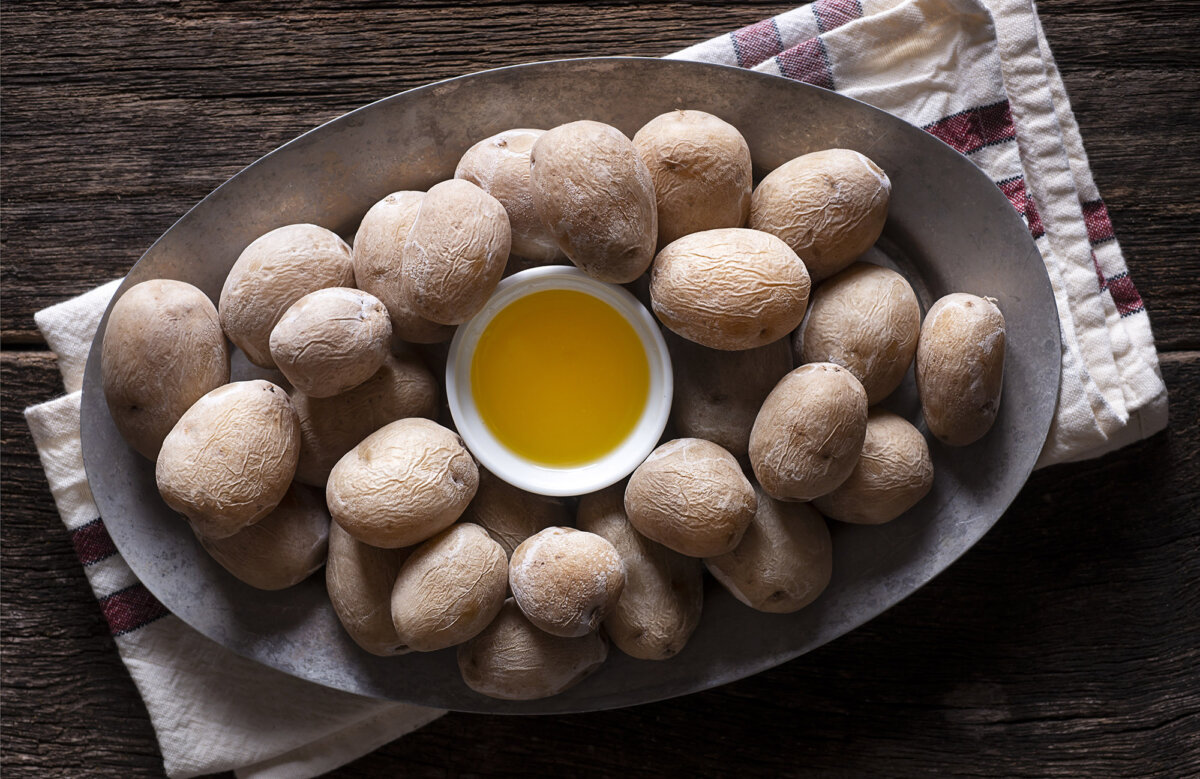
The recipe couldn’t be simpler, although anyone with high blood pressure may find it alarming: Add two cups of salt to a pot of boiling water. Throw in unpeeled potatoes and cook for about 20 minutes until they’re so salt-covered that they look white when they dry. Slather them with butter, and you’ve got yourself a meal—or at least a side dish.
I had my doubts—they’re just potatoes, I thought—but three batches in, I can’t believe how wrong I was about these tiny spud bombs of creaminess. Devotees of Syracuse salt potatoes swear by them, and the Central New York dish shares an origin story with Syracuse’s unlikely moniker: Salt City.
An Accident of Geology
More than 370 million years ago, what is now the state of New York lay at the bottom of a tropical sea.
When the waters receded, the salt left behind formed halite—rock salt—which became part of the bedrock. Continental glaciers during the Ice Age carved the earth as they advanced and eroded it further when they released meltwater in their retreat. Cracks in the bedrock exposed groundwater to the long-buried salt.
In 1654, Simon Le Moyne, a French Jesuit missionary, came to the region to meet the Onondaga, a Native American tribe of the Haudenosaunee (Iroquois) Confederacy. They showed him salty springs at the southern end of what is now Onondaga Lake, and Le Moyne recognized its economic value. By 1820, the state of New York had taken most of the tribe’s land, and by the mid-19th century, the salt boom was on.
Salinity can be measured as a ratio of grams of salt to a liter of water, expressed as parts per thousand (ppt). Typical seawater has 35 ppt, while 19th-century measurements of the brine wells near Syracuse showed as much as 225 ppt.
“Upwards of 85 to 90 percent of the salt in the United States was coming from 600 acres around Onondaga Lake,” said Robert Searing, curator of history at Onondaga Historical Association in Syracuse.
Workers came in droves, and by the end of the 1800s, Syracuse was one of the 30 largest cities in the United States.
The Dish Emerges
“Salt potatoes were invented on the job,” Searing said.
Workers in each “block”—a square, roofed structure—tended 20 kettles, using first wood and then coal as fuel to boil down brine to get fine salt.
“The fellas just literally threw [potatoes] into the boiling brine and let them cook until mushy, and pulled them out and ate them in the blocks,” Searing said.

They would take brine home and cook them there, too.
In 1883, brothers Arthur and James Keefe, first-generation Irish immigrants, opened a grocery store with a tavern. “All they served [was] salt potatoes and beer,” Searing said.
Soon they began an obsession with oysters and clams from Long Island, which were easily shipped up the Hudson River and Erie Canal to Syracuse. “You start to see the Germans and the Irish living up on the north side of the city of Syracuse having clambakes,” Searing said. Salt potatoes were the side dish.
In 1914, John Hinerwadel Sr. bought some farmland and hosted clambakes at Hinerwadel’s Grove. His family soon started bagging their potatoes for sale with a packet of salt. While their clambakes ended in 2018, you can still buy a 5-pound bag of Hinerwadel’s Famous Original Salt Potatoes; Syracuse Crate ships these if you aren’t local.
Making Salt Potatoes
In Syracuse, Dinosaur Bar-B-Que still makes batches of salt potatoes for catering events, and Toss and Fire Wood-Fired Pizza features them on pizza. Bull and Bear Roadhouse has “loaded” salt potatoes on the menu, topped with bacon, pulled pork, cheese, and sour cream.
But you can also make your own.
“The dish originates with poor people,” Searing said. They would’ve used cheaper “scrap potatoes.” But the key is the salt. “For a true salt potato, it needs to be an obscene amount of salt for a pot of water,” he said.
David Iannicello co-founded Syracuse Salt Co. with his daughter Libby; they produce a variety of premium salts using well water on their property and other ingredients.
Iannicello remembers picnics with extended family each summer when he was a kid, where “we’d always have salt potatoes and hamburgers, hot dogs, and corn,” he said. He still makes salt potatoes a few times every year.
The Salt
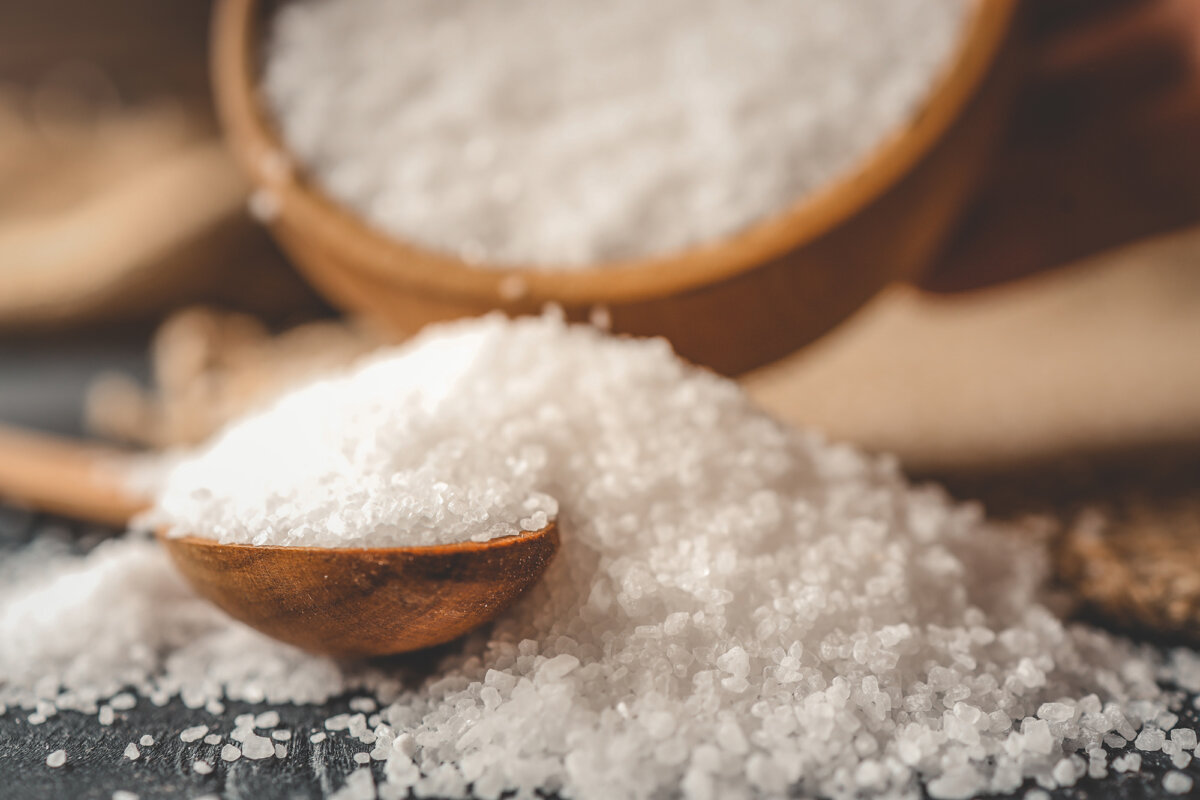
For big batches, Iannicello uses three-quarters of a pound of salt for 5 pounds of potatoes. While he doesn’t necessarily recommend using large quantities of premium salt—you can always use it as finishing salt—he does advise avoiding Morton brand and any other salts that contain anti-caking ingredients and iodine, because these bring a bitter flavor to the potatoes.
“If you’ve got a good mineral salt, you will definitely enjoy the potatoes more,” he said.
The Spuds
The original salt potatoes recipe calls for white potatoes, but Iannicello often uses red, a worthy substitute. Gold potatoes also work.
They should be small spuds, which are easier to cook and will transform into creamy wonders in a shorter amount of time. Iannicello recommends ones about golf ball-sized. Fingerlings have the right diameter, but they may require extra cook time for their length. The Little Potato Co. sells 1-pound packages of perfectly sized spuds that work very nicely for this dish. Check your local grocery.

The Finish
The finishing touch is butter. You can cut the potatoes in half and pour the butter on them or simply dunk them whole.
Searing had other thoughts: “I just soak mine in butter.”
Can’t argue with that.
Syracuse Salt Potatoes
Serves 2
- 1 pound small white, red, or gold potatoes, unpeeled
- 1/2 cup kosher salt
- Melted butter, salted or unsalted
Don’t peel, cut, or pierce the skin of the potatoes, or they will absorb saltwater and get soggy.
Fill a large pot or Dutch oven with enough water to cover the potatoes by two inches. Stir in the salt until dissolved, add the potatoes, and bring them to a boil. Turn the heat down to a simmer and cook them 15 minutes from that point, until they are a bit soft but still firm and can be easily pierced with a fork.
Drain the potatoes and let them air-dry. A salty crust will form on the skins immediately, and the insides will have a creamy texture.
Halve the potatoes if desired, and drizzle with or dip in the melted butter to serve.
