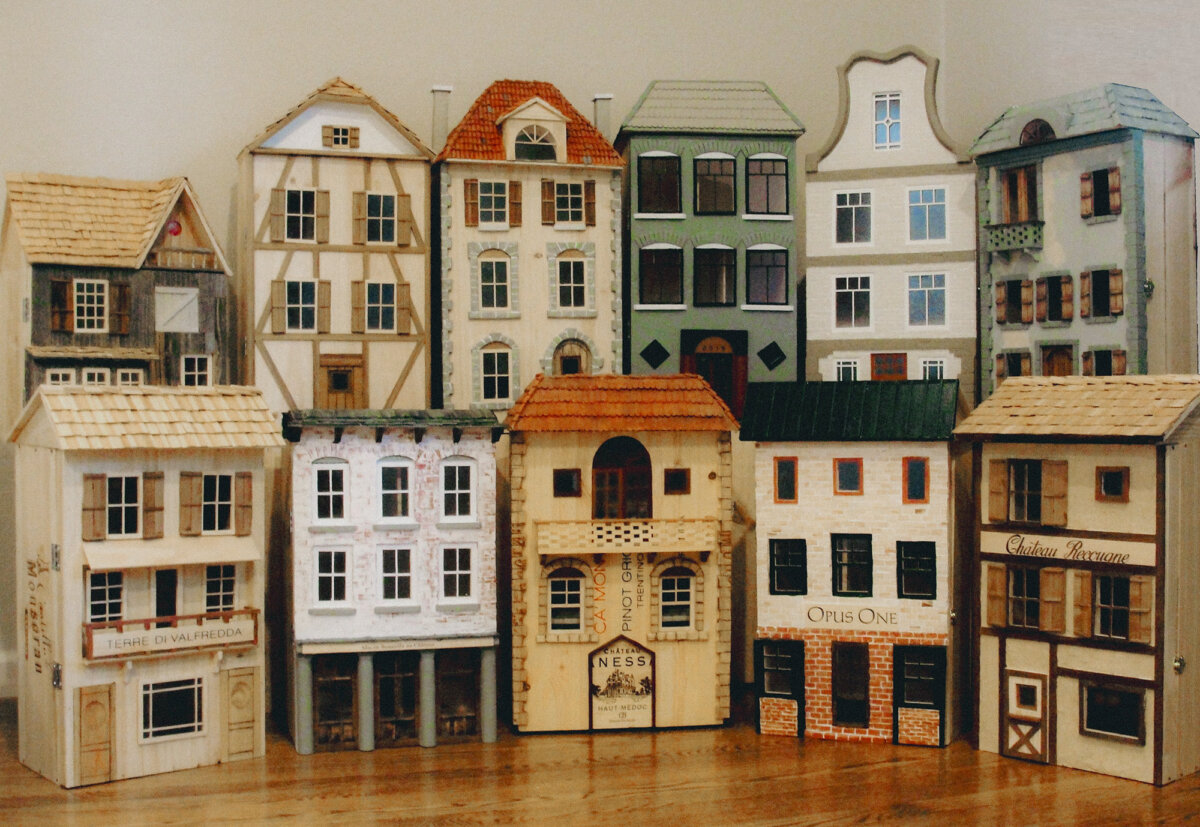
If you have a glass of wine with pasta, you might actually be making Christmas brighter for a little girl.
Of course that makes absolutely no sense—unless you know Tom Bresadola.
The 82-year-old former Navy lieutenant and retired sales rep makes doll houses for underprivileged kids in the Denver area. He uses wine boxes donated from liquor stores—and mostaccioli pasta.
Bresadola’s love of woodworking began as a child when he watched his father remodel their house. “We bought, for lack of a better term, an Archie Bunker type house in Chicago. Needed a lot of work. My dad built the upstairs, put in a bedroom, remodeled the kitchen, did all his own cabinet work,” he said. His first job description was pretty simple. “As a little kid, I followed him around with a flashlight, my main job, and just hung around with him learning how to do woodworking.”
As Bresadola picked up skills from his dad and shop class, he made something on his own. He described the experience:
“My first project was an orange crate scooter. You take an orange crate and you take a roller skate, separate the roller skates, put the front half on the front of the scooter, back half on the back, and take off. I was not great in algebra or Latin, but I was great in shop.”
Jump in Time
Flash forward to retirement. Like many who have given up a day job, he needed something to do. Bresadola got his cue from his granddaughter. She had a bunch of little toy animals dressed up to look human (commonly known as “Calico Critters”) and she wanted a home for them. Bresadola’s thought process was simple.
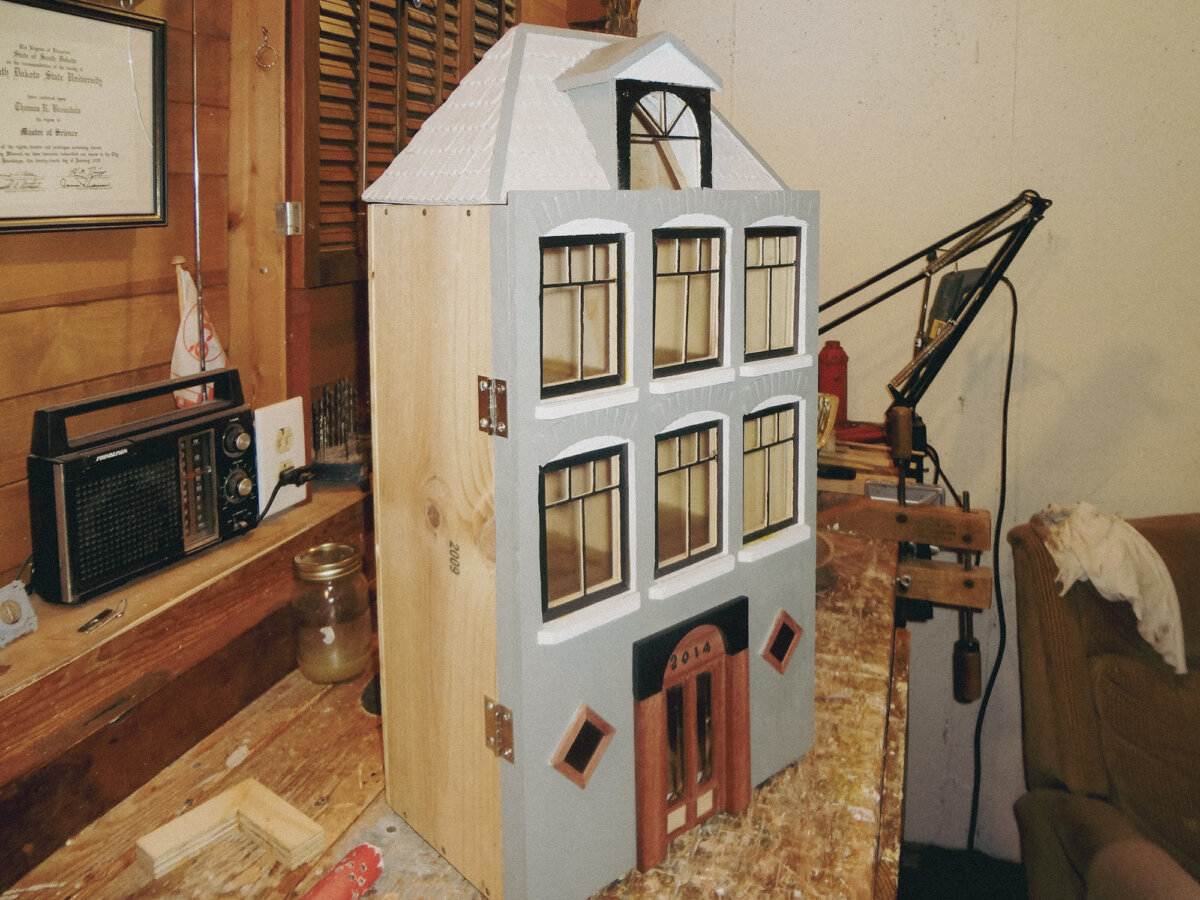
“Her dad traveled a lot, stayed in hotels, so she thought a hotel would be a great place for these little creatures. My wife and I travel quite a bit. We’ve seen a lot of houses in Belgium, Amsterdam, and they’re straight up, tall, narrow. And a wine box is a perfect fit. I grabbed a couple of wine boxes from a friendly liquor store. Made the first one and she loved it, and I love making them.”
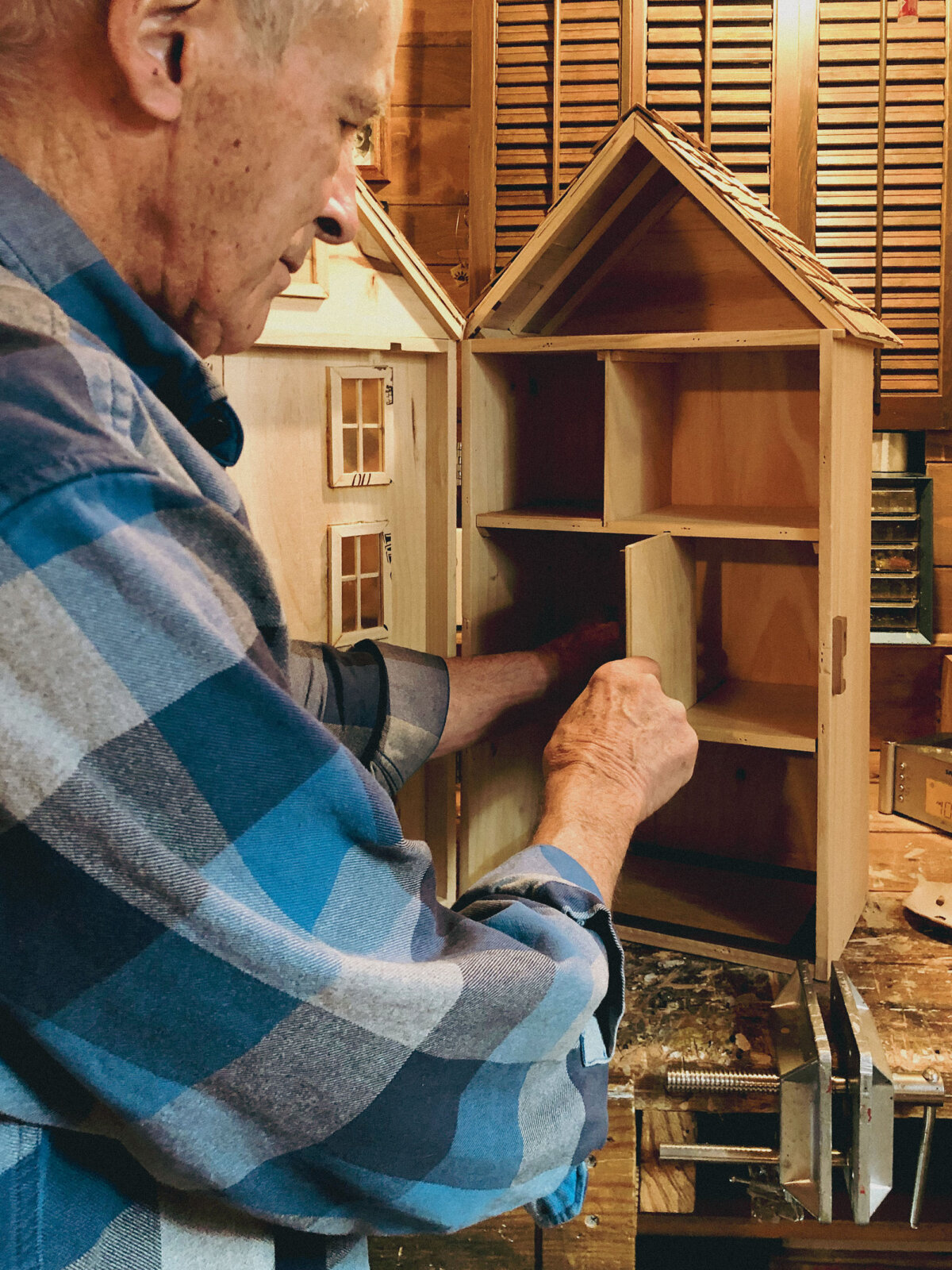
Once he started making them on a regular basis, he had no problem getting free supplies. “I’d go to liquor stores and tell them what I was doing. They thought it was great. So they donate these wooden boxes,” he said. “I went to a plastic company, got a couple of sheets of plastic out of their waste bins. Use that for the windows. I have a sister-in-law who does stained glass artwork. She sent me a few pieces of beveled glass.” His only expenses are hinges, which he says cost 40 cents.
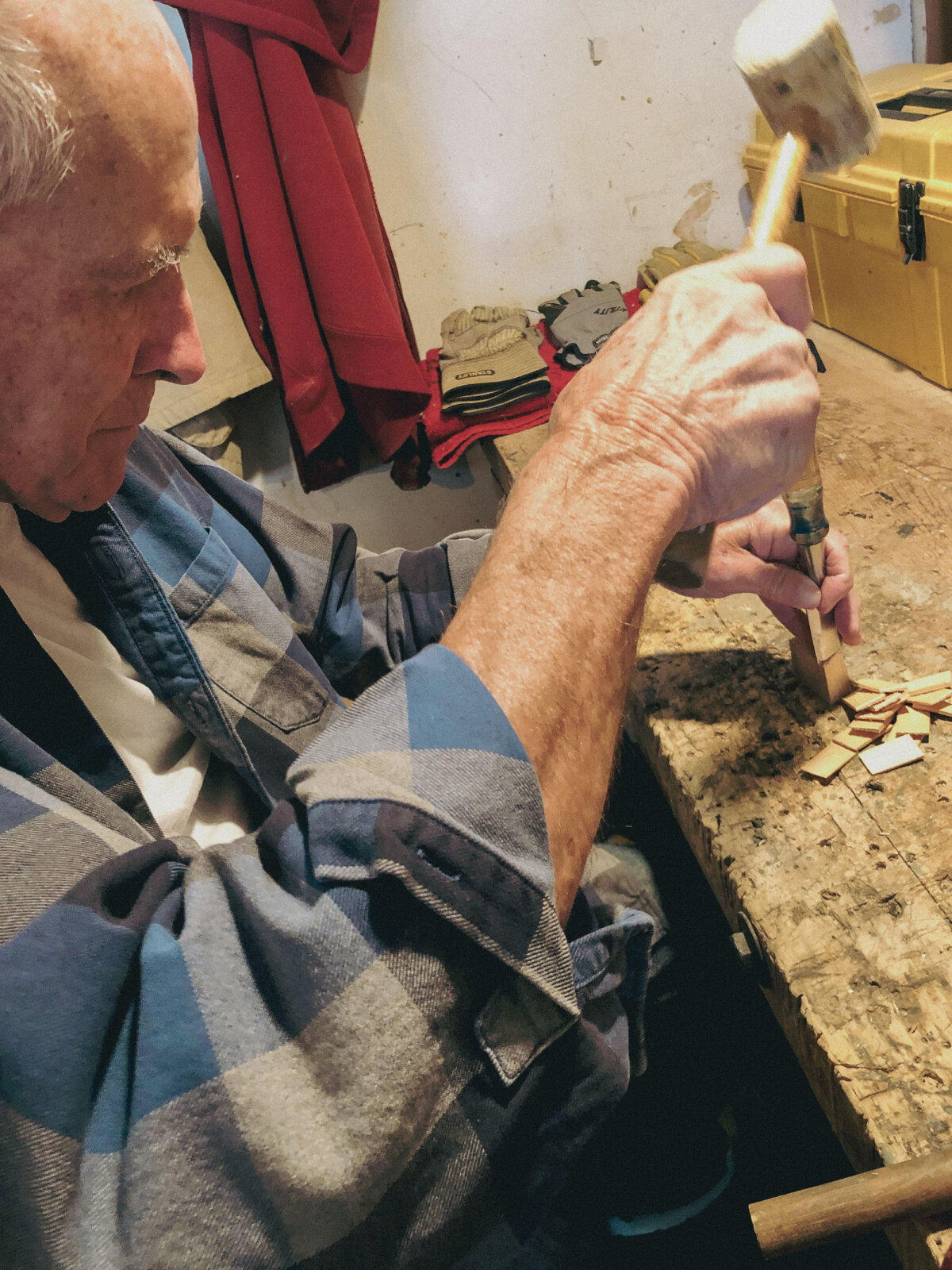
Perhaps the most clever feature of some doll houses is the supplies to make a tile roof: pasta. For that, Bresadola needed trips to the grocery store and a Chinese restaurant. “I had to find the exact kind of pasta. Had to be smooth too,” he said.
Mostaccioli is similar to penne, but without the ridges. But cutting a piece of pasta lengthwise in half wasn’t easy, hence the chopsticks. “I had trouble holding it, so I got a couple of chopsticks from my Chinese restaurant, and then I would put the chopstick in the hole in the pasta.”
Though making a doll house takes between 30 and 50 hours of work, he enjoys the work so much that he continues crafting these works of art. “Once you make them, what do you do with them? I looked around and I found a group called the Arapaho County Santa Claus Shop. It’s for disadvantaged children. Their parents have to be recommended to them by the fire department, police department, or social services. There’s no money exchanging hands.” Every year he donates 10 to 12 homemade doll houses that end up under Christmas trees.
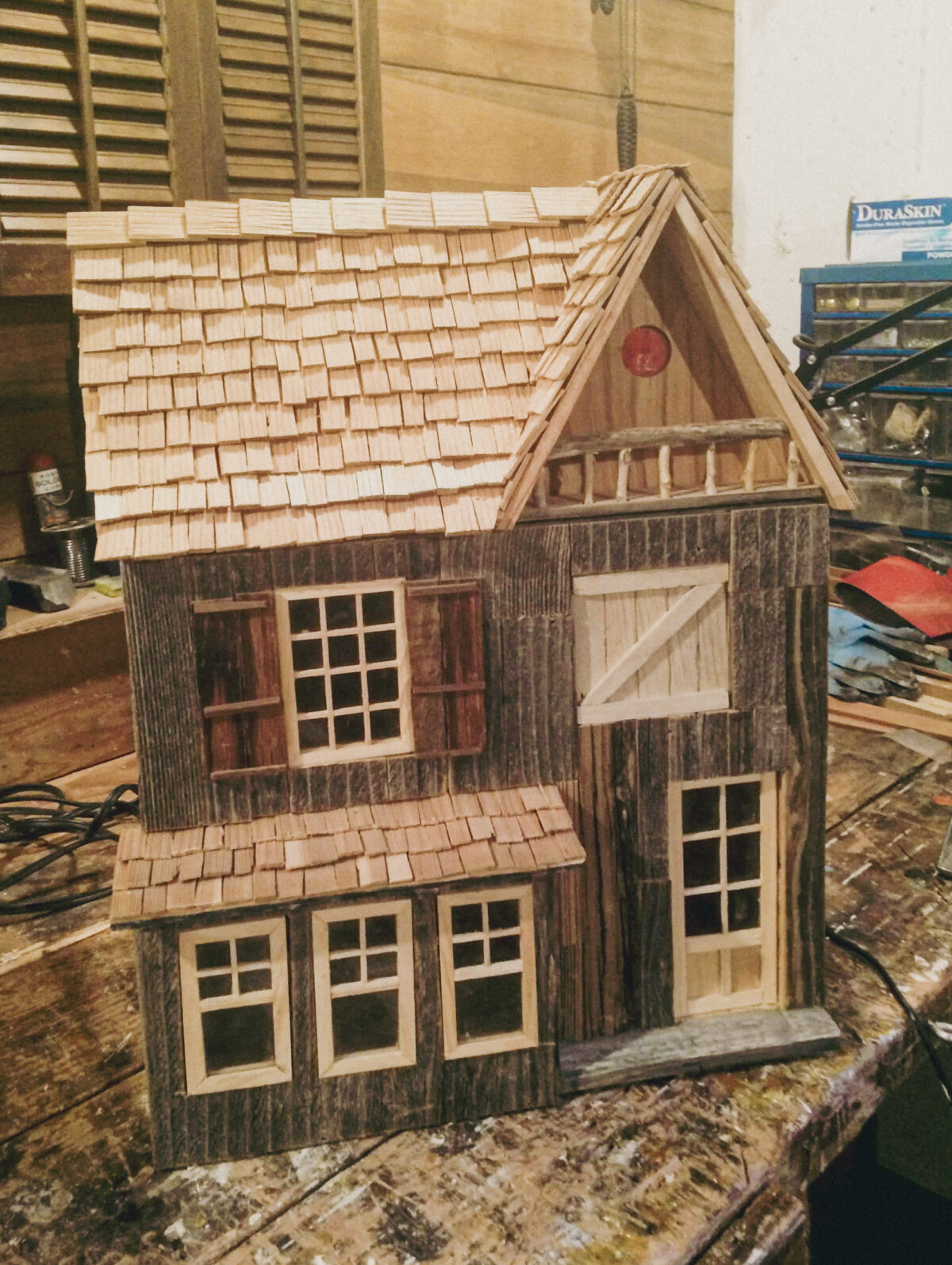
Though he’s never met any of the girls who have received them, he does share one heartwarming story. “My daughter was part of an auction of stuff for kids, and they were going to donate some stuff to Children’s Hospital in Denver. She brought the doll house over to them for their playroom.”
It turns out the hospital staff thought it was too nice and too delicate to put with many children, so they asked if they could just give it to a single needy child. “They gave it to a little girl. She had terminal cancer. Her parents were not around and she was by herself in a hospital with cancer on Christmas Eve, and they gave her the doll house. It was the only gift she received that year.”
Bresadola plans to continue making doll houses as long as he’s able. Even though he never gets to see those happy faces on Christmas morning, he knows his work is making a difference. “I do it as much for the kids as I do for myself.”