Even though there was active fighting for only three years, the Korean War was the longest war of the 20th century. It ran for 50 years during that century, and it continues today. When the shooting stopped in July 1953, it was an armistice. No peace treaty was signed. Shooting could resume at any time.
The Korean War was the first major conventional conflict since the end of World War II that featured significant land combat. In many ways, it concluded unfinished business from WWII.
The war is widely considered the first battle of the Cold War, which continued until the collapse of the Soviet Union in 1991. The Korean conflict was also considered an impossible war. By 1946, many believed the atomic bomb, transcontinental bombers, and the United Nations had made war obsolete. The realization that conventional warfare could coexist with a nuclear umbrella forced a reevaluation of defense policy.
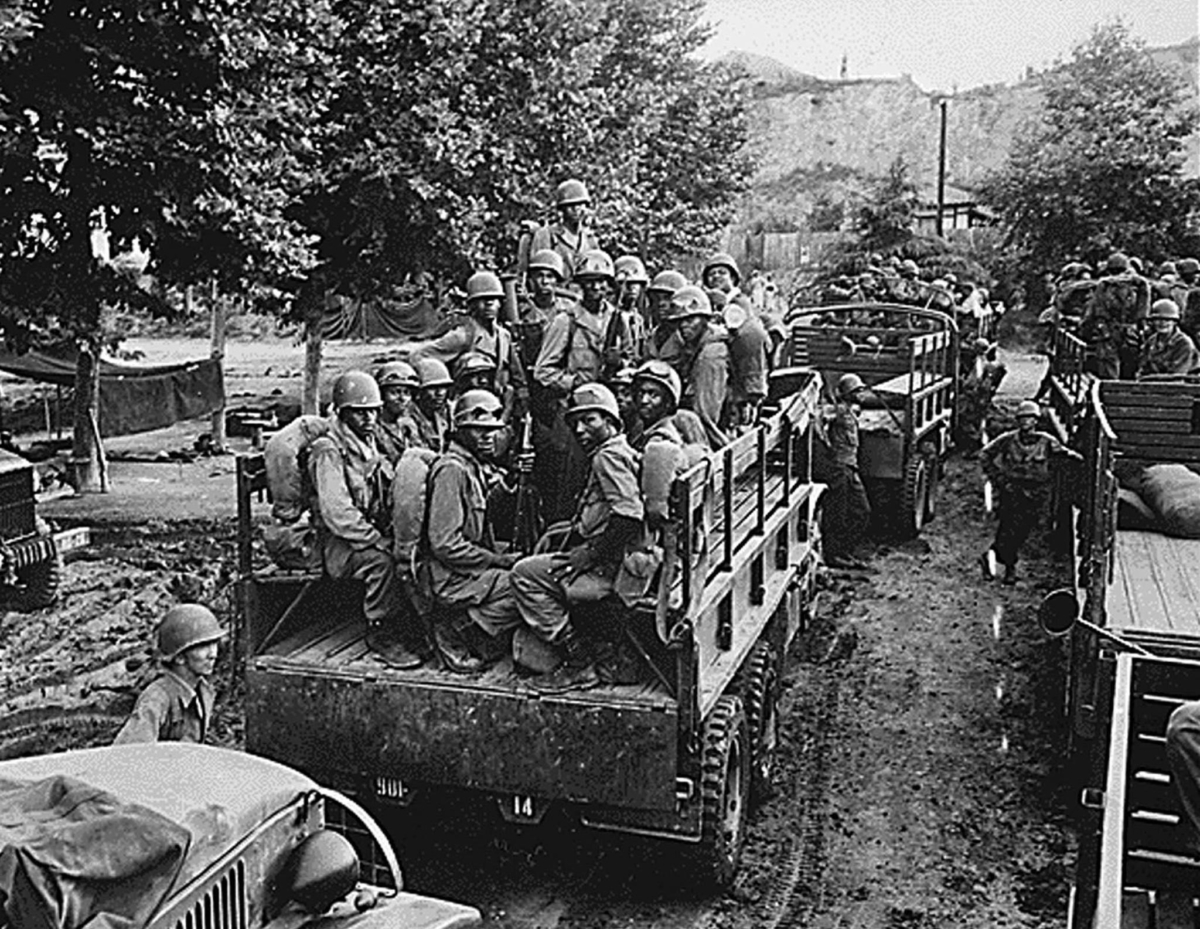
For all these reasons, understanding the Korean War is important. It contains lessons relevant to ground wars of this century. Yet the Korean War remains one of most obscure wars of the 20th century. Many call it “the Forgotten War.”
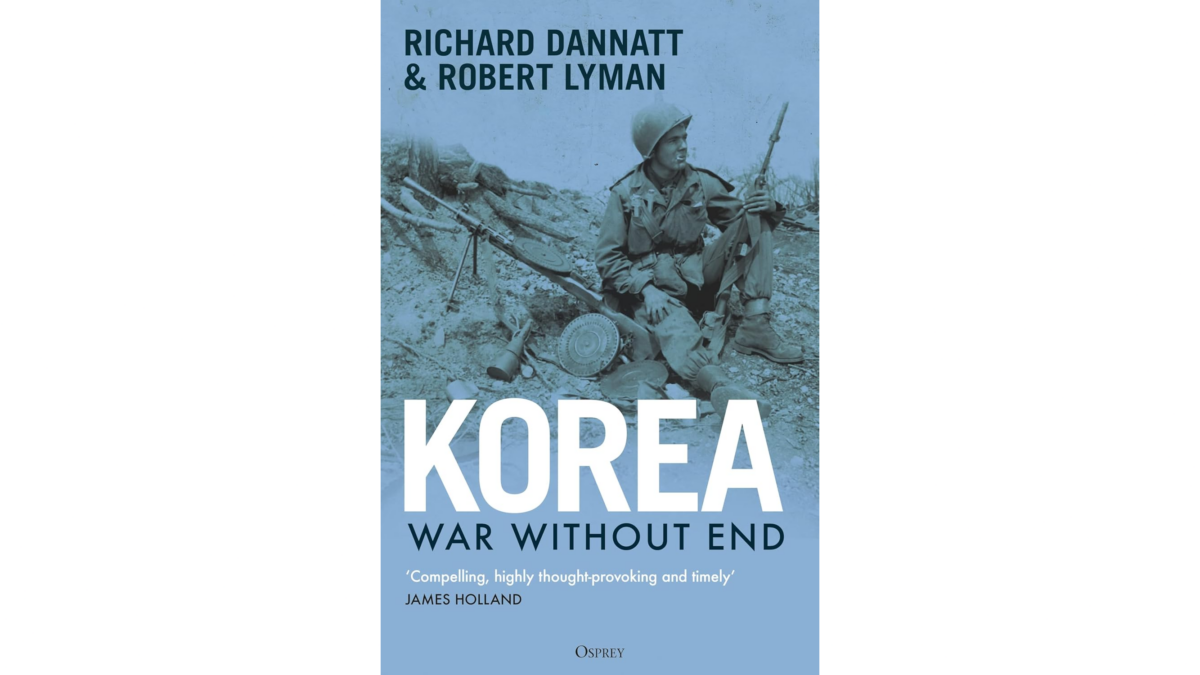
“Korea: War Without End” by Richard Dannatt and Robert Lyman attempts to redress that failing. The book offers a fresh look at the Korean War, reexamining its causes and consequences and putting it into its historical context, while highlighting its lessons relevant to the present. It is an ambitious undertaking, one that is largely successful.
Perhaps the book’s most important revelation was that there were actually two Korean wars, fought in three phases. The first ran from June to October 1950, with the invasion by the Democratic People’s Republic of Korea of the Republic of Korea. The U.N. intervention was intended to counter it and restore the status quo before the conflict began.
38th Parallel
The authors assert that the U.N. forces achieved that mandate upon reaching the 38th Parallel in October 1950. The mandate restored to the Republic of Korea the territory it held before the war.
The Republic of Korea then exceeded the mandate by launching their invasion of the north. This was done without consulting either the United Nations or Washington. The authors show that it triggered unintended consequences, including intervention by China and the Soviet Union.
This “second” Korean war had two phases. U.N. forces led by the United States marched up the Korean Peninsula, almost to the Yalu River’s border with China. This triggered Chinese intervention, and a U.N. retreat south of Seoul.
The authors show how the United Nations recovered its balance, led by a new army commander, Mathew Ridgeway. Ridgeway’s forces pushed North Korean and Chinese forces back to today’s armistice line. This lasted from October 1950 to June 1951.
The final phase was two years of deliberate stalemate. This was deliberate on the part of the United States. Washington realized that while there may be no substitute for victory, total victory required subjugation of China and the risk of a nuclear war.
This phase of the war redefined victory as maintaining the pre-war status of the Republic of Korea. It took two years of fighting along the armistice line to convince China and North Korea they could not take the South by force.
The book is divided into three parts paralleling these phases. While this is primarily a high-level look at the war that focuses on strategy and international politics, each section begins with a prologue showing the face of war. These prologues examine the experiences of a small group of individual soldiers. It provides a very personal look at the face of war in each of its three phases.
Misconceptions
The result is a remarkably rich analysis of the Korean War. The authors explain the misconceptions, on both sides, that led to the war’s start. They illustrate how imperfect intelligence, Soviet and American, exacerbated tensions. They also explain the role of the United Nations during the period. The United Nations was then viewed as a mechanism to prevent wars, receiving disproportionally more support than it would in future years.
The authors put the onus of starting the war where it belongs, with North Korea. They also show the incursion wasn’t part of a vast international communist plan.
Rather, the conflict started as an opportunistic land grab by the North, a war of conquest conducted independently of Russia or China. The North expected no outside intervention, even though the Republic of Korea and the United States had signed a defense treaty only shortly before the invasion.
The authors point out the excesses of the United States. They make the case that the United States and United Nations ceded the moral high ground by pushing into the North in 1950. They also argue that, once the United States determined on a negotiated peace rather than conquest, it had to place greater emphasis on military proportionality (returning the same force in a battle attack).
They also conclude the war was a success for the West, despite its ambiguous end. It represented a victory for the rule of law, keeping aggression from being rewarded. “Korea: War Without End” is a thought-provoking and rewarding look at the Forgotten War.
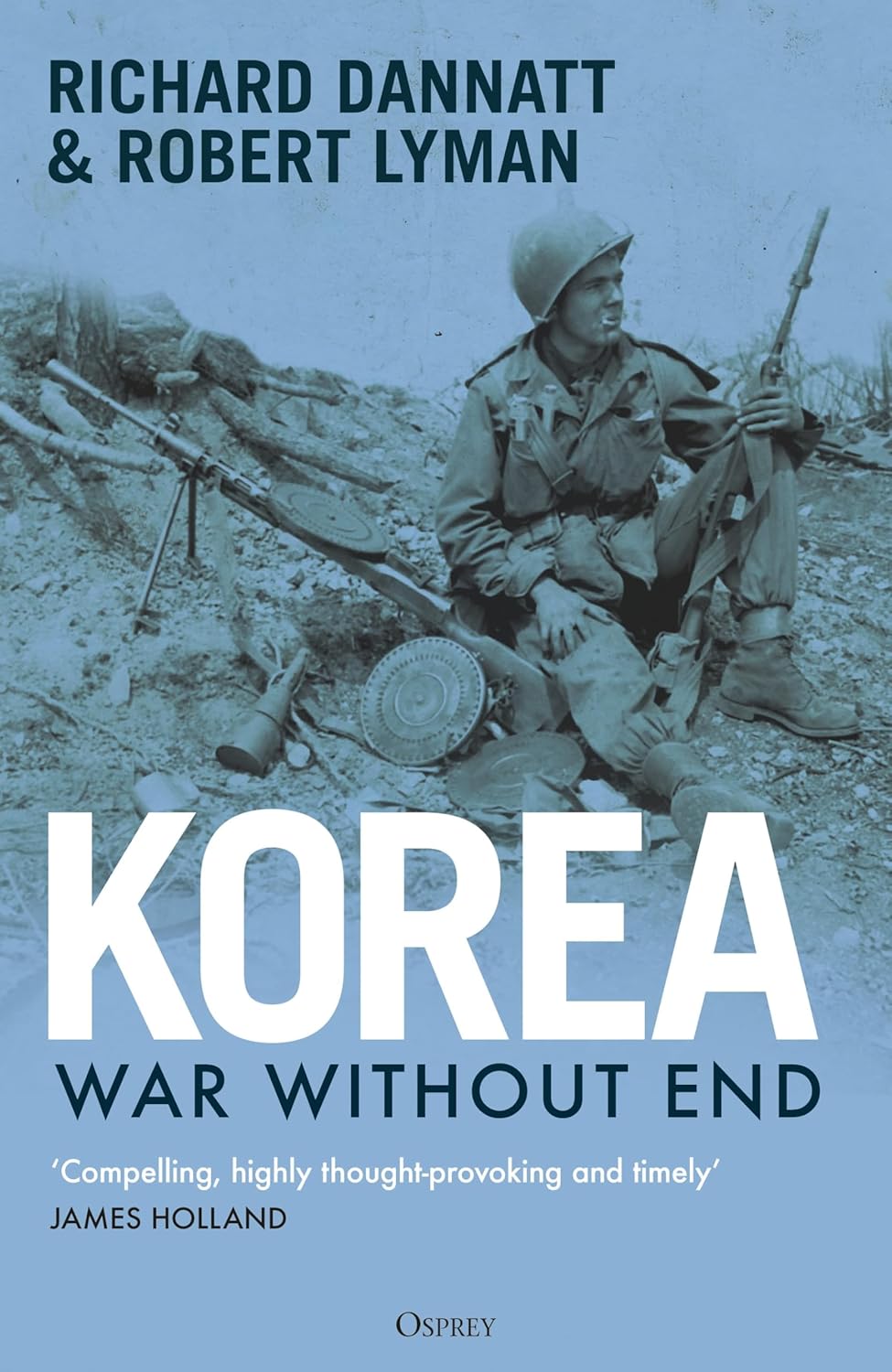
‘Korea: War Without End’
By Richard Dannatt and Robert Lyman
Osprey Publishing, May 22, 2025
Hardcover: 340 pages
What arts and culture topics would you like us to cover? Please email ideas or feedback to features@epochtimes.nyc