




Gilbert and Sullivan’s comic operas are considered the forerunners of the modern musical. Their story is one of the great creative partnerships in theater.
In their deft blend of music and lyrics, they are comparable to Mozart and his librettist Lorenzo Da Ponte a century prior, or the team of Alan Menken and Howard Ashman responsible for the early films of the Disney Renaissance.
A huge success in the late 19th century, their works have remained popular down to our own time.
A Chance Meeting
William Schwenck Gilbert (1836–1911) was born into a comfortable middle-class background. He took an early interest in the theater, writing and producing school plays. He also read comic verse like Edward Lear’s “Book of Nonsense.” As a young man, he illustrated and published a few books in this genre himself.
Unlike the well-off Gilbert, Arthur Sullivan (1842–1900) grew up in a working-class London district. His father was a musician, and the young Sullivan learned to play a wide variety of instruments by the time he was 8 years old.
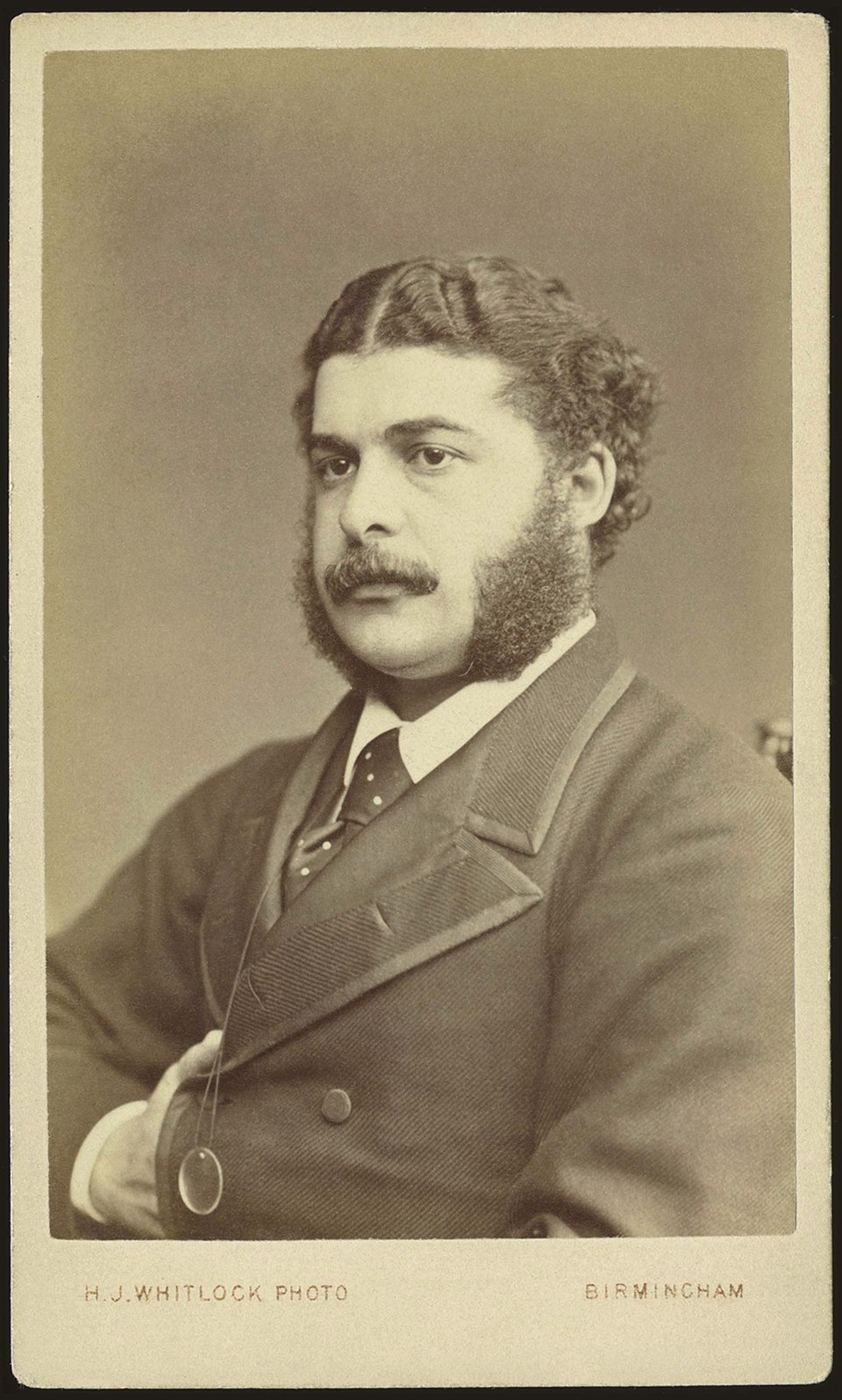 An 1870 portrait of Arthur Sullivan, taken by H.J. Whitlock. (Public Domain)
Later, he studied at the Royal Academy of Music and the Leipzig Conservatory. By his 20s, he was composing serious classical works.
The pair were introduced at a rehearsal of an operetta that Gilbert had written the lyrics for, and they soon began a collaboration with historic consequences.
Early Inspiration
At the age of 2, Gilbert was abducted and held for ransom while his family was traveling in Naples. Italian bandits accosted his nursery maid, who handed over the child after being threatened. Fortunately, his parents got him back for the sum of 25 pounds (over $3,200 today).
This unsettling childhood event inspired elements in several later operas like “The Gondoliers,” which tells the story of an heir to the throne kidnapped at birth.
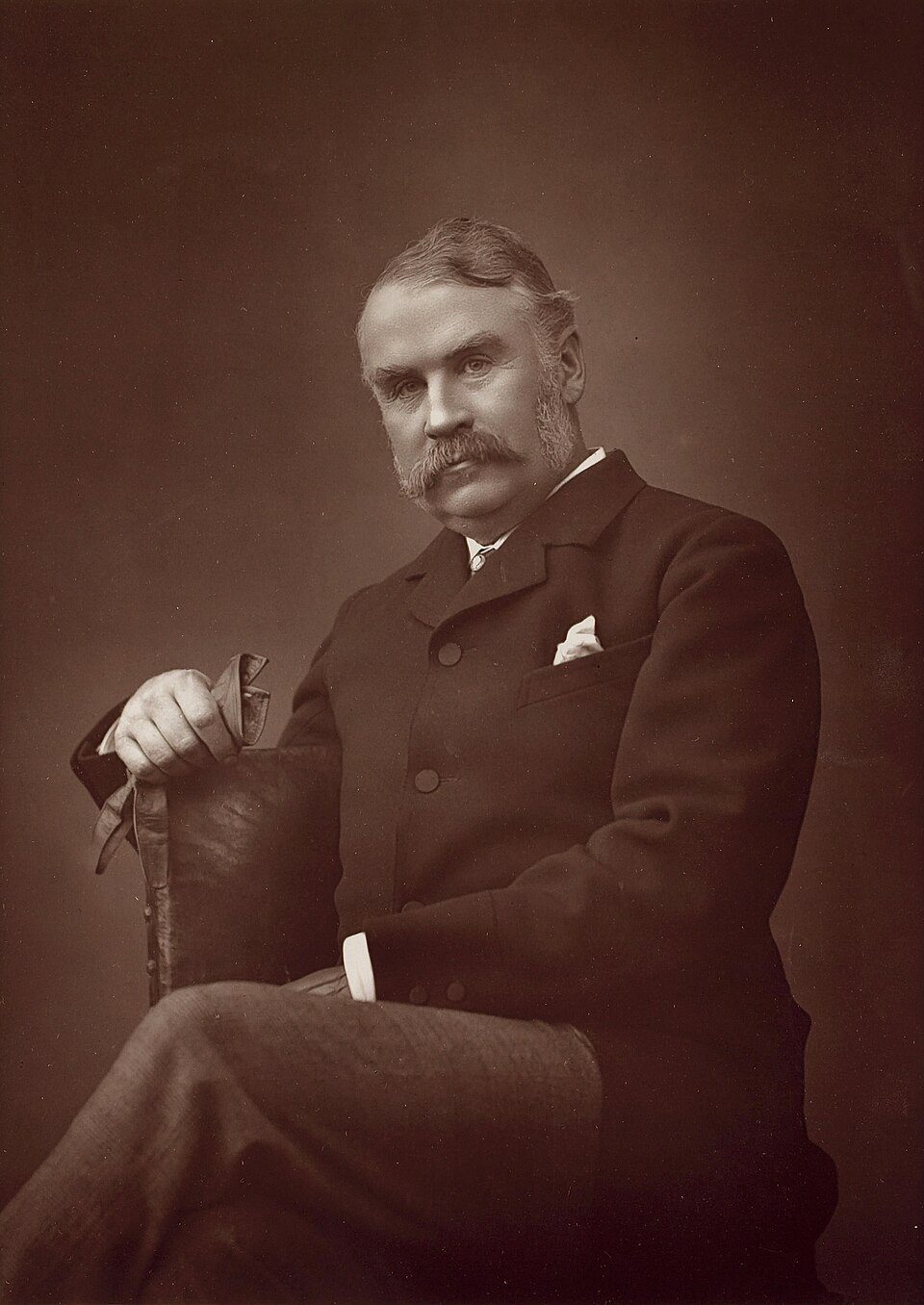 A photograph of Sir William Schwenck Gilbert, taken in the late 1880s by Herbert Rose Barraud. (Public Domain)
It also inspired Gilbert and Sullivan’s first international success, “H.M.S. Pinafore,” which premiered in 1878. In Gilbert’s first collection of verse, “Bab Ballads,” is a poem called “General John.” A character named Pvt. James tells the general:
“A glimmering thought occurs to me
(Its source I can’t unearth),
But I’ve a kind of a notion we
Were cruelly changed at birth.”
Gen. John replies:
“Being a man of doubtless worth,
If you feel certain quite
That we were probably changed at birth,
I’ll venture to say you’re right.”
In “H.M.S. Pinafore,” these characters are transformed into Ralph Rackstraw, a common sailor, and Capt. Corcoran, commander of the Pinafore. The plot involves Ralph secretly falling in love with the captain’s daughter, Josephine, who is expected to marry the first lord of the admiralty.
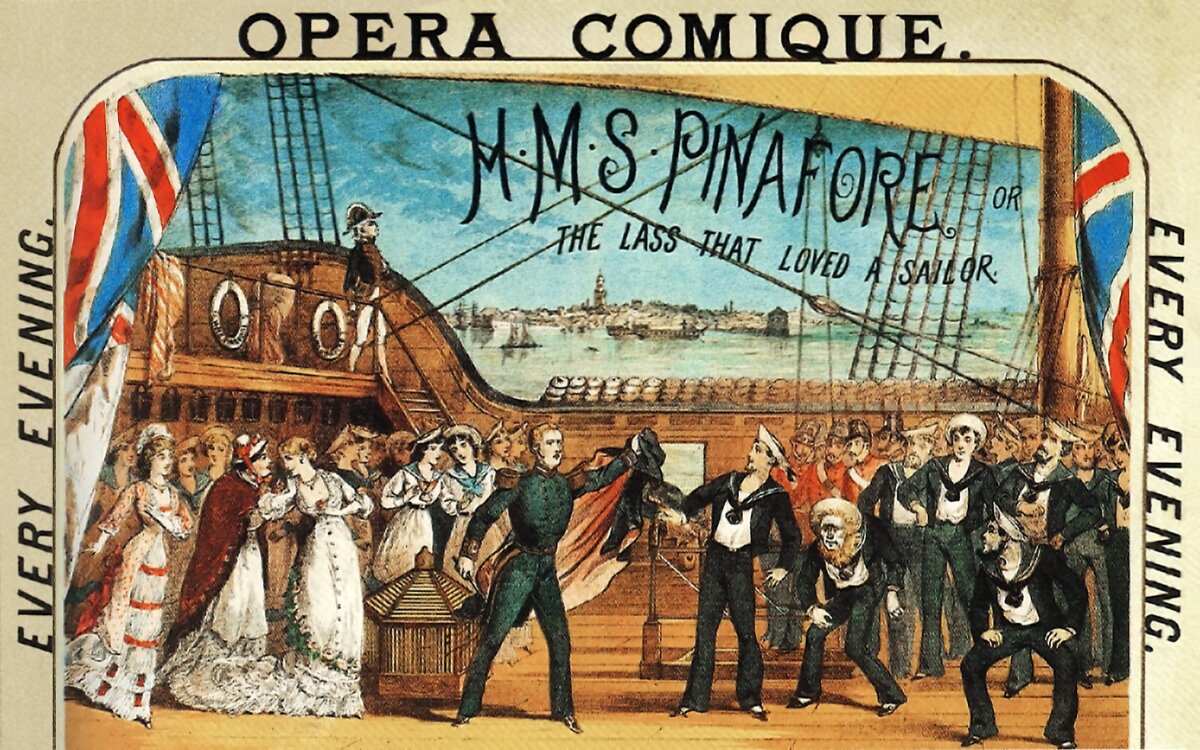
Despite the obstacles of class, Ralph and Josephine vow to elope. When their plan is discovered, Capt. Corcoran is furious. Everything changes, though, when the bumbling seafarer and former nursemaid, Little Buttercup, reveals a secret:
Two tender babes I nussed:
One was of low condition,
The other, upper crust,
A regular patrician.
Oh, bitter is my cup!
However could I do it?
I mixed those children up,
And not a creature knew it!
In time each little waif
Forsook his foster-mother,
The well born babe was Ralph –
Your captain was the other!!!
The story comes to an absurd but satisfying resolution when Ralph and the captain switch ranks. The socially elevated Ralph is now free to marry Josephine, and Capt. Corcoran can pursue his own romantic match with Little Buttercup, who had once been beneath him in station.
Pirating Problems
“H.M.S. Pinafore” was so successful that amateur performing groups in America began to stage unauthorized productions of the work without paying royalties to the creators. Technically this wasn’t “pirating” in the modern sense, since there were no copyright laws at the time. The positive side effect was that Gilbert and Sullivan operas developed a cult following.
The pair wrote their next work, “The Pirates of Penzance,” to be produced in America in order to discourage unsanctioned productions. At the grand opening in New York City on Dec. 31, 1879, the audience called for nine encores. As with “Pinafore,” the plot of “Penzance” was also inspired by Gilbert’s early kidnapping experience. The story features a nursery maid who apprentices the main character to a pirate as a baby.
 Welsh schoolchildren perform Gilbert and Sullivan’s “The Pirates of Penzance” in 1953. (Jason.nlw/CC BY-SA 4.0)
A Perfect Blend of Words and Music
Gilbert generally wrote the lyrics and dialogue to the libretto first, which Sullivan then set to music, carefully tailoring the melodies to the text. In the song “When I Was a Lad” from “H.M.S. Pinafore,” for example, Sullivan applied the rhythmic patterns of a traditional hornpipe dance to fit with Gilbert’s uneven distribution of stresses. Since the meter of Gilbert’s lyrics was usually very regular, however, it seems that he sometimes revised his lyrics to make the meter better fit Sullivan’s music.
The result was a perfect balance of humor and musicality. During the productions, Sullivan conducted the pit orchestra while Gilbert oversaw aspects of staging and design.
Creative Quarreling
The pair wrote a total of 14 comic operas over 25 years. Over time, they began to have disputes over creative differences and finances. Sullivan had ambitions to be a composer of more serious operas and grew tired of Gilbert’s absurd comic plotlines. Gilbert, who was sensitive about his art, became combative when Sullivan expressed a desire for more realism and emotions in their stories. Their differences came to a head when a financial quarrel led to a lawsuit between the two.
Sullivan tried to patch things up in a letter to Gilbert, citing “My old personal regard for you,” and hoping that the dispute could be “blotted out” of their long friendship. Gilbert wouldn’t drop the suit, however, and eventually withdrew the performance rights to his libretti. Eventually they reconciled, though, and collaborated on two more operas before Sullivan died in 1900.
Enduring Success
Gilbert and Sullivan’s operas have never diminished in popularity. Opera companies everywhere regularly mix them into their repertoire. In the United States, dozens of Gilbert and Sullivan societies perform the duo’s works almost exclusively. Groups like the New York Gilbert & Sullivan Players tour the country annually, while others reside in Seattle and Houston.
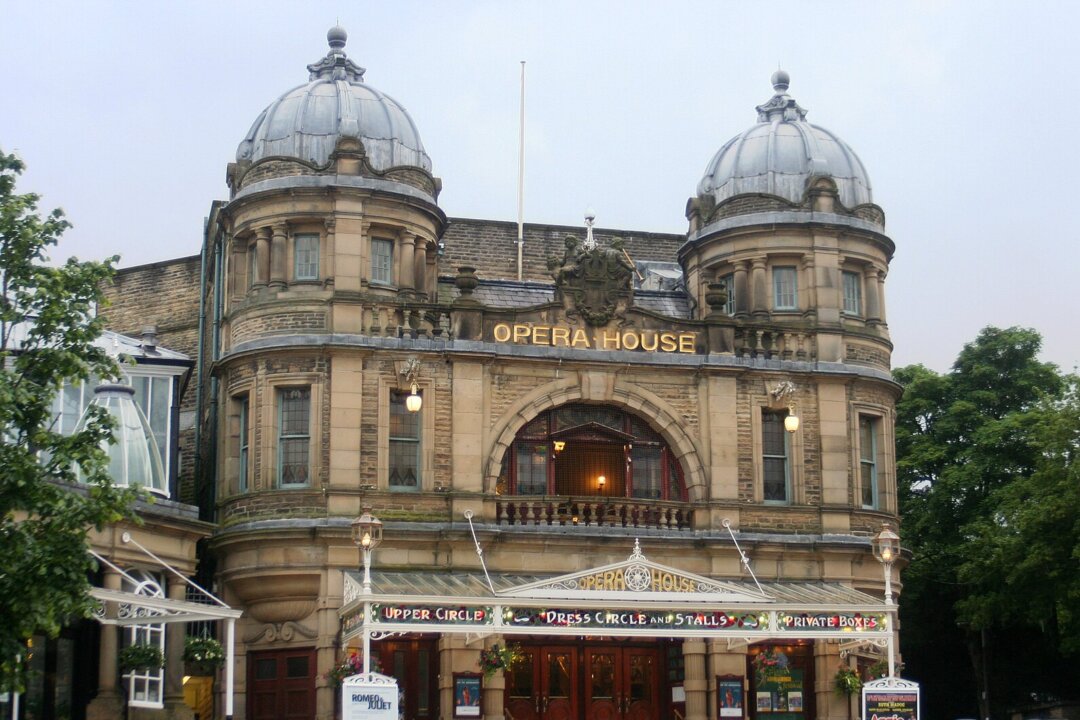 The opera house in Buxton, England, is the site of a Gilbert and Sullivan-themed festival held each year. (Public Domain)
This makes the pair the only writers in the English-speaking world other than Shakespeare, who have performing groups devoted to their specific works.
Over in England, the Buxton Opera House will be hosting this year’s International Gilbert and Sullivan Festival during the first two weeks of August. Founded in 1994, the festival has been an annual event for more than three decades.
The pair’s partnership may have ended more than a century ago, but their unique mixture of satirical and melodic genius continues to resonate with audiences across generations.
What arts and culture topics would you like us to cover? Please email ideas or feedback to features@epochtimes.nyc
