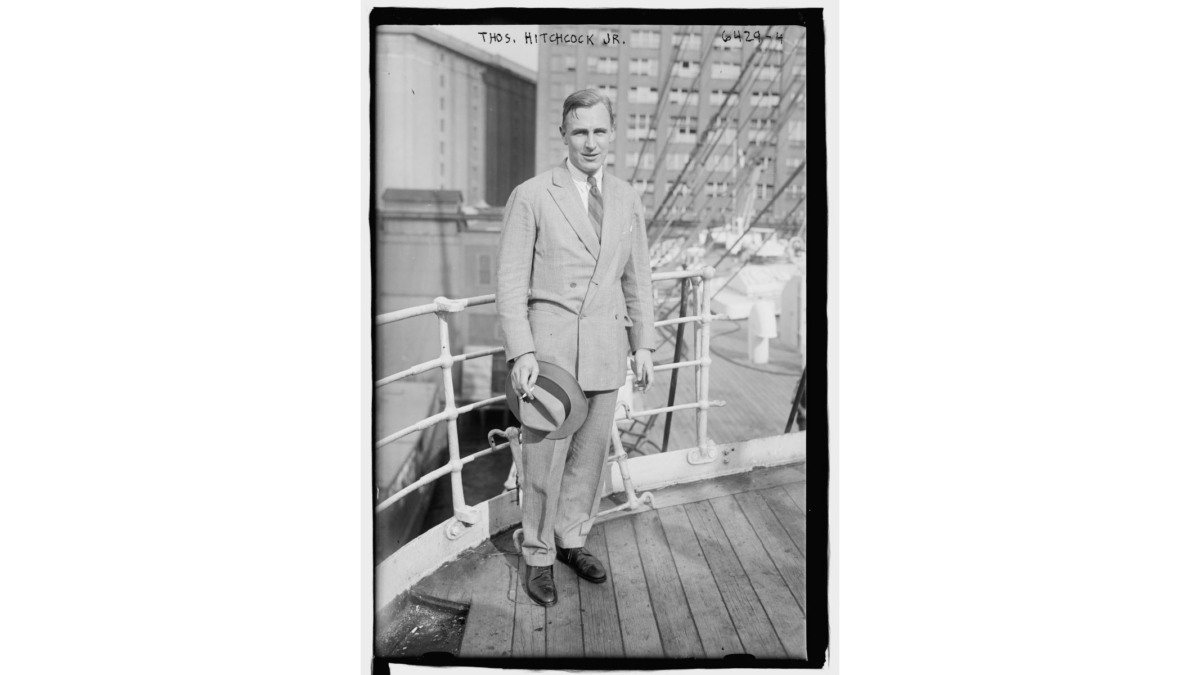
Thomas Hitchcock Jr. (1900–1944) may have been born in Aiken, South Carolina, but he would become the prince of Long Island.
Born into a wealthy family, Hitchcock’s father was well known as one of the nation’s first great polo players. He ranked as a 10-goaler (the highest ranking possible) three times and captained the American team at the first Westchester Cup in 1886, the prestigious polo match between America and England.
Thomas Sr. was a founder of the Meadow Brook Polo Club on Long Island and also of Belmont Park, home of the horse race, Belmont Stakes. One of the most successful horse trainers, he is known as the Father of American Steeplechasing and was posthumously elected to the National Thoroughbred Racing Hall of Fame.
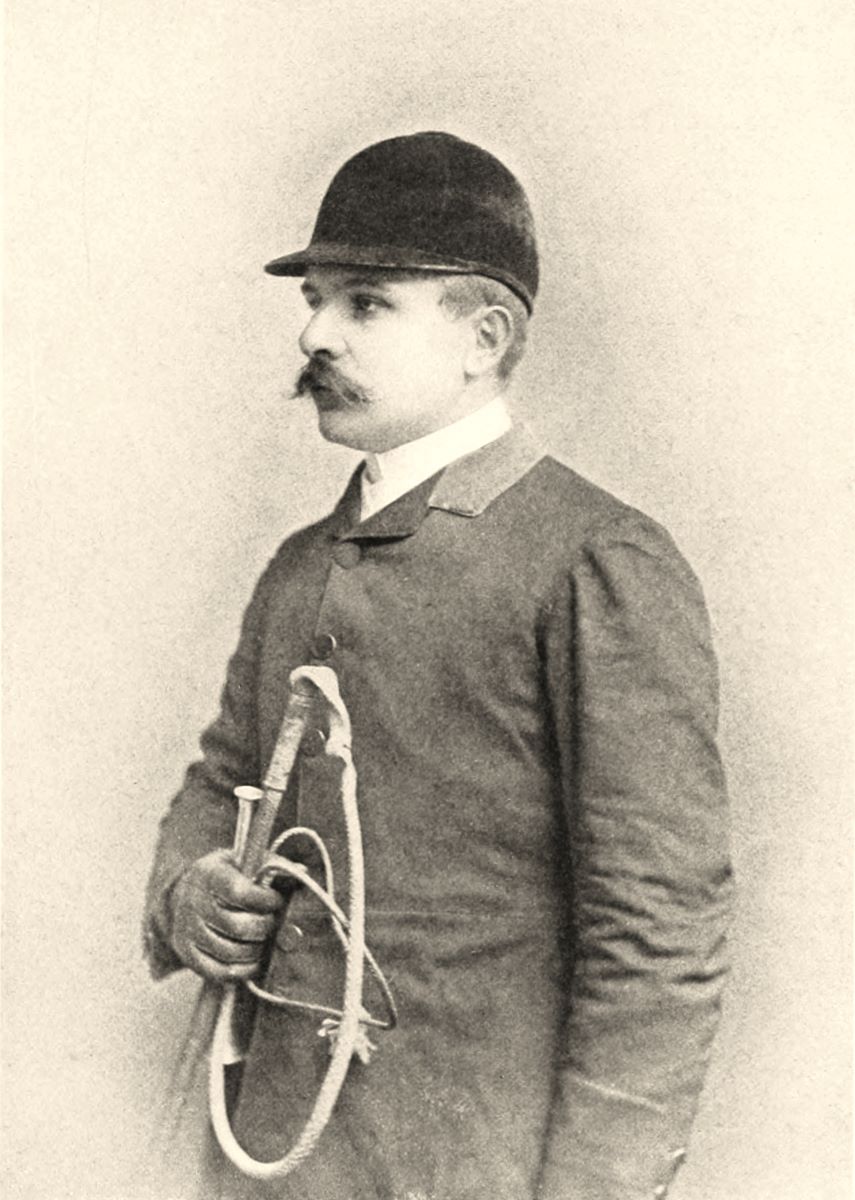
To say that his son had large shoes to fill would be an understatement, and yet Thomas Jr. would do far more than fill those shoes. He would become one of America’s great 20th- century heroes.
Fighting for the French
Surrounded by the wealthy aristocrats of the northeast, Hitchcock met the demands of an intensive education. He was educated at St. Paul’s School in Concord, New Hampshire, where he became class president. He was a sports star who boxed, swam, played tennis, hockey, football, golf, and, of course, polo. He played in his first polo tournament at 13 and, by 16, was the star player for the Meadow Brook Club team, leading the team to the 1916 U.S. National Junior Championship.
When America entered World War I in April the following year, the 17-year-old athlete wished to enlist in the Army Signal Corps’s new Aviation Section. Due to his age, Hitchcock was denied. But this didn’t stop him.
Hitchcock decided to go to Europe and join the Lafayette Escadrille—American pilots who fought on the side of the French. He was the group’s youngest pilot and secured two kills before being shot down on March 6, 1918 in Germany.
The young pilot spent the next six months as a prisoner of war. In September, while being transferred from one war camp to another by train, Hitchcock waited for nightfall, nabbed a map, leapt from the train, and covered nearly 100 miles before escaping safely into neutral Switzerland.
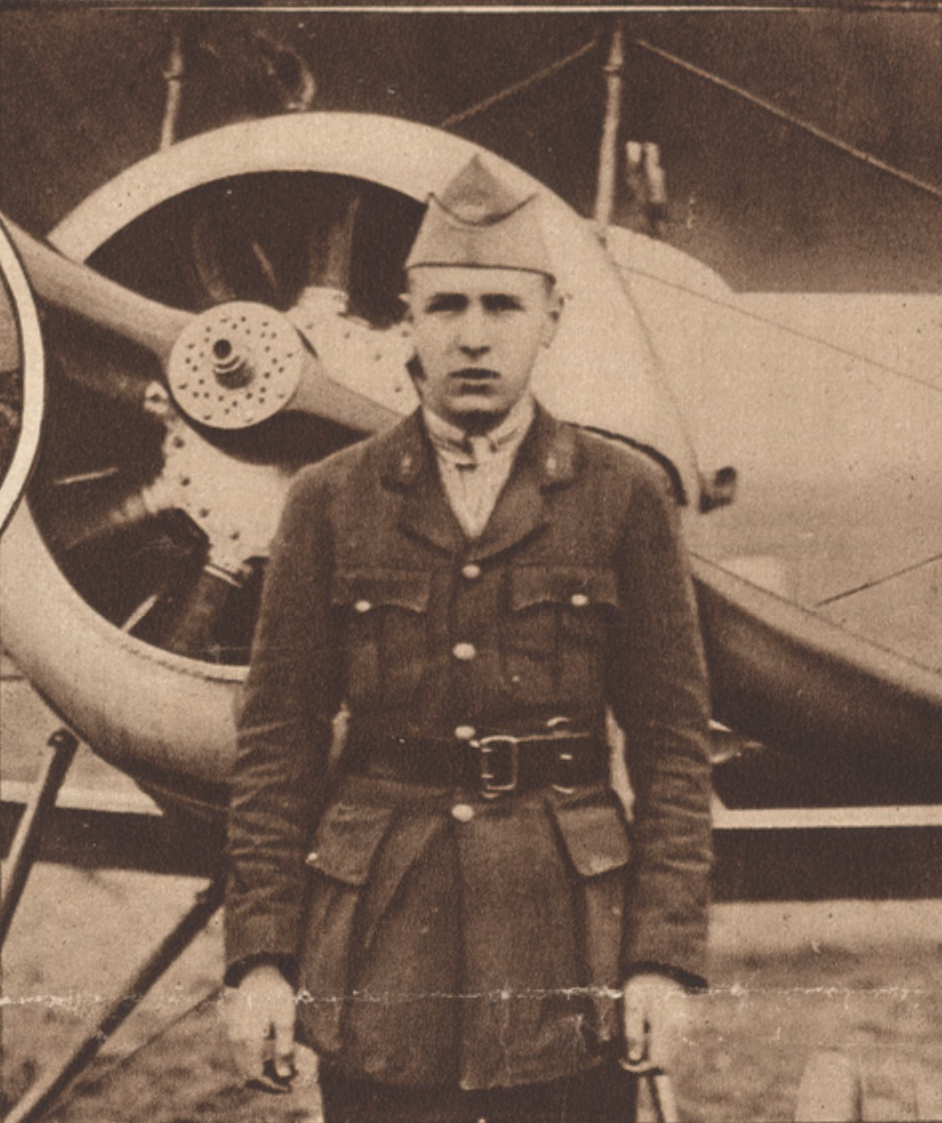
On Nov. 11, 1918, armistice went into effect, ending the hostilities of WWI. The French government awarded the young American pilot the Croix de Guerre for bravery. When he arrived back in America, he returned a hero.
America’s Greatest Polo Player
Hitchcock also returned to school, Harvard University to be precise. As he did at St. Paul’s, Hitchcock studied hard and continued playing polo. In 1921, he slipped right into his father’s shoes, competing in the Westchester Cup. But the result would be quite different.
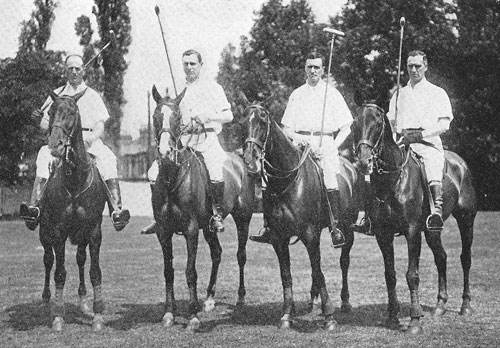
The Americans arrived at the Hurlingam Club in London and prepared to play before a large crowd, which included the Prince of Wales, the Duke of York, King Alfonso of Spain, Queen Mother Alexandra, as well as Winston and Clementine Churchill. Led by Hitchcock, the Americans dominated the match and secured the trophy.
As the New York World characterized it, “[B]efore two kings and two queens and about a dozen princes and princesses and all the world’s great horseman raised the Star-Spangled Banner in the greatest triumph polo has ever seen.”
The following year, Hitchcock began a march toward becoming the greatest polo player in American history. It was the first year that he achieved the 10-goal rank, a feat his father achieved three times in his career. Hitchcock did it every year from 1922 to 1940, excepting 1935, earning the nickname Ten-Goal Tommy. His on-the-field greatness helped lead his teams to four U.S. National Open Championships (1923, 1927, 1935, and 1936).
In 1928, his fame and wealth only grew after he married Margaret, of the prominent Mellon family, and they had four children. He began a career in business and banking, ultimately becoming a partner with Lehman Brothers in 1937.
His success on the field and in business caught the attention of a young writer, F. Scott Fitzgerald. Fitzgerald idolized the polo star and war hero, and modeled two of his fictional characters—Tom Buchanan of “The Great Gatsby” and Tommy Barban of “Tender Is the Night”—after him.
WWII and the P-51
When war erupted again in Europe, Hitchcock, recalling the devastation of the WWI, chose an isolationist view. This changed after Pearl Harbor and America entered into the war. The hero of WWI left his position at Lehman Brothers to get back into action. But just as he was too young to enlist in 1917, at 41, he was now considered too old. His reputation, however, preceded him and he was offered any desk job in the United States. That was not his style.
He contacted the U.S. ambassador to Great Britain, John Gilbert Winant, who suggested he come to London and become assistant military air attaché. Hitchcock didn’t need much convincing. His arrival proved more than beneficial to the Allied cause; it proved providential.
Hitchcock was shown the American-built and British flown P-51 Mustang. He quickly noted that the fighter plane could be far deadlier if the engine was replaced. His idea was instrumental in protecting bombers from Nazi fighter planes during bombing missions.
He began advocating the development of an upgraded version of the P-51, which would use the P-51 airframe, but a Rolls-Royce Merlin 61 engine. For months in 1942, he bombarded Washington with notes, explanations, and statistics, predicting that if the hybrid was created, it would become the best fighter plane in the war. He also hosted extravagant parties in his London flat to lobby the Royal Air Force and the Eighth Air Force, as well as those within the Roosevelt administration.
One of his close friends with whom he was in consistent contact with was an influential voice in the Roosevelt administration, Robert Lovett—the assistant secretary of war for air. (Lovett later became the secretary of defense during the Truman administration.) Hitchcock’s efforts finally paid off.
During a flight demonstration in the United States, the upgraded P-51B reached nearly 30,000 feet, exceeded speeds of 430 miles per hour (100 mph faster than the P-51A with the Allison engine), and demonstrated long-range capacity. By the end of 1942, 2,200 new P-51B Mustangs were ordered for development.
“[Hitchcock] was largely responsible for the P-51B, for pushing that project until it got through,” Lovett claimed. “The only person who could have done this was someone who was both knowledgeable as a pilot and who had the qualities of leadership to take disparate people and get them moving in a common direction.”
Hitchcock was correct in his prediction: Arguably, the Mustang proved to be the best fighter plane of the war.
A Tragic but Fitting End
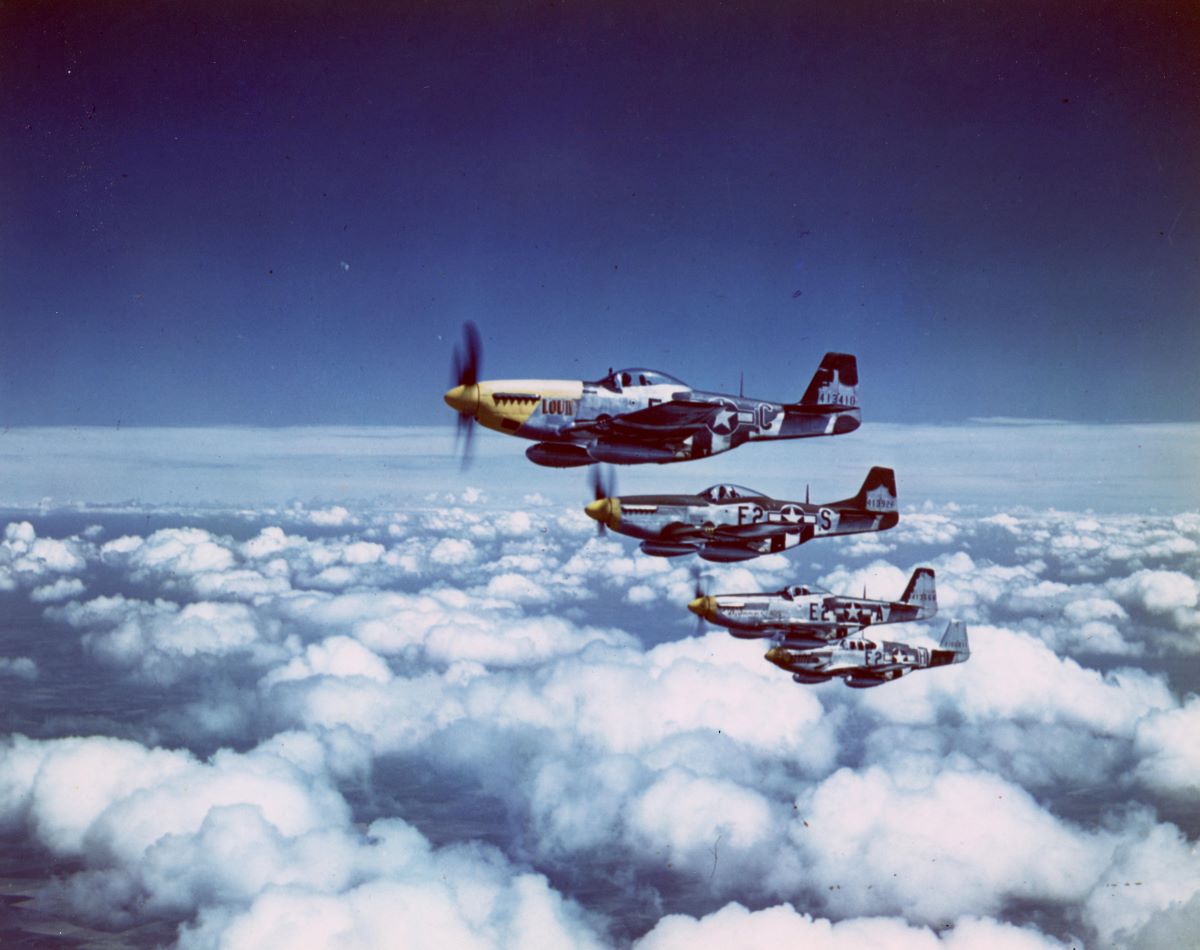
Hitchcock had long wanted to fly combat missions during the war, and, in 1944, it seemed he would get his wish. He joined the 408th Fighter Group, which had been activated in 1943, but in April 1944, the group was disbanded. He then became deputy chief of staff for the U.S. Ninth Air Support Command in England.
The air war in Europe had shifted in the Allies’ direction in large part because of the success of the bombing raids, which themselves were now far more successful because they could be escorted by fighters. The P-51B (and later C and D) were a rapid success, but an intermittent problem was taking place. There were reports that pilots were killed at times because they couldn’t pull the plane out of a dive.
Engineers theorized that the fuel tanks were destabilizing the plane while in a dive. Hitchcock took it upon himself to test the theory and solve the issue. While testing this theory, Hitchcock sent his P-51 into a dive. The theory proved tragically accurate on April 18, 1944, when Hitchcock was unable to pull his Mustang out of its dive.
The polo star and hero of two wars had died in a way characteristic of his daring life.
What arts and culture topics would you like us to cover? Please email ideas or feedback to features@epochtimes.nyc