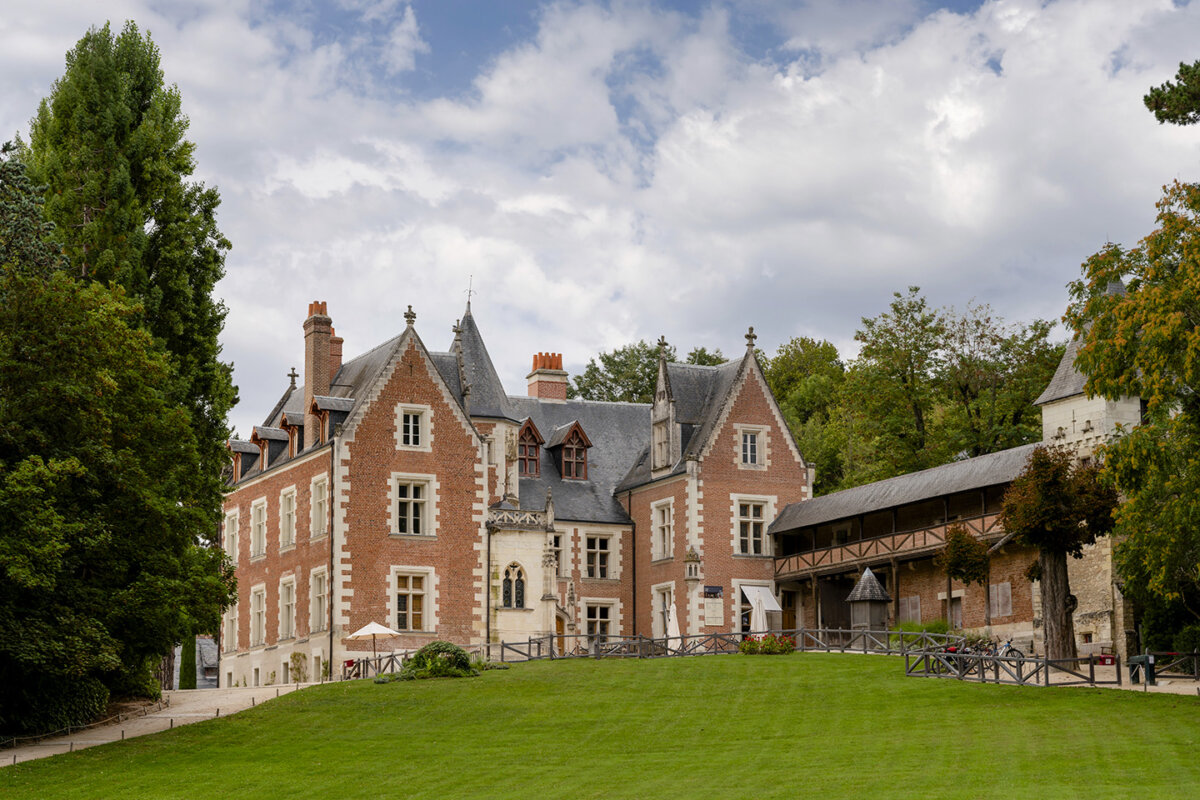
The Château du Clos Lucé exemplifies French Renaissance with its classically proportioned brick and freestone trimmed façade and iconic steep, triangular gabled roof with dormers (roof windows). Gothic architectural elements remain in the towers and mullioned windows. (Guillaume Angleraud/Shutterstock)
Remembered primarily as Leonardo da Vinci’s home during the last three years of his life, the Château du Clos Lucé now serves as a museum dedicated to his life and work. It is among the loveliest of the hundreds of châteaux in France’s Loire Valley.
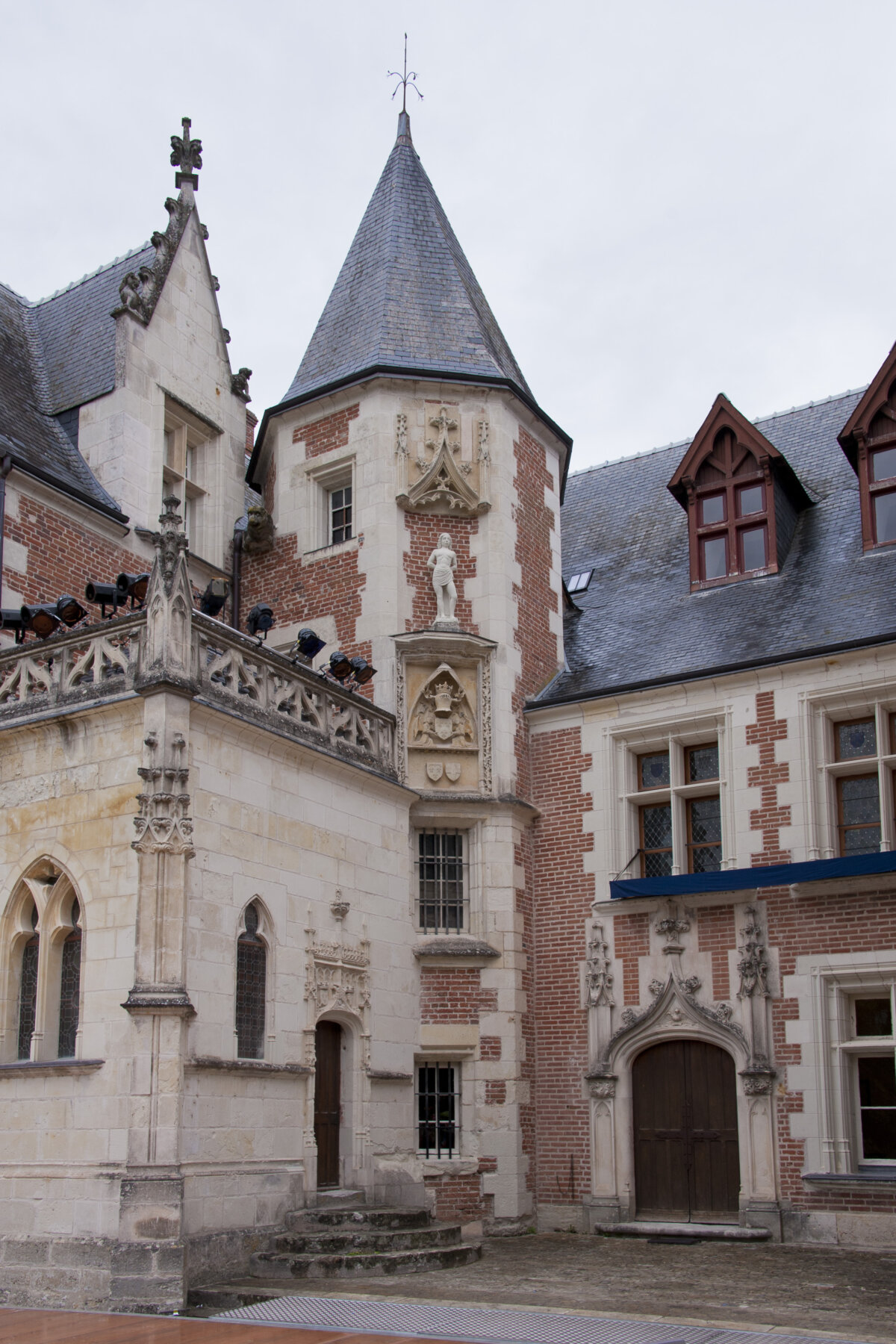
Built in 1471 by Hugues d’Amboise, the chateau combines elements of French Gothic and Renaissance traditions. The château’s façade is made of 15th-century tuffeau stone (local limestone) and pink bricks—unaltered in hue since the Renaissance. Inside the manor’s small courtyard, the octagonal tower, which features a spiral staircase, is a notable architectural feature. At one end of the chateau and inside one corner of a large courtyard are two small square towers with steeply sloping pyramidal roofs, a common feature of medieval French architecture.
Owned by French monarchs, Clos Lucé provided a more private alternative to the nearby Château Amboise, which is connected to Clos Lucé by an underground passageway. Since the palace housed several famous owners and occupants, including King Charles VIII and Leonardo da Vinci, it has been a designated historical monument since 1862.
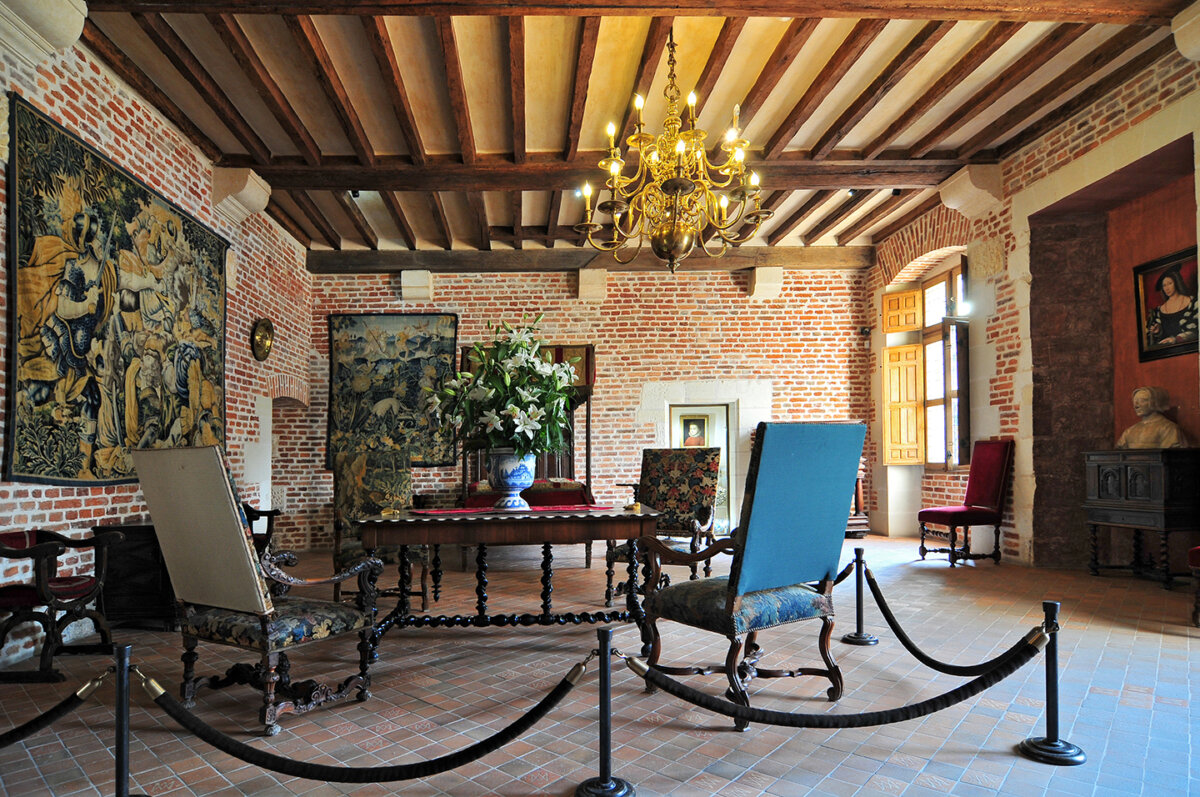
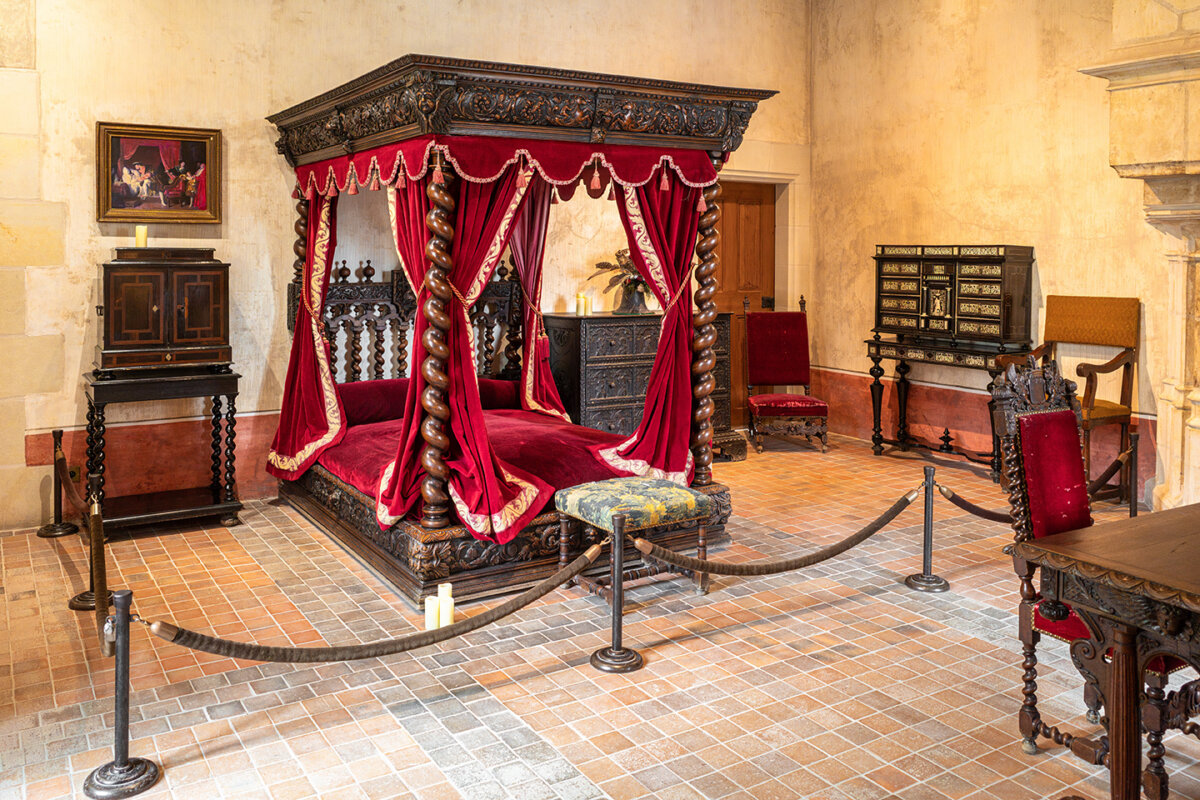
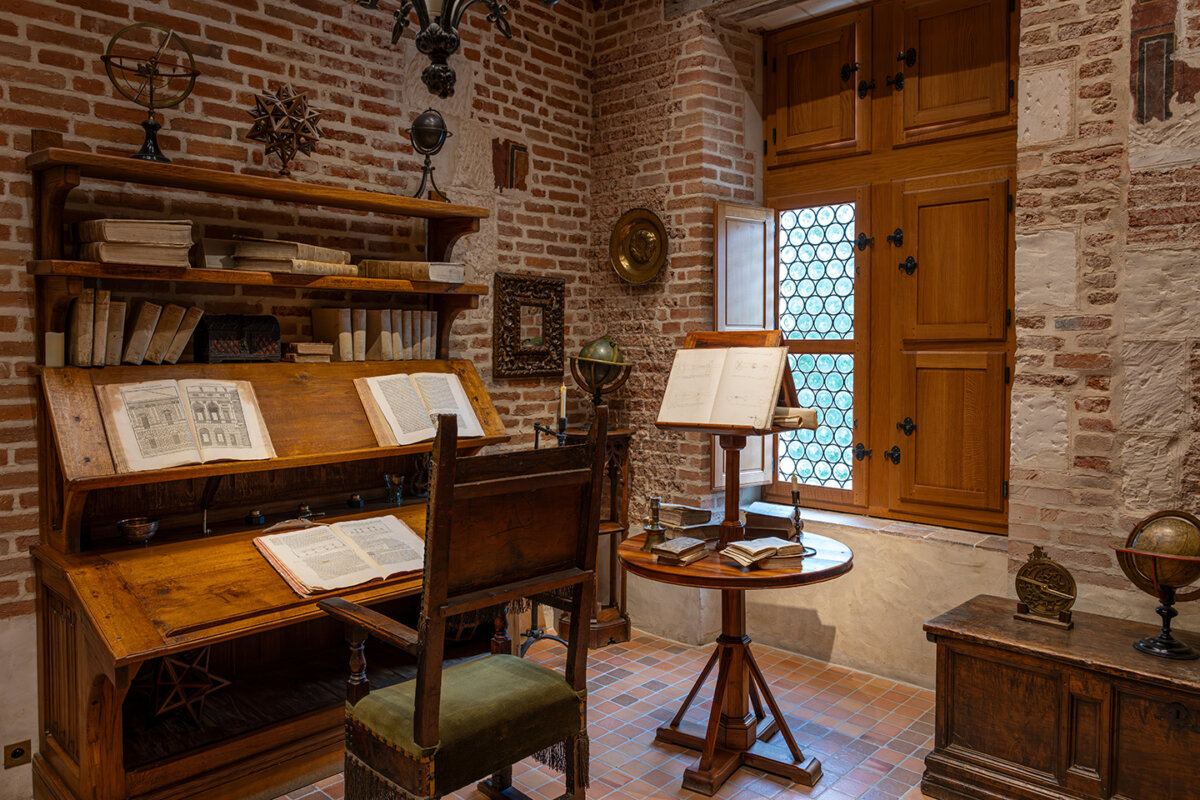
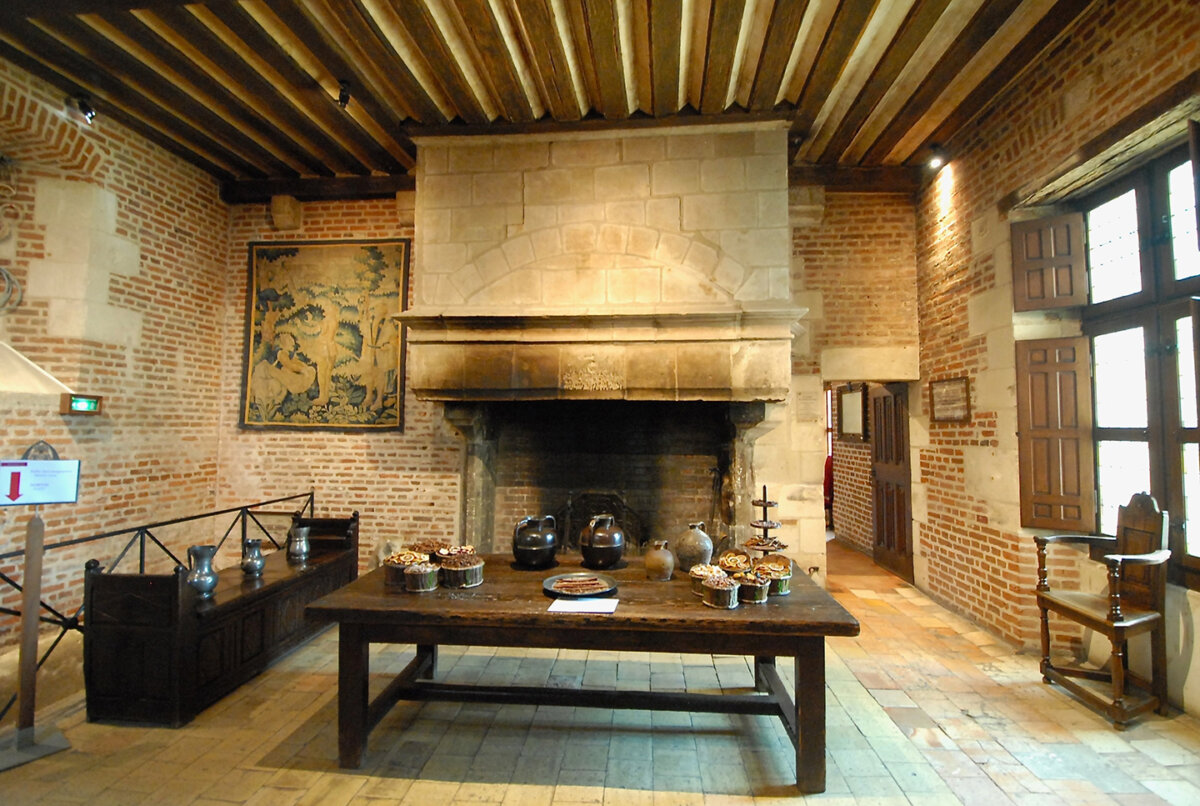
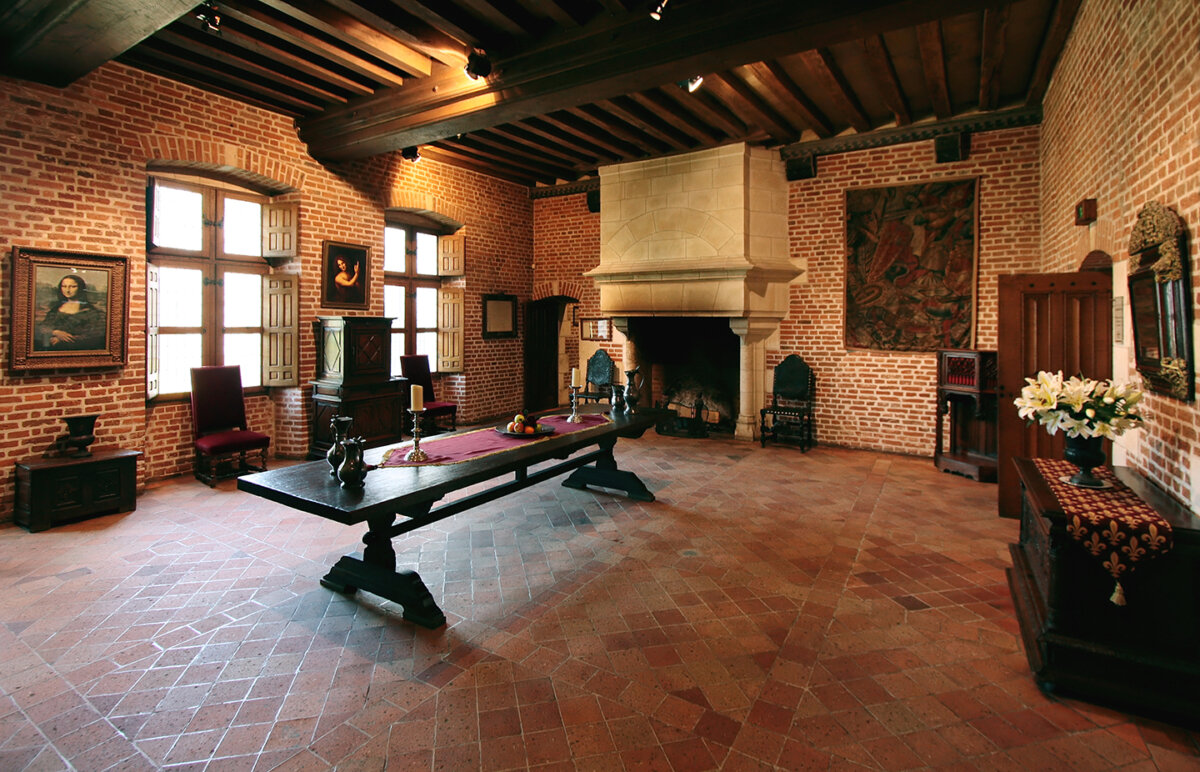
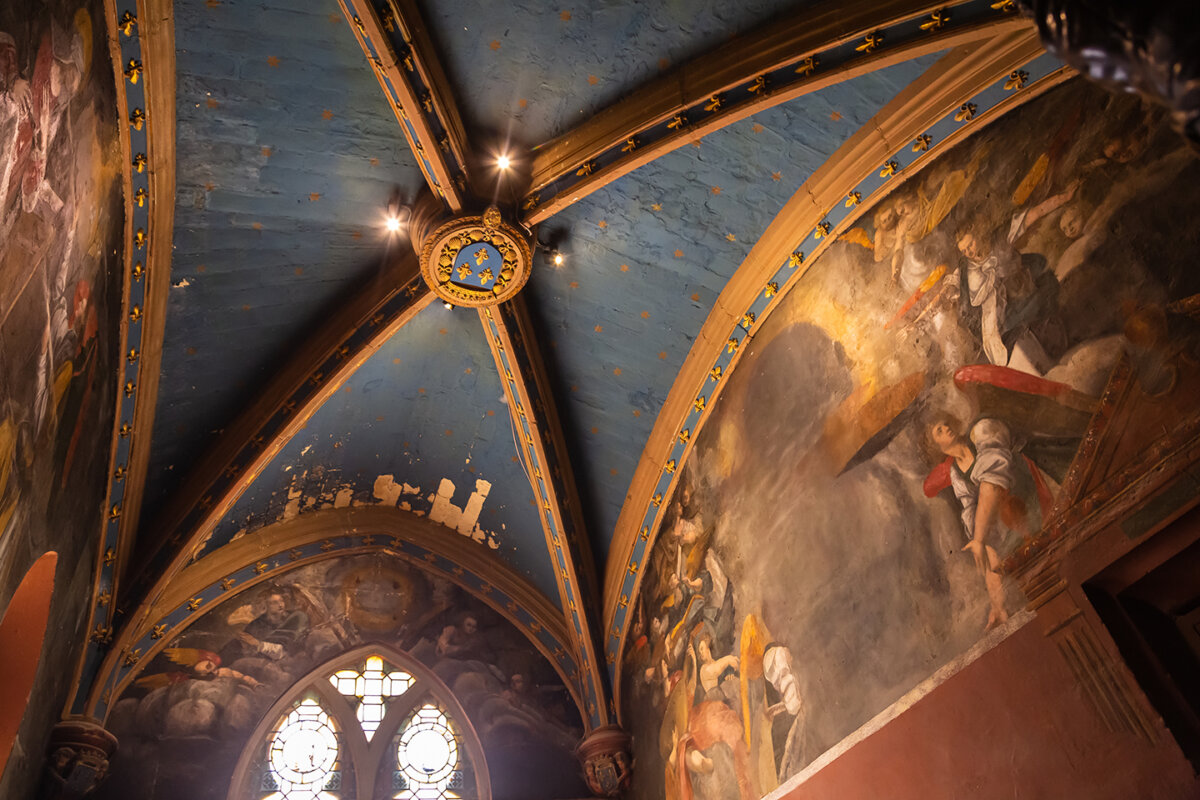
The château was built around an octagonal tower that features a spiral staircase. The oratory of Anne de Bretagne (L) and the Gothic-style windows contribute to the manor’s appearance of a medieval fortress. Freestone—a fine-grained stone that can be easily carved—was used for the decorative elements, such as the tracery, in the mullioned windows. (Fabio Lotti/Shutterstock) The former bedroom of Francis I’s sister Marguerite de Navarre features brick and tuffeau stone walls, vermilion-painted oak beams supported by corbels, terracotta tiles, and tapestries from Flanders, Belgium. Marguerite’s childhood portrait by François Clouet, the king’s official court painter, is showcased in a display cabinet on the back wall. A copy of her later portrait by François’s son Jean (circa 1527) is hanging on the wall to the right. (Cezary Wojtkowski/Shutterstock) Leonardo da Vinci’s bedchamber features a sumptuous Renaissance canopy bed, carved with chimeras, cherubs, and marine animals. The room is furnished with 16th-century Italian secret cabinets. Next to the bed is the famous reproduction of the painting of Leonardo’s death by Jean-Auguste-Dominique Ingres. (Taljat David/Shutterstock) Leonardo’s library at Clos Lucé displays his cabinet of curiosities. Known simply as wonder-rooms (not just pieces of furniture), cabinets of curiosities became popular during the Renaissance and displayed their owners’ collections of artifacts. The combination of globes, reading desk, and ancient texts from the Institute of France recreates Leonardo’s scholarly atmosphere. (Guillaume Angleraud/Shutterstock) Restored to its original state, the kitchen, with its high stone hearth, provides visitors an insight into the daily life of Leonardo. It is believed his servant Mathurine prepared his vegetarian meals here. According to Leonardo, “sobriety, healthy meals, and a proper sleep will keep you in good health.” While the furniture lacks the detailed carving seen in other chambers, an elegant tapestry is among the kitchen’s decorations. (tengatt/Shutterstock) One of most notable chambers at Clos Lucé is the “Salle du Conseil,” or Great Hall. The large room is richly decorated with tapestries and reproductions of works by Leonardo da Vinci. While the “Mona Lisa” and “Saint John the Baptist” are copies, the originals were among the works that Leonardo kept at the château. (Manfred Heyde/CC BY-SA 3.0) The château’s oratory, known as a true jewel of Gothic architecture, was built in 1490 for Anne of Brittany, the wife of Charles VIII. Francesco Melzi, Leonardo’s chief assistant and closest friend, painted four frescoes in the chapel, including one of the Annunciation. The combination of dark blue with gold fleur-de-lis, symbolic of the French royal family, decorates the center. (Oleg Anisimov/Shutterstock)
What arts and culture topics would you like us to cover? Please email ideas or feedback to features@epochtimes.nyc
James Baresel is a freelance writer who has contributed to periodicals as varied as Fine Art Connoisseur, Military History, Claremont Review of Books, and New Eastern Europe.